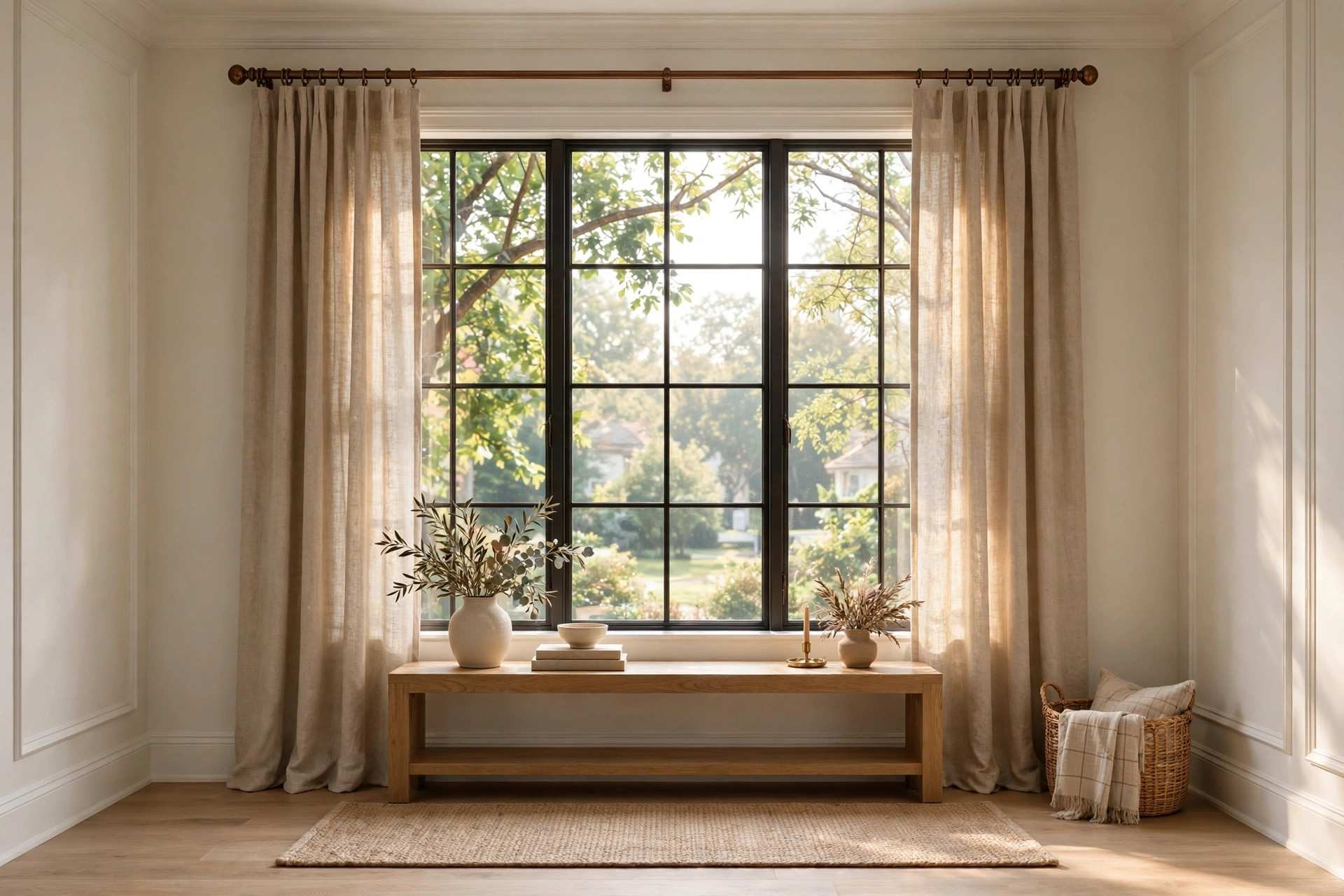

A good window curtain panels buying guide for the USA market starts with one simple fact. Curtain panels do more than cover glass. They set the mood of a room. They soften hard lines. They control light and noise. They can make a small room feel tall and a plain room feel finished.
This guide walks you through the whole process. It covers size, fabric, style, and cost. It gives care tips and safety notes. It ends with clear answers to common questions. By the end, you will know how to pick curtain panels that fit your windows, your rooms, and your budget.
Why Curtain Panels Matter in a Home
Windows are often the largest feature in a room. Bare glass can make a space feel cold. It can also let in glare at the wrong hour. The right panels solve both problems at once. They add color and texture. They frame the view. They give a room a sense of polish.
Panels also serve a practical purpose. Thicker fabrics block drafts in winter. They cut heat gain in summer. Sheer panels soften harsh light while keeping the view. In bedrooms, heavy panels help you sleep past sunrise. In living rooms, they add warmth and reduce echoes. No other single change costs so little and changes so much.
A careful window curtain panels buying guide USA shoppers can trust will repeat one idea often. Measure first. Buy second. Most returns in this market come from wrong widths and wrong lengths, not from bad taste.
How to Measure for Window Curtain Panels: Window Curtain Panels Buying Guide Usa
Width
Curtain panels are sold in single panels or pairs. The width listed on the package is the flat width of one panel. For a full look, the total panel width should be one and a half to two times the width of the rod. This fullness makes gentle folds when the curtain is closed.
Take the width of your window trim and add six to twelve inches on each side for the rod. That is your rod width. Double it for fullness. A standard pair of panels with a combined width of 100 inches suits a 50-inch window. For very full looks, go up to two and a half times the rod width.
Length
Standard lengths are 63, 84, 95, 108, and 120 inches. To pick, hang the rod first, or at least mark where it will go. Measure from the top of the rod to the spot where you want the hem to fall.
Three styles dominate. The sill style ends at the sill and suits kitchens and small rooms. The apron style falls just below the sill. The floor style just kisses the floor and is the most common choice for living rooms and bedrooms. For a rich, formal look, add two to four inches and let the fabric puddle on the floor.
Rod Placement
Hang the rod four to six inches above the window frame. Extend it three to six inches past the frame on each side. This trick makes the window look larger. It also lets panels stack fully off the glass so light pours in during the day.
Fabrics and What Each One Does
Fabric decides how the panel hangs, how it filters light, and how it ages. Read the fiber content on the label. It matters more than the pattern.
Cotton
Cotton panels are crisp and easy to clean. They suit casual rooms and take dye well, so colors stay true. Medium weight cotton holds a pleat. It wrinkles, though, and it fades in strong sun. Line it if the window faces south.
Linen
Linen gives a relaxed, natural look with a slight texture. It filters light softly and drapes well. Pure linen wrinkles a great deal. Blends with cotton or polyester keep the look and cut the wrinkles. Linen suits living rooms and airy bedrooms.
Polyester
Polyester is the workhorse of curtain fabric. It resists wrinkles, sun fade, and shrinkage. It costs less than natural fibers. Modern polyester can feel soft and look rich. It suits busy homes, rental units, and rooms with strong light. Many decorating ideas for affordable rooms start with simple polyester panels because they look far better than their price.
Velvet
Velvet adds drama and blocks light well. It suits formal living rooms and master bedrooms. It is heavy, so it needs a strong rod and sturdy brackets. Cotton velvet looks best but costs more. Synthetic velvet is easier to care for.
Sheers
Sheer panels are made from thin voile, chiffon, or lace. They diffuse light and keep a room bright. They give little privacy at night. Layer them behind heavier panels for the best of both worlds.
Blackout Fabric
Blackout panels have a dense weave or a bonded backing. They block nearly all light. They help shift workers sleep and keep media rooms dark. They also cut noise and drafts. Look for the term “thermal insulated” if you want heat control too.
Styles and Header Types
The top of the panel decides how it moves on the rod and how formal it looks.
Rod pocket. A stitched pocket slides over the rod. It gives soft gathers and a classic look. It is hard to move, so it suits panels that stay closed or stay open.
Grommets. Metal rings punched along the top slide easily on the rod. They make deep, even folds. They read as modern and casual. They are the easiest to open and close each day.
Tab tops. Fabric loops hang from the rod. They give a relaxed, airy feel. They move with some effort and suit light fabrics.
Back tabs. Hidden tabs keep the front face clean while sliding like grommets. They look tailored and work well in living rooms and offices.
Pinch pleats. Sewn pleats at the top create a formal, tailored line. They need hooks and a track or rings. They suit dining rooms and traditional spaces.
How to Choose Panels for Each Room
Living room. Pick fabric that matches the mood you want. Sheers layered with linen or cotton work in bright spaces. If the room faces a street, choose lined panels for privacy. Panels that pool slightly on the floor add softness. When planning a full living room refresh, people often pair new window panels with a guide to velvet living sofas or a luxury area rugs buying guide so the colors work together.
Bedroom. Sleep comes first. Blackout or lined panels are the best pick. Choose calming colors. Make sure the rod is wide enough that panels cover the trim fully when closed. Light gaps at the edges ruin the blackout effect.
Kitchen. Keep fabric short and washable. Cafe curtains that cover the lower half of the window are classic. Avoid puddling lengths near stoves. Skip heavy velvet, which holds cooking smells.
Home office. Control glare on the screen. Light filtering panels beat blackout here. Position panels so you can adjust them through the day. A tidy window treatment helps a work corner feel serious, much like a modern farmhouse table buying guide helps pick a work surface that fits the space.
Bathroom. Use moisture-resistant fabric or vinyl-lined panels. Keep them away from shower splash. Short lengths work best.
Cost and Price Ranges
Curtain panels range widely in price. Simple ready-made pairs in polyester start near fifteen dollars at mass retailers. Mid-range cotton and linen pairs run forty to one hundred dollars. Designer and custom panels can cost two hundred dollars or more per panel.
What raises the price? Long lengths cost more than short ones. Wide widths cost more. Lined panels cost more than unlined ones. Natural fibers cost more than synthetics. Custom hems and pleats add cost.
What saves money? Buy standard lengths. Watch seasonal sales in January and July, when home stores clear stock. Stores like IKEA and Crate & Barrel run regular home textile events. Check Wayfair for open-box deals. Two pairs of budget panels layered together can look as rich as one expensive pair.
Set a budget per window before you shop. A whole house can need ten or more windows. The bill adds up fast.
Where to Shop in the USA
Start with big home retailers for the widest choice. They carry every length, fabric, and price point. Specialty stores carry better fabrics and longer lengths. Online marketplaces offer huge variety and reviews from real buyers.
Read reviews for clues about true length and color. Photos from buyers show the real color, which often differs from studio shots. Check the return policy. Many stores let you hang panels and live with them for a month before deciding.
Decor sites such as The Spruce and HGTV publish seasonal curtain trends and room makeover stories that show panels in real homes. West Elm carries modern styles that suit city apartments and new builds.
Care and Upkeep
Dust panels weekly with a vacuum brush attachment or a shake outdoors. This keeps them bright and cuts allergens. Wash machine-safe panels in cold water on gentle. Dry on low or line dry. Press while slightly damp for a crisp finish.
Dry clean velvet, silk, and lined panels. Never wring them. Rehang panels while slightly damp so gravity smooths the wrinkles.
Sun is the main enemy. Rotate panels between windows each season if one side gets harsh light. Lined panels last years longer in sunny rooms. Check the back of the fabric each year for fading or dry rot. Replace panels when the fabric weakens, not after it tears.
Steam out wrinkles after washing. A handheld steamer works on hanging panels and takes minutes. It is one of the best small tools a homeowner can own.
Safety Notes for Families
Cords pose a real danger to small children and pets. Choose cordless panels or wand-operated styles. If you keep corded blinds under panels, cut looped cords and fit cleats high on the wall. Keep cords out of reach of cribs and beds.
Heavy panels need strong rods. A falling rod can injure a child. Mount brackets into studs or use proper wall anchors. Test the rod with a firm tug before hanging expensive panels.
In kitchens, keep fabric away from gas flames and toaster slots. Choose flame-retardant fabric near heat sources. Never place candles on window sills under panels.
Frequently Asked Questions
How many panels do I need for one window?
For most windows, one pair is right. That means two panels. For a narrow window under 36 inches wide, one panel pulled to the side can work. For a wide window over 60 inches, consider three or four panels for full coverage.
Should curtains touch the floor?
In living rooms and bedrooms, yes. Panels that just touch or slightly pool look best. In kitchens and bathrooms, keep them at sill length for safety and easy cleaning. Long panels near radiators or heaters are a fire risk, so keep fabric clear of heat.
What is the difference between curtains and drapes?
The terms overlap in daily use. Traditionally, curtains are light and unlined. Drapes are heavy and lined. Panels is the neutral word for a single length of fabric. When shopping, read the product details rather than trusting the name.
Do I need to line my curtain panels?
Lining adds body, privacy, and sun protection. It is worth the cost in sunny rooms and bedrooms. In dim rooms, unlined panels are fine and cost less. You can also buy separate clip-on liners to upgrade unlined panels later.
How do I pick a color?
Match the panels to the wall for a calm, seamless look. Pick a color from the rug or art for a pulled-together feel. Go bold with pattern if the furniture is plain. When in doubt, choose warm white or soft gray. These shades suit almost every room and never go out of style.
Can I mix curtain styles in one room?
Yes, if you keep one thing in common. Use the same fabric in different lengths, or the same color in different header styles. Mixing works best in open floor plans where the kitchen and living area share a view. Keep the rod finish the same across the room.
A Short Final Word
Buying window curtain panels does not need to be hard. Measure twice. Pick a fabric that fits the room and the light. Hang the rod high and wide. Choose cordless styles if children are in the home. Stay inside your budget per window.
A thoughtful window curtain panels buying guide USA homeowners can use again and again comes down to this. The best panels are the ones that fit well, suit the room, and make you glad to see them each morning. Take your time. Hang one window first. Live with it for a week. Then finish the rest of the house with confidence.
See Article for more detail.
References
Apartment Therapy. (n.d.). Home design ideas and inspiration. https://www.apartmenttherapy.com Article. (n.d.). Modern furniture. https://www.article.com Crate and Barrel. (n.d.). Furniture and home decor. https://www.crateandbarrel.com HGTV. (n.d.). Home and garden ideas. https://www.hgtv.com IKEA. (n.d.). Home furnishings. https://www.ikea.com The Spruce. (n.d.). Home and garden advice. https://www.thespruce.com Wayfair. (n.d.). Furniture and home goods. https://www.wayfair.com West Elm. (n.d.). Modern furniture and home decor. https://www.westelm.com
Was this guide helpful?

About Jennifer Lee
The My Garden US editorial team writes practical, in-depth home and garden guides for American homeowners — tested advice, no fluff.
You May Also Like

Couch Throw Pillows Buying Guide USA: Sizes, Fills, Fabrics, and Prices
February 17, 2026 0 views
Luxury Area Rugs for California Homes in the USA: A Complete Buying Guide
May 27, 2026 0 views
Rustic Console Tables: A Guide for American Homes
March 8, 2026 0 views