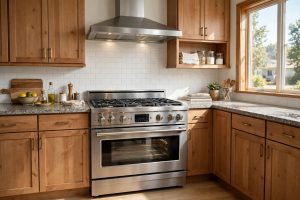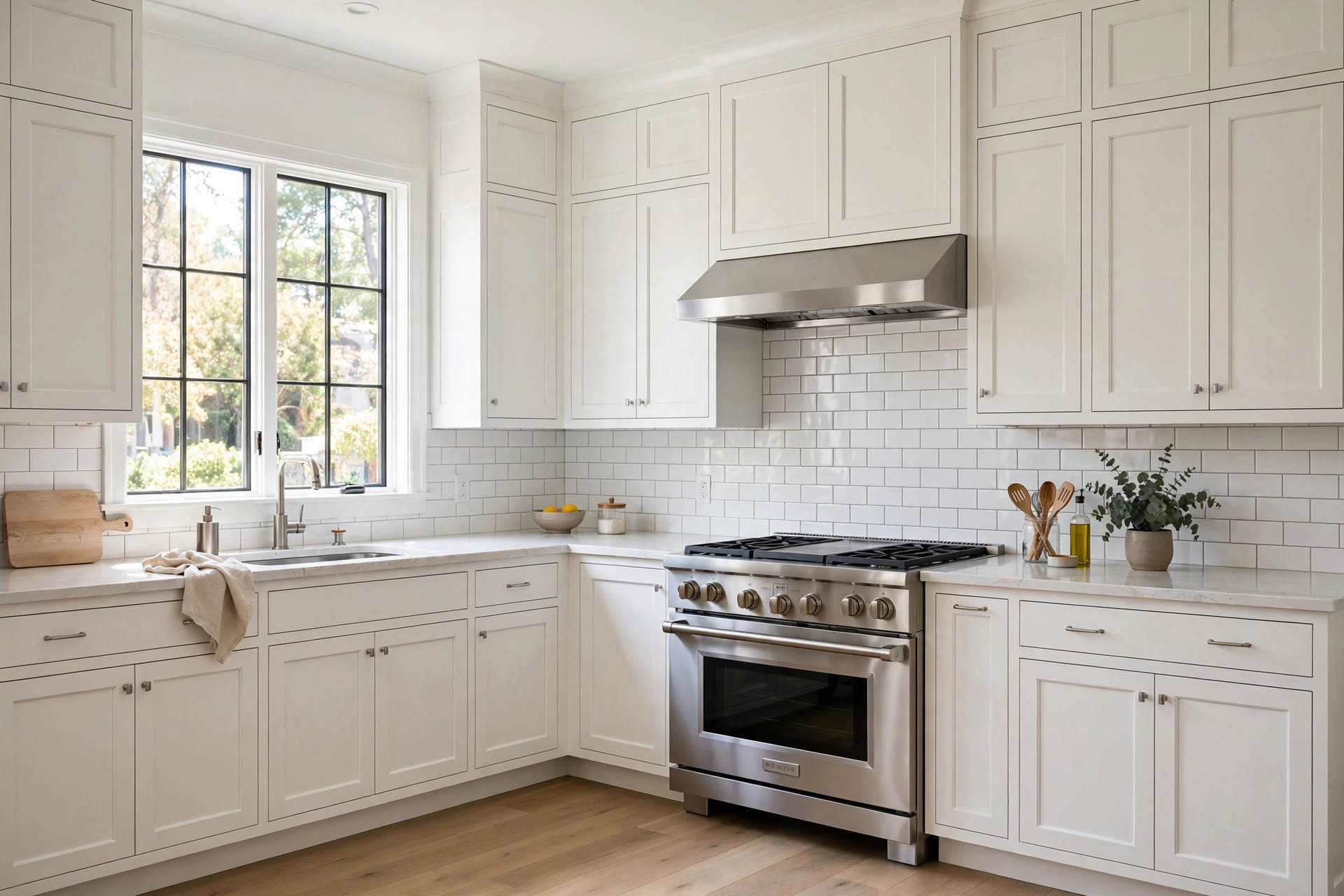

This shaker cabinet doors American homes guide starts with a simple fact. The shaker door is the most common cabinet door style in the United States today. It is a flat center panel framed by four rails and stiles. There is no raised carving and no busy detail. The design is plain on purpose, and that plain look fits kitchens of almost every style, from old farmhouses to new city flats.
The style goes back to the Shaker religious community of the 1700s. The Shakers built simple wood furniture because they believed plain things were honest things. Their cabinet work used clean frames and flat panels. American builders copied the look through the 1800s and 1900s, and it never went out of fashion. When you walk through a new subdivision or an older neighborhood, you will see these doors again and again. They cost less than carved doors, they age well, and they suit paint or stain.
This guide walks through what matters when you shop for shaker cabinet doors in an American home. It covers the main types, the woods and man-made panels they are made from, fair prices, and the daily care that keeps them looking new. By the end, you will know how to read a catalog, what questions to ask a cabinet shop, and how to match the doors to your own kitchen.
Why It Matters
Cabinet doors set the look of the whole kitchen. In a typical home, cabinets cover more wall space than anything else in the room. A reader can change the doors and make the kitchen feel new without moving a wall or a pipe. That makes the choice of door style one of the biggest decisions in a kitchen update.
The shaker style matters for three reasons. First, it fits many styles. A white painted shaker door suits a modern room. A stained oak shaker door suits a rustic room. Second, it is easy to clean. Flat panels collect less dust than carved panels with deep grooves. Third, it holds its value. Home buyers recognize the look and see it as a safe, timeless choice. Kitchen design books at The Spruce note that simple cabinet styles date more slowly than busy ones.
For families who cook every day, the door choice also matters for upkeep. Grease and steam rise from the stove and settle on every surface. A plain flat panel wipes clean in seconds. A door with deep carving needs a brush and more time. When you read a shaker cabinet doors buying guide usa, the same point comes up: plain doors save time over years of use.
How to Choose: Shaker Cabinet Doors American Homes Guide
Start by measuring what you have. Measure each opening on your cabinets, or ask the cabinet maker to do it. Shaker doors come in standard sizes, but older American homes often have odd sizes. A door that is even a quarter inch off will rub or hang crooked.
Next, decide on the frame style. Look at two details: the inside edge of the frame and the outside edge. The inside edge can be square, or it can have a small step called a bevel. The outside edge can be plain or rounded. Square edges give a crisp modern look. Slightly eased edges feel softer and show fewer dents.
Then pick the finish. Paint is the most popular choice in the United States. White paint is the top seller, followed by light gray, navy blue, and soft green. A painted door hides wood grain and gives a clean look. Stain shows the wood grain and gives warmth. Both need a hard finish that resists water. Ask your dealer which paint the factory uses. Many makers now use catalyzed finishes that are harder than paint from a hardware store can be.
Finally, match the hardware. Hinges and knobs should match in style. For shaker doors, simple knobs or cup pulls in brushed nickel, black, or brass work well. If you want a modern look, use long bar pulls. This Old House guides remind readers that hardware is the one part of a cabinet you touch every day, so it should feel solid in the hand.
Types and Options
Shaker doors come in several types. Each one has its own build and price.
Solid wood shaker doors. These are made from real wood such as maple, oak, cherry, or hickory. The frame is solid wood, and the center panel is solid wood too. They feel heavy and they take stain well. They cost the most, but they can be sanded and refinished more than once.
MDF shaker doors. MDF stands for medium-density fiberboard. These doors are made from wood fibers pressed with glue. They are smooth and they take paint very well. They cost less than solid wood. They do not warp or crack with changes in humidity, which is a real help in kitchens near the coast. Home repair sites such as Bob Vila explain that painted MDF doors are now standard in many mid-price American kitchens.
Thermofoil shaker doors. These have an MDF core wrapped in a thin vinyl skin. They are the least costly option. They clean easily, but the vinyl skin can peel near heat, so keep them away from the oven and the toaster.
Unfinished and ready-to-paint doors. If you plan to paint the doors yourself, you can buy them bare. This saves money but takes time and care. The factory finish is usually tougher than what a home painter can apply.
Flat panel versus raised panel. True shaker doors have a flat center panel. Some catalogs sell a “modified shaker” with a slightly raised panel. It is still plain compared to traditional carved doors, but the raised panel adds a small shadow line.
When you shop for matching pieces, also look at kitchen pantry cabinets buying guide usa and kitchen backsplash tiles buying guide usa. Tall pantry doors often match the shaker style, and the tile color you pick should sit well with your door color.
Cost and Price
Prices vary by material, size, and where you buy. Here are fair ranges for one door in the United States today.
– Stock MDF shaker door, unfinished: $20 to $45 per door – Stock solid wood shaker door, finished: $45 to $90 per door – Semi-custom shaker door: $80 to $150 per door – Full custom shaker door: $150 to $300 or more per door
A full kitchen of 30 doors and 10 drawer fronts in stock white shaker will often run from $2,000 to $4,000 for doors alone. Boxes, hinges, and hardware add more. Big-box stores such as Home Depot and Lowe’s sell stock shaker doors and full cabinet lines that keep costs down.
Labor adds to the total if you hire a carpenter to install new doors on old boxes. Refacing a kitchen with new shaker doors on the old boxes costs less than full replacement. Many American homeowners pick refacing when the boxes are still sound. It takes less time and makes less mess.
One way to keep costs down is to order standard sizes. Custom sizes cost more and take longer. Another way is to paint the doors yourself if you buy them unfinished. Take care, though: a bad paint job will cost more to fix than a factory finish would have cost at the start. Product ratings at Consumer Reports can help you judge the finish quality of major cabinet lines before you buy.
Care and Upkeep
Shaker doors need simple, regular care. Wipe them down once a week with a soft cloth and warm water with a drop of dish soap. Dry them right after. Do not soak them. Water is the enemy of cabinet finishes, and it creeps into joints over time.
Grease near the stove needs more attention. Use a damp cloth with a mild degreaser once a month. Work from the top of the door down. Rinse with a clean damp cloth and dry. Never use steel wool or scouring pads. They will scratch the paint or the finish.
Check the hinges twice a year. Tighten loose screws. If a door starts to rub, the hinge may need a small turn. Most modern hinges have small screws that move the door left, right, up, or down. A few turns with a screwdriver will line it up again.
Touch up chips right away. Small paint chips are common around the knobs. Keep a small jar of the matching paint. Sand the spot lightly, dab on the paint, and let it dry. For stained doors, keep a touch-up pen from the cabinet maker.
In dry winter months, run a humidifier if your home air drops below 30 percent humidity. Solid wood doors shrink in dry air and may show tiny cracks at the joints. A little moisture in the air keeps the wood stable. Energy guides at Energy Star list safe ways to balance indoor humidity with good air quality.
Safety
Cabinet work is safe when you follow basic rules. If you install doors yourself, wear eye protection when you drill. Support the door on a flat table so it does not fall while you work. Keep small screws away from young children.
Paint and finish fumes need fresh air. Work in a room with the windows open, or paint the doors in the garage with the door open. Keep children and pets out of the work area until the paint is fully dry. Read the label on every can. Many paints say to wait 24 hours before heavy use.
Check that upper cabinets are fixed solidly to the wall studs. New doors weigh little, but if you also change the hinges or add glass inserts, check the screws that hold the cabinet boxes to the wall. A loose upper cabinet is a real hazard in a busy kitchen.
If your home was built before 1978, test old paint for lead before you sand. Lead dust is harmful, and federal rules require safe work methods in older homes. Many hardware stores sell test kits.
Frequently Asked Questions
Are shaker cabinet doors going out of style? No. They have been in style for over two hundred years. They are the most sold door style in the United States. Simple designs change slowly, while busy designs go in and out of fashion fast.
What is the difference between shaker and mission style doors? The two look alike at first glance. Mission style usually has thicker frames and heavier detail, and it often uses quarter-sawn oak with a dark stain. Shaker style is lighter and plainer, with a simple flat panel.
Can I mix shaker doors with other cabinet styles? Yes. Many kitchens use shaker doors on the lower cabinets and open shelves or glass doors on the upper cabinets. The plain shaker frame works well next to glass because neither one is busy.
Do shaker doors work in bathrooms? Yes. They are common in American bathrooms. Use a water-resistant finish and vent the bath fan after showers. Wood and MDF both suffer in rooms that stay damp.
Which wood is best for shaker doors? Maple is the most popular choice. It is hard, it takes paint well, and it costs less than cherry. Oak shows more grain and suits a rustic look. Hickory is very hard and has strong color change across the door.
Should I choose soft-close hinges? Yes, if the budget allows. Soft-close hinges stop doors from slamming. They reduce noise and they keep the door joints tight for more years. Many stock cabinet lines now include them as standard.
A Final Word
The shaker door earned its place in American homes through two centuries of plain good sense. It is simple to build, simple to clean, and simple to live with. Whether you buy stock doors from a home center, order semi-custom doors from a cabinet shop, or reface the boxes you already own, the steps are the same. Measure with care, pick a finish that suits your home, and keep up with small repairs.
Appliance makers such as GE Appliances, Bosch Home, and Whirlpool design their kitchen lines to sit well next to simple cabinet styles like this one. A plain door lets the rest of the kitchen shine. Take your time, ask questions, and you will end with a kitchen that looks right for many years to come.
References
Bob Vila. (n.d.). Home improvement advice. https://www.bobvila.com Bosch. (n.d.). Home appliances. https://www.bosch-home.com Consumer Reports. (n.d.). Product reviews and ratings. https://www.consumerreports.org ENERGY STAR. (n.d.). Energy efficient products. https://www.energystar.gov GE Appliances. (n.d.). Kitchen and home appliances. https://www.geappliances.com Lowe’s. (n.d.). Home improvement products. https://www.lowes.com The Home Depot. (n.d.). Home improvement products. https://www.homedepot.com The Spruce. (n.d.). Home and garden advice. https://www.thespruce.com This Old House. (n.d.). Home renovation guidance. https://www.thisoldhouse.com Whirlpool. (n.d.). Home appliances. https://www.whirlpool.com
Was this guide helpful?

About David Wilson
The My Garden US editorial team writes practical, in-depth home and garden guides for American homeowners — tested advice, no fluff.
You May Also Like
Pot Filler Faucets for California Homes: A Plain Buying Guide
June 16, 2026 0 views
A Practical Guide to Vinyl Plank Flooring for Texas Homes in the USA
May 28, 2026 1 views
Dual Fuel Ranges for Sale USA: A Complete Buyer Guide
July 4, 2026 0 views