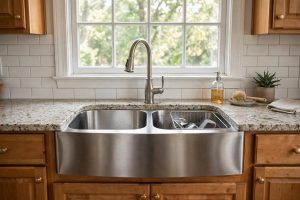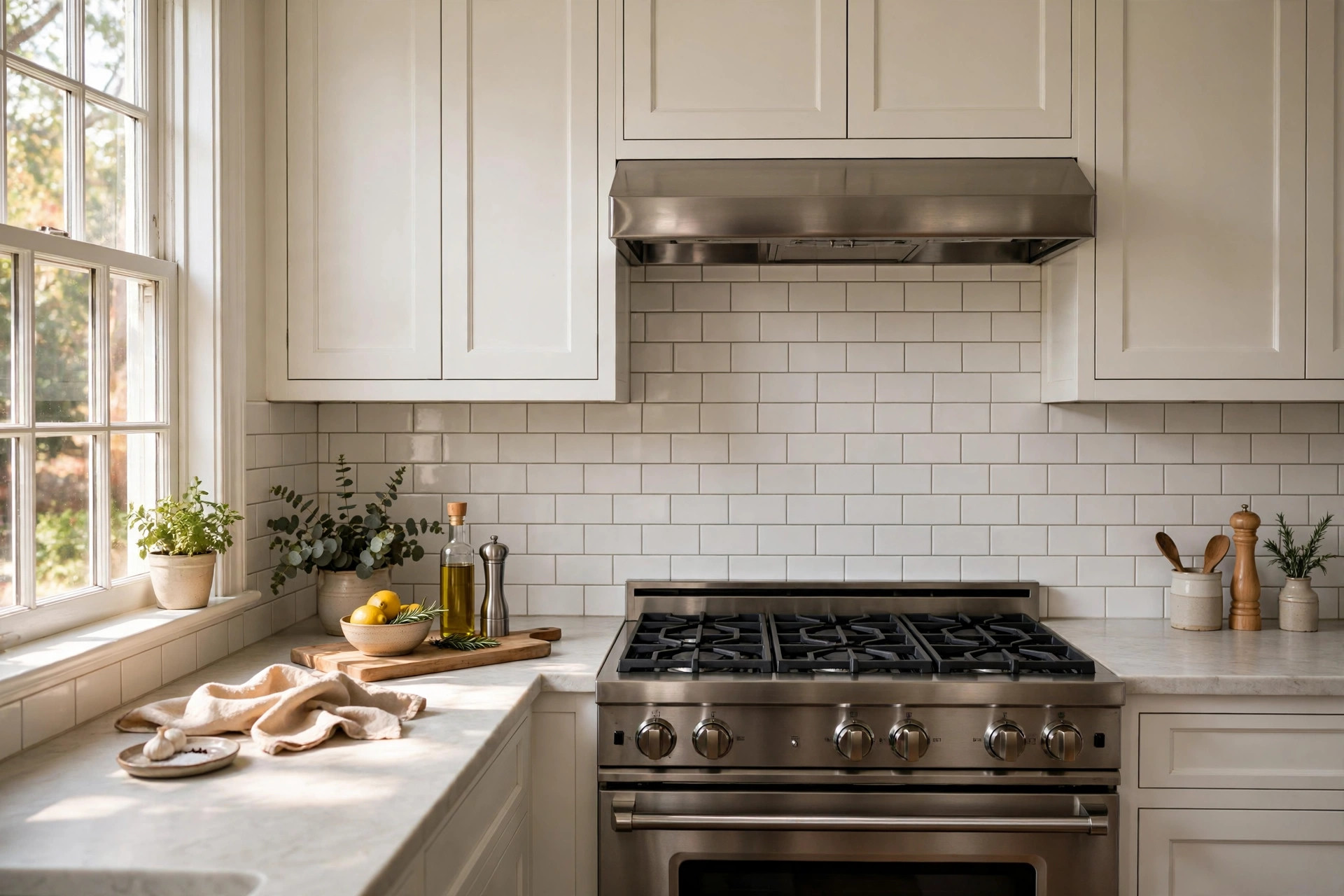

This kitchen backsplash tiles reviews buying guide usa was written to help the American home owner choose well. A backsplash sits between the counter and the upper cabinets. It takes heat, steam, grease, and daily wipes. It must look good and work hard. The sections below give plain facts, plain prices, and plain care advice. Read them before you shop.
Why a Backsplash Matters
The wall behind a stove gets hot and dirty. The wall behind a sink gets wet. Paint alone will not hold up in these spots. A tile backsplash gives the wall a hard, washable skin. It keeps water and grease out of the drywall. This matters in any kitchen, old or new.
Looks count too. The backsplash is one of the first things a guest sees in a kitchen. A clean tile job can make old cabinets look new. A tired or stained wall can drag a good kitchen down. Many sellers say the kitchen sells the house. A fresh backsplash is a low-cost way to lift that room.
A backsplash also sets the style of the room. Bright white subway tile keeps things calm and plain. A patterned tile adds life and color. Stone adds weight and warmth. Your choice here will guide the rest of the room, from paint to hardware to kitchen island seating choices. Take your time with it.
What to Look for When You Choose: Kitchen Backsplash Tiles Reviews Buying Guide Usa
A good backsplash tile must pass four tests. It must stand up to water. It must stand up to heat. It must be easy to clean. And it must suit the style of your kitchen. Run every tile you like through these four tests before you buy.
Start with water. The space behind the sink is wet every day. Unglazed stone will soak up water and stain. Glazed ceramic and porcelain will not. If you love stone, seal it well and seal it often. Many owners like tile buying guides from The Spruce to compare water ratings before they decide.
Next, think about heat. The stove wall takes direct heat from burners and the oven. Most tile holds heat well. Plastic-based peel-and-stick tiles do not. Check the heat rating on the box. Keep flammable materials well back from open flames. Large home stores such as Home Depot list heat ratings on their tile product pages.
Cleaning is the third test. A smooth tile wipes clean with a damp cloth. A rough tile holds grease in its pits. Small tiles mean many grout lines, and grout lines need scrubbing. Large tiles mean fewer grout lines and faster cleanup. Dark grout hides stains. Light grout looks fresh but needs more care. This is the main reason many busy cooks pick big, smooth tiles.
Style is the fourth test. Hold the sample tile up in your own kitchen. Look at it in daylight and in lamplight. Tile colors shift under warm bulbs. What looked gray in the store can look blue at home. Take samples home before you commit. Most stores sell single sample tiles for a few dollars.
Types of Backsplash Tile
Ceramic Tile
Ceramic tile is the most common backsplash tile in America. It is made from clay and fired in a kiln. A glaze coat gives it color and a hard, washable face. It costs little. It comes in every color and shape. The classic 3-by-6-inch subway tile is the best-known look. Ceramic cuts with simple tools, so many home owners lay it themselves. Its weak point is the glaze. A hard blow can chip it. Otherwise it lasts for decades.
Porcelain Tile
Porcelain is a harder, denser form of ceramic. It is fired at higher heat. It soaks up almost no water. It takes hard wear and heavy scrubbing. Many porcelain tiles copy the look of stone or marble at a lower price. It costs more than plain ceramic. It also cuts harder, so DIY cuts take more care and a better blade. For a busy family kitchen, porcelain is a strong pick. Consumer Reports tile reviews often rank porcelain high for durability in kitchens.
Natural Stone Tile
Marble, travertine, slate, and granite all appear as backsplash tile. Stone has depth that printed tile cannot match. No two pieces are alike. The price is higher, and the care is greater. Stone needs sealing before use and resealing over the years. It can stain from red wine, tomato sauce, and oil. It can also etch from acids like lemon juice and vinegar. If you love the look, go in with open eyes. Seal it. Wipe spills fast. Accept that it will age and change.
Glass Tile
Glass tile gives a bright, clean face. It throws light around the room. It wipes clean in seconds. It never stains. Colors run from pale sea glass to deep cobalt. The downsides are price and fitting. Glass costs more than ceramic. It also shows every flaw in the wall behind it, because it is clear. The installer must use a clean white setting bed. The look is modern and sharp. It pairs well with simple cabinets and clean lines.
Metal Tile
Stainless steel, copper, and bronze tiles give a bold, modern face. They hold heat well. They wipe clean. They dent if struck hard. Copper will darken and change color with age. Some owners like this aged look. Others do not. Metal tile costs more than ceramic. It suits new, sharp kitchens and pairs well with steel appliances from makers such as Bosch and Whirlpool.
Peel-and-Stick Tile
Peel-and-stick tile is a thin tile with a glue back. You cut it with scissors and press it on the wall. No mortar. No grout. No special tools. It is the cheapest way to change a backsplash in a day. It suits renters and quick flips. It is not as tough as real tile. Heat from the stove can loosen it. Water can get behind its edges. Many stores, including Lowe’s, carry large lines of these tiles. They are a short-term fix, not a lifetime one.
Cost and Price
Prices run wide. Budget ceramic subway tile can cost 2 to 5 dollars per square foot. Mid-range porcelain runs 5 to 15 dollars per square foot. Glass and stone run 10 to 30 dollars per square foot. Handmade and designer tile can pass 40 dollars per square foot. These are material prices only. Labor is extra.
A standard backsplash covers 25 to 40 square feet. For that size, material cost runs from about 75 dollars at the low end to more than 1,000 dollars at the high end. Labor adds 300 to 800 dollars for a typical job. Complex patterns cost more to lay. Removing old tile costs more too.
DIY saves the labor cost. A simple ceramic subway job is within reach of a careful beginner. Rent a wet saw for the day. Buy 10 percent extra tile for cuts and breaks. Follow the mortar and grout maker’s directions. If you want stone, glass, or a complex pattern, hire a pro. The pros at This Old House and Bob Vila both note that a bad tile job costs more to fix than a good one costs to hire.
Remember the small extras. Tile mortar, grout, sealer, spacers, and trim add 50 to 150 dollars. A new outlet cover plate set costs little but finishes the job. Old kitchens may need the wall repaired first. Plan for these costs before you start.
Care and Upkeep
Daily care is simple. Wipe the tile with a soft cloth and warm soapy water. Dry it to stop water spots. Do this often behind the stove and sink. Grease that sits for weeks turns hard and dark. Grease that is wiped daily comes off with ease.
Deep clean grout a few times a year. Mix baking soda and water into a paste. Scrub the grout lines with an old toothbrush. Rinse with clean water. Do not use harsh acid cleaners on stone tile. They etch the face. On sealed stone, use only mild cleaners made for stone.
Check the sealer on stone once a year. Drop a little water on the tile. If it beads up, the sealer is fine. If it soaks in and darkens the tile, reseal. Resealing takes an hour and costs little. Skip it and the stone will stain.
Watch the caulk where the tile meets the counter. Caulk cracks with time and movement. Cracked caulk lets water behind the tile. Pull it out and re-caulk when you see gaps. This small job stops big water damage. If you are reworking the whole counter area, read our garbage disposal installation reviews and buying guide too, since the sink wall is the same work zone.
Safety
Tile work has real risks. Take them in stride and handle them with care. A wet saw throws water and sharp tile chips. Wear eye guards and gloves. Keep fingers clear of the blade. Unplug the saw before you change blades.
Mortar and grout dust harm the lungs. Mix them with care and wear a dust mask. Open a window. Thin-set mortar also burns the skin on long contact. Wear gloves.
Heavy boxes of tile strain the back. Lift with the legs, not the back. Carry small loads. Set the boxes near the work area so you do not haul them far.
Behind the tile sit pipes and wires. If you drill or cut into the wall, know what is behind it. Turn off the power at the breaker before you move outlet boxes or covers. Turn off the water before you touch supply lines. These steps are plain and quick. Skip them and a small job becomes a big one.
Some very old kitchens may have lead paint under old wall coverings. If your home dates before 1978, test for lead before you scrape or sand. Federal guidance on lead safety is plain and free. When in doubt, hire a pro who knows the rules. The ENERGY STAR site also offers plain guidance on safe, efficient kitchen upgrades that pair well with a remodel.
Frequently Asked Questions
How much tile do I need for a kitchen backsplash?
Measure the length of the wall in inches and the height in inches. Multiply them and divide by 144. That gives square feet. Add 10 percent for cuts and waste. A standard run of 10 feet by 18 inches needs about 17 square feet of tile, so buy about 19 square feet. If your kitchen has more wall area, measure each run and add them up.
Can I tile over my old backsplash?
You can tile over old tile if the old tile is flat, sound, and well stuck. Clean it well and rough up the glaze so the new mortar grips. Most pros still prefer to remove the old tile. Removal lets them check the wall behind it. A flat wall gives a flat job. Thin peel-and-stick tile goes over old tile best. Thick stone over old tile can look bulky at the edges.
Which grout is best for a kitchen backsplash?
Sanded grout suits wide joints. Unsanded grout suits narrow joints under one-eighth inch. Epoxy grout resists stains best and never needs sealing. It costs more and sets fast, so it suits pros more than beginners. For most home owners, a good cement grout with a sealer is the plain, safe pick.
How long does a backsplash tile job take?
A simple straight subway tile job on one wall takes a skilled DIY owner one weekend. Day one for setting tile. Day two for grout and cleanup. A pro can finish a standard kitchen in one to two days. Stone, glass, and patterned jobs take longer. Drying times add days before heavy use. Plan the full week and you will not feel rushed.
Do I need to seal my backsplash tile?
Glazed ceramic, porcelain, and glass need no sealer. The glaze is the sealer. Natural stone needs sealer before use and again over the years. Some cement grouts need sealer too. Check the maker’s directions on the box. When in doubt, seal. Sealer is cheap. Stains are not.
Can a backsplash tile go behind a gas range?
Yes, if you keep the right clearances. Most tile holds heat well. Check the tile maker’s heat rating. Keep peel-and-stick and plastic-based tiles well back from open flame. Metal backsplash panels made for ranges are another safe pick. Follow your range maker’s clearance rules in the manual. If you are planning a full kitchen update, also look at kitchen pantry cabinets for Florida homes and similar storage guides to plan the whole room at once.
A Short Final Word
A backsplash is a small job with a big payoff. It guards the wall. It lifts the room. It can be done in a weekend for a few hundred dollars. Pick tile that stands up to water, heat, and daily wipes. Take samples home. Check prices with tax and extras. Then set it straight and level, and enjoy a kitchen that looks cared for. This guide gave you the facts. The rest is up to your eye and your budget.
References
Bob Vila. (n.d.). Home improvement advice. https://www.bobvila.com Bosch. (n.d.). Home appliances. https://www.bosch-home.com Consumer Reports. (n.d.). Product reviews and ratings. https://www.consumerreports.org ENERGY STAR. (n.d.). Energy efficient products. https://www.energystar.gov Lowe’s. (n.d.). Home improvement products. https://www.lowes.com The Home Depot. (n.d.). Home improvement products. https://www.homedepot.com The Spruce. (n.d.). Home and garden advice. https://www.thespruce.com This Old House. (n.d.). Home renovation guidance. https://www.thisoldhouse.com Whirlpool. (n.d.). Home appliances. https://www.whirlpool.com
Was this guide helpful?

About Sarah Mitchell
The My Garden US editorial team writes practical, in-depth home and garden guides for American homeowners — tested advice, no fluff.
You May Also Like
Dual Fuel Ranges Texas Homes USA: A Practical Buying Guide
August 17, 2026 0 views
Shaker Cabinet Doors for California Homes
August 24, 2026 0 views
Under Counter Wine Fridges Deals Near Me: A Buyer’s Guide
September 1, 2026 0 views