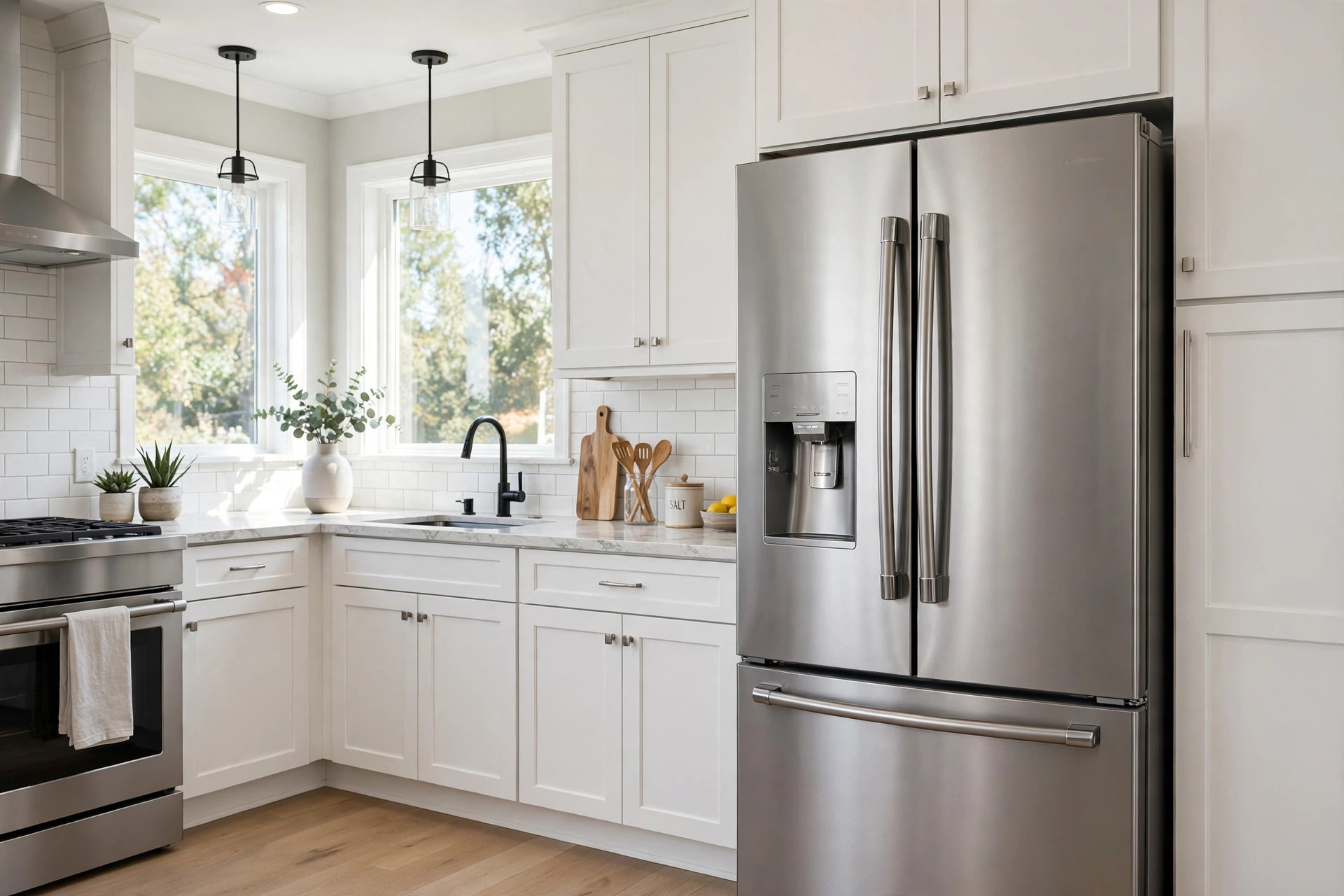

A french door refrigerator has two doors on top and a freezer drawer below. It is one of the most popular styles in American homes today. Families like the wide shelves. Cooks like the easy reach to fresh food. This french door refrigerators buying guide usa shoppers can use will walk you through the choices. You will learn how to measure your space, what features matter, and how much you should plan to spend. By the end, you will know which model fits your kitchen and your budget.
Why a French Door Refrigerator May Suit Your Home
French door models put fresh food at eye level. The double doors open to a wide refrigerator compartment. Milk, produce, and leftovers sit where you can see them. The freezer drawer below holds frozen goods in sliding baskets. Many buyers find this layout easier than a top freezer or a side-by-side.
The wide doors also help with large items. A party tray or a sheet pan of food fits without a fight. If you cook at home often, this matters. A side-by-side has narrow doors that can block a full pizza box. A french door does not have that problem.
Energy use is another point in their favor. When you open only one of the two doors, less cold air escapes. The ENERGY STAR program rates many french door models as efficient choices. Over the years, lower energy use adds up to real savings on your power bill. Guides on The Spruce note that certified models can cost less than seventy dollars a year to run.
Families with small children also like the design. The freezer is low, so frozen treats are within reach of small hands. Some parents see this as a plus. Others prefer the freezer up high and out of sight. Think about your own household before you decide.
What to Measure Before You Shop: French Door Refrigerators Buying Guide Usa
The most common mistake is buying a refrigerator that does not fit. Measure first. Bring a tape measure to the kitchen and write down three numbers.
First, measure the width of the opening where the refrigerator will go. Most french door models are between 30 and 36 inches wide. A 36-inch model is the most common full-size choice. Smaller kitchens may need a 30- or 33-inch model. Leave at least a quarter inch on each side for air flow.
Second, measure the height from the floor to the bottom of your upper cabinets. Standard french door refrigerators stand about 68 to 70 inches tall. If you have low cabinets, check the exact height of the model you want. Some models run taller with the hinges included.
Third, measure the depth. A standard-depth model is about 30 to 34 inches deep. A counter-depth model is about 24 to 28 inches deep and sits nearly flush with your counters. Counter-depth models look sleek and save walking space. They also hold less food. A full kitchen plan should consider both. If you are also planning a shaker cabinet doors american homes guide project, measure cabinet depth before you choose.
Do not forget the delivery path. Measure your doorways, hallways, and any tight turns. The refrigerator must get from the truck to the kitchen. Many delivery crews remove the refrigerator doors to fit through narrow openings. Ask the seller if door removal is included in the delivery fee.
Also check the door swing. French doors need room to open fully. If a wall or an island sits close by, the doors may not open wide enough to pull out the crisper drawers. Draw a rough floor plan. Mark where the island and counters are. Compare that with the door swing of the model you like. Retail buying advice on Home Depot covers these clearance checks in detail.
Types and Options on the Market
Not every french door refrigerator is the same. Stores sell several types. Here are the main ones.
Standard-depth french door. This is the full-size model. It holds 20 to 28 cubic feet. It gives you the most storage for the money. It sticks out past standard counters by a few inches. If you need space for a large family, start here.
Counter-depth french door. This model is built to line up with 24-inch-deep counters. It holds 15 to 22 cubic feet. It costs more per cubic foot than standard depth. The clean look is worth the price for many buyers. Showroom floor samples at Lowes let you compare both depths side by side.
Four-door french door. This style adds a middle drawer between the fresh food section and the freezer. The drawer often has its own temperature setting. You can keep drinks at one setting and deli meat at another. It is a favorite in homes that entertain. Prices run higher, but the flexibility is real.
French door with door-in-door. A small outer door opens into a shallow compartment in one of the main doors. You can grab milk or juice without opening the full refrigerator. Less cold air escapes. Families with kids use this feature every day.
Smart french door. These models connect to your home Wi-Fi. They show the weather on a screen. They let you look inside from your phone while you shop. They cost more and add repair risk. Think hard about whether you will use the smart features. A plain reliable model may serve you better for less money.
Brand lines from Whirlpool, GE Appliances, and Bosch all cover these types. Reviews on Consumer Reports compare them for reliability and owner satisfaction.
Features Worth Paying For
Some features add real value. Others are just nice to have. Here is how to tell the difference.
Ice and water through the door. This is the most used feature in most homes. It saves trips to the freezer. Look for a model with a water filter you can change yourself. Filters cost twenty to fifty dollars. You will change them every six months. Check the price of replacement filters before you buy.
Adjustable shelves. Spill-proof glass shelves that move up and down let you fit tall bottles. This feature costs little and helps a lot. Almost every modern model has it.
Dual evaporators or twin cooling. These systems keep fresh food and freezer air separate. Produce stays fresh longer. Ice does not pick up freezer smells. Models with this feature often cost a bit more. The food savings are worth it.
Humidity-controlled crispers. Two drawers with separate humidity settings keep lettuce crisp and fruit fresh. This is now standard on most french door models. Make sure the drawers slide smoothly and seal well.
Temperature-controlled drawer. A full-width drawer with its own settings works well for party trays, deli, or drinks. It is common on mid-range and higher models. Bob Vila buying guides list it as a top feature for home cooks.
Finish. Stainless steel is the most popular finish. It resists fingerprints better in the smudge-proof versions. Black stainless looks modern and hides smudges well. White is making a comeback in farmhouse kitchens. Choose a finish that matches your other appliances. If you are shopping for double wall ovens usa online deals, match the finish across brands to keep the kitchen looking planned.
Quiet operation. Some models run loud enough to notice in an open-plan home. Check the noise rating if you can. Inverter compressors tend to run quieter and use less energy. Store floor models are hard to judge for noise, so read owner reviews.
Cost and Price in the USA
French door refrigerators cost more than top-freezer models. That is the trade. Here is what to expect in 2026.
Budget models start around 1,500 dollars. These are basic 30-inch models with manual ice makers or no ice maker at all. They cool food just as well as the expensive ones. The finish options are limited.
Mid-range models run from 2,000 to 3,000 dollars. This is where most buyers shop. You get through-the-door ice and water, counter-depth options, and solid warranties. Most major brands compete hard in this range.
High-end models run from 3,000 to 5,000 dollars or more. You get four-door layouts, door-in-door access, smart screens, and pro-style finishes. These are for large kitchens and buyers who want every feature.
Watch for sales. Major holidays bring the best prices. Presidents Day, Memorial Day, July Fourth, Labor Day, and Black Friday all bring deep cuts. Stores also clear last year’s models when new lines arrive in the fall. This Old House notes that buying a floor model or a scratch-and-dent unit can save hundreds more.
Do not forget the extra costs. Delivery runs 50 to 150 dollars. Haul-away of the old unit adds 25 to 75 dollars. A new water line costs extra if your kitchen lacks one. Extended warranties run 200 to 500 dollars. Decide on these before the sale ends so you do not feel rushed.
Energy cost is part of the price too. Check the yellow EnergyGuide label on the model. It shows the yearly cost to run it. A difference of twenty dollars a year adds up over a fifteen-year life. The ENERGY STAR list shows which models use the least power.
Care and Upkeep
A french door refrigerator can last 12 to 17 years with basic care. Most of that care takes only minutes.
Clean the door seals twice a year. Wipe them with warm soapy water. Dry them well. A clean seal holds the cold in and keeps the motor from working too hard. If a seal is torn, replace it. Seals are cheap and easy to order from the brand.
Vacuum the condenser coils once a year. On most models the coils sit behind a front grille or under the unit. Dust on the coils makes the compressor run longer. Unplug the unit first. Use a soft brush on your vacuum. This simple job cuts energy use and extends the life of the machine.
Change the water filter on schedule. The light on the panel will tell you when. A clogged filter slows the ice maker and makes water taste stale. Keep a spare filter on hand so you do not put it off.
Keep the temperature right. Set the fresh food section to 37 or 38 degrees. Set the freezer to 0 degrees. Check with a cheap refrigerator thermometer once in a while. The built-in display can be off by a few degrees.
Leave space around the food. Air must move to cool evenly. Do not pack the shelves so full that cold air cannot flow. Also do not block the vents at the back with tall items.
If the ice maker slows down, check the water line for kinks. If the doors do not close on their own, check that the unit is level. A small tilt forward helps the doors swing shut. Most owner manuals explain how to adjust the front feet.
Safety Notes
Refrigerators are safe machines, but a few rules matter.
Anchor the unit if you live in earthquake country. Straps or brackets keep it from tipping. Check with your local hardware store for the right kit.
Keep the back vents clear. Do not push the unit tight against the wall. Heat must escape. Poor air flow can overheat the compressor.
Water lines can leak. Check the connection twice a year. Look for drips or damp spots on the floor. A slow leak can rot a wood floor before you notice. A cheap leak alarm under the unit gives you early warning.
Old refrigerators need safe disposal. The refrigerant inside harms the air if released. Many power companies pay you to haul away an old working unit. They recycle it the right way. Never leave an old refrigerator in the yard with the doors on. Children can climb inside. Remove the doors or lay the unit on its back before pickup day.
Frequently Asked Questions
How long does a french door refrigerator last? Most last 12 to 17 years. Cheaper models may fail sooner. Regular coil cleaning and seal care add years. When repair costs pass half the price of a new unit, it is time to replace.
Are french door refrigerators worth the extra cost? For most families, yes. The wide shelves and eye-level fresh food make daily life easier. The energy savings help too. If you rarely cook or live alone, a smaller top-freezer model may be the smarter buy.
What is the difference between counter-depth and standard-depth? Counter-depth models sit nearly flush with your counters. They look built in and save floor space. They cost more and hold less food. Standard-depth models hold more for less money but stick out past the counters. Measure your kitchen and your grocery habits before you choose.
Do french door models use more energy than side-by-side models? It depends on size. A large french door model uses more power than a small side-by-side. But per cubic foot, french door models are often efficient. Opening one narrow door lets out less cold air than opening one wide side-by-side door. Check the EnergyGuide label for the exact yearly cost.
Should I buy the extended warranty? It depends on the brand and the price. French door models have more parts that can fail, such as ice makers and electronics. If the warranty costs less than ten percent of the purchase price and covers five years, many buyers find it worth the peace of mind. Read the fine print for what is excluded.
Can I put a french door refrigerator in the garage? Only if the model is rated for garage use. Most indoor models struggle in heat above 100 degrees or cold below 40. The compressor may run too hard or shut down. A few brands sell garage-ready models built for wide temperature swings. Check the owner’s manual before you move one outside the kitchen.
A Short Final Word
Buying a french door refrigerator is a big purchase, but it does not need to be hard. Measure your space. Pick the type that fits your family. Pay for the features you will use and skip the rest. Buy during a holiday sale. Then keep the coils clean and the seals tight. Follow this french door refrigerators buying guide usa families rely on, and your new refrigerator will serve you well for many years. If your project also covers the rest of the kitchen, browse our kitchen backsplash tiles american homes guide to finish the room with style.
References
Bob Vila. (n.d.). Home improvement advice. https://www.bobvila.com Bosch. (n.d.). Home appliances. https://www.bosch-home.com Consumer Reports. (n.d.). Product reviews and ratings. https://www.consumerreports.org ENERGY STAR. (n.d.). Energy efficient products. https://www.energystar.gov GE Appliances. (n.d.). Kitchen and home appliances. https://www.geappliances.com Lowe’s. (n.d.). Home improvement products. https://www.lowes.com The Home Depot. (n.d.). Home improvement products. https://www.homedepot.com The Spruce. (n.d.). Home and garden advice. https://www.thespruce.com This Old House. (n.d.). Home renovation guidance. https://www.thisoldhouse.com Whirlpool. (n.d.). Home appliances. https://www.whirlpool.com
Was this guide helpful?

About Sarah Mitchell
The My Garden US editorial team writes practical, in-depth home and garden guides for American homeowners — tested advice, no fluff.
You May Also Like

Kitchen Backsplash Tiles USA Online Deals: A Plain Guide to Buying Smart
April 7, 2026 0 views
French Door Refrigerators Reviews Buying Guide USA
May 2, 2026 0 views
Kitchen Backsplash Tiles Deals Near Me: A Plain Guide to Smart Buying
July 1, 2026 0 views