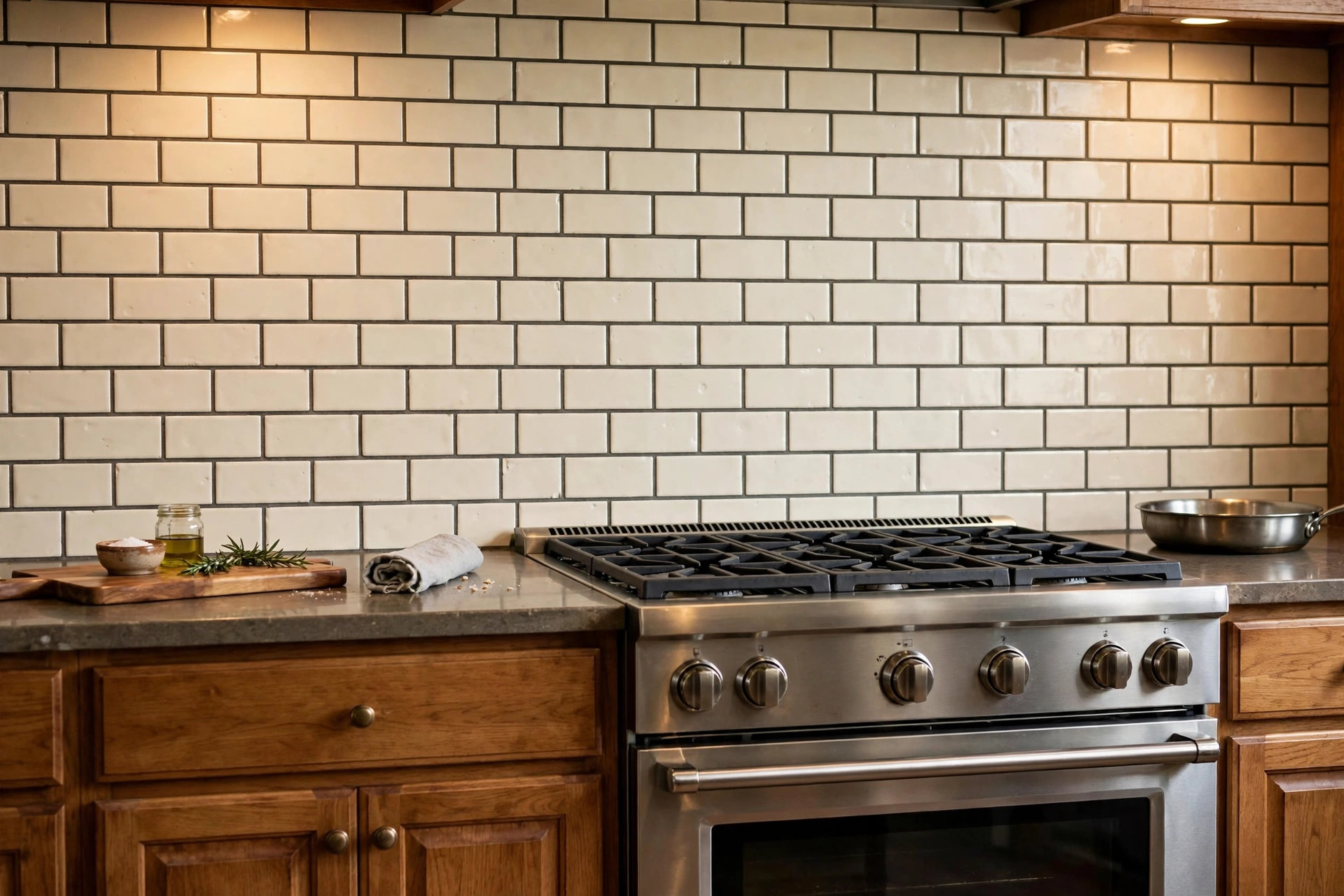

A kitchen backsplash tiles American homes guide must begin with a simple fact. The backsplash is the strip of tile that runs between the countertop and the upper cabinets. It catches the splashes from the stove and the sink. It protects the wall behind them. In many American homes, it is also the main visual accent of the kitchen. People change a backsplash before they change cabinets or counters, because it is a smaller job with a large effect. This guide explains what tile to pick, what it costs, how it goes on the wall, and how to keep it clean for years.
Why the Backsplash Matters in American Homes
The kitchen is the busiest room in the house. Grease, steam, and dishwater hit the wall every day. Without tile, painted drywall absorbs stains and peels. Tile gives the wall a hard, washable surface. That is its practical role. But in American homes it also carries style. Real estate agents often say that a clean, modern kitchen sells a house. A dated backsplash can age the whole room. A fresh one can make ten-year-old cabinets look new. For this reason, many homeowners plan the backsplash as the last step of a remodel, the piece that ties everything together.
Backsplashes also protect the investment behind them. When you pair new tile with an undermount stainless sink and solid quartz countertops, the whole wet zone becomes durable. Water beads on the tile. Crumbs wipe away. The wall beneath stays dry. Over time, that means less repair work and a kitchen that holds its value.
What to Look For When Choosing Backsplash Tile: Kitchen Backsplash Tiles American Homes Guide
Choosing tile is easier when you think in terms of four factors: material, size, finish, and color. Each one shapes how the tile looks and how it performs.
Material
Most American kitchens use ceramic or porcelain tile. Ceramic is lighter and easier to cut, which keeps installation costs down. Porcelain is denser and resists stains better. Both are fine for a backsplash. Natural stone such as marble, travertine, or slate brings rich texture, but it is porous and needs sealing. Glass tile reflects light and suits small kitchens, though it can show streaks. Metal tiles add an industrial note but may scratch. For most families, a glazed ceramic or porcelain tile is the safe, lasting choice.
Size and Shape
The classic subway tile, three inches by six inches, remains the most common size in the United States. It fits almost any kitchen. Smaller mosaic sheets are easy to install around outlets. Large-format tiles, twelve by twenty-four inches or more, have few grout lines and look calm and modern. Hexagons, arabesque shapes, and herringbone layouts add pattern. One rule holds across all of them: smaller tiles hide wall flaws, while larger tiles show them. Check your wall before you decide.
Finish
Glazed tile has a shiny coat that wipes clean. Matte tile hides smudges and suits rustic kitchens. Polished porcelain looks like stone. A word of caution: dark glossy tile shows every splash of water, and white matte tile can absorb grease stains if the glaze is thin. Ask the tile shop for a sample. Smear a drop of cooking oil on it, wait an hour, and wipe it off. That simple test tells you more than any brochure.
Color
White and cream are still the leaders, because they match almost any cabinet color. Light gray and soft blue are close behind. Dark tile looks dramatic behind a range but makes a small kitchen feel smaller. Many homeowners pick a tile one shade lighter than their cabinets to keep the room bright. Design advice from Bob Vila and The Spruce agrees on one point: choose the tile after the counters and cabinets are set, so you match reality rather than a plan.
Common Types and Options
Walk into any tile store in America and you will find five families of backsplash tile. Each has a clear character.
Ceramic tile is the workhorse. It is cheap, light, and comes in every color. The standard 3-by-6 subway in white is the default of American kitchen design. Porcelain tile costs more but resists chips and heat. Many porcelain lines now imitate marble or concrete so well that most eyes cannot tell the difference. Glass tile brings sparkle. A wall of sea-glass green or aqua tile behind a white range reads coastal and clean. Natural stone, especially honed marble, brings depth. Each piece is different, which is the appeal. It does need a sealant at install and every few years after. Metal tile, often stainless steel or copper, suits a chef-style kitchen. It is thin, light, and easy to clean, though harsh scrubbers can mark it.
Peel-and-stick tile deserves a note. It is a thin panel with adhesive on the back. No mortar, no grout. It is popular with renters and with sellers who want a quick refresh before listing a house. It does not last as long as real tile, and steam from a stove can loosen it, but for a one-to-three-year solution it works. Product roundups on Consumer Reports note that peel-and-stick panels are best kept away from direct heat.
Cost and Price
A backsplash is one of the least expensive kitchen upgrades. Material cost runs roughly two to fifteen dollars per square foot. Basic white ceramic subway tile sits at the low end. Handmade-look tile, natural stone, and glass sit at the high end. A typical American kitchen has about thirty square feet of backsplash area. That puts the material bill between sixty and four hundred fifty dollars.
Labor changes the picture. A professional tile setter charges about three hundred to eight hundred dollars for a standard backsplash job, depending on the region and the complexity of the pattern. Diagonal or herringbone layouts take longer and cost more. If you plan the project as part of a larger remodel, for example with new shaker cabinet doors, the tile work often gets folded into one contract at a better rate. DIY installers save the labor cost but must buy mortar, grout, spacers, a wet saw rental, and sealant. Budget another one hundred to two hundred dollars for tools and supplies.
One hidden cost is wall repair. If the old backsplash comes off with chunks of drywall, the wall must be patched before new tile goes up. A coat of primer is always wise. Plan for this in your budget rather than meeting it as a surprise.
Installing Backsplash Tile
Installation follows a steady sequence. First, turn off the power to the outlets in the work zone. Remove the outlet covers. Clean and dry the wall. If the wall is glossy paint, scuff it with sandpaper so the mortar grips. Mark a level line along the countertop. This line is your guide, because counters are rarely perfectly level.
Next, apply thin-set mortar in small sections, about two square feet at a time, with a notched trowel. Press the tiles in place with spacers between them. Work from the center of the wall outward so cut tiles land at the edges. Check with a level every few rows. Around outlets, cut the tile with a wet saw. Wear safety glasses. Let the mortar cure for a full day before you grout.
Grout fills the joints. Mix it to the thickness of peanut butter. Push it into the gaps with a rubber float, working diagonally. Wipe the tile faces with a damp sponge before the grout dries hard. Too much water weakens grout, so rinse the sponge often. After the grout sets, typically a day, apply a grout sealer if the grout is not a premixed sealed type. Reinstall the outlet covers with longer screws if needed. The room will look transformed. Step-by-step project guides at This Old House walk through each of these stages with photos, which help a first-time tiler.
Care and Upkeep
A tile backsplash is easy to maintain, which is why American families favor it. For daily care, wipe the tile with a soft cloth and warm soapy water. Dry with a second cloth to stop water spots. For grease near the stove, a mix of dish soap and baking soda cuts through film without scratching glaze. Never use steel wool or abrasive powder on glazed tile. They leave fine scratches that trap dirt.
Grout needs more attention than tile. Sanded grout can stain where grease lands. A grout pen or a yearly application of grout sealer keeps it fresh. If grout cracks, scrape out the loose part and patch it before water reaches the wall. Natural stone tile needs its own sealant every two to four years, depending on use. Check by dropping water on the stone. If it darkens, the seal has worn and must be renewed.
Ventilation matters as much as cleaning. A good range hood pulls steam away from the tile before it settles. Homes with a strong vent need far less scrubbing. Manufacturers such as Whirlpool and GE Appliances publish venting guidance with their ranges, and Bosch notes the same for its cooktops. Clean the hood filters monthly. Grease that never lands on the tile is grease you never wipe.
Safety
Tile work has a few clear hazards. Cutting tile throws sharp fragments, so safety glasses and gloves are not optional. A wet saw uses water and electricity together; keep the cord dry and follow the rental instructions. Dust from cutting stone contains silica. Work outdoors or wear a dust mask rated for fine particles. Mortar and grout are alkaline. They dry the skin and can burn the eyes. Gloves and eye protection handle this.
In the finished kitchen, safety shifts to the surface. Very glossy tile behind a range can reflect stove heat onto wood cabinets, so keep a few inches of clearance where the tile meets the range. Heavy stone tile needs a sound wall and the right mortar. On a plaster wall with loose paint, stone can pull away. When in doubt, ask a professional. Big-box retailers like The Home Depot and Lowe’s both offer free project planning advice in their tile departments, and ENERGY STAR offers guidance on choosing efficient range hoods that protect the backsplash from heat and steam.
FAQ
How much backsplash tile do I need for a standard kitchen? Most American kitchens need twenty to forty square feet. Measure the wall length times the height between counter and cabinet, usually eighteen inches. Add ten percent for cuts and waste. Odd layouts around windows and outlets need the extra margin.
Can I tile over an existing backsplash? Sometimes. If the old tile is sound and flat, new tile can go over it with the right bonding mortar. But two layers of tile can make outlets sit too deep, and the extra weight can fail on weak drywall. Most pros advise removing the old layer. The job looks better and lasts longer.
Is backsplash tile hard to install myself? A simple subway pattern is a friendly first tiling project. It takes a weekend: one day to set tile, one day to grout. Complex mosaics, natural stone, and herringbone patterns are harder. If your wall is uneven or you have many outlets, a professional earns the fee.
What grout color should I pick? Match the grout to the tile for a calm look, or contrast it for pattern. White tile with light gray grout is the classic American pairing. Dark grout with white tile shows the grid boldly but hides stains. Either way, choose a grout with built-in stain resistance if you can.
Does a new backsplash raise home value? A clean, modern backsplash helps a kitchen look updated, which helps a sale. No single fixture sets the price of a house. But real estate practice shows that buyers read the kitchen as a signal of the whole home. A fresh backsplash is a small cost with a strong visual return.
Can I use peel-and-stick tile behind a gas range? Keep adhesive panels away from direct heat. Most makers warn against use behind a range or inside a fireplace surround. Real tile is the right choice where flames and high heat live.
A Short Final Word
A kitchen backsplash does quiet work. It guards the wall, eases cleaning, and sets the tone of the room. Pick a material that suits your cooking habits, a size that fits your wall, and a color that pleases you for years rather than months. Measure twice, order ten percent extra, and give the mortar and grout their full cure time. Do that, and the tile will serve the household long after the trend pages have moved on.
References
Bob Vila. (n.d.). Home improvement advice. https://www.bobvila.com Bosch. (n.d.). Home appliances. https://www.bosch-home.com Consumer Reports. (n.d.). Product reviews and ratings. https://www.consumerreports.org ENERGY STAR. (n.d.). Energy efficient products. https://www.energystar.gov GE Appliances. (n.d.). Kitchen and home appliances. https://www.geappliances.com Lowe’s. (n.d.). Home improvement products. https://www.lowes.com The Home Depot. (n.d.). Home improvement products. https://www.homedepot.com The Spruce. (n.d.). Home and garden advice. https://www.thespruce.com This Old House. (n.d.). Home renovation guidance. https://www.thisoldhouse.com Whirlpool. (n.d.). Home appliances. https://www.whirlpool.com
Was this guide helpful?

About David Wilson
The My Garden US editorial team writes practical, in-depth home and garden guides for American homeowners — tested advice, no fluff.
You May Also Like

Pot Filler Faucets for Florida Homes: A Guide for American Kitchens
June 22, 2026 0 views
French Door Refrigerators for Sale USA: A Complete Buyer’s Guide
August 22, 2026 0 views
Microwave Drawer Units for California Homes
September 27, 2026 2 views