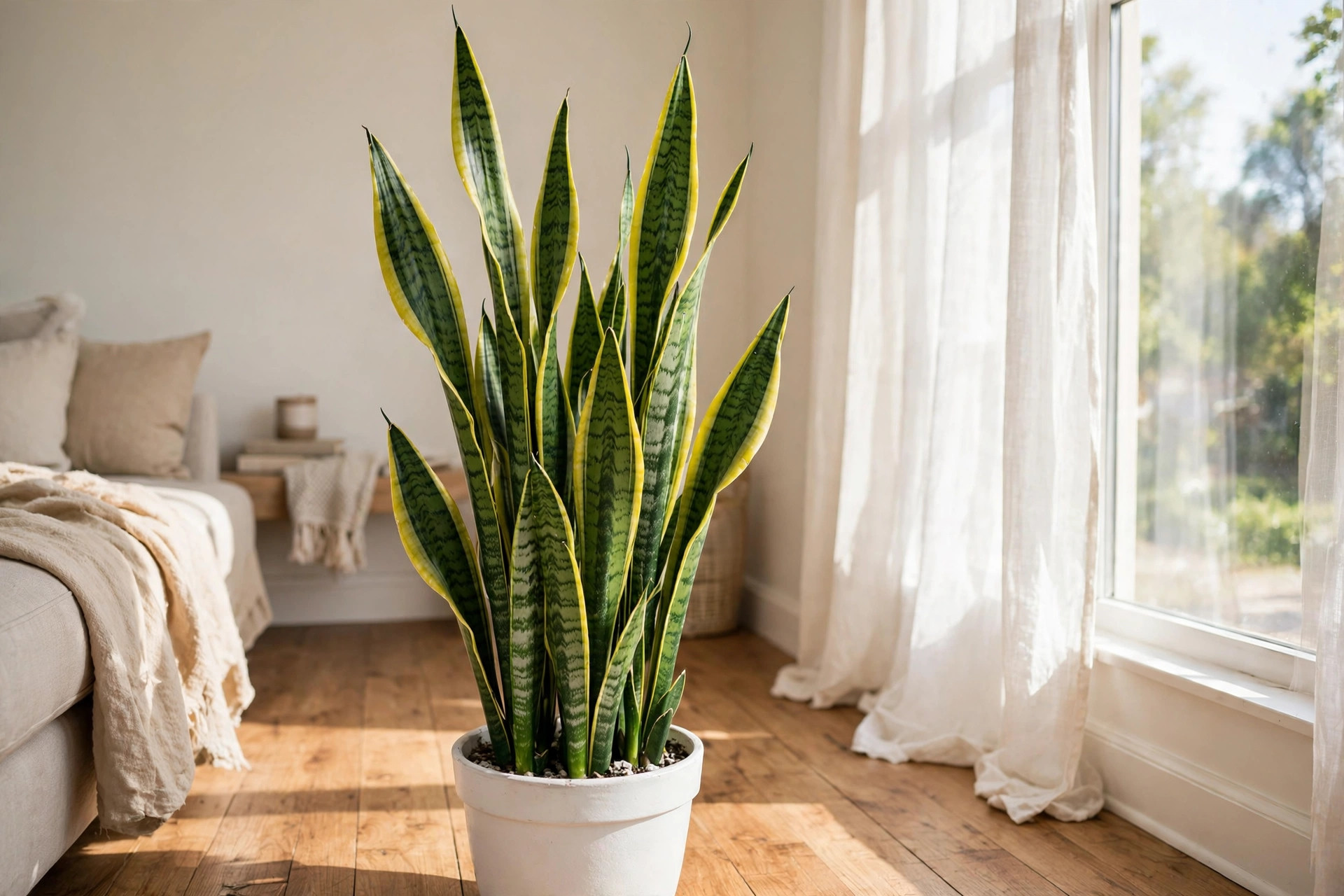

This snake plants indoor buying guide usa was written for the first-time buyer. The snake plant is one of the most forgiving houseplants in America. It tolerates low light. It tolerates missed watering. It grows slowly and asks little. But a plant that lives for years begins with a smart purchase. This guide explains why the snake plant works indoors, what to look for at the store, the main varieties, the cost, and how to keep it healthy after you bring it home.
Why the Snake Plant Earned Its Place Indoors
The snake plant came to American homes from dry regions of Africa. It stores water in thick, upright leaves. That habit makes it suited to indoor life, where air runs dry in winter and watering is easy to forget.
Few plants ask so little and give so much. The stiff leaves stand tall in a corner that gets little sun. They also do well in a bright living room. The plant grows slowly, so it does not outgrow its pot in a season. It keeps its shape for years.
Many buyers choose it as a first plant. Others buy it for an office desk or a rental home. It fits modern rooms, where clean lines and simple pots are popular. It also fits older homes, where a green leaf softens dark wood. When you compare it with other popular houseplants, such as monstera plants or fiddle leaf figs, the snake plant is the least demanding of the three. A fiddle leaf fig drops leaves when light changes. A monstera wants steady moisture. The snake plant endures.
There is also a health angle. Houseplants clean the air a little and lift the mood of a room. No plant replaces good ventilation, but a few green leaves make a room feel alive. The snake plant does this work with almost no effort on your part.
What to Look for When You Buy: Snake Plants Indoor Buying Guide Usa
A good purchase starts with your eyes. Slow down at the store and study the plant before you pay.
Leaf Condition
Look for leaves that stand firm and upright. They should feel thick when you press them gently between thumb and finger. The color should be even. Most varieties show green with lighter bands. Yellow-edged types should show a clean yellow border.
Avoid leaves that bend or flop. Avoid brown tips across many leaves. A single brown tip on an old leaf is normal. Many brown tips point to poor care. Avoid soft or mushy spots. Soft spots at the base mean the roots may be rotting. That plant will not recover well.
Check the center of the rosette. New leaves rise from the center. A tight, healthy center with a small new leaf is a good sign. The plant is still growing.
Root Health
Ask to lift the plant from its nursery pot if the shop allows it. Healthy roots are white or pale tan. They fill the pot but do not circle in a tight mass. A plant that is slightly root-bound is fine. Snake plants like snug pots.
Avoid plants that smell sour or moldy. Avoid soil that stays soaking wet. Wet soil at the store warns of overwatering. A wet plant may look fine today and collapse in two weeks.
Size and Pot
Snake plants are sold in pots from four inches to fourteen inches wide. A six-inch pot suits a desk or a shelf. A ten-inch pot suits a floor corner. The plant grows slowly, so buy the size you want for the next two years.
Check that the pot has a drainage hole. This is not optional. Without drainage, water pools at the bottom and roots rot. Many decorative pots lack holes. If you love a solid pot, keep the plant in its nursery pot and set that inside the decorative one. Empty the extra water after each watering.
Types and Varieties of Snake Plants
The plant family is called Sansevieria by older books and Dracaena by newer ones. Shops use both names. Do not let the two names confuse you. They refer to the same plants.
The most common type is Sansevieria trifasciata, sold under names like Laurentii. It grows two to four feet tall. Its leaves are dark green with lighter bands and yellow edges. This is the classic snake plant that most people picture.
Sansevieria zeylanica is close in form but lacks the yellow edge. Its bands are softer. It costs about the same and cares for in the same way.
For small spaces, look at Sansevieria trifasciata Hahnii. It is a dwarf form that grows six to eight inches tall. It fits a desk or a bathroom shelf. There are also cylindrical types, like Sansevieria cylindrica. Their leaves are round like spears and often sold braided. They are striking and cost a little more.
Variegated forms carry cream or white streaks. They are slower to grow and need a bit more light to keep their pattern. They usually cost more than plain green plants of the same size.
Where to Shop in the USA
You have three good options. Each has strengths.
Local nurseries and garden centers offer the best quality. Staff can answer questions. You can inspect every leaf before you buy. Prices run a little higher, but the plants are usually fresh and well cared for. Many of the best plants are grown in professional nurseries before they reach local shops.
Big home improvement stores carry snake plants year-round. The price is low and the stock is large. Inspect each plant with care, because watering at large stores is uneven. Look for the firmest leaves on the shelf.
Online sellers ship plants in boxes with heat packs in cold weather. This option suits buyers who cannot find a variety locally. Read reviews about packing and cold-weather shipping. A plant that freezes in transit will not recover.
When you shop online, prefer specialty plant growers and established seed companies with clear return policies. Seed and plant catalogs and nursery stock from long-standing firms tend to arrive in better shape than plants from unknown sellers.
Cost and Price
Snake plants are among the cheapest houseplants of their size. A four-inch pot usually costs between five and twelve dollars. A six-inch pot costs between twelve and twenty-five dollars. A ten-inch pot costs between thirty and sixty dollars. Large floor plants in fourteen-inch pots can reach eighty to one hundred twenty dollars.
Variety changes the price. Common Laurentii is cheap and easy to find. Rare variegated forms cost more. Braided cylindrica costs more because of the extra labor.
Price also follows the season. Stock is best in spring, when garden centers fill their benches. Prices drop a little when supply is high. In winter, choice is smaller and shipping costs rise.
Remember the pot in your budget. A plain nursery pot costs nothing extra. A good ceramic pot with drainage costs fifteen to forty dollars. A bag of cactus soil costs under ten dollars. The plant itself is the smallest cost. Good soil and a good pot protect your purchase.
Care and Upkeep
The snake plant forgives mistakes, but it still has needs. Meet the basics and it will live for a decade or more.
Light
Snake plants survive in low light, but they grow best in bright, indirect light. A spot near an east or west window is ideal. They also take a few hours of direct morning sun. In a dark corner, the plant will live but grow very slowly and lose its bold pattern.
Move the plant slowly when light changes. A plant raised in low light can burn if moved to full sun in one day. Shift it over a week or two.
Water
Water is where most owners go wrong. Too much water kills more snake plants than too little. Let the soil dry out fully between waterings. Push a finger two inches into the soil. If it feels dry, water. If it feels damp, wait.
In summer, watering every two to three weeks is common. In winter, once a month may be enough. Always water deeply, so water runs from the drainage hole. Then empty the saucer. Never let the pot sit in water.
Soil and Feeding
Use a fast-draining mix. A cactus or succulent mix works well. You can also mix regular potting soil with perlite or coarse sand. The goal is simple: water should pass through, not sit.
Feed lightly. A half-strength houseplant fertilizer once or twice in the growing season is enough. More feeding does not make the plant grow faster. It can burn the roots.
Repot only when roots crowd the pot or push through the drainage hole. This happens every two to three years. Move up one pot size only. A pot that is too large holds extra water and invites rot.
For general feeding schedules and seasonal tasks, planting calendars help you time your care through the year. Broader houseplant care guides are useful when you want to compare the snake plant with other indoor plants.
Safety Around Pets and Children
Snake plants are mildly toxic if eaten. The leaves contain compounds that can cause nausea and stomach pain. Dogs and cats that chew the leaves may vomit. Children should be taught not to bite the leaves.
Place the plant where pets cannot reach it. A high shelf or a tall stand works. If a pet eats a large amount, call your veterinarian. If a child eats some, call poison control. Most cases are mild, but it is best to act fast.
The plant is safe to touch. It does not irritate skin. The risk comes only from eating the leaves. With sensible placement, the snake plant is a safe home for families with pets and children. Government agricultural research from the USDA supports good plant care practices that keep houseplants healthy and homes safe.
Frequently Asked Questions
How fast does a snake plant grow? It grows slowly. Indoors, expect three to six inches of new growth per year. Good light speeds it up. Low light slows it down. A slow pace is normal, not a sign of trouble.
Why are the leaves turning yellow? Yellow leaves usually mean too much water. Check the soil. If it is wet, let it dry fully. Cut off badly yellowed leaves at the base. They will not turn green again. The plant will send up new leaves.
Can a snake plant live in a room with no windows? It can survive for months in a windowless room with artificial light, but it will not thrive. A small grow light or a bright lamp nearby helps. For best results, give it at least some natural light.
How do I make more plants from one? Divide the root ball in spring. Remove the plant from its pot and cut the thick roots with a clean knife. Each piece should have leaves and roots. Pot each piece in fresh soil. You can also root a leaf cutting in water, but division is faster and more reliable.
Does the snake plant flower indoors? It can, but it is rare. Mature plants in bright light sometimes send up a stalk of small, sweet-smelling white flowers. The flowers usually appear in spring or summer. A flowering plant is healthy. Enjoy it.
Is a snake plant good for a beginner? Yes. It is one of the best first plants. It survives missed waterings, low light, and dry air. It teaches new owners the basics without harsh punishment for mistakes. Pair it with easy plants like pothos plants to build a small indoor garden with confidence.
A Final Word
A snake plant is a long-term companion. Choose one with firm leaves, dry soil, and a healthy center. Give it a pot with drainage and a bright spot. Water it less than you think. It will reward you with years of quiet, upright green.
Buyers who want reliable plants often turn to trusted names in the trade. Plant breeding programs keep improving houseplant varieties, and practical gardening advice helps owners solve problems as plants age. With a little care at the start, your snake plant will be one of the easiest successes in your home.
References
Burpee. (n.d.). Seeds, plants, and gardening supplies. https://www.burpee.com Gardening Know How. (n.d.). Gardening guides and plant care. https://www.gardeningknowhow.com Gurney’s Seed & Nursery Co. (n.d.). Seeds, plants, and garden supplies. https://www.gurneys.com Monrovia. (n.d.). Plants for home gardens. https://www.monrovia.com National Institute of Food and Agriculture. (n.d.). Agricultural research and extension. https://www.nifa.usda.gov Park Seed. (n.d.). Seeds, plants, and gardening supplies. https://www.parkseed.com Proven Winners. (n.d.). Plants and gardening inspiration. https://www.provenwinners.com The Old Farmer’s Almanac. (n.d.). Gardening calendars and advice. https://www.almanac.com The Spruce. (n.d.). Home and garden advice. https://www.thespruce.com White Flower Farm. (n.d.). Plants, bulbs, and garden supplies. https://www.whiteflowerfarm.com
Was this guide helpful?

About James Carter
The My Garden US editorial team writes practical, in-depth home and garden guides for American homeowners — tested advice, no fluff.
You May Also Like

Lavender Seed Packets Reviews Buying Guide USA: How to Choose Seeds That Truly Sprout
May 8, 2026 0 views
Garlic Bulbs Planting Reviews Buying Guide USA: A Complete 2026 Planting and Buying Guide
June 8, 2026 0 views
Dahlia Bulbs Bulk Reviews Buying Guide USA
September 10, 2026 0 views