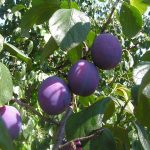
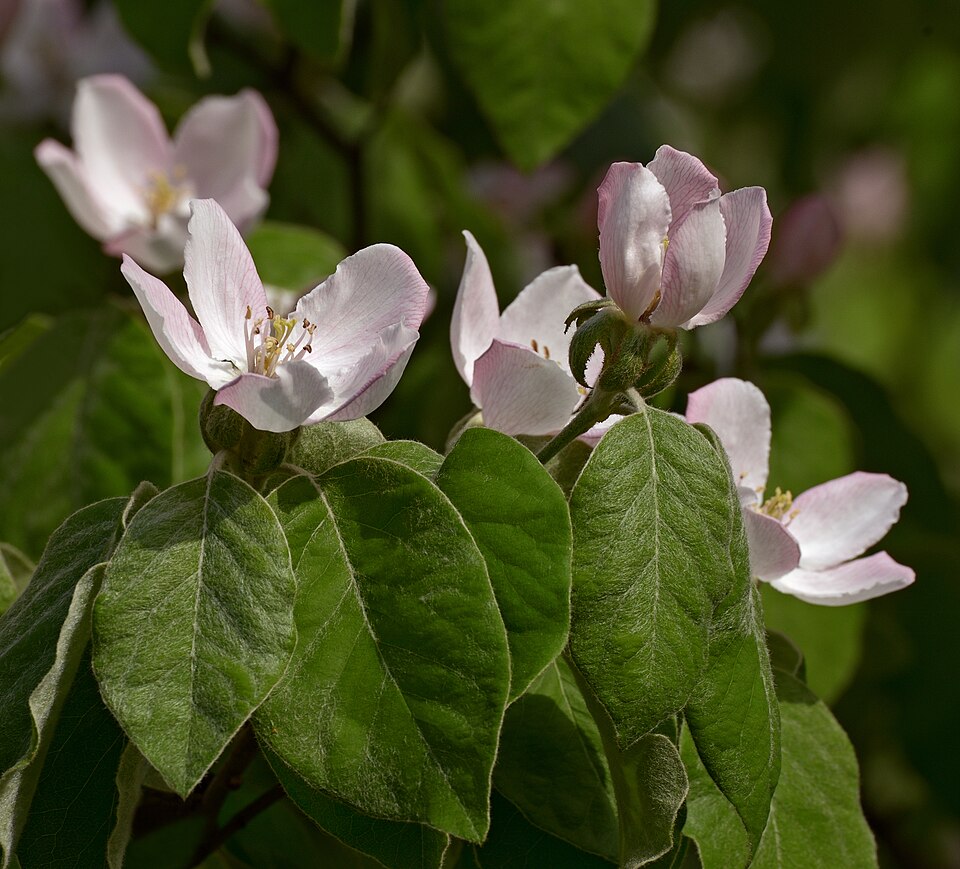
Quince is the old soul of the orchard - a small, gnarled tree with gorgeous spring blossoms and golden, perfumed fruit that no one eats raw. That last part surprises people. Raw quince is rock-hard and mouth-puckeringly astringent. But cook it, and it transforms: the flesh turns pink, the kitchen fills with perfume, and you get membrillo, jelly, and baked dishes unlike anything else in the orchard. If you want to learn how to grow quince, know that patience is the whole technique - the tree is easy, the fruit demands cooking, and one tree feeds a household's preserves for a season.
Table of Contents
Table of Contents
Quince (Cydonia oblonga) is hardy in zones 5 through 9 and self-fertile, so a single tree fruits alone. It needs some winter chill to fruit well, and its blossoms are frost-tender, so late spring freezes in the coldest zones can ruin a crop. Expect three to five years before the first real harvest - fruit trees play the long game.

Photo: Wikimedia Commons
Choosing a Tree
When it comes to how to grow quince, getting the details right makes all the difference.
Many homeowners find that how to grow quince is easier than they expected once they know the basics.
Buy a grafted bare-root tree from a reputable nursery - grafted trees fruit years sooner and more reliably than seedlings, and the variety is guaranteed. Quince varieties differ in fruit size, shape, and flavor; some are better for jelly, others for baking. Ask the nursery which varieties do well in your region, and check variety notes on Gardenia.net before you order.
Quince is self-fertile, so one tree is enough. But think about placement: a mature quince spreads 12 to 15 feet wide with a picturesque, slightly twisted form. It is genuinely ornamental - the big pink-white spring blossoms rival any flowering tree, and the golden fruit hanging in fall is beautiful. Plant it where you will see it, not hidden in a far corner. The Missouri Botanical Garden plant finder describes its ornamental qualities alongside its fruiting needs.
Order bare-root trees for planting in late winter or early spring, while they are still dormant. A one- or two-year-old whip establishes fastest; older, bigger trees cost more and transplant with more shock.
When and How to Plant
Many homeowners find that how to grow quince is easier than they expected once they know the basics.
The key to how to grow quince is choosing the right approach for your space and budget.
Plant bare-root trees in late winter or early spring, as soon as the ground can be worked and while the tree is still dormant - roughly around your last spring frost date. Check your zone's timing on our planting calendar to get it right. Dormant planting lets roots establish before the leaves demand water.
Dig a hole wide enough to spread the roots without bending them, and just deep enough to set the tree at the same depth it grew in the nursery - look for the soil line on the trunk. Backfill with the native soil, firming gently to remove air pockets, and water deeply. Mulch with three to four inches of wood chips or compost, keeping it several inches back from the trunk. Stake the young tree for its first year or two; quince wood is brittle and young trees rock in wind, which tears new roots.
Space trees 12 to 15 feet apart. Quince tolerates clay and even wet soil better than most fruit trees, but it still fruits best in ground that drains reasonably. A sheltered spot reduces wind damage to the heavy fruit and protects the frost-tender blossoms in spring.
Soil and Sun
The key to how to grow quince is choosing the right approach for your space and budget.
With a little planning, how to grow quince can fit even a busy schedule.
Full sun - eight hours or more - for the heaviest crops and the most fragrant fruit. Quince fruits in partial shade, but yields drop and ripening slows. In frost-prone areas, avoid low pockets where cold air settles; a slope or a spot with good air drainage protects the blossoms that become your harvest.
Soil should be rich and well-drained, though quince is more forgiving than most fruit trees - it handles clay and periodically wet ground. Work compost into the planting hole and mulch yearly. A slightly acidic to neutral pH suits it. If your soil is extremely sandy, extra organic matter helps it hold the moisture quince likes. A soil test through your extension office guides any amendments; Clemson Cooperative Extension and University of Minnesota Extension both explain the process.
Watering and Feeding
With a little planning, how to grow quince can fit even a busy schedule.
Before you start, it helps to understand how how to grow quince works in real homes.
Water deeply through the first two or three seasons while roots establish - about an inch a week when rain falls short. Mature quince trees are tough and tolerate dry spells, but steady moisture during fruit development gives larger, juicier fruit. Drip irrigation or a soaker hose under the mulch keeps water on the roots.
Feed in spring with compost or a balanced fertilizer. Quince is a moderate feeder - one spring feeding is plenty in most soils. Too much nitrogen pushes leafy growth at the expense of fruit and invites fire blight, the bacterial disease that is quince's worst enemy.
Mature trees in decent soil often need nothing beyond the yearly mulch. If growth is weak - shoots under 6 inches a year - a spring feeding helps. But read the tree before you feed: dark green leaves and 8 to 12 inches of new shoot growth mean nutrition is fine. Pale leaves and stunted shoots mean feed. Overfed quince trees grow fast and soft, and soft growth is exactly what fire blight attacks first, so err on the side of less. A ring of compost out at the drip line each spring is the gentlest, safest feeding there is.
Young trees benefit from a little extra nitrogen to size up, but ease off once fruiting begins. The Clemson HGIC fruit tree pages explain balanced feeding, and the Old Farmer's Almanac orchard guides keep the schedule practical.
Pruning to an Open Vase
Before you start, it helps to understand how how to grow quince works in real homes.
A good plan for how to grow quince saves time, money, and frustration.
Prune in winter while the tree is dormant. Train young trees to an open vase shape - three or four main limbs spreading outward from a short trunk - which lets light into the center and makes harvest easy. Each winter, remove dead, damaged, and crossing branches, thin crowded interior wood, and cut back overly long shoots. Remove suckers sprouting from the base or roots promptly; they steal energy and are not the fruiting variety.
Keep pruning tools sharp and clean. This matters doubly for quince because of fire blight: the bacteria enter through blossoms and pruning wounds, turning shoots black as if scorched. If you see blackened shoot tips, cut well below the damage - a foot or more into healthy wood - and disinfect tools between cuts with rubbing alcohol or a bleach solution. Do not compost blighted wood; bag it and throw it away. UF IFAS Gardening Solutions has clear fire blight identification photos.
Quince shares the home orchard well with figs and American persimmons - all unfussy, old-fashioned fruits that thrive on similar easy care.
Pests, Thinning, and Fruit Care
A good plan for how to grow quince saves time, money, and frustration.
For most people, how to grow quince comes down to a few smart choices.
Codling moth can spoil fruit with wormy tunnels. Thin fruitlets in early summer to one per cluster and 4 to 6 inches apart - thinning gives larger fruit and removes many damaged ones early. Monitor with pheromone traps if moths are a known problem in your area, and clean up fallen fruit promptly so larvae cannot overwinter.
Quince has few other serious pests. Good airflow from open pruning, yearly cleanup of fallen leaves and fruit, and a dormant oil spray in late winter handle most issues. Avoid overhead watering, which spreads disease.
Be patient with young trees. It is normal for a quince to drop fruitlets in its first bearing years while it finds its rhythm. Do not over-thin a young tree into thinking it should carry a full crop before its branches are strong enough - light crops for the first couple of bearing years build a stronger tree.
Harvest and the Kitchen
For most people, how to grow quince comes down to a few smart choices.
If you are new to how to grow quince, start with the simplest option and build from there.
Harvest when fruit turns golden yellow and smells fragrant - the perfume is the ripeness test. The skin often has a light fuzz; rub it off with a cloth. Quince stores for weeks in a cool spot, and the fragrance perfumes the whole room - old gardeners kept a bowl of quince in the linen closet as a natural air freshener.
Now the important part: quince must be cooked. Raw, it is hard and astringent enough to be inedible. Poached, baked, or simmered into jelly and membrillo (quince paste), the flesh turns a gorgeous pink and the flavor becomes floral, honeyed, and complex.
Start simple if you have never cooked quince. Peel, quarter, and core the fruit - a sharp knife and some patience, since it is hard - then poach the quarters in lightly sweetened water until tender and blushing pink. That basic preparation goes into everything: chop it into yogurt, fold it through oatmeal, or serve it alongside roast pork where its perfume cuts the richness. Quince jelly, made from the strained juice, sets with a jewel-like clarity and a flavor no apple jelly touches.
Membrillo, the firm Spanish paste, is cooked down with sugar until sliceable and traditionally served with sharp cheese - the combination is one of the great pairings in food. Classic uses include quince jelly, membrillo served with cheese, baked quince with honey, and quince added to apple pies for perfume. One tree yields heavily - expect bushels from a mature tree - so plan your preserving before harvest season arrives.
Troubleshooting
If you are new to how to grow quince, start with the simplest option and build from there.
When it comes to how to grow quince, getting the details right makes all the difference.
No fruit: The tree may be too young (allow three to five years), or late frosts killed the blossoms. In frost-prone zones, site the tree where cold air drains away.
Fire blight (blackened shoots): Cut well below damage, disinfect tools between cuts, and avoid excess nitrogen. Choose resistant varieties where available.
Small fruit: Drought during fruit development, or too many fruits per branch. Water steadily and thin fruitlets.
Wormy fruit: Codling moth. Thin fruitlets, trap moths, and clean up fallen fruit. The USDA National Agricultural Library indexes extension fact sheets on orchard pests.
Bitter or astringent cooked fruit: Underripe harvest. Wait for full golden color and strong fragrance before picking. The USDA PLANTS Database carries the species background.
References
When it comes to how to grow quince, getting the details right makes all the difference.
Many homeowners find that how to grow quince is easier than they expected once they know the basics.
Missouri Botanical Garden. (n.d.). Cydonia oblonga. https://www.missouribotanicalgarden.org/
Clemson University Cooperative Extension Service. (n.d.). Fruit trees for the home orchard. https://hgic.clemson.edu/
Old Farmer's Almanac. (n.d.). Growing quince. https://www.almanac.com/
The key to how to grow quince is choosing the right approach for your space and budget.
Many homeowners find that how to grow quince is easier than they expected once they know the basics.
Was this guide helpful?

About My Garden US
The My Garden US editorial team writes practical, in-depth home and garden guides for American homeowners — tested advice, no fluff.
You May Also Like

Pothos Plants Bulk American Homes Guide: How to Buy, Grow, and Keep Them Green
March 22, 2026 4 views
Onion Sets Planting Reviews: A Buying Guide for Gardeners in the USA
June 14, 2026 3 views
Succulent Variety Packs Deals Near Me: A Full Buying Guide
June 2, 2026 3 views