European plums are the workhorse plums: sweet, rich, and versatile enough for fresh eating, baking, jam, and drying into prunes. Unlike their Japanese cousins, many European varieties are self-fertile, so a single tree fruits alone. They are also hardier and less fussy, which makes them the safer plum for most American orchards.
Table of Contents
Table of Contents
This guide explains how to grow European plums in zones 5 through 9. They need full sun, well-drained soil, and a few hundred chill hours, which most of the country provides. The big jobs are thinning the young fruit, watching for plum curculio and black knot, and picking at the right moment. Expect fruit in three to five years from a grafted tree. figs and pawpaws share the orchard's sunny edge.

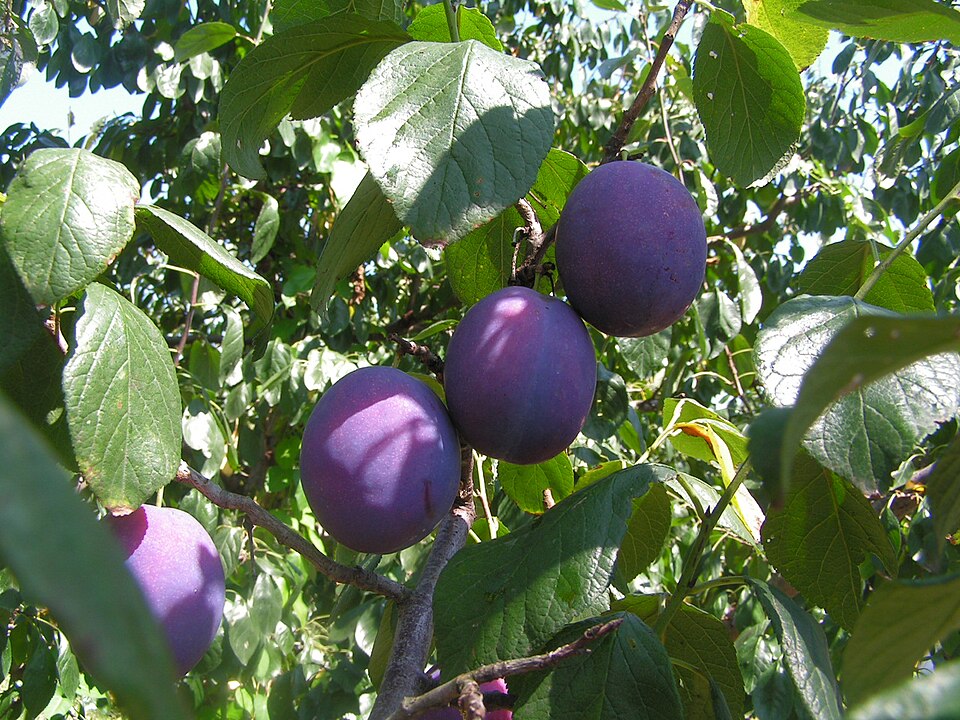
Photo: Wikimedia Commons
Choosing a Variety
When it comes to how to grow european plums, getting the details right makes all the difference.
Many homeowners find that how to grow european plums is easier than they expected once they know the basics.
Stanley is the classic American prune plum, self-fertile, heavy bearing, and excellent dried. Italian and French Improved are old favorites for fresh eating and canning. Green Gage is the connoisseur's plum, small, green-gold, and intensely sweet, though fussier than Stanley.
Most European plums are self-fertile, so one tree suffices, but a second variety can boost crops. Buy grafted trees on semi-dwarf rootstock for manageable size. Avoid Japanese plum varieties if your springs are frosty; Europeans bloom later and dodge more frost. The USDA PLANTS Database lists Prunus domestica with its cultivated forms.
If you want prunes, Stanley is the answer; it dries better than any other common variety and is self-fertile and heavy bearing. For fresh eating, Green Gage is the connoisseur's pick where it succeeds. Choose based on what you will do with the fruit. The Missouri Botanical Garden fruit pages compare European plum varieties by use.
When and How to Plant
Many homeowners find that how to grow european plums is easier than they expected once they know the basics.
The key to how to grow european plums is choosing the right approach for your space and budget.
Plant grafted European plums in early spring as soon as the ground can be worked. Space trees fifteen to twenty feet apart, or twelve feet for semi-dwarfs. Dig a wide hole, set the graft union two inches above the soil line, and water deeply. Stake the young tree for its first year or two.
Choose a sunny site with good air drainage to reduce frost risk on the blossoms. Plums bloom early, so a slope or high spot beats a frost pocket. check your USDA zone planting dates to time your planting week. Mulch with wood chips after planting, keeping mulch away from the trunk. The Old Farmer's Almanac fruit-tree guides cover planting depth and staking.
Plums establish quickly, so stake only until the roots anchor, usually one season. Leaving stakes on for years rubs bark wounds and weakens the trunk. Remove ties in fall and the stake the following spring if the tree stands firm. The Gardenia.net tree-planting guides give the same one-season staking rule.
Soil and Sun
The key to how to grow european plums is choosing the right approach for your space and budget.
With a little planning, how to grow european plums can fit even a busy schedule.
European plums want full sun and well-drained loam. They tolerate a range of soils better than cherries do, but waterlogged ground still invites root disease. Six to eight hours of direct sun gives the sweetest fruit.
Work compost into the planting area and aim for a near-neutral pH. Plums are fairly tolerant of clay as long as water drains. Avoid low spots where cold air and water collect. The University of Minnesota Extension lists plums among the hardiest stone fruits for northern orchards.
Watering and Feeding
With a little planning, how to grow european plums can fit even a busy schedule.
Before you start, it helps to understand how how to grow european plums works in real homes.
Water deeply at planting and through the first season. Established plums need moderate water, with deep soakings during dry spells while the fruit is sizing. Consistent water in early summer prevents small, shriveled fruit.
Feed young trees lightly in spring with a balanced fertilizer. Mature trees in decent soil need little beyond compost mulch. Too much nitrogen makes soft, disease-prone growth. If the tree crops heavily and grows steadily, it needs nothing more. The Clemson HGIC stone-fruit pages give the same restrained approach.
Care Through the Season
Before you start, it helps to understand how how to grow european plums works in real homes.
A good plan for how to grow european plums saves time, money, and frustration.
Prune European plums to an open center in late winter, removing dead, crossing, and overly vigorous wood. Thin the young fruitlets to two to three inches apart in early summer; plums over-set badly, and unthinned trees produce masses of small fruit and risk breaking limbs under the load. Thinning feels brutal and is absolutely necessary.
Watch for plum curculio, a weevil that scars young fruit with crescent cuts; clean up fallen fruit to break its cycle. Brown rot attacks ripening fruit in wet weather; thin the canopy for air flow. Black knot shows as ugly black swellings on branches; prune them out well below the swelling and destroy the wood, since it spreads. american persimmons nearby share some of the same pests. The Clemson Cooperative Extension home-orchard guides detail organic controls.
Each winter, inspect every branch for black knot swellings and prune them out, since one missed knot seeds next year's infections. Burn or bag the prunings; do not compost them. This annual inspection is the single best black knot control. The UF IFAS Gardening Solutions orchard disease pages describe the sanitation routine.
Harvest
A good plan for how to grow european plums saves time, money, and frustration.
For most people, how to grow european plums comes down to a few smart choices.
Expect fruit three to five years after planting. Pick when the fruit yields slightly to pressure and shows its waxy natural bloom. Taste is the test; European plums for fresh eating should be sweet and rich, not tart. They also dry into prunes: halve, pit, and dry until leathery.
Harvest over a week or two as fruits ripen. Handle gently to avoid bruising. Refrigerate fresh plums for a couple of weeks, or freeze halved and pitted for winter baking. A mature tree can produce several bushels in a good year. The USDA National Agricultural Library hosts home fruit drying references.
Troubleshooting
For most people, how to grow european plums comes down to a few smart choices.
If you are new to how to grow european plums, start with the simplest option and build from there.
Masses of tiny fruit mean you skipped thinning. Thin to two to three inches apart next season, and prop or thin overloaded limbs now. Broken limbs under fruit load are common on unthinned trees; prune out the damage cleanly.
Black knot spreads fast if ignored. Inspect branches each winter and cut out every swelling, burning or bagging the wood. Brown rot in wet summers needs air flow and sanitation; remove mummified fruit hanging on the tree. Poor fruit set in warm-winter regions means insufficient chill hours; European plums need several hundred, and there is no fix except choosing lower-chill fruits. Gummosis oozing from the trunk often follows injury or borers; keep the trunk healthy and weed-free.
Thinning: The Job Nobody Wants to Do
If you are new to how to grow european plums, start with the simplest option and build from there.
When it comes to how to grow european plums, getting the details right makes all the difference.
Thinning plum fruitlets feels wrong, and it is the most important thing you will do for the crop. In early summer, when the fruitlets are marble-sized, remove enough so the remaining fruits sit two to three inches apart. On a heavy-setting tree like Stanley, this means removing more than half the young fruit. It hurts. Do it anyway.
The payoff is full-size, sweet plums instead of masses of small, tart ones, plus branches that do not snap under the load. Unthinned trees also tend toward biennial bearing, cropping heavily one year and barely the next; thinning evens the cycle. Work through the tree systematically, branch by branch, rather than eyeballing it. The first time takes an hour on a young tree; experienced growers thin as they walk the orchard. Your back will ache and your harvest will be superb. The Old Farmer's Almanac orchard calendars place thinning in the early-summer task list, right when the fruitlets size up.
Dealing with Plum Curculio
When it comes to how to grow european plums, getting the details right makes all the difference.
Many homeowners find that how to grow european plums is easier than they expected once they know the basics.
Plum curculio is the small weevil responsible for the crescent-shaped scars on young plums, and it is the most common reason home plum crops disappoint. The adult lays eggs in the fruitlets in spring; the larvae feed inside, and damaged fruits drop early. A bad infestation can ruin most of the crop.
Control starts with sanitation. Pick up and destroy every fallen fruitlet through spring and early summer, since the larvae develop inside fallen fruit. Do not compost them; bag and trash them or feed them to chickens. This single habit breaks the weevil's life cycle more effectively than anything else.
For heavy pressure, shake the tree in the morning onto a tarp and destroy the weevils that drop; they play dead when disturbed, which makes them easy to collect. Some growers spray kaolin clay, which coats the fruit and deters egg-laying, reapplying after rain. Keep the area under the tree clean and mowed, since the weevils overwinter in debris. With consistent sanitation, curculio damage drops to a tolerable level, and the thinned, clean crop that remains is superb.
European plums are among the most rewarding orchard trees for home growers. A self-fertile variety like Stanley, a sunny well-drained site, ruthless thinning, and watchful pruning for black knot: that is the program. In a few years you will be picking sweet plums for pies, jam, and prunes by the bucket. Few trees give this much food for this little fuss.
References
University of Minnesota Extension. (n.d.). Growing plums in home gardens. https://extension.umn.edu/
Clemson Cooperative Extension. (n.d.). HGIC: Plums. https://hgic.clemson.edu/
USDA National Agricultural Library. (n.d.). Home fruit drying. https://www.nal.usda.gov/
Old Farmer's Almanac. (n.d.). Growing plums: planting guide. https://www.almanac.com/
Was this guide helpful?

About My Garden US
The My Garden US editorial team writes practical, in-depth home and garden guides for American homeowners — tested advice, no fluff.
You May Also Like
How to Grow Angelica: A Bold Herb Guide
October 15, 2026 1 views
Garlic Bulbs Planting: Where to Buy USA Seed Garlic and How to Grow It
April 7, 2026 9 views
Heirloom Vegetable Seeds Reviews Buying Guide USA
June 10, 2026 3 views