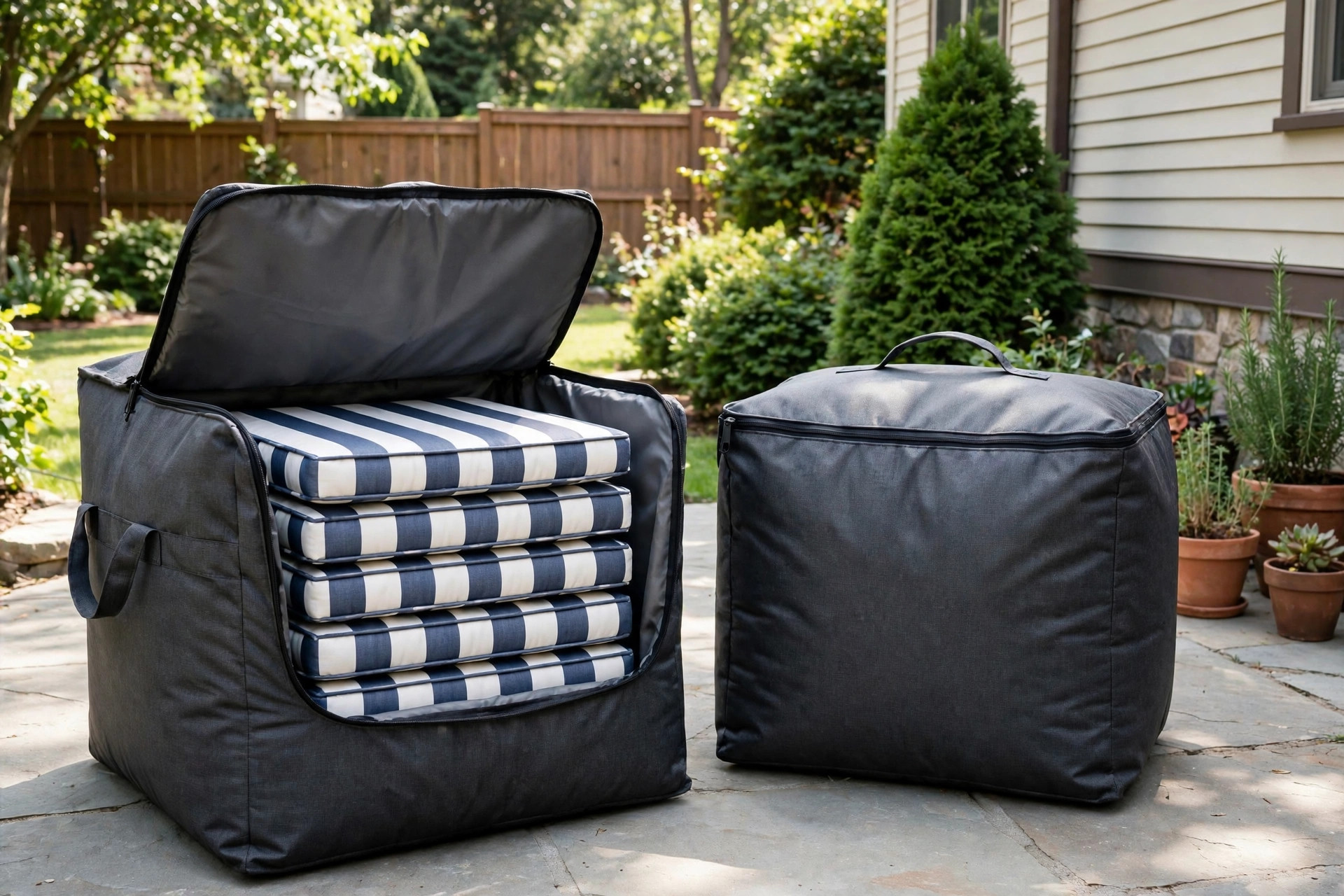
This patio cushion storage bags reviews and buying guide covers everything you need to know before you buy. Patio cushions cost real money. A good set of chair and lounge cushions can run into hundreds of dollars. Rain, sun, dust, and mildew can ruin them in one bad season. A storage bag built for this job keeps your cushions safe between uses. It also saves you the trouble of dragging cushions in and out of the house every time clouds roll in. This guide looks at the key features, the main types, the price ranges, and the upkeep steps. By the end, you will know exactly what to buy for your home.
Why Patio Cushion Storage Matters
Outdoor cushions live a hard life. The sun fades their fabric. Rain soaks their foam. Morning dew seeps into every seam. Once moisture gets deep into a cushion, mildew follows. Mildew stains are hard to remove, and the smell can linger for months.
A storage bag is a simple shield against all of this. You slip the cushions inside, pull the zipper, and the weather stays out. This matters most in regions with wet springs, humid summers, or long winters. Readers looking at best patio cushion storage bags for florida homes know how fast mildew can take hold in a humid climate.
Storage also saves time. Without a bag, you may stack cushions on the porch or in the garage. They pick up dust, bugs, and grease from the car. A dedicated bag gives them a clean, sealed home. When guests arrive, you unzip and set up in minutes. This small habit can add years to the life of your cushions.
Think of the math. A new cushion set can cost 200 to 500 dollars. A quality storage bag often costs 25 to 60 dollars. If the bag adds even two extra years of life to the cushions, it has paid for itself many times over.
What to Look For When Choosing a Bag: Patio Cushion Storage Bags Reviews and Buying Guide
Weatherproof Fabric
The fabric is the heart of the bag. Look for heavy duty polyester or vinyl coated material. Many brands use 600D polyester, a thick weave that shrugs off rain. The D number stands for denier, which measures thread thickness. A higher number means a tougher fabric.
Water resistance should be more than a thin spray coating. Check that the inside of the fabric feels sealed or rubberized. Some bags add a waterproof coating on the inner face. Reviews on sites like Wayfair often note how bags held up after a full winter outside.
Seams and Zippers
Seams are the weak point of any bag. Taped or heat sealed seams keep water from wicking through stitch holes. The zipper matters too. A good bag uses a heavy duty zipper with a flap that folds over it. This flap sheds rain away from the teeth. Avoid small, flimsy zippers. They are the first part to fail.
Size and Capacity
Measure your cushions before you shop. A common bag size holds two to three chair cushions. Large bags hold a full lounge set. It is better to buy a bag that is slightly roomy. Cramming cushions in tight strains the zipper and can wrinkle the fabric. Some buyers use a tape measure and write down the length, width, and height of their largest cushion. This takes two minutes and prevents a return.
Handles and Carry Options
Look for sturdy handles on the top and sides. Some bags add backpack style straps or shoulder straps. These help when you carry a full bag across the yard to the shed. Reinforced stitching around the handle anchors keeps them from tearing under load. A full bag of wet weather cushions can weigh 30 pounds or more.
Breathability and Ventilation
A sealed bag can trap damp air inside. A few small vents or a breathable panel can help. Make sure vents face downward or have flaps so rain cannot enter. If you store cushions that are slightly damp, vents reduce the chance of mildew. Many Container Store listings describe how vented designs perform in humid garages.
Types of Patio Cushion Storage Bags
Standard Rectangular Bags
These are the most common. They look like large duffel bags. They come in many sizes. Most have one big zippered opening along the top. Prices start around 25 dollars. They suit chair cushions, bench pads, and small throw pillows. The simple shape makes them easy to stack on a garage shelf.
Coffin Style Bags
These bags have a rigid or semi rigid frame. The shape holds its form even when empty. They work well for long bench cushions and chaise lounge pads. The frame keeps the bag from sagging. Prices run 40 to 70 dollars. Retailers such as Amazon carry many frame style options with hundreds of buyer reviews.
Vertical Standing Bags
Tall and narrow, these bags stand upright like a closet. They suit deep seat cushions and back pillows. The standing shape saves floor space in a shed. Some models include a small zippered front pocket for pillows. Check the base for reinforced panels. A weak base will buckle under weight.
Multi Piece Sets
Some sellers offer two or three bags in one set. This is useful if you have a full dining set plus a lounge set. Sets often cost less per bag than buying alone. Outdoor living brands like Frontgate and Article sell coordinated storage lines that match their furniture collections.
Budget Tarp Style Covers
These are thin covers, more sack than bag. They cost 10 to 20 dollars. They keep dust off but offer little real water protection. They can work for short term storage under a covered patio. They are not a good choice for open decks or long winters. This guide treats them as a stopgap, not a real storage solution.
Cost and Price Ranges
Patio cushion storage bags sit in a modest price band. Most quality bags sell between 25 and 70 dollars. Large or framed models can reach 90 dollars.
Budget bags under 25 dollars often use thin fabric and small zippers. They may last one season. Mid range bags from 30 to 50 dollars usually offer 600D fabric, sealed seams, and strong handles. This is the sweet spot for most buyers. Premium bags over 60 dollars add rigid frames, thicker coatings, and longer warranties.
Prices shift with the season. Late summer and early fall bring sales as stores clear outdoor stock. Big home retailers like Home Depot and Lowe’s often discount outdoor storage items after Labor Day. If you can wait, you can save 20 to 40 percent.
Shipping matters too. Large bags are bulky. Check whether the seller ships free. For readers planning a bigger outdoor setup, our guide to rolling storage carts reviews and buying guide covers mobile storage options for the shed and garage as well.
Watch out for prices that seem too low. A 12 dollar bag for a full cushion set will fail fast. The zipper will split or the seams will leak. Spend a little more once rather than buying twice.
Care and Upkeep of Your Bags and Cushions
Cleaning the Bag
Wipe the outside of the bag with a damp cloth and mild soap. Rinse with a hose on a gentle setting. Let it air dry fully in the sun. Never put a storage bag in a washing machine. The spin cycle can crack waterproof coatings. Check the care tag that comes sewn into the seam. Most makers print simple steps there.
Drying Cushions Before Storage
This is the most important habit. Always let cushions dry in the sun before bagging them. Even a cushion that feels dry on top can hold dampness inside the foam. Stand cushions upright for an hour or two on a sunny day. This airing step does more to prevent mildew than any bag feature. Home care writers at The Spruce stress this point in almost every outdoor storage article.
Seasonal Storage Routine
At the end of the season, brush off loose dirt and leaves. Spot clean stains with mild soap. Let everything dry fully. Place the cushions in the bag. Leave the zipper cracked for a day in a dry spot, then close it fully. Store the bag off the ground on a shelf or pallet. Concrete floors can sweat and pass moisture upward.
Check the bag once mid winter. Open it, let fresh air in for an hour, and look for any damp smell. This five minute check can catch a problem before it spreads.
Repairs
Small tears can be patched with fabric repair tape made for tents and awnings. Clean the area, press the tape on both sides, and it will hold. A stuck zipper often just needs cleaning. Use an old toothbrush to clear grit from the teeth, then rub a candle stub along the track. If a handle tears at the anchor, a shoe repair shop can re stitch it for a few dollars. Brands that make outdoor furniture, like Polywood, often sell care products that work on storage bags too.
Safety Tips
Keep storage bags away from heat sources. Do not place them near a grill, fire pit, or patio heater. Most fabrics are not flame proof. A stray spark can melt a hole in minutes.
Ventilation matters for health. Never store cushions that are wet enough to drip. Trapped moisture grows mold. Mold spores can trigger allergies. If a bag smells musty when you open it, air the cushions out before use.
Mind the weight. A large bag stuffed with waterlogged cushions can weigh more than expected. Lift with your legs. If the bag is too heavy, take cushions out two at a time.
Keep bags out of reach of small children. A large bag can be a hiding place. Teach children not to climb inside. This is the same common sense that applies to any large bag or chest in the home.
Frequently Asked Questions
What size storage bag do I need for my patio cushions?
Measure your largest cushion. Add two inches to each side for easy loading. A standard chair cushion bag fits cushions around 24 by 24 inches. A lounge bag fits pads up to 60 inches long. When in doubt, choose the larger size. A roomy bag is easier to use and lasts longer.
Can I leave storage bags outside all winter?
Yes, if the bag is rated for it. Look for UV resistant fabric and sealed seams. Place the bag where water will not pool on top. Under a covered patio or deck is best. Check it once or twice during the season. Cheap thin bags may crack in freezing weather, so buy a mid range bag or better for outdoor winter storage.
How do I stop mildew in my cushion storage bag?
Dry the cushions fully before storing them. This is the single best step. Store the bag off the ground in a dry spot. Crack the bag open for a few hours once a month during the off season. If your climate is very humid, a small moisture absorber packet inside the bag can help. Do not rely on the bag alone to fix wet cushions.
Are expensive patio cushion storage bags worth it?
For most homes, the mid range is enough. Bags from 30 to 50 dollars with 600D fabric and sealed seams do the job well. Premium bags make sense if you store bags outdoors year round or if your cushion set is costly. A 90 dollar bag protecting a 600 dollar cushion set is a sound buy.
How many cushions fit in one storage bag?
It depends on the bag and the cushions. A medium bag holds two to four dining chair cushions. A large bag holds a full bench set or two chaise pads. Do not force extra cushions in. An overstuffed bag strains the zipper and lets water in through the stressed seams.
Where is the best place to store the bag in the off season?
A dry garage, shed, or basement works well. Keep it off the floor on a shelf or pallet. Avoid spots near a water heater or washing machine where leaks can happen. If you must store it outside, pick a covered spot and check it through the winter. For indoor organization ideas, see our wicker storage baskets reviews and buying guide.
A Final Word
Patio cushion storage bags are a small buy that guards a larger one. Pick a bag with thick fabric, sealed seams, a strong zipper, and a size that fits your cushions with room to spare. Dry the cushions before you pack them. Check the bag once during the off season. These simple steps will keep your cushions fresh and ready for many summers to come.
References
Amazon. (n.d.). Online shopping. https://www.amazon.com Article. (n.d.). Modern furniture. https://www.article.com Frontgate. (n.d.). Outdoor furniture and decor. https://www.frontgate.com Lowe’s. (n.d.). Home improvement products. https://www.lowes.com Polywood. (n.d.). Outdoor furniture. https://www.polywood.com The Container Store. (n.d.). Storage and organization products. https://www.containerstore.com The Home Depot. (n.d.). Home improvement products. https://www.homedepot.com The Spruce. (n.d.). Home and garden advice. https://www.thespruce.com Wayfair. (n.d.). Furniture and home goods. https://www.wayfair.com
Was this guide helpful?

About Emily Rodriguez
The My Garden US editorial team writes practical, in-depth home and garden guides for American homeowners — tested advice, no fluff.