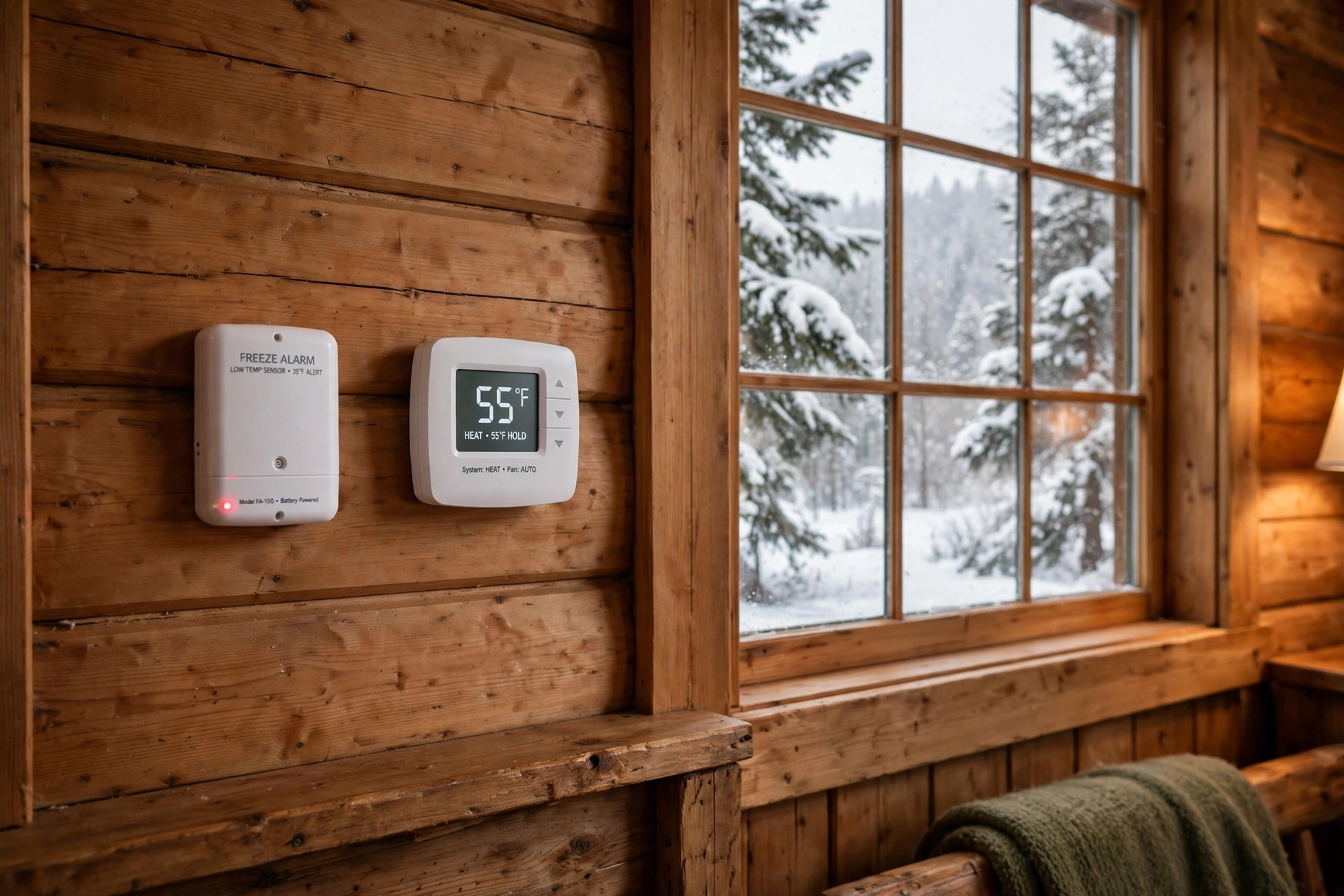

A freeze alarm for vacation home reviews USA are what many owners read when they own a cabin, a lake house, or a second home that sits empty for weeks. A freeze alarm is a small device that watches the temperature inside your home. When the temperature drops below a level you set, it calls you, texts you, or sends an app alert. That early warning can save you from a burst pipe and a flooded home.
This guide explains how freeze alarms work, what the main types are, what to look for in reviews, what they cost, and how to keep them running.
Why It Matters
A vacant home in winter faces a real threat. Pipes run through walls, under floors, and through crawl spaces. When indoor heat fails, water inside those pipes can freeze. Ice takes up more space than water. The pressure builds. The pipe splits. Then, when the ice melts, water pours out. This can go on for days before anyone notices.
A burst pipe in an empty vacation home is one of the most costly home insurance claims. Repairs can reach thousands of dollars. Flooring, drywall, cabinets, and furniture may all need work.
A freeze alarm does not heat the home. It does not fix a broken furnace. It buys time. If the heat fails at midnight, the alarm can wake you at two in the morning. You can then call a neighbor, a caretaker, or a plumber before the pipes freeze solid. Many owners pair a freeze alarm with a water leak detector for full protection. Others add a smart smoke detector so the home is watched for fire as well as cold.
For cabins far from town, the value grows. A plumber may be an hour away. A caretaker may visit only once a week. In those cases, an early alert can be the difference between a simple furnace restart and a full flood. Sites like Consumer Reports publish buyer guidance on home safety devices.
How Freeze Alarms Work: Freeze Alarm for Vacation Home Reviews Usa
The idea is simple. A temperature sensor sits inside your vacation home. You set a low limit, often between 40 and 50 degrees Fahrenheit. If the indoor temperature falls below that limit, the alarm sounds the alert.
Temperature Sensors
Most freeze alarms use a built-in sensor. Some models accept a remote sensor on a wire. You can place the remote probe near the coldest part of the house, such as a crawl space or a room above an unheated basement. This helps catch cold spots before the main living area feels the chill.
A good sensor is steady and true. It should read within one or two degrees of a known good thermometer. Reviews on PCMag and The Verge often test sensor accuracy, so they are useful stops when you compare models.
Alerts and Monitoring
The alert is the heart of the device. Common alert paths include a phone call, a text message, and a push notice from an app. Some models call several numbers in a row until a person answers.
Higher end models add power outage alerts. If the power fails, the heat may fail soon after. An alert that says the power is out tells you to act before the house even cools down. Some units also report high temperature and humidity. The U.S. Consumer Product Safety Commission at cpsc.gov offers general guidance on home safety devices and recalls, which is worth checking before you buy any alarm.
Types of Freeze Alarms
Reviews in the USA group freeze alarms into a few main types. Each has strengths and weak points. Your choice depends on where the vacation home sits and what services reach it.
Cellular Freeze Alarms
Cellular models use the cell phone network. They do not need Wi-Fi, a landline, or internet service at the home. This makes them a strong pick for remote cabins in the woods or at the lake. You pay a monthly or yearly plan for the cell service, much like a phone bill.
The main risk is signal. If the cabin has no cell coverage, a cellular alarm cannot send alerts. Check coverage with a phone visit first. Battery life on these units is often long, sometimes a year or more, since they sleep between check-ins.
Wi-Fi Freeze Alarms
Wi-Fi models connect to the home internet and send alerts through an app. They often have no monthly fee beyond your internet bill. They may also tie into a smart home system, so you can see temperature graphs on your phone from anywhere.
The weak point is the internet itself. If the router loses power, or the internet service goes down, the alarm goes quiet. Some models add a battery backup and send a last alert before they die. If your vacation home has steady internet and power, a Wi-Fi alarm is a fine low cost choice. Tech reviewers at CNET often note how well these models hold a connection in real homes.
Landline and Battery Models
Older designs call your phone over a landline. Many vacation homes no longer keep a landline, so these models are fading. Where a landline exists, they are simple and steady, needing no internet and no cell signal.
Battery only models are even simpler. They sound a loud siren on site but cannot call you. For a home far from other houses, they offer little. Most modern reviews favor models that reach your phone no matter where you are.
Whole Home Monitoring Systems
Some owners skip a stand alone freeze alarm and add temperature sensors to a full security system. Companies such as SimpliSafe and ADT offer sensors that watch for low temperature as part of a monitored plan. A Google smart thermostat can also send low temperature alerts through its app.
These systems cost more, but they watch for many threats at once: break-ins, fire, carbon monoxide, and freezing pipes. For a high value vacation home, that wide net may be worth the monthly fee.
What to Look For When You Compare Reviews
Freeze alarm reviews in the USA tend to test the same points. Use this list as you read them.
First, look at the alert method. Does it call, text, or use an app? Does it call more than one number? A model that calls five numbers in order is safer than one that sends a single text.
Second, check the temperature range and the low limit setting. You want to set the alert well above freezing, so you have time to act. A limit of 45 degrees is common. Models that let you set any value give you more control.
Third, look for power and connection backup. Does the unit keep working when the power fails? Does it warn you about the outage? For Wi-Fi models, does it alert you when it loses its connection? A silent alarm is no alarm at all.
Fourth, read about false alarms. Cheap sensors can drift. A unit that cries wolf will train you to ignore it. Reviews on PCMag often report on alert reliability over weeks of testing.
Fifth, study the ongoing cost. Some units are buy once with no fee. Others need a cell plan or a cloud subscription. Add up three years of cost before you compare prices.
Sixth, look at the app and the setup. A clear app with simple menus matters. You may set the unit up once a year, and you do not want to fight with it each fall.
Seventh, check the battery life and the power source. A unit that plugs into the wall with a battery backup is ideal. Pure battery units need a fresh battery each season. Mark your calendar.
Eighth, look for extra sensors. Water leak detection and humidity sensing add value. A single unit that watches for freeze, flood, and power loss covers the three main winter threats to an empty home.
Cost and Price
Stand alone freeze alarms in the USA usually cost between 50 and 200 dollars. Cellular models sit at the high end because they include cell radios. Wi-Fi models are often cheaper, with many good options under 100 dollars.
Monthly costs add up. Cellular plans for freeze alarms often run 10 to 20 dollars per month, or 100 to 200 dollars per year. Wi-Fi models usually have no monthly fee, though a few charge for cloud history or extra features.
Full security systems with temperature sensors cost more. The hardware can run several hundred dollars, and monitoring plans often run 20 to 60 dollars per month. That said, you get break-in and fire coverage in the same bill, which can lower your insurance cost. Ask your insurer about discounts for monitored alarms. Ring sells add-on sensors that may fit an existing setup without a new contract.
When you weigh cost, weigh risk too. A single burst pipe claim often costs more than ten years of alarm service. For a vacation home you visit only in summer, the alarm is cheap insurance.
Care and Upkeep
A freeze alarm only helps if it works when you need it. A short yearly routine keeps it ready.
Test the alarm each fall before the cold arrives. Lower the set point or cool the sensor, and confirm that the alert reaches your phone. Test every phone number on the call list. People change numbers. Old numbers on the list are a silent failure.
Replace batteries on schedule. Do not wait for a low battery chirp that no one hears in an empty house. Change them each fall when you close up the cabin.
Keep the firmware and the app up to date. Makers fix bugs and improve alerts through updates. An old app may miss a notice that a new one would catch.
Place the unit with care. Do not set it next to a heat vent or in direct sun. Both can fool the sensor into reading warm while the rest of the house cools. A central interior wall gives the truest reading. If you use a remote probe, put it in the coldest room you worry about.
Tell your caretaker or a trusted neighbor about the alarm. Give them a key or a lockbox code. An alert is only useful if someone can get inside to act on it. Leave a short written note near the unit with your phone number and the plumber’s number.
Safety
Freeze alarms are safety tools, and safety rules apply to them as well.
Do not rely on the alarm alone. Keep the heat set to a safe minimum, often 55 degrees, even when the house is empty. Shut off the main water valve and drain the pipes if the home will sit empty through deep winter and no heat is needed.
Check for product recalls. The U.S. Consumer Product Safety Commission lists recalls of home safety devices at cpsc.gov. A quick search before you buy can save trouble later.
Use safe power practices. Do not run the alarm off a frayed cord or an overloaded outlet. If you use a cellular model with a plug-in supply, keep the supply dry and off the floor where water could reach it.
Remember that no alarm stops a pipe from freezing. The alarm buys time. Your plan for that time matters most. Know who you will call. Know how fast they can reach the house. Keep their numbers in the alarm and in your phone. For extra eyes on the property, a solar security camera lets you check the exterior from your phone while the sensors watch the climate inside.
Frequently Asked Questions
How cold should I set the freeze alarm?
Most owners set the low limit between 40 and 50 degrees Fahrenheit. A setting of 45 degrees is common. This gives you hours, sometimes a full day, to act before pipes freeze. Do not set it at 32 degrees. By then the danger is already present.
Do freeze alarms work without Wi-Fi?
Yes. Cellular freeze alarms use the cell network and need no Wi-Fi or internet. Landline models use a phone line. Only Wi-Fi models need internet at the home. For a cabin with no internet, a cellular model is the usual pick.
Is there a monthly fee for a freeze alarm?
It depends on the type. Wi-Fi models often have no monthly fee. Cellular models need a service plan, often 10 to 20 dollars per month or a yearly rate. Full security systems with temperature sensors carry a monitoring fee. Check reviews for the true long term cost before you buy.
Can a freeze alarm also detect water leaks?
Many modern units can. Some include a water sensor probe that you place on the floor near a water heater or under a sink. If your main fear is a burst pipe, a combined freeze and leak alarm covers both the warning and the damage.
Will a freeze alarm lower my home insurance?
It may. Some insurers offer discounts for monitored alarms and for leak detection devices. The discount varies by state and by company. Call your agent and ask what proof they need.
What happens if the power goes out?
Good freeze alarms plan for this. Many plug-in units carry a battery backup and send a power loss alert before the house cools. Battery only cellular units keep working through an outage as long as the battery holds.
A Final Word
A freeze alarm is a small cost for real peace of mind. It watches your vacation home through the cold months and calls you when the heat fails. Read the reviews, pick the alert type that fits your home, test the unit each fall, and keep a response plan ready. With those steps in place, you can enjoy the winter knowing your empty house has a voice.
References
ADT. (n.d.). Home security and automation. https://www.adt.com CNET. (n.d.). Technology news and reviews. https://www.cnet.com Consumer Reports. (n.d.). Product reviews and ratings. https://www.consumerreports.org Google Store. (n.d.). Smart home devices. https://store.google.com PCMag. (n.d.). Technology product reviews. https://www.pcmag.com Ring. (n.d.). Smart home security devices. https://www.ring.com SimpliSafe. (n.d.). Home security systems. https://www.simplisafe.com The Verge. (n.d.). Technology news and reviews. https://www.theverge.com U.S. Consumer Product Safety Commission. (n.d.). Product safety information. https://www.cpsc.gov
Was this guide helpful?

About Robert Taylor
The My Garden US editorial team writes practical, in-depth home and garden guides for American homeowners — tested advice, no fluff.
You May Also Like
Motion Sensor Flood Light Reviews 2026 USA: What Really Works
May 15, 2026 0 views
Interconnected Smoke Alarms Code Requirements USA
March 10, 2026 0 views
Smart Padlock for Gate Reviews 2026 USA: A Plain Guide to Buying the Right One
April 19, 2026 0 views