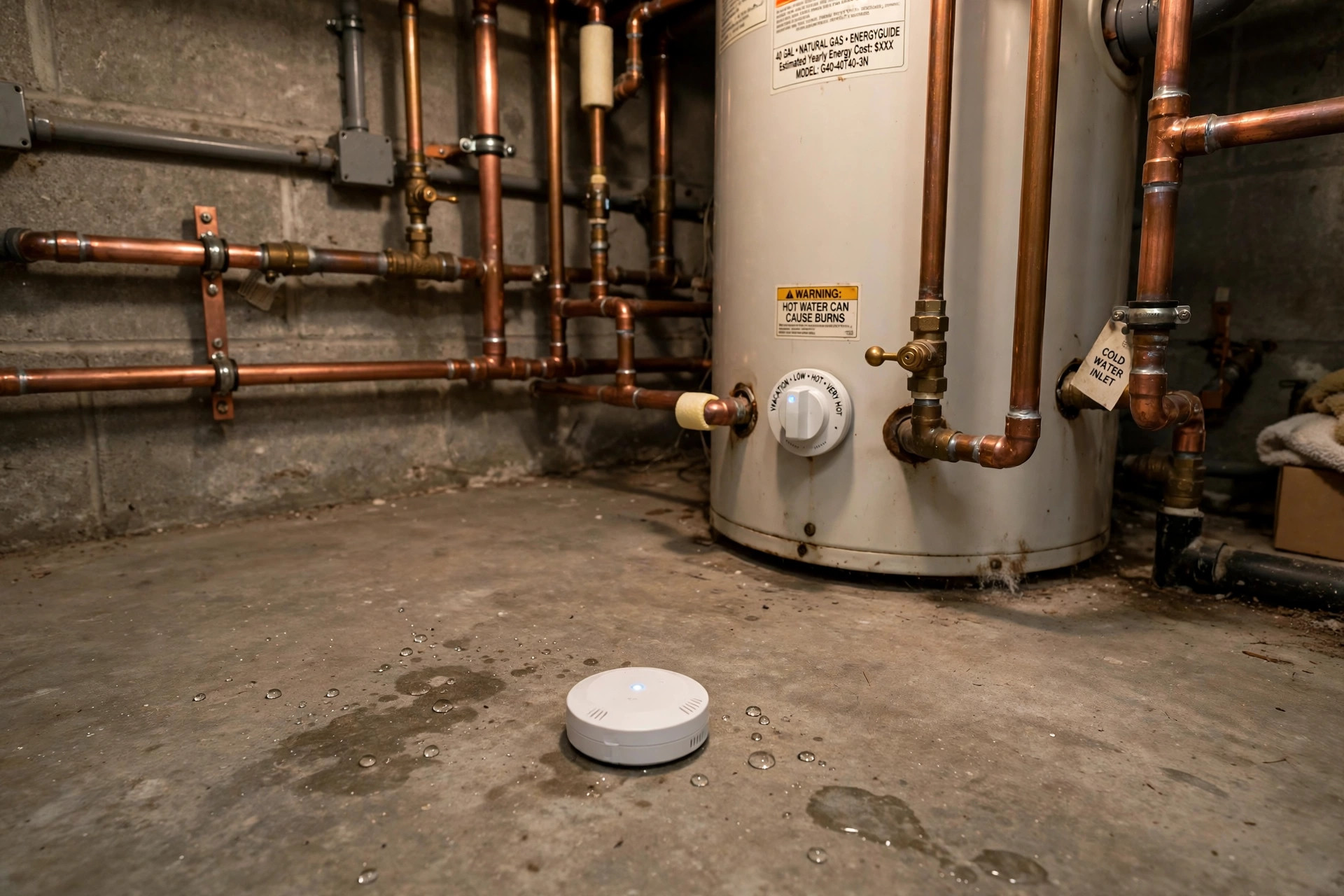

Water damage is one of the most common and most costly problems an American home can face. A slow leak under a sink can rot a cabinet for months before anyone notices. A burst pipe in the wall can flood a basement in an hour. The bill for such damage often runs into the thousands of dollars. This is why smart water leak detector reviews 2026 usa have become one of the most read topics among home owners. A small device, no larger than a hockey puck, can sit near a water heater or under a sink and warn you the moment it feels water. Many models now connect to your phone and send an alert even when you are miles from home. Some go further and shut off the main water valve by themselves.
This guide walks through what the reviews say in 2026, what to look for when you shop, the types on the market, what they cost, and how to keep them working. The advice below comes from the main points that keep coming back in consumer tests and home guides.
Why a Smart Leak Detector Matters
Most leaks start small. A supply line to a toilet drips. A washing machine hose weakens. A sump pump fails during a storm. By the time a person sees or hears the problem, the damage may already be done. Floorboards swell, drywall softens, and mold takes hold. Consumer Reports notes that water damage claims remain among the most frequent home insurance claims, and many begin with a leak that went unseen for days.
A smart leak detector changes that math. It watches while you sleep and while you travel. The moment water touches its sensors, it sounds a loud alarm and pushes a message to your phone. Some whole-home systems can also close a valve on your main water line, which stops the flow in seconds. Reviews this year give the highest marks to models that do three things well: detect water fast, send alerts you cannot miss, and keep working during a power cut or a dead internet connection.
The Consumer Product Safety Commission also reminds home owners that water and electrical equipment are a dangerous mix. A leak near a furnace or a laundry outlet can create a shock hazard. Early warning is not just about saving money on repairs. It is about safety as well.
What to Look for When You Choose One: Smart Water Leak Detector Reviews 2026 Usa
Reviews in 2026 point to the same short list of features again and again. Before you buy, check each one.
Detection method
Most detectors use small metal probes on the bottom of the unit. When water bridges the probes, the alarm sounds. Higher-rated models add a cable probe, a thin cord that runs along the floor and senses water anywhere along its length. This is useful along walls and under long runs of pipe. A few top models also sense freezing air, which warns you that pipes may burst soon. Freeze warning is a big plus in northern states.
Alerts
The best units use more than one way to reach you. They beep loudly in the room, send a push notice to your phone, and in some cases send a text or an email. Models tied to a home hub can also flash lights or speak through a smart speaker. Look for reviews that test alert speed. A notice that arrives ten minutes late may be too late.
Power and backup
Most leak detectors run on one or two AA batteries that last one to three years. A few plug into a wall outlet with battery backup. During a storm, when pipes are most likely to burst, the power may fail and the internet may drop. Units with a built-in siren still warn anyone at home even when the network is down. If you travel often, pick a model with cellular backup or a loud local alarm that a neighbor could hear.
Smart home links
Many detectors work with the systems people already own. They pair with voice helpers and with hubs from brands like the one at the Google Store. Some link to a smart water shutoff valve, which closes the main line when a leak is found. Reviews in 2026 favor open systems that play well with several platforms over closed ones that lock you into a single brand.
App quality
The app is where you will live with this device day to day. Good apps let you name each sensor by room, see battery level, run a test, and mute or silence alarms. Weak apps crash, log you out, or bury the alert among ads. The Verge and PCMag both weigh app quality heavily in their smart home ratings.
Build and sensors
A detector that sits in a damp basement must survive damp air without corroding. Stainless probes last longer than bare metal ones. The housing should keep splashes out of the electronics. If the unit goes in a sump pit or a crawl space, check that the maker rates it for damp spots.
Types and Options on the Market
The market in 2026 falls into a few clear groups. Each suits a different home.
Spot detectors. These small discs sit in one place: under a sink, behind a toilet, or next to a water heater. They are cheap, easy to place, and a good first step. Most homes need several. A CNET roundup notes that spot detectors are the best value for renters and for small homes.
Cable probe detectors. These add a long sensing cord to the main unit. You can run the cord along a wall, under a washing machine, or around a sump pit. One unit can guard a whole room. They cost more than spot detectors but cover more ground.
Whole-home valve systems. These pair sensors around the house with a motor that closes your main water valve when a leak is found. This is the gold standard for people who travel or own a second home. The cost is higher, and some need a plumber to fit the valve. But they are the only type that can stop a burst pipe on their own. SimpliSafe and ADT both sell monitored water sensors that tie into wider home protection plans, and reviews often compare stand-alone detectors against these monitored options.
Combination detectors. Some units sense both water and smoke or temperature. A /best-smart-smoke-detector-reviews-2026-usa/ guide can help if you want fewer gadgets on the ceiling and wall. The best carbon monoxide detector reviews 2026 also cover combo alarms for those who want one device to watch for several dangers at once. Reviews rate combo units well when each sensor works as well as a stand-alone one, so check the water sensing scores before you buy.
Ring and other brand sensors. Makers of doorbells and cameras have moved into leak detection. Ring offers a water sensor that fits into its alarm system, so one app guards doors, windows, and pipes together. Reviews praise this for people who already own the brand’s gear, though they note it needs the maker’s hub to work.
Cost and Price
Prices in 2026 run from about twenty dollars for a basic spot detector to more than two hundred dollars for a whole-home valve system. A mid-range smart detector with phone alerts and a loud siren usually costs between thirty and seventy dollars. Cable probe models run higher, often near one hundred dollars.
A shutoff valve adds the most to the bill. The valve motor itself can cost one to four hundred dollars, and a plumber may charge another one to three hundred to fit it. Some insurance companies give a discount on home insurance when you install a monitored leak system, which can pay back part of the cost over time. Ask your agent before you buy.
Running costs are low. Batteries last a year or more and cost a few dollars to replace. Most makers charge no monthly fee for basic alerts. A few sell optional monitoring plans that call you or send a crew if an alarm sounds while you are away. The Home Depot lists many models with no fee at all, and its buying guides note which ones need a hub sold separately.
When you compare, count the whole room, not just one device. Three spot detectors at forty dollars each may cost less than one cable probe unit that covers the same space. Reviews that test value always look at coverage per dollar.
Care and Upkeep
A leak detector only helps if it is awake and in place. Good care is simple but must be done on a schedule.
Test each unit every few months. Most have a test button, or you can touch a wet cloth to the probes and wait for the alarm. The app should show the alert within a minute. Replace batteries when the app shows low power, not when the unit goes silent. Once a year, wipe the probes clean. Soap, dust, and mineral scale can coat them and slow the response.
Check that the detector has not moved. Pets, mops, and stored boxes can push a disc away from the spot it guards. A sensor that slid six inches from the water heater is a sensor that will warn you late. If the unit uses Wi-Fi, make sure the signal still reaches it after you move a router or add a new appliance. A cheap plug-in range extender can help in a far basement corner.
Keep the app on your phone updated, and keep your login current. An alert means nothing if the app cannot sign in. Some makers let you add a second contact, so a neighbor or a family member also gets the warning. Set that up before you need it.
Safety
Water near electricity is the main danger. Do not place a detector so close to an outlet or a furnace that you must reach into a wet area to fetch it. If you see standing water near a panel or a wired appliance, stay back and call a professional. Test the alarm with a damp cloth, not by pouring water near live equipment.
Battery safety matters too. Use the battery type the maker lists. Do not mix old and new cells. Keep spare batteries out of reach of children and pets. Button cells in particular are a swallowing hazard, and the Consumer Product Safety Commission keeps strong warnings about them.
If your system includes a shutoff valve, know how to open the valve by hand. In a false alarm, you will want water back on fast. Keep the maker’s help number near the main valve so anyone at home can find it.
Frequently Asked Questions
How many leak detectors does a home need?
Most homes need between three and six. Start with the water heater, the washing machine, and under the kitchen sink. Add one behind each toilet and one near the sump pump if you have one. A /smart-co-detector-with-app-alerts-usa/ buyer often pairs leak sensors with other alarms, so it helps to map the whole house at once rather than buying one piece at a time.
Do smart leak detectors work without Wi-Fi?
They warn in the room with a loud siren even when the network is down, as long as the battery is good. But phone alerts need a connection. Some models use a hub with cellular backup. If you travel, that backup is worth the extra cost.
Can a leak detector stop the water by itself?
Only if it is paired with a shutoff valve. A plain sensor only warns you. Whole-home systems with a motor valve close the main line on their own. Reviews in 2026 rate this as the single most valuable upgrade for people with a vacation home or a basement.
Will these sensors work in a cold crawl space?
Most work down to near freezing, and some send a freeze warning before pipes burst. Check the rated temperature range in the reviews. Units rated only for indoor rooms may fail or give false alarms in an unheated crawl space.
Do I need a plumber to install one?
No, not for spot or cable detectors. You set them on the floor and link them to the app. A shutoff valve on the main line is different. Many makers say a licensed plumber should fit it, and some warranties demand it.
Are there monthly fees?
Most stand-alone detectors charge nothing after the purchase. Optional monitoring plans from alarm companies add a monthly fee, usually as part of a wider security package. Read the fine print before you sign, and note whether the fee covers water alerts or only break-in alarms.
A Short Final Word
A smart water leak detector is a small purchase that guards against one of the biggest bills a home owner can face. The reviews in 2026 agree on the basics: pick sensors with fast, loud alerts and a good app; cover the water heater, the laundry, and the sinks first; and think hard about a shutoff valve if you travel. Test the units, change the batteries, and keep the app signed in. Do that, and a ten-dollar puddle will never get the chance to become a ten-thousand-dollar flood.
Related guides on this site include best video doorbell without subscription usa and ring vs nest doorbell comparison 2026 usa.
References
ADT. (n.d.). Home security and automation. https://www.adt.com CNET. (n.d.). Technology news and reviews. https://www.cnet.com Consumer Reports. (n.d.). Product reviews and ratings. https://www.consumerreports.org Google Store. (n.d.). Smart home devices. https://store.google.com PCMag. (n.d.). Technology product reviews. https://www.pcmag.com Ring. (n.d.). Smart home security devices. https://www.ring.com SimpliSafe. (n.d.). Home security systems. https://www.simplisafe.com The Home Depot. (n.d.). Home improvement products. https://www.homedepot.com The Verge. (n.d.). Technology news and reviews. https://www.theverge.com U.S. Consumer Product Safety Commission. (n.d.). Product safety information. https://www.cpsc.gov
Was this guide helpful?

About James Carter
The My Garden US editorial team writes practical, in-depth home and garden guides for American homeowners — tested advice, no fluff.
You May Also Like

Long Range Driveway Alarm Reviews 2026 USA: What Buyers Should Know
August 28, 2026 0 views
Keyless Entry Door Lock Reviews 2026 USA: A Plain Guide
August 6, 2026 0 views
Home Security Checklist for Vacation: A USA Guide
June 4, 2026 0 views