Few home upgrades bring as much comfort as a new fireplace. A real wood fire takes work, smoke, and ash. Gas needs pipes and vents. Electric fireplaces skip all of that. This smart smart electric fireplaces buying guide will help you choose one that fits your home, your budget, and your daily life.
An electric fireplace uses LED light and a heater to copy the look and warmth of a real fire. A “smart” model adds Wi-Fi or Bluetooth control. You can turn it on from your phone. You can set timers. Some models answer to voice commands. The result is real warmth with modern ease.
Why It Matters
Heat bills rise every winter. Many homes have rooms that never feel warm enough. A basement, a bedroom, or a home office may sit cold while the rest of the house stays warm. An electric fireplace fixes this by adding heat right where you need it.
Unlike a wood stove, an electric model needs no chimney. Unlike gas, it needs no gas line. You plug it in and hang it on the wall or set it in place. Renters can use many models, since most need no changes to the home.
Smart controls add real value. You can warm the living room before you arrive home. You can set the flames to glow without heat on a mild evening. You can shut the unit off from bed if you forgot. These small comforts add up over a cold season.
There is also the look. A fireplace makes a room feel finished. It gives people a place to gather. Even a simple wall unit can change the feel of a bare wall. Design sites like The Spruce show how a fireplace can anchor a room and pull the whole design together.
What “Smart” Means in an Electric Fireplace: Smart Smart Electric Fireplaces Buying Guide
Not every electric fireplace is smart. The word matters, so it helps to know what to expect.
Most smart models connect to your home Wi-Fi. A free app on your phone acts as the remote. From the app you can change flame color, flame brightness, and heat level. You can set daily timers. You can turn the unit off from anywhere.
Some models work with voice assistants. You can say a command and the flames come on. Check the product box for which assistants it supports before you buy.
A few high-end models add extras. They may link to home routines, such as turning on with the evening lights. They may show energy use in the app. These extras are nice, but they are not needed for good heat and good looks.
One note of care: a “smart” label on the box can mean little. Some sellers use the word for any model with a remote. Look for Wi-Fi, Bluetooth, or app control in the specs. If the box lists none of these, the model is likely not truly smart.
How to Choose: What to Look For
Heating Power
Electric fireplaces are rated in watts and BTUs. Most plug-in models run at 1,500 watts, which gives about 5,100 BTUs. That warms a room up to about 400 square feet. That is enough for a living room or a master bedroom.
Measure your room first. A unit that is too small will run all day and still leave you cold. A unit that is too large may cycle on and off and waste power. Match the BTU rating to your room size. The U.S. Environmental Protection Agency offers guidance on efficient home heating that can help you size any heater wisely.
Flame Realism
The flame is the heart of the unit. Cheaper models show flat, repeated flame patterns that can look fake up close. Better models use layered LED light, moving mirrors, or water vapor to make deeper, more natural flames.
Many models let you change flame color. Orange looks classic. Blue or purple suits a modern room. Look for a model with several color and brightness settings. That way you can match your mood and the season.
If you can, watch a video of the model running before you buy. Photos can hide a lot. Moving flames tell the truth about how real the unit looks.
Smart Controls and Ease of Use
Check the app rating in your phone’s app store before you buy. A model with a one-star app will frustrate you daily. Read recent reviews and look for words like “easy to connect” and “works with my phone.”
Make sure the unit also ships with a normal remote or on-unit buttons. Apps update, phones break, and Wi-Fi drops. You should never be stuck with no way to turn the heat off.
Size, Style, and Placement
Measure your wall before you shop. Wall-mounted units come in widths from 30 to 72 inches. A unit that is too wide will crowd the room. One that is too narrow will look lost on a big wall.
Think about viewing height. The center of the flame should sit near eye level when you are seated. That is usually about 40 to 50 inches from the floor. Inserts that go inside an old firebox have fixed heights, so measure that opening too.
Style matters as well. Black glass fronts suit modern rooms. Wood mantels suit classic rooms. Corner units save space in small rooms. Pick a style that matches the furniture you already own.
Types and Options
Wall-Mounted Units
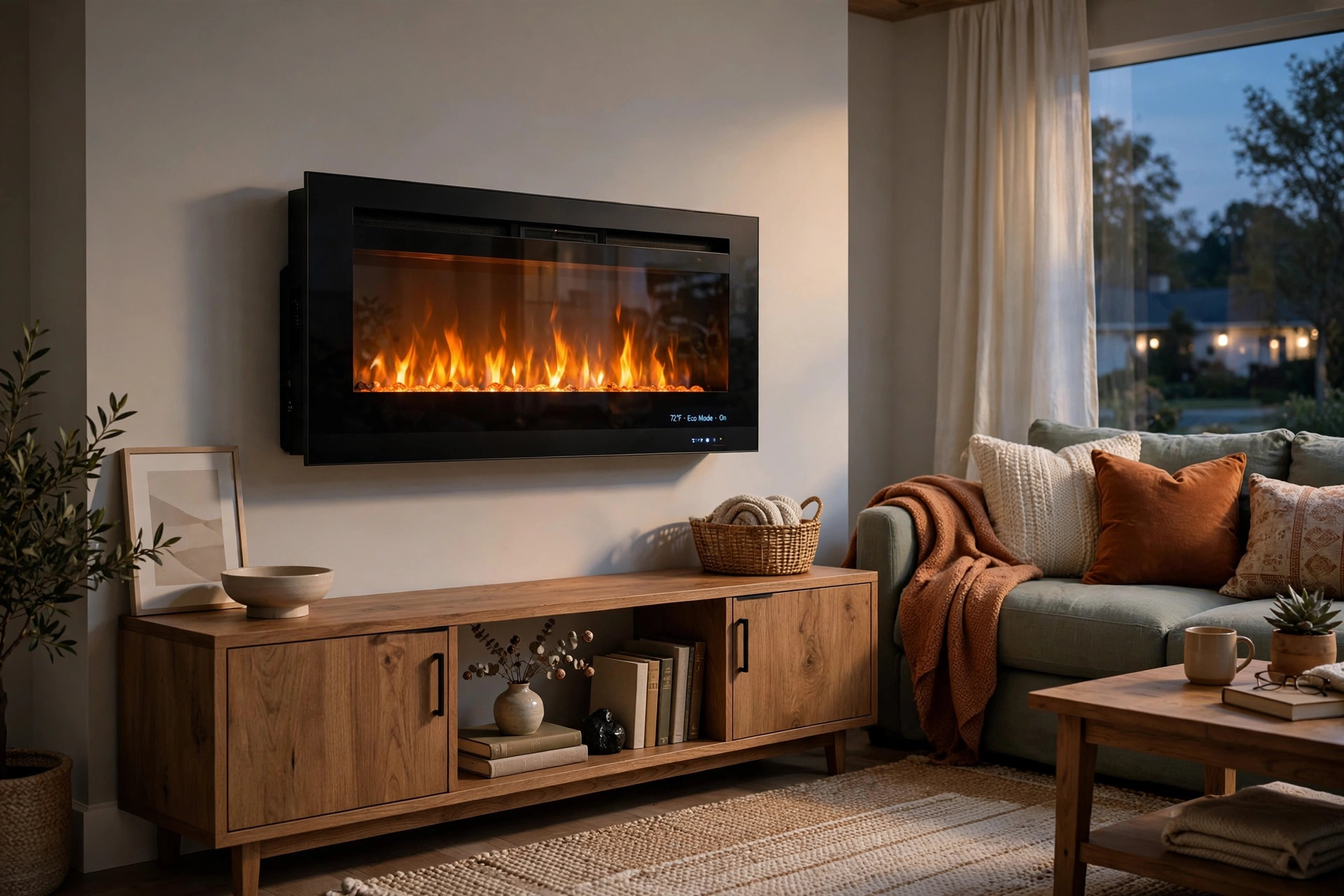
These hang on the wall like a flat TV. They are the most popular smart electric fireplaces. They save floor space and look clean and modern. Most are slim, about 4 to 6 inches deep. They plug into a normal outlet. Prices run from about $200 to $1,500.
Fireplace Inserts
Inserts slide into an existing wood fireplace opening. They give an old, unused firebox new life. Many inserts come with trim kits that hide gaps around the edges. If you own a dead fireplace, this is often the best choice. Expect to pay $300 to $1,200.
Freestanding Stoves and Mantel Packages
Freestanding units stand on the floor and look like small stoves or full mantels. Mantel packages include a wooden surround that looks like built-in furniture. These need no mounting and move with you if you relocate. They cost $250 to $1,800.
Electric Fireplace TV Stands
These combine a media console with a built-in fireplace. They hold a TV up to 65 inches or more and warm the room at the same time. They suit living rooms and family rooms. Prices range from $300 to $1,200. Big retailers like Best Buy and The Home Depot carry wide ranges of these combo units, which makes it easy to compare sizes side by side.
Outdoor-Rated Models
A few brands make electric fireplaces rated for covered patios. These have sealed parts that resist damp air. Never use an indoor-only model outside. Check the rating on the box. Brands such as Napoleon and Heatilator are known for hearth products, and their sites can help you learn which styles suit indoor and outdoor use.
Cost and Price
Smart electric fireplaces cost more than basic models, but the gap is small. Expect these rough ranges:
– Basic plug-in models: $150 to $400 – Smart wall-mounted models: $250 to $1,500 – Inserts with smart features: $350 to $1,400 – Full mantel packages: $400 to $2,000
Running costs are modest. A 1,500-watt heater uses about 18 cents of power per hour at average U.S. rates. Running the flames without heat costs only a few cents. If you use the unit to warm one room and turn the main heat down, you may save money over the winter.
Watch for sales. Fireplaces sell at deep discounts in late winter and early spring. Stores clear stock before summer. You can often save 20 to 40 percent by buying off-season. Both Lowe’s and The Home Depot run regular hearth sales worth watching.
Also plan for extras. A nice mantel shelf, a budget friendly indoor firewood holder, or an EPA certified fireplace tool set can finish the look even beside an electric unit. And if your state gets cold snaps, a top pick for fireplace log holders for Texas homes shows how other owners style the hearth area.
Care and Upkeep
One of the best things about electric fireplaces is how little care they need. There is no ash, no soot, and no chimney to sweep. Still, a little upkeep keeps the unit looking and working well.
Dust the unit often. Dust on the glass front dulls the flame effect. Use a soft cloth and a mild glass cleaner. Never spray cleaner into the vents.
Vacuum the vents once a season. Dust can block airflow and make the heater work harder. Unplug the unit first, then use a soft brush attachment.
Wipe the LED flame bed gently if it looks dim. On most models you can lift the front glass or open a back panel to reach it. Check your manual for the exact steps.
Check the cord each year. If it looks worn, cracked, or hot to the touch, stop using the unit and call the maker. A damaged cord is a fire risk.
Keep the manual and the app updated. Makers sometimes fix bugs or add features through app updates. A quick update in the fall keeps everything smooth for winter.
Safety
Electric fireplaces are far safer than wood or gas fires. There is no open flame and no smoke. Still, they make real heat, so basic care matters.
Keep cloth, paper, and curtains at least three feet from the front and sides. This is the single most important rule. Heat builds up fast near the vent.
Plug the unit straight into the wall. Do not use extension cords or power strips. Heaters draw a lot of power, and thin cords can overheat.
Look for safety marks on the box. UL or ETL listing means the unit passed independent safety tests. Most good brands carry one of these marks.
Use the built-in timer and shutoff features. Many smart models have overheat shutoff and child locks. Turn these on in the app. This Old House and Family Handyman both publish heater safety guides that are worth a read before your first cold snap.
Keep kids and pets from touching the glass. The glass stays cooler than a real fire, but it can still get hot when the heater runs. A simple screen or a bit of distance solves the problem.
Never leave the heater running when no one is home. Use the app to check and shut it off if you forgot. That one habit removes most of the risk.
FAQ
Do smart electric fireplaces really heat a room?
Yes, within limits. A standard 1,500-watt model warms up to about 400 square feet. It works best as a zone heater for one room. It will not replace a full home furnace in a cold climate.
How much power does the flame effect use alone?
Very little. The LED flames use about the same power as a night light. You can run the flames all evening for pennies. Heat is what costs money, not the light show.
Can I install it myself?
Most plug-in models, yes. Wall-mounted units need two screws into wall studs and a nearby outlet. That is a simple job for most owners. Hardwired or recessed models may need an electrician. When in doubt, hire one.
Will it work during a power outage?
No. Electric fireplaces need power for both flames and heat. If outages worry you, keep a battery lantern and warm blankets ready. A wood or gas backup is the only fireplace that works with no power.
Do I need Wi-Fi for a smart model to work?
You need Wi-Fi for the app and voice control. Without Wi-Fi, most smart models still work with the included remote or on-unit buttons. You just lose the phone features until the network returns.
How long do electric fireplaces last?
The LED flames often last 50,000 hours or more. That is many years of evening use. The heater parts may wear sooner with heavy use. Most makers offer a one to two year warranty. Consumer Reports tracks appliance reliability and can help you compare brands before you buy.
A Short Final Word
A smart electric fireplace gives you warmth, beauty, and control with very little fuss. Pick the right size for your room. Choose flame settings you enjoy looking at. Make sure the app works well. Then buy off-season to save money.
This smart smart electric fireplaces buying guide covered the key points: heat size, flame quality, smart features, types, cost, care, and safety. Take your time, compare a few models, and read real owner reviews. The right unit will warm your home and your evenings for years to come.
References
Best Buy. (n.d.). Consumer electronics retailer. https://www.bestbuy.com Consumer Reports. (n.d.). Product reviews and ratings. https://www.consumerreports.org Family Handyman. (n.d.). DIY home repair and maintenance. https://www.familyhandyman.com Heatilator. (n.d.). Fireplaces and fireplace products. https://www.heatilator.com Lowe’s. (n.d.). Home improvement products. https://www.lowes.com Napoleon. (n.d.). Fireplaces, grills, and heating products. https://www.napoleon.com The Home Depot. (n.d.). Home improvement products. https://www.homedepot.com The Spruce. (n.d.). Home and garden advice. https://www.thespruce.com This Old House. (n.d.). Home renovation guidance. https://www.thisoldhouse.com U.S. Environmental Protection Agency. (n.d.). Protecting human health and the environment. https://www.epa.gov
Was this guide helpful?

About James Carter
The My Garden US editorial team writes practical, in-depth home and garden guides for American homeowners — tested advice, no fluff.