
Introduction
Few things trouble a tidy living room like a loose pile of firewood on the floor. The search for budget friendly indoor firewood holders for sale usually begins in autumn, when the first cold night makes the fireplace earn its keep. A good holder keeps the logs stacked, the bark off the carpet, and the next armload of wood within reach of the firebox. It does not have to cost much. This guide looks at what matters in a holder, the types you can buy, what they cost, and how to keep them safe and sound through the heating season.
Why a Firewood Holder Matters: Budget Friendly Indoor Firewood Holders for Sale
A holder is more than a tidy box. Firewood brings bark chips, dirt, and insects into the house. When logs lie directly on a wood floor or a rug, moisture from the bark can stain the surface. A raised holder with an open base lets air move under the logs and catches most of the debris in one spot. That one spot is easy to sweep.
A holder also saves steps. On a cold evening, nobody wants to carry logs in from the porch each time the fire burns low. A holder beside the hearth holds enough wood for the evening. Some hold a full day of burning. The fire tender reaches, loads, and returns to the chair without a coat or a flashlight.
There is a safety gain as well. Logs stacked in a sturdy frame do not roll onto the floor. A frame keeps the wood a set distance from the fireplace opening. That fixed distance matters when the room is dark and the only light is the fire itself. Retailers such as Lowe’s and Home Depot both carry racks that show the recommended clearance in their product listings, which is a good sign that the maker thought the matter through.
How to Choose the Right Holder
Choice comes down to four plain questions: how much wood it holds, what it is made of, how it fits the room, and how it will be moved and cleaned.
Size and Capacity
First measure the space. A holder that crowds the hearth will get knocked when people walk past. Most indoor holders stand between two and four feet wide and hold enough split logs for one or two evenings of steady burning. A wood stove that heats the whole house may need a larger rack, or two holders filled in turn. The This Old House site often notes that the hearth zone is working space, not display space, and the same rule applies here: pick a size that leaves room for the poker, the brush, and the person tending the fire.
Height matters too. A tall narrow rack fits a tight corner. A low wide rack slides under a raised hearth. Check the height of the fireplace opening as well. Logs should slide out of the holder without lifting them above the mantel.
Material and Build
Steel is the common choice. It is strong, it wipes clean, and it stands up to heat if a stray ember lands on it. Powder-coated steel resists rust from damp logs. Wrought iron looks old-fashioned and costs more, but it lasts for years. Woven baskets of canvas, leather, or seersucker fabric suit a quiet corner, though they will not take a hot coal. Wooden crates look warm and farm-like, but they should sit well back from the firebox.
Check the welds and joints before buying. A rack that wobbles in the store will wobble worse with a full load of oak. Feet matter too. Small rubber or plastic feet keep metal legs from scratching the floor and let you slide the rack out for sweeping.
Style and Fit
The holder lives in the living room all winter, so it should look at home there. Black metal suits almost any room. Bronze or brass frames match a formal fireplace. A canvas tote or a woven log carrier fits a casual family room and can be hung out of sight in summer. Fireplace makers such as Napoleon and Heatilator show their hearths with matching log holders in their catalogs, which can give a buyer ideas for shapes and finishes that suit a modern or a classic mantel.
Moving and Cleaning
Firewood sheds chips every time a log is lifted out. A holder with a solid bottom or a pull-out tray keeps the mess in one place. Handles make it easy to carry the whole rack out for a full clean in spring. Light models are easier to empty and refill. Heavy models stay put when a child or a dog bumps into them. Households with pets may prefer the heavier kind.
Types of Indoor Firewood Holders
The market offers a handful of basic designs. Each has its place.
Log Racks
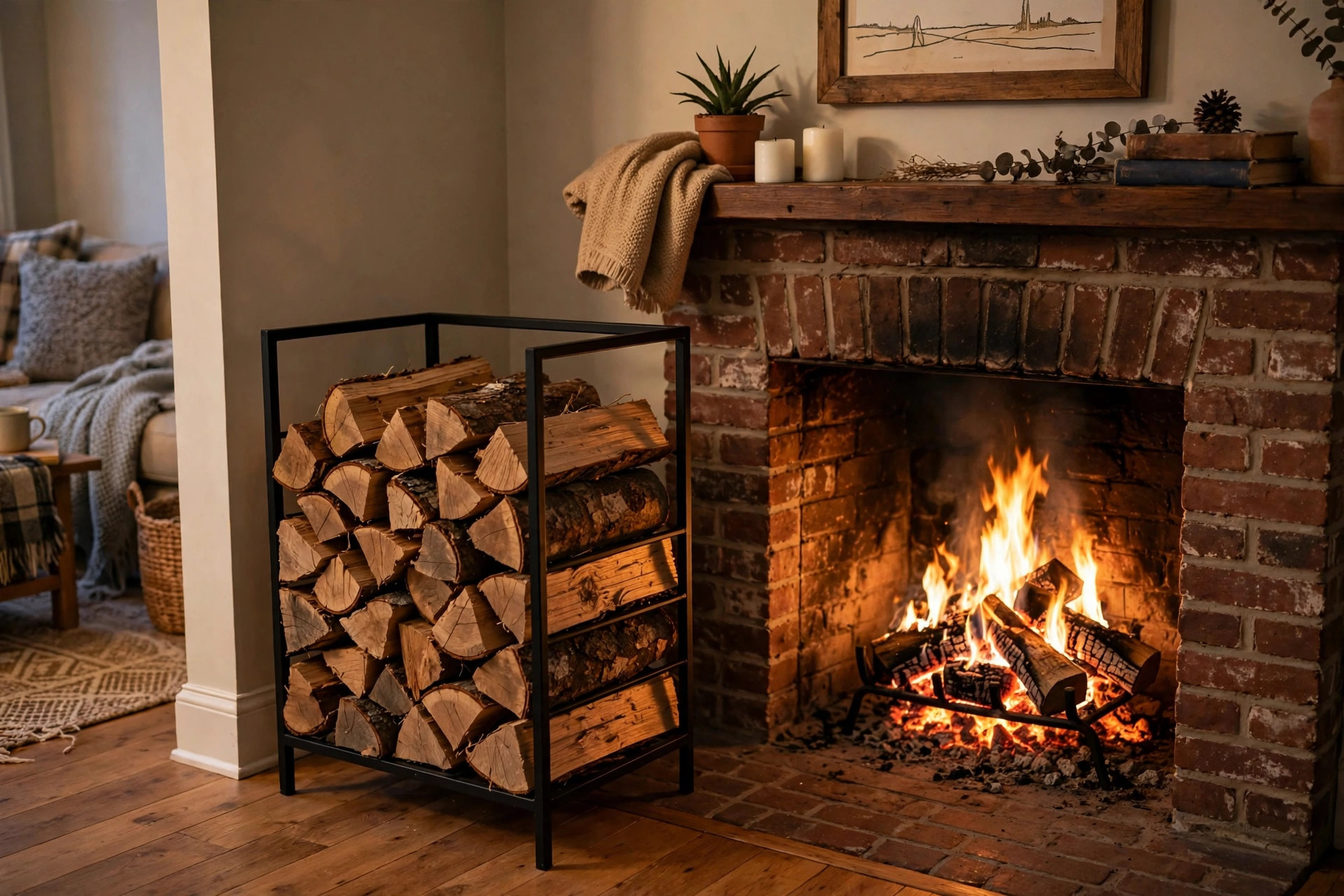
The log rack is the workhorse. Two side frames hold the ends of the logs, and the stack rests between them. Many racks come with built-in tool hooks for a poker, brush, and tongs, which keeps the whole fire-tending kit in one place. Racks hold the most wood for the money, and most cost less than a dinner out. The plain black steel rack is the most common sight in American living rooms, and it is usually the cheapest option on the shelf.
Baskets and Totes
Baskets carry wood from the porch to the hearth in one trip. Canvas and leather log carriers fold flat when empty. Rigid wicker or metal baskets stand open beside the fire and look natural doing it. Baskets hold less than a rack, so they suit a small fireplace or a room where wood is used only now and then. A basket is also the easiest type to put away when the season ends.
Wooden Crates and Boxes
Crates and boxes hide the wood. A box with a lid keeps dust down and looks like a piece of furniture. Many are sold unfinished, so the buyer can stain or paint them to match the room. The trade-off is weight and bulk. A full crate is heavy, and the wood inside stays hidden, so it is easy to forget to restock it. Keep crates at least three feet from the firebox, since wood catches fire readily.
Ring and Sculptural Holders
Ring holders hold a circle of logs upright, like a wreath of firewood. They look striking and cost little in floor space. They hold the least wood of any type, so they work best in rooms where the fireplace is lit for looks rather than heat. Their open shape lets bark chips fall straight through, which means more sweeping but a fine airy look.
Cost and Price
Most budget holders sell for between fifteen and sixty dollars. Simple steel racks sit at the low end. A rack with tool hooks costs a little more. Canvas totes and carriers fall in the same band. Baskets of wicker or woven seagrass run twenty to fifty dollars. Wooden crates and boxes range from thirty to eighty dollars, and finished furniture-grade boxes cost more still.
Sales cluster around autumn. Stores stock up in September and October, and the widest choice appears then. Buying in late winter can cut the price, but the popular sizes sell out first. Online listings from The Spruce round up tested picks each season, which helps a buyer compare prices without visiting five stores. The DIY-minded can also find build plans on Family Handyman for a fraction of the retail price, though the lumber and hardware still cost something.
A few costs hide in the fine print. A rack that needs assembly may need tools the buyer does not own. A heavy crate may cost extra to ship. And a holder placed on a fine rug may call for a fireplace hearth rug underneath it, which is a separate purchase worth planning for. Those who keep the bulk of their wood outside may also want luxury outdoor firewood storage sheds for Florida homes or a simpler covered rack, so the indoor holder only handles the evening supply.
Care and Upkeep
A holder asks for little. Empty it at the end of the season and shake out the chips. Wipe steel frames with a damp cloth and dry them fully so the coating does not rust. Canvas carriers can be brushed out and, if the maker allows it, washed. Wicker baskets keep their shape if they are not left in a damp spot.
Inspect the holder each autumn before the first fire. Check for loose screws, bent legs, and worn fabric handles. A carrier with a torn seam can spill a load of logs across the floor, so retire it when the stitching gives way. Oil the hinges on a lidded box so the lid does not slam. These small jobs take minutes and stretch the life of the holder for years.
Safety Tips
Firewood is fuel, and fuel deserves respect. Keep the holder at least three feet from the fireplace opening. Never set the holder on the hearth itself unless the maker says it is made for that. Embers can pop out of the firebox and land on a basket or a crate, so keep a spark screen on the fireplace and keep fabric holders well back.
Bring in only what will burn in a day or two. Large indoor stacks invite insects and raise the moisture in the room. The rest of the wood belongs in a covered stack outside. The Environmental Protection Agency advises burning only dry, seasoned wood, and a small indoor holder makes that habit easy: fill it with seasoned splits and leave the damp logs outside.
Do not overload the rack. A rack filled past its rails can spill logs toward the fire. Keep the area around the holder clear of kindling, paper, and light fabrics. Homes with small children do best with a heavy, low holder that cannot tip, and with the wood stored behind a hearth gate if the children are very young.
Frequently Asked Questions
How much firewood does an indoor holder need to hold? Enough for one to two evenings of burning is the usual rule. That is roughly a tenth to a fifth of a face cord for most fireplaces. A holder that holds more is fine, but very large indoor stacks waste floor space and bring extra insects inside.
Can a firewood holder sit on carpet? Yes, if it has a solid base or a tray to catch chips and moisture. A rack with open rails will let debris fall straight onto the carpet. Many buyers set the holder on a hearth rug to protect the flooring underneath.
What is the cheapest type of holder? A plain steel log rack is usually the cheapest. It holds the most wood for the least money and lasts for years. Canvas carriers run close behind in price, though they hold less wood.
Should the holder match the fireplace tools? It is not required, but it looks well when they do. Many racks come as a set with a poker, tongs, and brush, which often costs less than buying the pieces apart. Black metal sets suit most rooms.
How close can the holder be to a wood stove? Follow the stove maker’s clearance rules, which are printed in the manual and often on a label on the stove. Three feet is a common minimum for the wood pile. When in doubt, move the holder farther back. Nobody ever regretted giving a hot stove more room.
Do I still need outdoor storage if I have an indoor holder? Yes. The indoor holder handles the evening supply only. The main stack stays outside under cover, where the wood seasons and stays dry. For readers planning the whole setup, our top rated outdoor patio heaters buying guide covers a different kind of outdoor warmth, while a covered woodpile keeps the indoor holder fed through winter.
A Final Word
A firewood holder is a small purchase that pays off every cold night. Pick a size that fits the hearth, a material that suits the room, and a price that leaves room in the budget for good dry wood. Keep it three feet from the fire, fill it with seasoned splits, and empty it in spring. The room stays tidy, the fire stays fed, and the winter evenings take care of themselves.
References
Family Handyman. (n.d.). DIY home repair and maintenance. https://www.familyhandyman.com Heatilator. (n.d.). Fireplaces and fireplace products. https://www.heatilator.com Lowe’s. (n.d.). Home improvement products. https://www.lowes.com Napoleon. (n.d.). Fireplaces, grills, and heating products. https://www.napoleon.com The Home Depot. (n.d.). Home improvement products. https://www.homedepot.com The Spruce. (n.d.). Home and garden advice. https://www.thespruce.com This Old House. (n.d.). Home renovation guidance. https://www.thisoldhouse.com U.S. Environmental Protection Agency. (n.d.). Protecting human health and the environment. https://www.epa.gov
Was this guide helpful?

About James Carter
The My Garden US editorial team writes practical, in-depth home and garden guides for American homeowners — tested advice, no fluff.
You May Also Like
Best Direct Vent Gas Fireplaces for American Homes: A Complete Buyer’s Guide
September 29, 2026 0 views
Top Rated Stone Fireplace Surrounds for Small Apartments
August 28, 2026 0 views
Buy Ventless Gas Fireplaces Online in California: A Clear Buying Guide
April 6, 2026 0 views