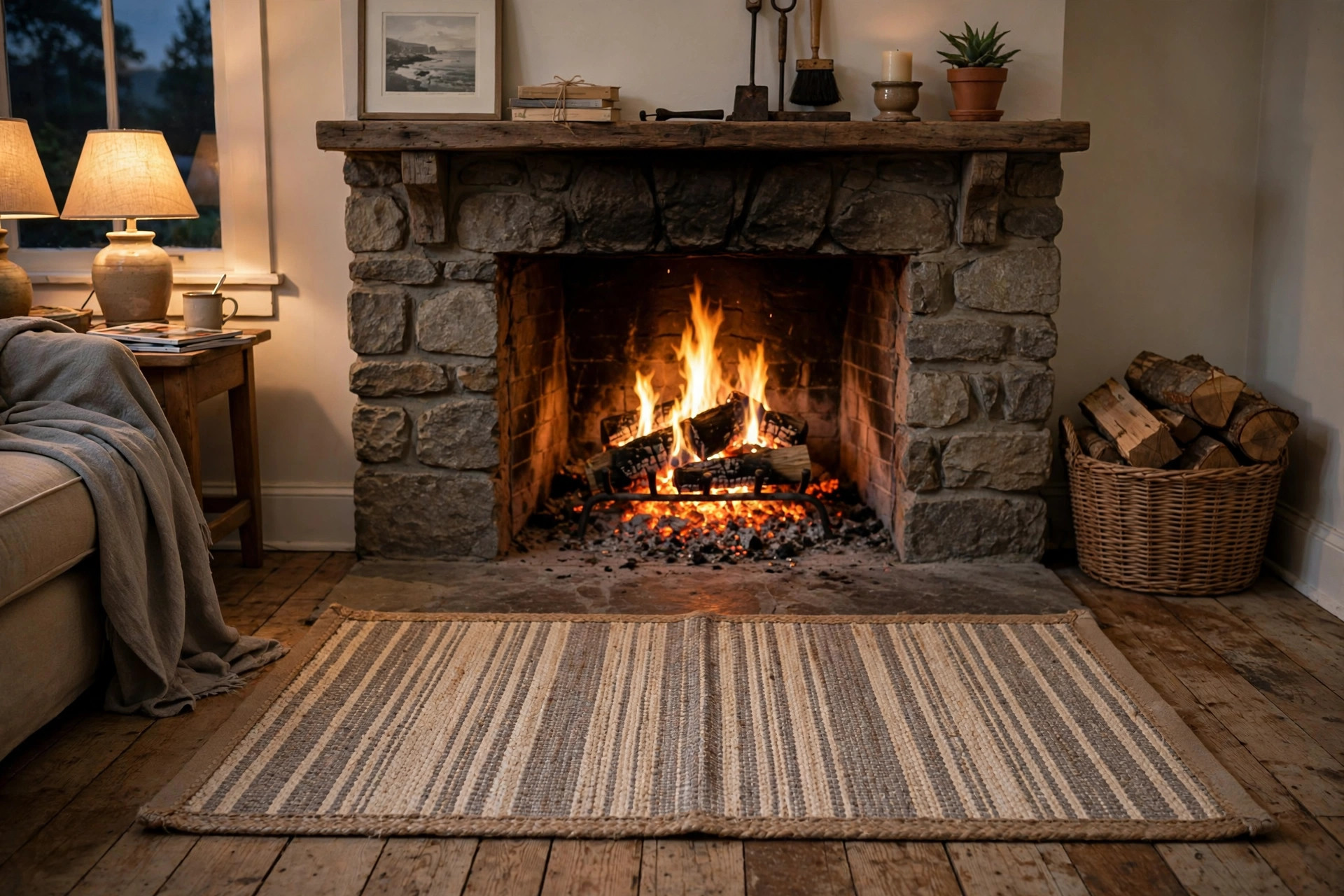

A hearth rug does more work than most people think. It catches sparks before they reach your floor. It keeps ash and soot from staining your wood or carpet. It adds warmth to the room when the fire is not lit. This budget friendly fireplace hearth rugs buying guide will help you find a good rug at a fair price. You do not need to spend a fortune to protect your floor and make your fireplace area look complete.
Many shoppers pay too much for a hearth rug because they assume safety costs money. That is not true. Safe, solid hearth rugs sell for modest prices in every big store in the country. The trick is knowing what matters and what does not. This guide walks you through each point, from material and size to price and care.
Why a Hearth Rug Matters
A fireplace throws off heat, sparks, and small bits of burning wood. Wood floors, laminate, and carpet do not react well to any of these. A single spark can leave a burn mark in seconds. Ash ground into carpet leaves a stain that is hard to remove.
A hearth rug sits between the fire and your floor. It takes the damage so your floor does not. Most rugs made for this job are treated to resist fire. They will smolder rather than catch flame. That small feature can save you a large repair bill.
Beyond safety, a hearth rug shapes the look of the room. The fireplace is often the center of the living room. A bare stretch of floor in front of it can look unfinished. A well-chosen rug fills that space and ties the seating area together. You get two benefits for one purchase, and that makes this one of the smartest small buys for any home with a fireplace.
Homeowners who keep up with chimney inspection services for homeowners know that fire safety is a full system. The chimney keeps smoke moving out. The hearth rug keeps sparks and heat off your floor. Both parts matter.
What to Look For When You Shop: Budget Friendly Fireplace Hearth Rugs Buying Guide
Fire Resistance Comes First
Not every rug near a fireplace is a hearth rug. A normal area rug can catch fire if a spark lands on it. Look for rugs labeled fire resistant or flame retardant. Many are made of fiberglass and then given a fabric face. These can sit very close to the fire without harm.
Read the label before you buy. It should state that the rug meets a known fire safety standard. If the package says nothing about fire resistance, do not use the rug at the hearth. The price of a true hearth rug is small. The cost of a floor fire is not.
Material
Most budget hearth rugs fall into a few material groups. Fiberglass core rugs with a cotton or wool face are the most common. They resist heat well and cost little. Wool rugs resist flame on their own and last a long time. Synthetic rugs made of treated polyester are light and easy to clean, though some can melt near very high heat.
Wool is the premium pick but often breaks a tight budget. A fiberglass rug with a decorative face gives you the same protection for much less money. For a cheap fireplace hearth rug that still does its job, fiberglass is hard to beat.
Size and Shape
Hearth rugs come in a few common shapes. The half moon is the most popular. It fits neatly against the curved front of a fireplace. Rectangles work well for wide fireplaces and corner stoves. Some round and oval rugs exist too.
Measure the space before you order. The rug should stretch at least 18 inches out from the firebox opening on all sides where sparks can fly. For a typical fireplace, a rug about 4 feet wide does the job. Too small a rug leaves gaps where sparks can reach the floor. Too large a rug can crowd a small room.
Backing and Grip
A rug that slides across the floor is a trip hazard. Look for a rubber or latex backing that grips the floor. Many budget rugs include this feature. If yours does not, a separate rug pad sold for a few dollars will fix the problem. A rug that stays put is safer for everyone, from small children to older guests.
Types of Hearth Rugs and Their Prices
Traditional Half Moon Rugs
The half moon shape hugs the fireplace front. These are the most common fire resistant hearth rug style. They come in patterns from classic braided looks to plain solid colors. Budget models in fiberglass sell for around 20 to 40 dollars. Wool versions can run 80 dollars or more.
Rectangle Hearth Rugs
Rectangular rugs cover more floor. They suit wide fireboxes and wood stoves that sit away from the wall. Prices run about the same as half moon rugs at the budget end. A basic rectangle often costs between 25 and 45 dollars.
Decorative and Braided Rugs
Braided hearth rugs use thick woven cotton over a fire-safe core. They look warm and traditional. Solid color rugs in black, brown, or gray hide ash stains well. Patterned rugs can add color to a plain room. Budget decorative options start near 30 dollars. Keep in mind that light colors show ash and need more cleaning.
Extended and Extra Large Rugs
If your stove throws sparks far, or if you have a raised hearth with a wide opening, an extra large rug may help. These cost more, often 50 to 80 dollars. Measure first. Many homes do not need the extra size, and a standard rug saves money.
When you compare options across big retailers, you will see the same price bands again and again. Guides at The Home Depot and Lowe’s list current models with customer reviews, which helps you see what real buyers think before you spend.
Cost and Where to Find the Best Deals
A good hearth rug does not need to cost much. Most shoppers spend between 20 and 60 dollars. That range covers safe, well-made rugs in all common sizes. Spending more can buy nicer wool or custom shapes, but it is not needed for basic protection.
Sales run all through the fall. Stores stock up before heating season and cut prices in late winter. Buying off season can save you 20 percent or more. Online stores often beat local prices, though shipping can add cost. Watch for free shipping deals.
Check the return policy before you buy. A rug that looks good online may clash with your room. A store with free returns lets you try it at home. That matters more than a tiny price gap between two shops.
Reader-tested advice on sites like The Spruce and This Old House often covers which budget models hold up after a full winter of use. Family Handyman also runs practical guides on hearth care and small fireplace projects.
Care and Upkeep
A hearth rug takes daily wear from feet, ash, and heat. Simple care keeps it looking good for years.
Vacuum the rug once a week during burning season. Use a brush attachment to lift ash from the fibers. For spots, blot with a damp cloth and mild soap. Do not soak a fiberglass rug. Too much water can damage the backing.
Shake the rug outside a few times each winter. This removes fine ash that vacuuming misses. Let the rug dry fully if it gets wet from boots or snow. A damp rug near a fire can grow mildew.
Check the rug once a year for thin spots or damage. If the fire-resistant core shows through, replace the rug. A worn rug protects less than a new one. At budget prices, replacing every few years is easy and cheap.
Pets add extra wear to a hearth rug. Claws can snag woven fibers, and pet hair builds up fast near a warm fire. Brush the rug with a stiff hand brush once a week if you have dogs or cats. Keep claws trimmed to reduce snags. A rug with a tight weave holds up better in a pet home than a loose braided one.
Store a spare rug flat, never folded, in a dry place during the warm months. Folding can crease the fire-resistant core and the backing. A flat roll tied with string works well. Before the first fire of the season, unroll the rug a day early so it lies flat again.
Safety Rules for Hearth Rugs
A hearth rug is a safety tool, so use it right.
Keep the rug flat at all times. A curled edge is a trip risk. If the rug curls, place it under heavy books for a day or two to flatten it.
Never let the rug touch the fire or the firebox interior. It should sit outside the opening, not inside it. Give at least a few inches of space between the rug edge and the firebox.
Do not use the rug as a place to set hot logs or tools. Use a proper log holder and tool set instead. Keep a fire extinguisher within reach of the fireplace area.
The EPA publishes guidance on safe wood burning and wood stove use. Following those tips along with basic hearth care keeps your whole fireplace setup safer. Makers of hearth products such as Napoleon and Heatilator also publish owner guides with useful safety notes.
If you are updating the area around your fireplace, you may also look at marble fireplace surrounds for a classic finish that pairs well with a simple hearth rug.
Frequently Asked Questions
How much should I spend on a hearth rug?
Most buyers do well spending 20 to 60 dollars. That buys a fire-resistant rug in a standard size. More expensive wool rugs last longer but are not required for safety.
What size hearth rug do I need?
Measure your firebox opening. The rug should reach at least 18 inches past the opening on each side. A 4-foot half moon fits most standard fireplaces.
Are cheap hearth rugs safe?
Yes, if they are labeled fire resistant or flame retardant. A cheap fireplace hearth rug with a fiberglass core meets the same basic safety needs as a costly one. Check the label for a fire safety standard.
Can I wash a hearth rug?
Most can be spot cleaned with mild soap and water. Avoid soaking them. Machine washing is not advised unless the maker says it is safe.
How long does a hearth rug last?
With weekly vacuuming and care, a budget rug lasts two to four years of regular winter use. Wool rugs can last much longer.
Should the rug match my room decor?
It helps the room look pulled together, but safety comes first. Dark solid colors hide ash best. If you want pattern, choose a busy weave that masks stains.
A Short Final Word
Buying a hearth rug should be simple. Pick a fire-resistant model in the right size, pay a fair price, and keep it clean. This budget friendly fireplace hearth rugs buying guide has shown you that safety does not demand a big budget. A 30-dollar rug can guard your floor just as well as one that costs three times more.
Before you check out, measure your space one more time. Read the label for fire resistance. Choose a color that fits your room. Then enjoy your fire with one less worry. If you are also planning outdoor heat for next season, a buying guide for electric patio heaters can help you compare those options too.
References
Family Handyman. (n.d.). DIY home repair and maintenance. https://www.familyhandyman.com Heatilator. (n.d.). Fireplaces and fireplace products. https://www.heatilator.com Lowe’s. (n.d.). Home improvement products. https://www.lowes.com Napoleon. (n.d.). Fireplaces, grills, and heating products. https://www.napoleon.com The Home Depot. (n.d.). Home improvement products. https://www.homedepot.com The Spruce. (n.d.). Home and garden advice. https://www.thespruce.com This Old House. (n.d.). Home renovation guidance. https://www.thisoldhouse.com U.S. Environmental Protection Agency. (n.d.). Protecting human health and the environment. https://www.epa.gov
Was this guide helpful?

About Lisa Anderson
The My Garden US editorial team writes practical, in-depth home and garden guides for American homeowners — tested advice, no fluff.
You May Also Like
Top Rated Chimineas for Patios for Cold Climates
April 4, 2026 0 views
Ventless Chimineas for Patios for Sale: A Complete Buyer’s Guide
May 9, 2026 0 views
Where to Buy Chimney Liners in California: A Complete Homeowner’s Guide
July 28, 2026 0 views