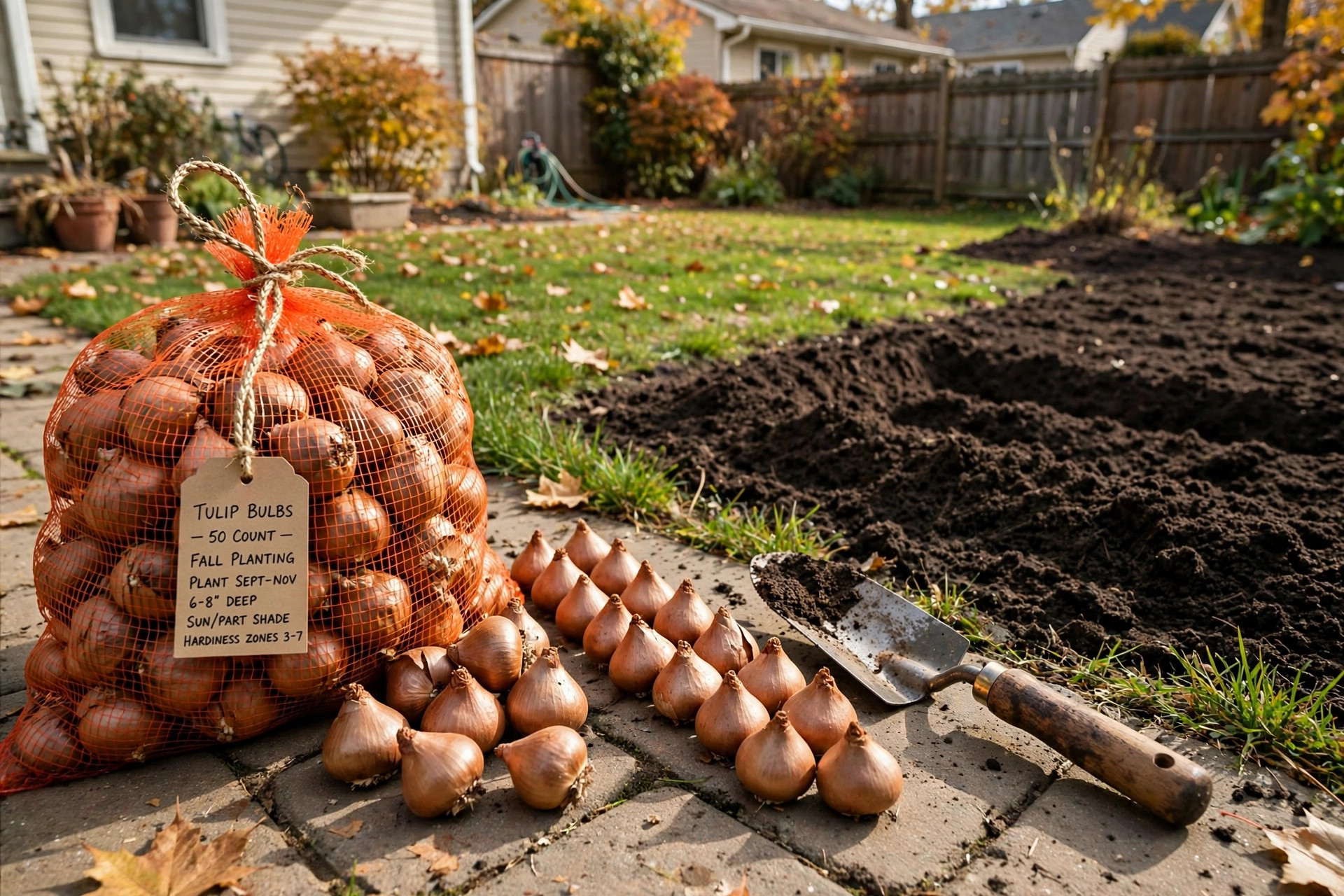

The fall season is the right time to plant tulip bulbs. This tulip bulbs fall reviews buying guide usa gives plain advice for home gardeners. It covers how to read reviews, how to pick firm healthy bulbs, and how to plant them for a strong spring show. You do not need special tools. You only need good bulbs, a good spot, and a little care.
Why Fall Bulb Quality Matters
Tulips bloom in spring, but the work starts in fall. A bulb is a small store of food and energy. Once it goes in the ground, it grows roots while the soil is still warm. Then it rests through the cold months. In spring it sends up a stem and a flower. Weak or sick bulbs often fail at one of these steps. They may rot in wet soil. They may push up small, pale leaves with no flower. They may bloom one year and then fade for good.
Reviews help you avoid this. Other buyers tell you which sellers ship firm, dry bulbs. They tell you which packs arrive with mold or soft spots. They tell you how the bulbs performed in real yards across the country. A few minutes of reading can save you from a poor spring display.
What to Look For When You Read Reviews: Tulip Bulbs Fall Reviews Buying Guide Usa
Look past the star count. Read the words that buyers use. The best reviews describe the bulbs in detail. They say how big the bulbs were. They say whether the bulbs felt firm and heavy. They say whether the packing kept the bulbs dry.
Watch for these signs in reviews:
– Bulbs described as firm, hard, and dry to the touch. – Bulb size given in inches or centimeters, not just words like “large.” – Buyers who planted in fall and saw blooms the next spring. – Clear photos from real buyers showing what arrived. – Sellers who answer questions about bulb origin and storage.
Watch for warning signs too. Do not buy from listings where many buyers report soft bulbs. Do not buy when reviews mention a musty smell or visible mold. Be careful with packs where buyers say the bulbs were tiny or mixed with other kinds. One bad review may just be a hard case. Many bad reviews tell a true story.
Pay attention to when the reviews were written. Bulb quality can change from year to year. A seller with good reviews last fall may have changed sources since then. Recent reviews matter most. Reviews from your region matter most too. A buyer in a cold state faces different weather than a buyer in a warm state.
How to Choose the Best Tulip Bulbs
Start with bulb size. Bigger bulbs hold more food for the plant. They make bigger flowers and stronger stems. Look for bulbs that are at least two inches across. Many good sellers list the size in centimeters. Twelve centimeters or more is a good sign.
Check the skin of the bulb. It should be dry and papery. It should not be cracked or peeling badly. A little loose skin is normal. Large cracks or cuts can let rot in. The bulb should feel solid when you press it gently. It should not give under your thumb.
Look at the base of the bulb. This is the flat end where roots grow. It should be clean and dry. Dark spots or soft areas at the base are a bad sign. The top of the bulb should be firm and dry as well.
Buy only as many bulbs as you can plant soon. Bulbs dry out when they sit in warm rooms. If you must store them, keep them in a cool, dry, dark place. Do not seal them in plastic bags. Air flow keeps them healthy.
Types of Tulip Bulbs
Single Early Tulips
These bloom first, often in March or April. They have simple cup shaped flowers. They do well in beds and in pots. Many buyers like them for the start of spring color.
Darwin Hybrid Tulips
These are large and strong. They grow tall with big blooms. They are a good pick for beds that need bold color. They also return better than most kinds in later years.
Triumph Tulips
These bloom in mid spring. They have classic tulip shapes and many colors. They hold up well in wind and rain. Reviews often praise their long bloom time.
Parrot Tulips
These have ruffled, frilled petals. They look showy and odd. They bloom late in spring. They need a sheltered spot because the heavy blooms can fall in strong wind.
Double Late Tulips
These have many layers of petals. They look like peonies. They bloom late and last well in cool weather. They are a good pick for cut flowers.
Botanical and Wild Tulips
These are small and simple. They look like wild flowers. They are tough and often come back year after year. They suit natural gardens and rock beds.
For more help on picking planting stock, see our guide on heirloom vegetable seeds and our notes on organic herb seeds. A related roundup of wildflower seed mixes may help if you want a meadow style bed.
Cost and Price
Tulip bulb prices change with size, kind, and pack size. Small packs of common kinds cost little per bulb. Rare or new kinds cost more. Prechilled bulbs for warm zones also cost more.
Typical ranges in the United States:
– Small packs of ten to twenty five bulbs: a few dollars per bulb for common kinds. – Large bags of fifty or one hundred bulbs: lower cost per bulb, best for big beds. – Specialty kinds like parrot or double late tulips: higher cost per bulb. – Prechilled bulbs for warm zones: a premium over standard bulbs.
Buy early in fall for the best choice. Sellers often sell out of popular kinds by late fall. Late season sales can save money, but the choice is smaller and some bulbs may be dry from long storage.
Compare the cost per bulb, not just the pack price. A bag of one hundred bulbs that costs more may still be the better deal. Also count the cost of your time. Cheap bulbs that do not bloom are not cheap at all.
How to Plant Tulip Bulbs in Fall
Plant when the soil is cool but not frozen. In most states this means late September through November. A soil thermometer can help. Aim for soil that is below sixty degrees but still soft enough to dig.
Dig a hole six to eight inches deep. Put the bulb in with the point up. Cover it with soil and press it down gently. Space bulbs four to six inches apart. For a full look, plant them in groups of five to nine.
Water the bulbs once after planting. This helps them settle and start root growth. After that, rain usually does the rest. In dry falls, water again if weeks pass with no rain.
Add a layer of mulch two to three inches thick. This holds in soil warmth and keeps the ground from heaving in winter. It also stops weeds. Bark, straw, and shredded leaves all work well.
Mark where you plant. It is easy to forget and dig up bulbs in spring while working the bed. Simple plant tags or small stakes will do.
A Note on Soil
Tulips do best in soil that drains well. Heavy clay holds too much water and can rot bulbs over winter. If your soil is heavy, mix in coarse sand or compost before planting. A raised bed also works well. Test the soil pH if you can. Tulips like soil that is near neutral, between six and seven on the pH scale. Lime can raise the pH if your soil is too sour.
Care and Upkeep
Tulips need little care once they are planted. Do not water them in winter unless the ground is very dry. Too much water in cold soil can cause rot.
When the shoots come up in spring, watch for pests. Deer and rabbits eat tulip buds and flowers. A fence or a repellent spray can help. Squirrels may dig up fall planted bulbs. A wire mesh over the planting area stops them.
After the blooms fade, cut off the dead flower head. Leave the leaves in place. The leaves feed the bulb for next year. Let them turn yellow and dry on their own before you remove them. This is the single most important care step.
Do not dig up the bulbs unless you must. Many kinds will come back, though blooms may get smaller over time. If you lift bulbs for storage, dry them well and keep them cool until fall planting time.
Safety
Tulip bulbs are toxic if eaten. Keep them away from children and pets. Dogs that dig in the garden may find and chew them. Signs of bulb poisoning in pets include drooling, vomiting, and stomach upset. Call your vet right away if a pet eats a bulb.
Wear gloves when you handle large numbers of bulbs. Some people get skin rashes from bulb dust. Wash your hands after planting.
Use clean tools. Dirty tools can spread disease from one bed to another. A quick wipe with soap and water is enough for home use.
FAQ
When is the best time to plant tulip bulbs in fall?
Plant six to eight weeks before the ground freezes. In most states this falls between late September and November. Soil should be cool but still soft enough to dig.
How deep should tulip bulbs be planted?
Plant bulbs six to eight inches deep. Measure from the base of the bulb to the soil surface. Deeper planting can protect against frost heaving.
Can tulip bulbs be grown in pots?
Yes. Use a pot at least twelve inches deep with holes at the bottom. Plant bulbs closer than in the ground, about two to three inches apart. Keep the pot in a cold but sheltered spot through winter.
How long do tulip bulbs last?
Most tulips bloom well for two to four years. Darwin hybrids and botanical kinds often last longer. Beds that are fed well and left undisturbed do best.
Do I need to chill tulip bulbs before planting?
In cold and mild states, winter does the chilling for you. In warm states where winter stays mild, buy prechilled bulbs or chill them in a fridge for eight to twelve weeks before planting.
What does bulb size mean in reviews?
Size is given in centimeters around the bulb. Twelve centimeters or more is good. Bigger bulbs hold more food and make stronger flowers. If a listing does not give a size, ask the seller before you buy.
A Short Final Word
Good tulips start with good bulbs and good timing. Read the reviews with care. Pick firm, large bulbs from a seller you trust. Plant them at the right depth while the soil is still workable. Then let fall rain and winter cold do their quiet work. Come spring, you will be glad you took the time.
For more background, see The Spruce, Burpee, and National Institute of Food and Agriculture. For more background, see Park Seed, Gurney’s Seed & Nursery Co, and White Flower Farm. Buying guides are also published by Monrovia and Proven Winners.
References
Burpee. (n.d.). Seeds, plants, and gardening supplies. https://www.burpee.com Gurney’s Seed & Nursery Co. (n.d.). Seeds, plants, and garden supplies. https://www.gurneys.com Monrovia. (n.d.). Plants for home gardens. https://www.monrovia.com National Institute of Food and Agriculture. (n.d.). Agricultural research and extension. https://www.nifa.usda.gov Park Seed. (n.d.). Seeds, plants, and gardening supplies. https://www.parkseed.com Proven Winners. (n.d.). Plants and gardening inspiration. https://www.provenwinners.com The Spruce. (n.d.). Home and garden advice. https://www.thespruce.com White Flower Farm. (n.d.). Plants, bulbs, and garden supplies. https://www.whiteflowerfarm.com
Was this guide helpful?

About Michael Thompson
The My Garden US editorial team writes practical, in-depth home and garden guides for American homeowners — tested advice, no fluff.
You May Also Like
How to Grow Zinnias: Cut Flowers All Summer
October 6, 2026 5 views
Air Plants Bulk Reviews Buying Guide USA: How to Buy Healthy Tillandsia in Large Packs
July 20, 2026 0 views
Sunflower Seed Packs for Texas Homes USA
May 17, 2026 0 views