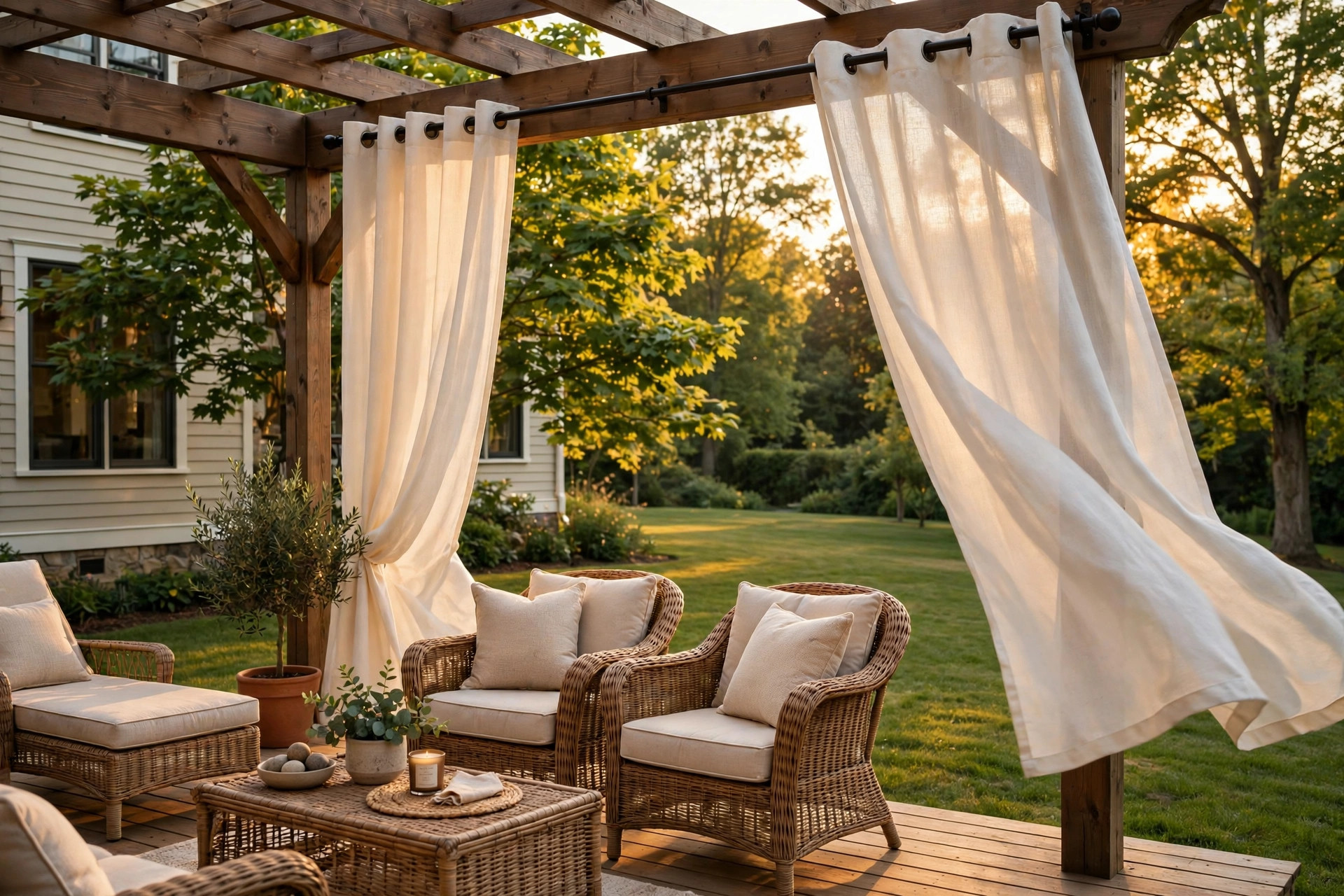

A patio should feel like part of the home. Yet many patios sit bare. They get too much sun in the afternoon. They give no privacy from the street or the neighbors. The best outdoor patio curtains for American homes solve these problems in one simple step. They soften the space. They cut glare. They add privacy. And they cost far less than a fence or an awning.
Outdoor curtains are not the same as indoor curtains. They face rain, wind, and strong sun. They must stand up to weather that would ruin ordinary fabric. This guide explains how to pick them. It covers fabric, types, cost, care, and safety. By the end, you will know exactly what to buy for your patio, deck, or porch.
Why Outdoor Patio Curtains Matter
An American patio serves many purposes. It is a place for morning coffee. It is a spot for evening dinners. It hosts birthday parties and quiet reading hours. But a bare patio often goes unused. The sun beats down too hard. Neighbors can see everything. The wind makes the space feel raw.
Patio curtains change the feel of the space. They create a room without walls. Light filters through the fabric. The air still moves. But the harsh edges of the outdoors feel tamed. A family in Texas uses them to cut the late sun. A couple in Florida uses them to keep the rain mist off the furniture. A homeowner in Ohio uses them to block the view from the house next door.
Curtains also protect what sits on the patio. Sun fades cushions and wood. A set of panels on the sunny side slows that damage. They can even make a patio feel cooler. Shade cloth fabrics can lower the air temperature under a covered area by several degrees. That matters during a long summer.
Unlike awnings or pergolas, curtains are easy to change. You can take them down in winter. You can swap colors in spring. You can open them wide for a party or close them tight for a quiet evening. Few home projects give so much change for so little money.
What to Look for in Outdoor Patio Curtains: Best Outdoor Patio Curtains for American Homes
Not every curtain works outside. Indoor fabric will fade in weeks and rot in a season. The best outdoor patio curtains for American homes share a few traits. Look for these before you buy.
Fabric and Weather Resistance
The fabric is the most important choice. The best options use solution-dyed acrylic or treated polyester. Solution-dyed fabric holds its color deep in the fibers. The sun cannot bleach it out as fast. Polyester panels cost less. Many are coated to shed water.
Check the label for words like “fade resistant” and “mildew resistant.” Mildew grows fast in damp corners of a porch. A fabric that resists it will save you from washing panels every month. Some makers treat the fabric with a water-repellent finish. Water beads up and rolls off. That helps after a sudden storm.
Weight matters too. Very light fabric blows wild in a breeze. Very heavy fabric strains the rod. A medium-weight panel with reinforced top and bottom hems works best. The hems should have double stitching. The grommets should be rust-proof metal or heavy plastic.
If you want shade more than looks, look at sun-blocking panels made for patios. Retailers like Home Depot and Lowe’s sell panels rated by how much light they block. A panel that blocks 90 percent of UV gives real relief on a hot deck.
Size and Hanging Hardware
Measure before you shop. Measure the width of the opening you want to cover. Then add at least 20 percent. Curtains look best with some fullness. A flat, stretched panel looks thin and cheap. For a 10-foot opening, buy panels that total about 12 feet wide.
Measure length too. Most outdoor curtains run from a rod or wire down to the patio floor. Common lengths are 84, 96, and 108 inches. If your porch ceiling is high, you may need the longer size. A panel that pools on the floor will collect dirt and water. Aim for a hem that just brushes the ground.
The rod or cable must hold the weight. A standard indoor curtain rod will bend. Use a rod made for outdoor use, or a stainless steel cable kit with turnbuckles. Cables work well for long spans. Mount the brackets into solid wood or masonry. Drywall anchors will pull out in the wind. When in doubt, check the hanging guides at This Old House before you drill.
Tiebacks are a small item with a big job. In wind, loose panels turn into sails. Sturdy tiebacks keep them gathered and safe when you want the view open. Some panels come with built-in ties.
Types of Outdoor Patio Curtains
Patio curtains come in three main styles. Each serves a different need. Many homes use more than one type.
Sheer Panels
Sheer outdoor panels are light and airy. They soften sunlight without blocking it. They move in the breeze. They give a soft, resort-like feel. Sheers work well on porches that already have a roof. They add style more than function.
The trade is durability. Sheer fabrics are thinner. They tear more easily in strong wind. They offer little privacy at night when lights are on inside. Choose sheers for calm, covered spots. For more solid options, browse the outdoor curtain range at Wayfair.
Solid Sun-Blocking Panels
Solid panels are the workhorses. They block sun, cut glare, and add real privacy. Most are made of heavy polyester or acrylic canvas. Many carry a UV rating. Colors run from white and sand to deep navy and forest green. Light colors reflect heat. Dark colors hide dirt.
Solid panels suit west-facing patios that catch the harsh afternoon sun. They also work as windbreaks on open decks. If your main goal is shade on a budget, this type gives the most value per dollar.
Privacy and Mosquito Curtains
Some panels add a mesh layer that keeps insects out. These suit homes near lakes or woods. The mesh is fine enough to stop mosquitoes but open enough to let air pass. Full enclosures exist too, with zippered door panels. They turn a deck into a screened room for the summer.
Privacy curtains use a tighter weave. From a few feet away, you cannot see through them. They are popular in cities and suburbs where houses sit close together. If insects are your main worry, pair any curtain with the safety and pest advice at The Spruce.
Cost and Price of Outdoor Patio Curtains
Outdoor patio curtains are one of the cheaper ways to improve a yard. A single 54-by-84-inch panel often costs between 15 and 40 dollars. A full set for a standard patio, four to six panels plus a rod or cable kit, usually runs from 80 to 300 dollars.
Several factors move the price. Solution-dyed acrylic costs more than basic polyester. It also lasts two to three times longer in full sun. Custom sizes cost more than standard panels. Rust-proof hardware adds to the bill but avoids the orange stains that cheap metal leaves on fabric.
Think in terms of cost per year. A 20-dollar panel that fades and tears in one season costs more over time than a 45-dollar panel that lasts four summers. Shoppers watching their budget can still find solid value: affordable outdoor patio curtains with free shipping are widely listed online, and seasonal sales in late summer often cut prices by a third.
Installation adds cost if you hire help. Hanging a cable system on a wood-framed porch is a simple do-it-yourself job for most homeowners. Mounting into brick or stucco may call for a handyman. Expect to pay 75 to 150 dollars for a simple professional install in most American cities.
If you are comparing sellers, the best outdoor patio curtains for sale pages update often, and regional guides like the one for the best outdoor patio curtains for Florida homes help in harsh sun states.
Care and Upkeep
Outdoor curtains need little care, but they do need some. A quick routine each season keeps them looking good for years.
Shake or brush off dust every few weeks. Spot clean stains with mild soap and water. Do not use bleach on colored fabric. It will strip the dye and weaken the fibers. Most panels can be hosed down while hanging. Let them dry fully before tying them back. Damp, bunched fabric grows mildew fast.
Once a year, take the panels down and wash them. Many are machine washable on a gentle cycle. Check the care tag first. Hang them back while slightly damp so they dry smooth and wrinkle-free.
In regions with snow or ice, take curtains down for the winter. Ice is heavy. It can rip grommets out of the fabric. Store dry panels in a breathable bag, not a sealed plastic tub. Sealed tubs trap moisture and invite mildew.
Check hardware each spring. Tighten loose brackets. Replace any rusted hooks. A ten-minute check beats a panel torn loose in the first spring storm. For step-by-step seasonal upkeep ideas, HGTV and Bob Vila both publish yearly outdoor maintenance checklists.
Safety Tips
Curtains are fabric, and fabric near heat needs care. Keep all panels well away from grills, fire pits, and patio heaters. Most outdoor fabrics are not fireproof. A gust of wind can push a loose panel into a flame. Hang panels on the side of the patio farthest from any open fire.
Wind is the other main risk. Tie panels back or take them down before a storm. A panel left flying in high wind can tear its mounts out of the wall. Falling hardware can hurt someone below. In hurricane-prone states, remove curtains entirely when a storm warning is issued.
Choose cordless tiebacks or short ties. Long cords can snag children or pets. The U.S. Consumer Product Safety Commission warns about cord hazards around the home, and the same care applies on the porch. Keep ties short and out of reach of small children.
Make sure curtains do not block walkways or exits. A panel across a stair rail is a trip hazard at night. Keep the path from the door to the yard clear. If you light the patio, use outdoor-rated fixtures and keep cords off the ground.
Finally, check local rules. Some homeowner associations limit the color or style of visible patio curtains. A quick check saves an argument later. IKEA sells simple neutral panels that pass most association rules.
Frequently Asked Questions
Can I use indoor curtains on my patio? It is not wise. Indoor fabric lacks UV protection and mildew treatment. It will fade in a few weeks of direct sun. It may rot after a few rains. Outdoor-rated panels cost only a little more and last far longer.
Will outdoor patio curtains survive heavy rain? Good ones handle rain well. Water-repellent polyester sheds most storms. But no curtain should sit in standing water. Panels that pool on a wet floor will soak through and grow mildew. Hang them to just touch the ground, and let them dry after storms.
Do patio curtains really keep a deck cooler? Yes, by a useful amount. Shade blocks direct sun from heating the deck boards and furniture. Light-colored solid panels reflect the most heat. Many homeowners report the shaded area feels five to ten degrees cooler on hot afternoons.
How do I keep curtains from blowing in the wind? Use heavier fabric, add weights to the bottom hem, and tie panels back when not in use. Weighted hems are sold as small pouches that slip into the hem pocket. For very windy spots, a cable system holds panels tighter than a rod.
What color is best for outdoor curtains? Light colors like white, sand, and light gray reflect heat and brighten the space. They show dirt faster, though. Medium tones like taupe or sage hide soil and still feel cool. Dark colors absorb heat but give a rich look and strong privacy.
How long do outdoor patio curtains last? It depends on fabric and sun exposure. Basic polyester panels last one to three seasons in full sun. Solution-dyed acrylic panels often last four to seven years. Taking them down in winter and cleaning them yearly adds years to either type.
A Final Word
The best outdoor patio curtains for American homes are not the most costly ones. They are the ones matched to your weather, your sun, and your space. Pick weather-ready fabric. Measure with care. Hang them on solid hardware. Keep them clean and take them down before storms. Do these simple things, and your patio will gain a soft, shaded room that you use far more than before. It is a small project with a daily reward.
References
Blinds.com. (n.d.). Window blinds, shades, and shutters. https://www.blinds.com Bob Vila. (n.d.). Home improvement advice. https://www.bobvila.com HGTV. (n.d.). Home and garden ideas. https://www.hgtv.com IKEA. (n.d.). Home furnishings. https://www.ikea.com Lowe’s. (n.d.). Home improvement products. https://www.lowes.com The Home Depot. (n.d.). Home improvement products. https://www.homedepot.com The Spruce. (n.d.). Home and garden advice. https://www.thespruce.com This Old House. (n.d.). Home renovation guidance. https://www.thisoldhouse.com U.S. Consumer Product Safety Commission. (n.d.). Product safety information. https://www.cpsc.gov Wayfair. (n.d.). Furniture and home goods. https://www.wayfair.com
Was this guide helpful?

About Michael Thompson
The My Garden US editorial team writes practical, in-depth home and garden guides for American homeowners — tested advice, no fluff.
You May Also Like

Custom Light Filtering Roller Shades Buying Guide
January 24, 2026 0 views
How to Choose Thermal Window Film Privacy Tint with Free Shipping
April 7, 2026 0 views
Buy Zebra Dual Layer Shades Online in Colorado: A Plain Guide for the Mountain Home
April 25, 2026 0 views