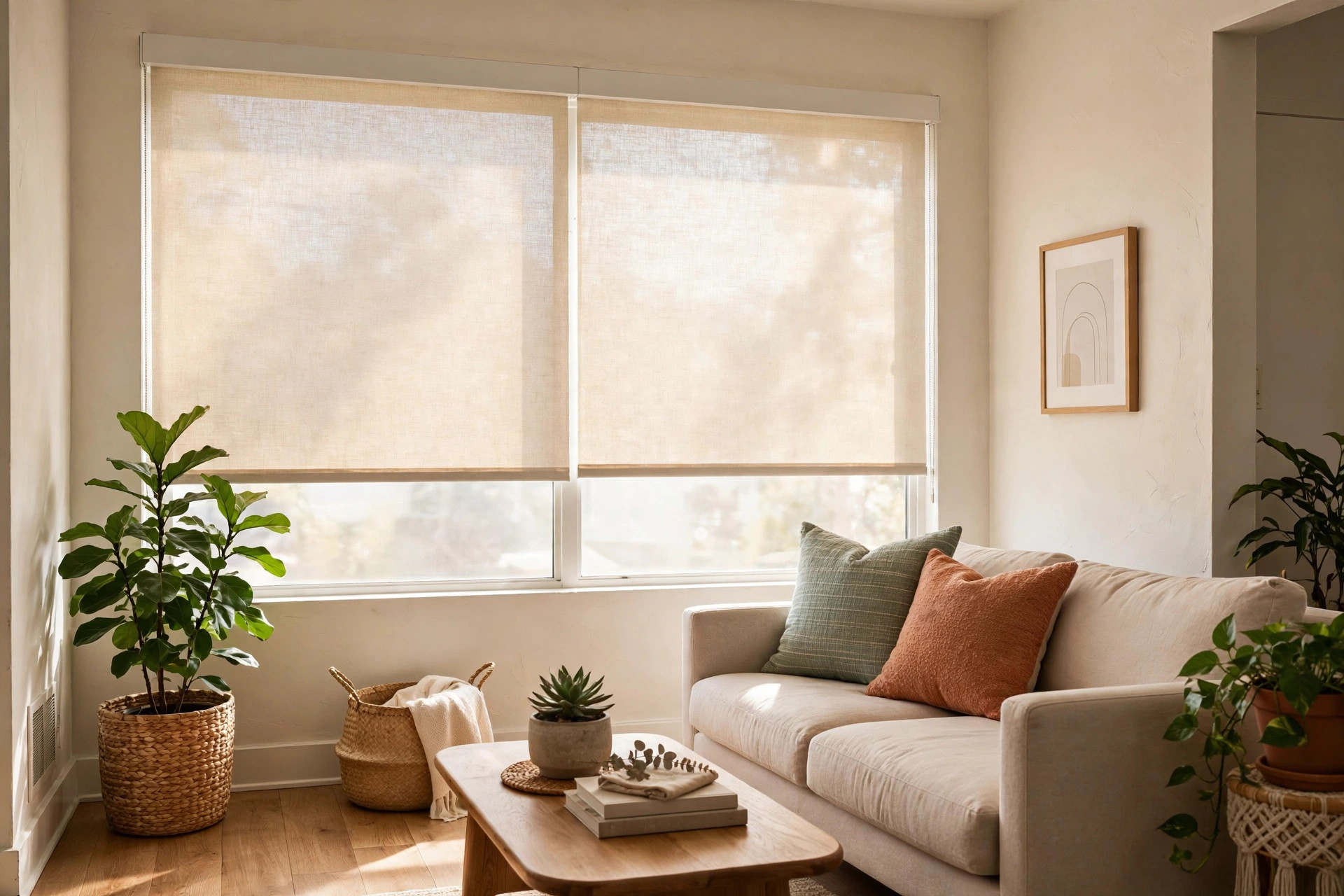

California apartments have a gift and a problem at the same time. The sun shines for most of the year. That bright light makes a small room feel open and alive. But it also makes the room hot by midday, fades the sofa, and glares on the television. The search for the best light filtering roller shades for california apartments starts from this simple need: keep the daylight, lose the harsh parts.
A light filtering roller shade is a single sheet of fabric that rolls up and down over a window. It lets soft light pass through while it blocks the hard glare. Unlike a blackout shade, it does not make the room dark. The room stays bright but calm. For a renter in Los Angeles, San Diego, Sacramento, or San Francisco, that balance matters, as apartment living guides often note. Most leases forbid drilling big holes or changing the window frame. A roller shade is light, cheap, and easy to remove when the lease ends.
Why Light Filtering Shades Matter in California Apartments
Sun in California is stronger than most newcomers expect. A south-facing apartment window can take in enough heat to raise the room temperature by ten degrees on a summer afternoon. The air conditioner then works harder, and the power bill grows. A light filtering shade cuts much of that heat while still letting the room feel bright.
Furniture tells the story first. Ultraviolet light from an uncovered window fades wood floors, bleaches fabric, and cracks leather. A shade with even light filtering slows that damage. It does not block every ray, but it spreads the light out so no single spot takes the full force of the sun.
Privacy is the other reason. Many California apartment blocks stand close together. A window at street level or across from another building leaves little privacy during the day. A light filtering shade lets you see soft shapes outside without giving a clear view in. At night the rule flips: with lamps on inside, the shade becomes see-through from outside. You need a second layer, such as a curtain, for evening privacy. Keep that in mind before you buy.
How to Choose: What to Look For: Best Light Filtering Roller Shades for California Apartments
Fabric and Opacity
Light filtering fabric comes in grades. Some pass a soft glow, some pass almost as much as a sheer curtain. For a bedroom in a bright California apartment, choose a denser fabric. For a kitchen or living room, a lighter fabric keeps the space cheerful. Hold a sample up to a sunny window before you decide. The shop sample under indoor lamps will not tell the truth.
Size and Mount
Roller shades come in two mounts. An inside mount sits within the window frame and looks neat. It needs the frame to be at least two inches deep. An outside mount sits above the frame on the wall and covers more of the window. Outside mounts block more side light and suit renters, since the brackets go into the wall above the frame, not into the frame itself.
Measure each window three times: width at the top, middle, and bottom. Use the smallest number for an inside mount. For an outside mount, add three to four inches of width on each side so light does not leak past the edges. Write every number down with the room name. Window sizes in one apartment often differ by half an inch.
Cordless and Safe Operation
Loose cords are a known hazard for small children and pets. The federal safety commission has urged cordless designs for years, and California law now pushes the same way. For an apartment with children, choose a cordless shade or a motorized one. Cordless shades lift with a push and lower with a pull. They cost a little more, but they remove the danger and look cleaner on the wall.
Types and Options for Apartment Renters
Standard Light Filtering Roller Shades
The basic model is a fabric roll on a tube with a bracket at each end. It does the job for most rooms. Prices stay low, colors are many, and the shade weighs almost nothing. This is the right pick for a renter who wants a fast fix.
Solar Roller Shades
Solar shades have a fine woven screen. They cut glare and heat while keeping a clear view outside. They come in openness grades: one percent openness blocks almost all direct sun; ten percent keeps a bright view. A five percent grade suits most California apartments. Note that solar shades give little privacy at night, so pair them with curtains if the window faces a street.
Dual Roller Shades
A dual shade hangs two rolls on one bracket: one light filtering, one blackout. By day you use the light layer; at night you pull the blackout layer for sleep and privacy. Dual shades cost more, but they solve the night-privacy problem of plain light filtering fabric in a single product.
Motorized Shades
Battery-powered motorized shades open and close with a remote or a phone app. They suit tall windows you cannot reach and rooms where you want to schedule light during the day. Batteries last a year or more in normal use. Check the lease before you screw a bracket into the wall; many landlords accept two small holes, and some do not.
Cost and Price: What to Expect
A basic light filtering roller shade from a home improvement store runs about twenty to forty dollars for a standard window. Custom sizes and cordless lifts raise that to fifty to ninety dollars. Dual and motorized models start near one hundred dollars and climb with width.
Custom shops and online blind retailers charge more, but they cut the shade to your exact window. If your apartment has odd-sized windows, as older California buildings often do, a made-to-measure shade avoids gaps where sun leaks in. A full one-bedroom apartment with six windows can be covered for roughly one hundred fifty to three hundred dollars with off-the-shelf shades, or three hundred to six hundred dollars with custom work.
Remember the renter’s math. A cheap shade you take with you is fine. An expensive custom shade may not fit your next apartment. Unless the window sizes match, the money stays with the old flat. Buy mid-range for now, and keep the receipt and the packaging for the move.
Care and Upkeep
Roller shades ask for little care. Dust them every few weeks with a dry cloth or a vacuum brush. In California dust gathers fast, especially near freeways and in dry valley towns, so do not wait for the fabric to look gray.
For spots, dab with a damp cloth and mild soap. Do not soak the fabric, and never use bleach. Roll the shade down and let it dry flat before rolling it back up, or the damp cloth can leave a ring. Once a year, check the brackets. Apartment walls are often thin drywall, and a bracket can loosen. Tighten the screws by hand and look for cracks in the anchor.
If the shade rolls unevenly, the fabric may have slipped on the tube. Pull it all the way down, smooth it flat, and roll it back slowly. Most small faults fix themselves this way. If the spring or motor fails within the warranty year, most sellers replace the unit. Keep the box for the first months.
Safety in an Apartment Setting
Cordless operation is the safest choice where children or pets live. If your shade still has a cord, keep it short, tie it high with a cord cleat, and cut any loop. Do this on day one, not later.
Heat safety matters in California too. A shade that sits close to a hot window can trap heat against the glass. In older apartments with single-pane windows, leave a small gap at the bottom of the shade on very hot days so warm air can escape. It also helps to choose light colors, which reflect more sun than dark ones and keep the room cooler.
Renters should photograph the walls and window frames before hanging anything. When you move out, patch the small holes with filler and a dab of paint. Most landlords charge more for a handyman visit than for a tube of filler. Check your lease for any clause about window coverings; some buildings require all shades to look the same from the street. In that case, choose a white or off-white fabric so your window matches the others.
Pairing Shades with Curtains and Film
Many renters pair a light filtering shade with a side panel curtain for style and night privacy, and home design shows give plenty of layered window ideas. If you prefer to keep the window bare, a budget friendly window film privacy tint can add daytime privacy without a second layer. Some renters choose a decorative window film for a frosted-glass look on bathroom or kitchen windows, then use shades only on the large living room glass.
Frequently Asked Questions
Do light filtering roller shades block enough heat for a California summer?
They block a large share of glare and some heat, but they are not insulators. For a west-facing window that takes the full afternoon sun, a denser fabric or a solar shade with low openness works better than a sheer grade. A ceiling fan or portable air conditioner still helps on the hottest days.
Can I hang roller shades without drilling?
Yes. Tension rods fit inside shallow frames, and adhesive brackets hold light shades on smooth frames. They cost more than screw brackets and hold less weight, so they suit small windows. For wide windows, screws into a stud or a drywall anchor are safer.
Will a landlord allow roller shades?
Most landlords welcome them because they protect the window and look tidy. The risk is the holes. Ask in writing before you drill, and keep the permission message. If the lease forbids wall holes, use no-drill mounts.
Do these shades work on sliding glass doors?
A wide roller shade covers a sliding door well and rolls up out of the way. Measure the full frame, not just the glass. For very wide doors, two shades side by side roll more smoothly than one heavy shade.
How long do roller shades last in a rental?
A decent fabric shade lasts five to seven years with normal use. Sun is the main enemy; the fabric slowly fades and stiffens. Rotating which windows stay shaded, or closing shades only during peak sun hours, stretches their life.
Are motorized shades worth it for an apartment?
They are worth it for hard-to-reach windows, such as a tall window above a stairwell or a skylight. For normal windows, a cordless manual shade does the same job for less money and leaves nothing to charge or replace when you move.
A Short Final Word
The best light filtering roller shades for california apartments are not the dearest ones. They are the ones that fit the window, suit the renter’s lease, and match the room’s sun. Measure twice, choose cordless, and pick a fabric dense enough for the hours you sleep. A small purchase, done well, changes how the whole apartment feels from morning to night. Start with the brightest window and work from there.
References
Apartment Therapy. (n.d.). Home design ideas and inspiration. https://www.apartmenttherapy.com Blinds.com. (n.d.). Window blinds, shades, and shutters. https://www.blinds.com Bob Vila. (n.d.). Home improvement advice. https://www.bobvila.com HGTV. (n.d.). Home and garden ideas. https://www.hgtv.com Hunter Douglas. (n.d.). Custom window treatments. https://www.hunterdouglas.com IKEA. (n.d.). Home furnishings. https://www.ikea.com Levolor. (n.d.). Custom blinds and shades. https://www.levolor.com Lowe’s. (n.d.). Home improvement products. https://www.lowes.com The Home Depot. (n.d.). Home improvement products. https://www.homedepot.com The Spruce. (n.d.). Home and garden advice. https://www.thespruce.com U.S. Consumer Product Safety Commission. (n.d.). Product safety information. https://www.cpsc.gov Wayfair. (n.d.). Furniture and home goods. https://www.wayfair.com
Was this guide helpful?

About Emily Rodriguez
The My Garden US editorial team writes practical, in-depth home and garden guides for American homeowners — tested advice, no fluff.
You May Also Like
Buy Bamboo Roman Shades Online in Arizona: A Complete Guide
July 11, 2026 0 views
Noise Reducing Pinch Pleat Drapes Buying Guide
August 11, 2026 0 views
How to Find the Best Blinds Installation Companies Near Me
May 16, 2026 0 views