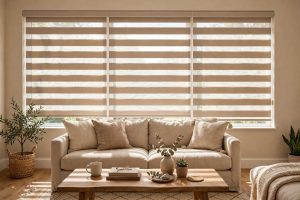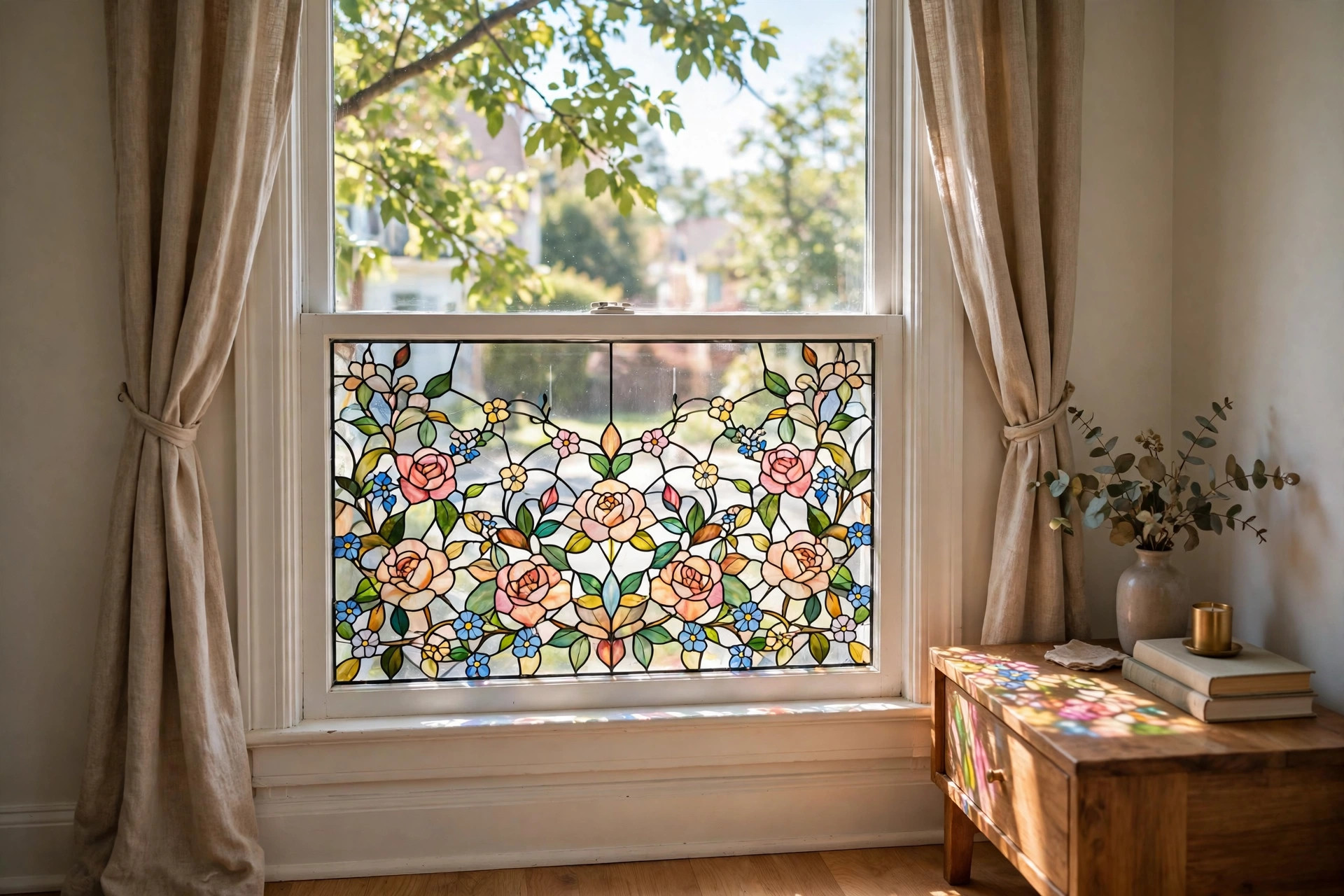

Bare windows show everything. Passersby can see your living room, your kitchen, and your daily routine. This decorative window film reviews and buying guide will help you choose a film that adds privacy and style to your glass in one simple step. You do not need new windows or a contractor. A roll of film, a spray bottle, and a free afternoon are enough for most jobs.
Decorative window film is a thin plastic sheet that sticks to glass. It comes in patterns that look like frosted glass, etched glass, stained glass, or lace. Some films add pure privacy. Others are made mostly for beauty. Many do both. The film goes on the inside of the window and stays in place with water and a mild soap solution. When you want to remove it, you peel it off. No glue means no damage to the glass.
Why Decorative Window Film Matters
A home with bare glass can feel exposed. Bedrooms and bathrooms need privacy most of all. Ground floor windows face the street, and neighbors can look straight in during the day. Decorative film solves this without blocking light. A frosted pattern lets sunlight pass through while it hides the view from outside. Your rooms stay bright and open, yet no one can watch you inside.
Cost is the second reason. New glass with a built-in frost or pattern can cost hundreds of dollars per window. A roll of quality decorative film costs far less and covers several windows. Renters like this option because it leaves no mark when removed. Owners like it because it lets them change the look of a room for little money.
Style is the third reason. A plain builder-grade house can gain character from stained-glass film in an entryway or from a frosted band on a bathroom window. Some films copy the look of hand-cut glass from older homes. You can read the product selection guides at Blinds.com to see how many patterns are now on the market. The choice runs from simple frost to full color scenes.
How to Choose: What to Look For: Decorative Window Film Reviews and Buying Guide
Start with the job the film must do. If privacy is the goal, choose a film that hides shapes and details from both sides of the glass. Frosted and etched patterns do this best. If you only want beauty, stained-glass and colored films are fine. Some films offer partial privacy. A lace or light pattern film may hide details in daylight but show shadows at night when indoor lights are on. Decide what matters more before you buy.
Light and Clarity
Every film cuts some light. A heavy frost cuts more light than a light tint. Check the rating for visible light transmission when the maker lists it. Most home films pass between 50 and 85 percent of daylight. Rooms that face north may feel dark with a heavy film. In that case, choose a lighter pattern or put film on only part of the window. A border band along the middle of the glass gives privacy at eye level and leaves the top and bottom clear.
Size and Fit
Measure your glass before you order. Measure the width and height of each pane in inches. Buy film that is at least one inch wider than the glass on all sides so you can trim it to a clean edge. Most rolls come in widths of 17, 23, 35, or 47 inches. Large picture windows may need a 47-inch roll or two rolls joined with a seam. A seam in the middle of a window shows, so plan the layout to hide seams at the frame.
Adhesive or Static Cling
Two kinds of film exist. Self-adhesive film has a sticky back that grabs the glass at once. Static-cling film holds by static charge and a thin water layer. Static-cling film is easier for beginners. You can lift it and move it during install. It also removes cleanly. Self-adhesive film is harder to position but lasts longer in hot sun. For most home users, static-cling film is the safer first choice. The home improvement resources at Lowe’s explain both types and show simple install steps.
Quality Signs
A good film lies flat with no curl at the edges. The pattern should look even across the roll. Cheap films can show streaks or dots when light shines through. Read several reviews before you buy a brand you do not know. Look for reports of long life, easy install, and clean removal. Reviews that mention bubbles after one year are a warning sign.
Types of Decorative Window Film
The market offers many styles. Here are the main types you will find.
Frosted and Etched Film
Frosted film gives the highest privacy. It turns clear glass into a soft white surface that passes light but blocks views. Etched patterns add designs like vines, leaves, or geometric lines into the frost. These films suit bathrooms, front doors, and office windows. They cost little and install fast. Most buyers who want privacy start here. If you want full privacy on a budget, also see our affordable window film privacy tint buying guide.
Stained-Glass Film
Stained-glass film copies the look of leaded glass art. It uses bright colors and dark lines to form flowers, birds, or abstract scenes. It is made for beauty, not for privacy. Some stained-glass films pass colored light into the room, which can look lovely in a sunny entry. These films cost more than plain frost. They suit homes with a classic or craftsman style. You can browse stained-glass ideas in the decorating articles at HGTV.
Privacy and One-Way Films
Privacy films use dark tints or mirror coatings. They let you see out while others cannot see in during the day. At night, when your lights are on, the effect reverses. For this reason, mirror films work best on windows that face strong daylight. They are common on offices and street-level rooms. They cut more light and heat than frosted films.
Textured and 3D Films
Textured films copy real glass textures like rain glass or cross-reed glass. They catch light in pretty ways and add a luxury feel. These films cost more and come in fewer patterns. They suit powder rooms and front-door sidelights where guests notice details.
Colored and Gradient Films
Colored films add a soft wash of blue, green, or bronze to glass. Gradient films fade from dark at the bottom to clear at the top, or the reverse. They are popular on modern homes and on sliding doors. They give mild privacy and a clean, up-to-date look.
Cost and Price
Prices vary by brand, size, and pattern. A basic frosted roll, 17 inches wide and 78 inches long, often sells for 10 to 20 dollars. That is enough for one or two standard windows. Larger rolls, 36 inches wide and 72 inches long, sell for 25 to 45 dollars. Premium stained-glass and textured films can run 40 to 80 dollars per roll.
For a whole house, the cost adds up but stays far below new glass. Ten windows might need 100 to 250 dollars in film. Tools cost little. You need a spray bottle, a plastic squeegee, a sharp utility knife, and a lint-free cloth. Many kits include the squeegee and knife. You can compare current prices at the window treatment section of Wayfair and the window film listings at The Home Depot before you order.
Do not forget the hidden cost of waste. First-time users often cut one panel wrong. Buy ten percent more film than your measurements say. It is cheap insurance against a bad cut.
Care and Upkeep
Decorative film needs little care. Clean it with a soft cloth and a mild soap solution. Wring the cloth well so it is damp, not wet. Wipe in one direction. Do not use glass cleaners with ammonia. Ammonia can cloud some films and dull the pattern over time. Do not use scrub pads or steel wool. They scratch the plastic surface.
Check the edges once a year. Heat and sun can loosen a corner. Press a loose corner back with a damp cloth. If a section bubbles, prick the bubble with a pin and smooth it flat. Small repairs can add years to the life of a film.
Most indoor films last three to ten years. Sun-facing windows age film faster. South and west windows take the hardest sun. A film that turns yellow or peels at the edges should be replaced. Removal is simple for static-cling film. Peel a corner and pull slowly. Warm the film with a hair dryer on low heat if it resists. Clean the glass with soap and water after removal. For more care tips on home surfaces, the cleaning guides at The Spruce are a good reference.
Safety Notes
Window film is safe when used as directed, but a few points matter. Do not apply dark or mirror films to double-pane windows if the maker warns against it. Dark film absorbs heat. On sealed double-pane units, extra heat can stress the seal and crack the glass. Read the product label for this warning. Light frosted and static-cling films are safe on almost all glass.
Sharp knives are the main tool risk. Cut away from your body. Keep fingers clear of the blade path. Keep knives out of reach of children.
Check local rules before you film street-facing windows in a rental or a condo. Some associations limit what can go on windows. A quick call to your landlord or board can save trouble later. The safety information at the U.S. Consumer Product Safety Commission covers general home product safety for families with children.
FAQ
Will decorative window film block all light?
No. Most decorative films let through 50 to 85 percent of daylight. Frosted films block the most light. Stained-glass and light tint films block less. If a room must stay bright, choose a light pattern or film only the lower half of the window.
Can I put film on a bathroom shower window?
Yes. Static-cling film works well in damp rooms because it has no glue to fail. Make sure the glass is clean and dry during install. Do not place film where the shower stream hits it every day. Heavy steam is fine, but direct hot spray can loosen edges over time.
How long does it take to install?
A single window takes 15 to 30 minutes for a beginner. The first panel is the slowest. By the third window, most people work twice as fast. Plan an afternoon for five or six windows.
Does the film work on textured or wired glass?
Static-cling film needs smooth glass to hold. It will not stick well to rough, rippled, or wired glass. Self-adhesive film may grip better on light texture, but results vary. Test a small corner first before you buy a full roll.
Will the film fade in the sun?
Quality films hold their color for years. Cheap films may fade or yellow on sun-facing windows. Films with UV protection last longer. Look for a UV rating on the label. The energy and home guides at ENERGY STAR explain how window treatments affect heat and light in the home.
Can I layer decorative film over curtains or blinds?
Yes. Many homes use film for privacy and curtains for style. Film on the glass lets you leave sheers open during the day. This is a popular mix in bedrooms and living rooms. If you prefer fabric shades instead, see our guide to top rated cordless cellular shades for American homes or our review of top rated sheer linen curtains for USA homes. For design ideas that pair film with furniture and fabrics, the home decor inspiration at IKEA can help.
Final Word
Decorative window film is one of the simplest upgrades a homeowner can make. It adds privacy, cuts glare, and gives plain glass a finished look. The work is within reach of any beginner, and the cost is low. Start with one bathroom or entry window. Learn the install steps on a small pane. Once you see the result, you will know which rooms should be next.
Buy from a brand with strong reviews, measure twice, and keep your cuts straight. Independent product tests, such as those published by Consumer Reports, can help you compare quality claims across brands. With a little care, your film will look good for years and come off cleanly when you are ready for a change. For hands-on project walkthroughs, the DIY project guides at Bob Vila are worth a look before you start.
References
Blinds.com. (n.d.). Window blinds, shades, and shutters. https://www.blinds.com Bob Vila. (n.d.). Home improvement advice. https://www.bobvila.com Consumer Reports. (n.d.). Product reviews and ratings. https://www.consumerreports.org ENERGY STAR. (n.d.). Energy efficient products. https://www.energystar.gov HGTV. (n.d.). Home and garden ideas. https://www.hgtv.com IKEA. (n.d.). Home furnishings. https://www.ikea.com Lowe’s. (n.d.). Home improvement products. https://www.lowes.com The Home Depot. (n.d.). Home improvement products. https://www.homedepot.com The Spruce. (n.d.). Home and garden advice. https://www.thespruce.com U.S. Consumer Product Safety Commission. (n.d.). Product safety information. https://www.cpsc.gov Wayfair. (n.d.). Furniture and home goods. https://www.wayfair.com
Was this guide helpful?

About Emily Rodriguez
The My Garden US editorial team writes practical, in-depth home and garden guides for American homeowners — tested advice, no fluff.
You May Also Like

Reliable Shutter Installation Services in California: A Homeowner Guide
January 4, 2026 0 views
Window Film Privacy Tint Reviews and Buying Guide
January 26, 2026 0 views
How to Buy Custom Made Curtains Online Online in Colorado
March 9, 2026 0 views