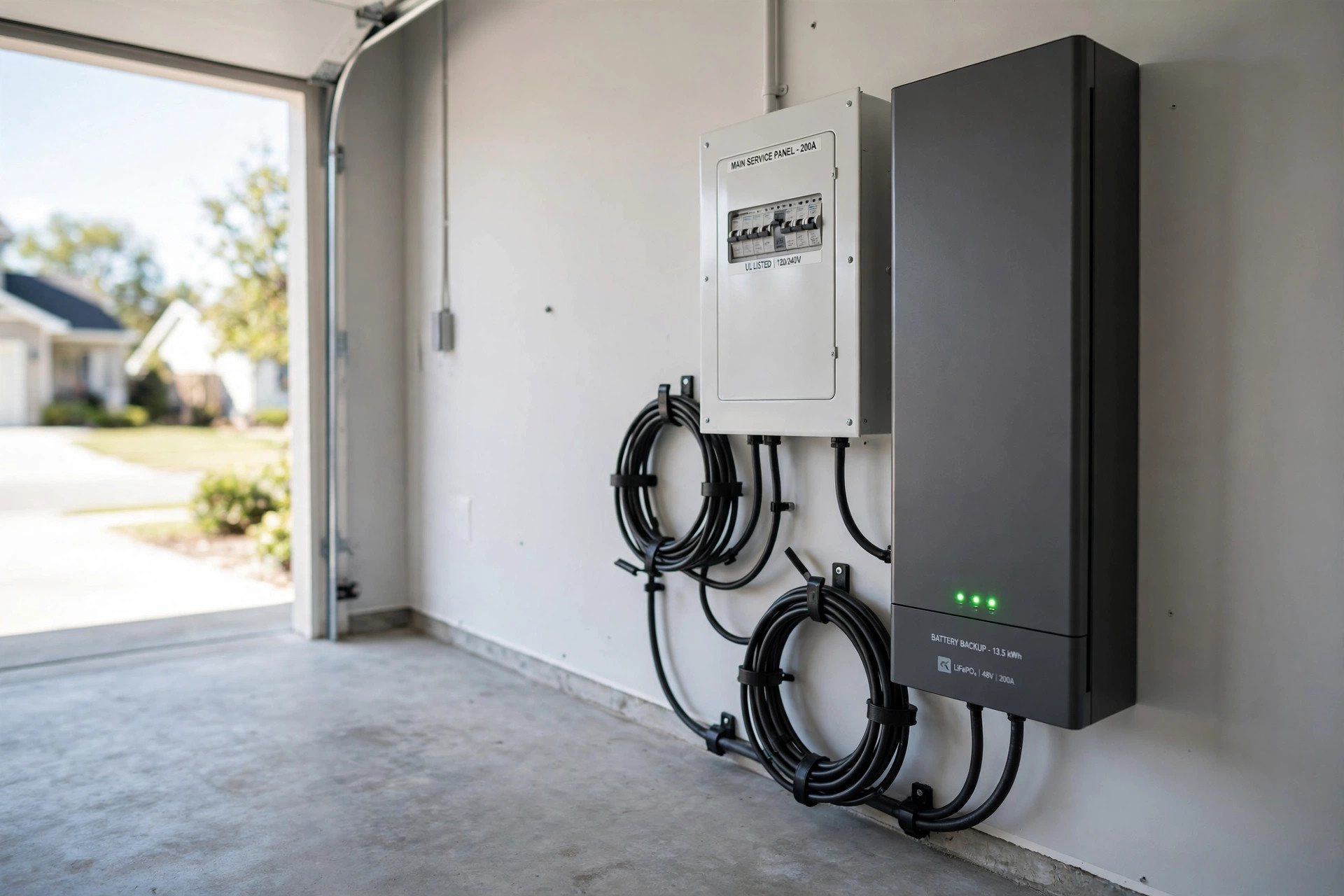

Power outages have become a part of daily life for millions of American families. Storms, wildfires, and old power lines can leave a home dark for hours or even days. That is why so many homeowners now search for the best home battery backup system reviews in the USA. A home battery backup system stores electricity and gives it back when the grid fails. It keeps the refrigerator cold, the lights on, and the phone charged. This guide explains what these systems are, how to choose one, and what the leading products offer.
Why a Home Battery Backup System Matters
A power cut used to be a small trouble. Candles came out, and life went on. Today the average home depends on power for almost everything. The refrigerator holds hundreds of dollars of food. The sump pump guards the basement. Medical devices need steady power. When the grid fails, the cost of a blackout adds up fast.
A home battery backup system solves this problem in a quiet, clean way. Unlike a gas generator, a battery makes no noise and gives off no fumes. It starts in a fraction of a second. The system charges from the grid or from solar panels, then waits. When power fails, it takes over at once. Many owners say the lights do not even blink.
The best home battery backup system reviews in the USA point to one more gain. Some power companies charge more for electricity in the late afternoon. A battery can charge at night when rates are low and feed the home during the costly hours.
How a Home Battery Backup System Works: Best Home Battery Backup System Reviews Usa
The idea is simple. A battery pack sits in the garage or on an outside wall. It connects to the home through an inverter, which turns the stored direct current into the alternating current that wall outlets use. A transfer switch watches the grid. When the grid drops, the switch moves the home to battery power.
Most systems recharge from the grid, from solar panels, or both. Many buyers pair a battery with solar panels. By day the sun charges the battery. By night the battery runs the home.
Capacity is measured in kilowatt-hours. One kilowatt-hour runs a refrigerator for about one hour. Whole-home systems often hold between ten and forty kilowatt-hours. Power output is measured in kilowatts. It tells how many devices can run at once. A strong system can start a central air conditioner. A small one can only run lights and small devices.
What to Look for When You Choose
Reading the best home battery backup system reviews in the USA is a good first step. But every home is different. The points below help you pick the right size and type.
Battery Capacity
Add up the power your key devices use. A refrigerator needs about two hundred watts when running. A sump pump may need eight hundred. A central air conditioner may need three thousand or more. Pick a capacity that covers your list for the length of the outages in your area.
Power Output and Surge Rating
Motors need a burst of power to start. A refrigerator or well pump can draw three to five times its normal power for a few seconds. The surge rating of the battery must handle this. If the surge rating is too low, the system will shut off the moment a motor tries to start.
Battery Chemistry
Most new systems use lithium iron phosphate cells. This type is safe, long-lived, and holds up well in heat. Ask what chemistry the system uses. Lithium iron phosphate is the standard for homes in 2026.
Cycle Life and Warranty
A cycle is one full charge and drain. Good batteries last four thousand to six thousand cycles. Most makers give a ten-year warranty. Read the fine print. Some warranties cover the battery only if a certified installer does the work. Keep the receipt and the install report.
Expandability
Many systems let you add more battery units later. This is a smart feature. You can start with enough power for the basics and grow the system as your budget allows. Check that the maker sells matching units and that the installer plans for the extra space.
Monitoring and Controls
Almost every modern system comes with a phone app. The app shows how much power the home uses, how full the battery is, and when the system switched to backup. Good apps let you set rules, such as saving the battery for evening hours.
Types of Home Battery Backup Systems
The best home battery backup system reviews in the USA cover three main types. Each fits a different home and budget.
Whole-Home Battery Systems
These large units connect to the main panel and back up the whole house. Brands like the Tesla Powerwall and the Generac PWRcell lead this group. They hold thirteen to eighteen kilowatt-hours per unit and can be stacked for more. Install cost runs high, but they give the most complete cover. Homes with central air and electric heat often need this type. If you want to compare the two top names, read our Tesla Powerwall vs Generac PWRcell comparison for a side-by-side look.
Partial-Home Systems
A partial-home setup backs up only chosen circuits. The electrician wires the fridge, lights, and outlets to a subpanel. A smaller battery feeds that panel. Cost is much lower than whole-home. This is the most common choice for town homes and small houses. The main limits are the air conditioner and the electric stove, which stay off in a blackout.
Portable Power Stations
Portable units are small boxes with handles. They hold one to five kilowatt-hours and run a few devices. They cost far less than wall-mounted systems and need no installer. They are a good first step for renters. See our best portable generator for home backup guide if you want a mobile option.
Leading Brands and What Owners Say
The best home battery backup system reviews in the USA keep naming the same makers. Here is what the reviews show.
Tesla Powerwall. The most known name. Each unit holds about thirteen and a half kilowatt-hours. The app is simple and clear. Owners like how the unit handles storm watch mode, which charges the battery before a storm. The main complaint is long wait times for install in some states.
Generac PWRcell. A strong pick for large homes. It can scale to high capacity and pairs well with Generac solar gear. Reviews praise its power output and its dealer network.
Enphase IQ Battery. Built for homes with Enphase solar panels. The units are small and stackable, which suits tight spaces. Reviews like the safety of the lithium iron phosphate cells and the ten-year warranty.
LG Energy Solution. A trusted name from the world of electronics. Their home batteries are known for long life and strong warranties.
FranklinWH. A newer maker that has earned strong reviews. Its units offer high output and a neat all-in-one cabinet. Owners praise the customer support.
EcoFlow and Bluetti. These makers sell large portable stations that can back up key circuits. Reviews from users love the easy setup and the low price.
Cost and Price in 2026
Price is the first question most buyers ask. A small portable station costs between one thousand and four thousand dollars. A partial-home wall unit with install runs from eight thousand to fifteen thousand dollars. A whole-home system with two or more battery units can run from eighteen thousand to thirty thousand dollars before tax credits.
The federal tax credit helps. Home batteries that meet the size rule can claim a tax credit on the cost of the unit and the install. Some states add their own credits or rebates.
Install cost varies by state and by home. An old panel may need an upgrade. A long cable run adds labor. Get three quotes from certified installers. Ask each one what circuits will be backed up and what the system will do in a three-day outage. For more on what installers charge for full backup projects, see our whole house generator cost installed guide.
Care and Upkeep
A home battery needs little care. That is one of its charms. Still, a few habits keep it strong for years.
Keep the unit in a spot that stays between freezing and very hot. Garages are fine in most states. In very cold areas, an indoor wall is better. Check the app once a month. Keep vents and fans clear of dust and boxes. Once a year, ask the installer or maker to run a health check.
Safety Notes
Batteries hold a lot of energy, and safety comes first. Buy only units that are listed by a known test lab. In the United States, look for the UL listing mark. The federal safety agency tracks battery recalls and safety notes, and its consumer safety pages are worth a look before you buy.
Hire a licensed electrician for the install. A bad wire job can start a fire. Keep the area near the battery clear. If the unit swells, smells odd, or gives a warning that will not clear, call the maker at once.
Place outdoor units where flood water cannot reach them. In wildfire zones, follow the local fire rules for battery placement. Many counties now have clear rules on how far a battery must sit from a wall or a window.
How Battery Backup Helps a Smart Home
A battery backup system fits well with a smart home. When power fails, the battery keeps the Wi-Fi router alive. That means cameras, doorbells, and sensors keep working. For broader home safety ideas, SimpliSafe and ADT both publish useful guides on keeping a home safe during outages.
Smart security gear adds a layer of calm in a blackout. A video doorbell with local storage keeps recording even when the internet drops. Reviews of top models are easy to find on sites like CNET and PCMag. The Google Store lists smart plugs and thermostats that pair with many battery systems. Tech news sites like The Verge often cover new battery and smart home gear as it launches.
Rebates, Tax Credits, and Energy Programs
Money back makes a battery much easier to buy. The federal clean energy credit applies to home battery systems that meet the size rule. The credit covers a share of the equipment and install cost. Your tax preparer can confirm the current rate.
States run their own programs. California, New York, and several New England states offer battery rebates or low-cost loans. The Department of Energy keeps pages that explain federal programs in plain terms. The Energy Star program also lists efficient home upgrades and how they pair with batteries.
Some utilities run virtual power plant programs. Your battery sends power to the grid for a few hours on the hottest days of the year. You get a check or a bill credit.
Buying Tips From Owners
Start with your outage history. If your power fails for two hours at a time, a small system is enough. If it fails for two days, buy more capacity or add a generator.
Buy from a maker with a local dealer. When something breaks, a local tech can be at your door in a day. Read warranty terms before you sign. Note what voids the warranty.
Ask for a load test at install. The installer should cut the grid feed and show you what stays on. Time how long the battery lasts with your normal evening use.
Frequently Asked Questions
How long will a home battery backup system run my house?
It depends on the battery size and what you run. A thirteen kilowatt-hour unit can run lights, a fridge, Wi-Fi, and phones for about ten to fourteen hours. Add an air conditioner and the time drops to three to five hours. Larger systems with stacked units can run a home for a full day or more.
Can a home battery run central air conditioning?
Yes, if the system is sized for it. Central air needs a strong surge to start. Whole-home systems from the top makers can handle this. Small portable units cannot. Tell your installer that air conditioning is a must, and they will size the inverter to match.
Do I need solar panels to use a home battery?
No. A battery can charge from the grid alone. It will still guard against outages and can still shift power use to cheap hours. Solar panels make the system stronger and can pay it off faster, but they are not required.
How long do home batteries last?
Most home batteries last ten to fifteen years. Good units are rated for four thousand to six thousand cycles. The warranty is usually ten years. After that the battery still works but holds less charge each year.
Are home battery systems safe?
Yes, when they are installed right. Use UL-listed units, hire a licensed electrician, and follow the maker’s placement rules. Modern lithium iron phosphate cells are very stable. Problems are rare and almost always tied to bad installs or damaged units.
What does install take, and how long does it last?
A simple wall-unit install takes one day. Larger jobs with panel upgrades take two to three days. Permits can add one to four weeks before work starts.
A Short Final Word
The best home battery backup system reviews in the USA agree on the basics. Buy enough capacity for your real needs. Pick a trusted maker with local support. Hire a licensed installer. Claim every credit and rebate you can. Do these four things and your home will ride through the next blackout in comfort. Power may fail, but your evening plans do not have to fail with it. For deep test data and side-by-side scores, Consumer Reports is a solid last stop before you sign a quote.
References
ADT. (n.d.). Home security and automation. https://www.adt.com CNET. (n.d.). Technology news and reviews. https://www.cnet.com Consumer Reports. (n.d.). Product reviews and ratings. https://www.consumerreports.org ENERGY STAR. (n.d.). Energy efficient products. https://www.energystar.gov Google Store. (n.d.). Smart home devices. https://store.google.com PCMag. (n.d.). Technology product reviews. https://www.pcmag.com SimpliSafe. (n.d.). Home security systems. https://www.simplisafe.com The Verge. (n.d.). Technology news and reviews. https://www.theverge.com U.S. Consumer Product Safety Commission. (n.d.). Product safety information. https://www.cpsc.gov U.S. Department of Energy. (n.d.). Energy efficiency and renewable energy. https://www.energy.gov
Was this guide helpful?

About Michael Thompson
The My Garden US editorial team writes practical, in-depth home and garden guides for American homeowners — tested advice, no fluff.
You May Also Like

Smart Mailbox Sensor Reviews 2026 USA: Best Picks for Every Home
May 21, 2026 0 views
SimpliSafe vs ADT Cost Comparison 2026 USA
March 10, 2026 0 views
Roborock vs iRobot Comparison 2026 USA: Which Robot Vacuum Fits Your Home
June 15, 2026 0 views