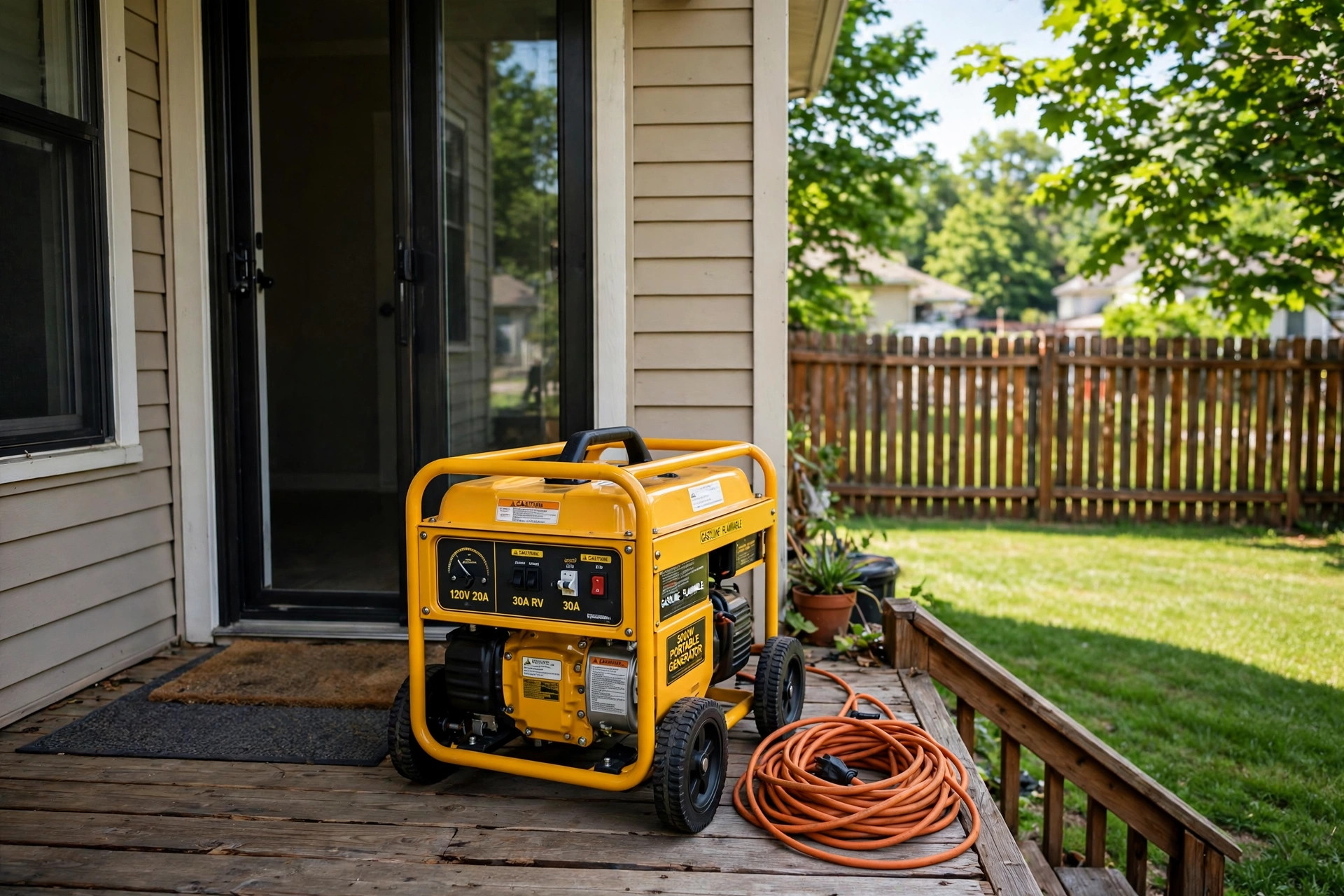

Power lines go down every year in the United States. Storms, ice, wind, and heat waves can leave a house dark for hours or days. The best portable generator for home backup USA buyers is the one that fits the size of their home needs, runs on a fuel they can store, and starts every time they pull the cord or press the button. This guide walks through all of it in plain language.
Why a Portable Generator Matters for Home Backup
A portable generator is a small engine that makes electricity. When the grid fails, the unit can power a refrigerator, lights, a furnace fan, a well pump, and a phone charger. It does not cost as much as a large standby unit that is wired into the house. Many owners roll it out only when they need it, then store it away.
A dark home can turn into a costly home fast. Food in a warm refrigerator spoils in a day. Pipes can freeze in a cold snap. A sump pump stops, and a basement can flood. For older people and for homes with medical needs, an outage is more than an inconvenience. A good generator turns a crisis into a mild event.
Portable units also work for more than outages. They run tools at a job site. They power a tailgate or a camp. But the main reason most families buy one is home backup, and that is the focus here.
How to Choose: What to Look For: Best Portable Generator for Home Backup Usa
Start with wattage. A generator has two watt numbers. Running watts is the power it gives out all the time. Starting watts is the short burst it gives when a motor starts up. A refrigerator may need 700 running watts and 2,200 starting watts. Add up what you plan to run, then leave room for the largest starting load.
Most American homes need between 4,000 and 8,500 running watts for basic backup. That covers a fridge, a freezer, lights, a television, a furnace blower, and a few small devices. A well pump or a central air conditioner needs much more. Those items often call for a larger unit or a wired standby system instead.
Fuel Type
Gasoline is the most common fuel. It is easy to find, but it goes bad in a few months unless a stabilizer is added. Propane stores for years and burns cleaner. Diesel is steady and safe to store, but diesel portables are heavy and cost more. Many units are dual-fuel, which means they burn gasoline or propane. A dual-fuel model gives you options when one fuel is hard to find.
Inverter or Conventional
A conventional portable generator runs at a fixed speed. It is loud and the power is a bit rough. It works well for tools and simple motors. An inverter generator changes speed with the load. It is quieter, burns less fuel, and makes clean power for phones, laptops, and televisions. Inverters cost more, but they are the best choice for most home backup plans.
Runtime and Tank Size
Runtime is how long the unit runs on one tank. A tank that gives 10 to 14 hours at half load is a good mark. That means you can run it all night and refill in the morning. Larger tanks weigh more, so balance runtime against the weight you can move.
Noise Level
Conventional units run near 74 decibels. That is as loud as a vacuum cleaner. Inverter units run near 52 to 62 decibels. That is closer to a normal conversation. If you have close neighbors, a quiet unit keeps the peace. Many towns also have noise rules during the night.
Start Type
Recoil start means pulling a cord. It works, but it is hard for some people. Electric start uses a key or a button. Some models add a remote start, so you can fire up the unit from inside the house. For a home backup machine, electric start is worth the extra money.
Types of Portable Generators for Home Backup
Conventional Portable Generators
These are the classic open-frame units. They sit in a metal frame, run on gasoline, and give 4,000 to 12,000 watts. They are the least costly per watt. They are also the loudest and heaviest. They suit people who want raw power for a furnace, a well pump, or heavy tools.
Inverter Generators
Inverters give 2,000 to 7,500 watts in most home models. They are quiet, light, and fuel efficient. Two units can often be paired to double the power. They are the best pick for electronics, night use, and neighborhoods with noise limits.
Dual-Fuel and Tri-Fuel Generators
Dual-fuel units burn gasoline or propane. Tri-fuel units add natural gas. The changeover takes a minute with a simple switch or hose change. These units are smart for people who want fuel flexibility during long storms, when gas stations may close.
Whole House Generator vs Portable
A whole house standby generator turns on by itself and powers nearly everything. It costs much more and needs a professional install. A portable generator needs you to start it and plug in what matters most. For most families, the portable is the sensible first step. You can always add a manual transfer switch so the unit feeds chosen circuits through the home wiring.
Sizing Your Generator: A Simple Method
Walk through your home and list what must stay on. Write down the running watts for each item from its label or manual. Add them up. Then add the highest starting watts of any motor on the list. Round up to the next common size.
A sample list looks like this:
– Refrigerator: 700 running watts – Freezer: 500 running watts – Furnace fan: 875 running watts – Lights (six LED bulbs): 60 running watts – Television and cable box: 200 running watts – Phone chargers: 20 running watts
The total is about 2,355 running watts. With starting watts for the fridge and furnace, a 5,000-watt unit handles this list with room to spare. If you add a well pump at 2,000 running watts, move up to 7,500 or more.
Do not guess. Read the labels. Most owners buy a unit one size larger than their math suggests. That margin keeps the engine from straining, which makes it last longer.
Cost and Price
A small inverter unit for lights, phones, and a fridge costs about $400 to $800. A mid-size inverter or dual-fuel unit for most of a home costs about $800 to $1,500. A large conventional unit above 9,000 watts costs about $1,000 to $2,000.
Running costs add up too. Gasoline costs change by region and season. Propane costs more per unit of energy but stores longer. An efficient inverter sips fuel, which matters in a multi-day outage.
Extra gear also costs money. A good set of heavy outdoor extension cords may cost $50 to $150. A manual transfer switch installed by an electrician may cost $300 to $600. A weather cover costs about $30 to $60. Budget for these items along with the machine.
Buying advice from Consumer Reports test reports can help you compare models side by side. Reviews on PCMag and CNET often rate noise and fuel use, which matters for home backup. Tech sites such as The Verge also cover inverter models that double as smart home gear.
Care and Upkeep
A generator that sits all year will not start when you need it. Care is simple but must be done.
– Run the unit for 20 minutes every month with a light load. – Use fresh fuel with a stabilizer, or run it on propane. – Change the oil after the first 20 hours, then as the manual says. – Check the air filter and clean it once a season. – Keep spare spark plugs and a quart of the right oil on hand. – Store it in a dry place, out of the rain.
Gasoline left in the tank for months turns to varnish. That clogs the carburetor. Many owners drain the fuel or run the unit dry before storage. A fuel shutoff valve makes this easy. Write the date of each oil change on a tag tied to the handle.
Safety: The Rules That Save Lives
Carbon monoxide is the great danger. It is a colorless, odorless gas that a generator makes while it runs. Never run a generator inside a home, garage, basement, or shed. Keep it at least 20 feet from the house, with the exhaust pointing away from doors and windows. The U.S. Consumer Product Safety Commission has tracked many deaths from generators used indoors or too close to homes. Heed its guidance every time.
More safety rules:
– Let the engine cool before refueling. Gasoline on a hot engine can ignite. – Use outdoor-rated extension cords that are heavy enough for the load. – Never plug a generator directly into a wall outlet. This backfeed can kill utility workers. – Install battery carbon monoxide alarms on each floor of your home. – Keep the unit dry. Do not run it in rain without a proper cover.
If your home already has smart safety gear, a Google Store smoke and CO detector or a Ring alarm can add another layer of warning during an outage. Many owners pair backup power with SimpliSafe or ADT monitoring so the home stays watched even when the lights go out.
Home Security During an Outage
A dark street can attract trouble. A generator keeps your lights, cameras, and alarms working. That is part of home security, not just comfort. A best smart floodlight for backyard usa stays useful when the power is on, and a small UPS battery keeps cameras alive while the generator starts.
While you plan your backup power, do not forget the other pieces of a safe home. A video doorbell for apartments no wiring usa protects renters who cannot wire a full system. And once the power returns, documents matter too — a best home safe for documents reviews usa keeps papers safe from fire and water.
Frequently Asked Questions
How big a portable generator do I need for home backup?
Most homes need 5,000 to 7,500 running watts for the basics: fridge, freezer, lights, furnace fan, and small devices. Add up your running watts and the largest starting load, then round up. Owners who want air conditioning or a well pump often need 9,000 watts or more.
Can I run my whole house on a portable generator?
You can power many circuits, but not all at once. A portable unit feeds selected items through extension cords or a manual transfer switch. Central air, electric ranges, and electric water heaters are usually too much. A standby whole house unit is the answer if you want everything on.
Is an inverter generator better for home backup?
For most homes, yes. Inverters are quieter, burn less fuel, and make clean power for electronics. They cost more per watt, but two units can be paired for more power. If noise and fuel use matter to you, choose an inverter.
How long can a portable generator run?
Most units run 8 to 14 hours on one tank at half load. Larger tanks run longer but weigh more. The engine itself can run for days with refueling and oil checks, though most manuals advise rest breaks and regular oil level checks during long runs.
Can I store a generator with fuel in it?
Gasoline should not sit for months without a stabilizer. Either add stabilizer and run it monthly, or drain the tank and run the carburetor dry. Propane does not go bad, so dual-fuel owners often keep a propane tank ready instead of stored gasoline.
What is the safest place to run a generator?
Outside, at least 20 feet from the house, with the exhaust aimed away from doors and windows. Never in a garage, basement, porch, or near an open window. Keep carbon monoxide alarms working on every floor.
A Final Word
The best portable generator for home backup USA shoppers choose is the one they can start, fuel, and maintain without stress. Size it to your real needs. Pick a fuel you can store. Keep it quiet if you have neighbors. And above all, run it outside and far from the home. A well-chosen unit turns the next outage into a small event instead of a crisis.
References
ADT. (n.d.). Home security and automation. https://www.adt.com CNET. (n.d.). Technology news and reviews. https://www.cnet.com Consumer Reports. (n.d.). Product reviews and ratings. https://www.consumerreports.org Google Store. (n.d.). Smart home devices. https://store.google.com PCMag. (n.d.). Technology product reviews. https://www.pcmag.com Ring. (n.d.). Smart home security devices. https://www.ring.com SimpliSafe. (n.d.). Home security systems. https://www.simplisafe.com The Verge. (n.d.). Technology news and reviews. https://www.theverge.com U.S. Consumer Product Safety Commission. (n.d.). Product safety information. https://www.cpsc.gov
Was this guide helpful?

About Robert Taylor
The My Garden US editorial team writes practical, in-depth home and garden guides for American homeowners — tested advice, no fluff.
You May Also Like
Best Solar Security Camera Reviews 2026 USA: A Plain Guide for Homeowners
February 26, 2026 0 views
Smart Air Purifier With App Reviews 2026 USA: A Practical Guide for American Homes
February 20, 2026 0 views
Alexa vs Google Home 2026 Comparison USA: Which Voice Assistant Wins Your Home
March 24, 2026 0 views