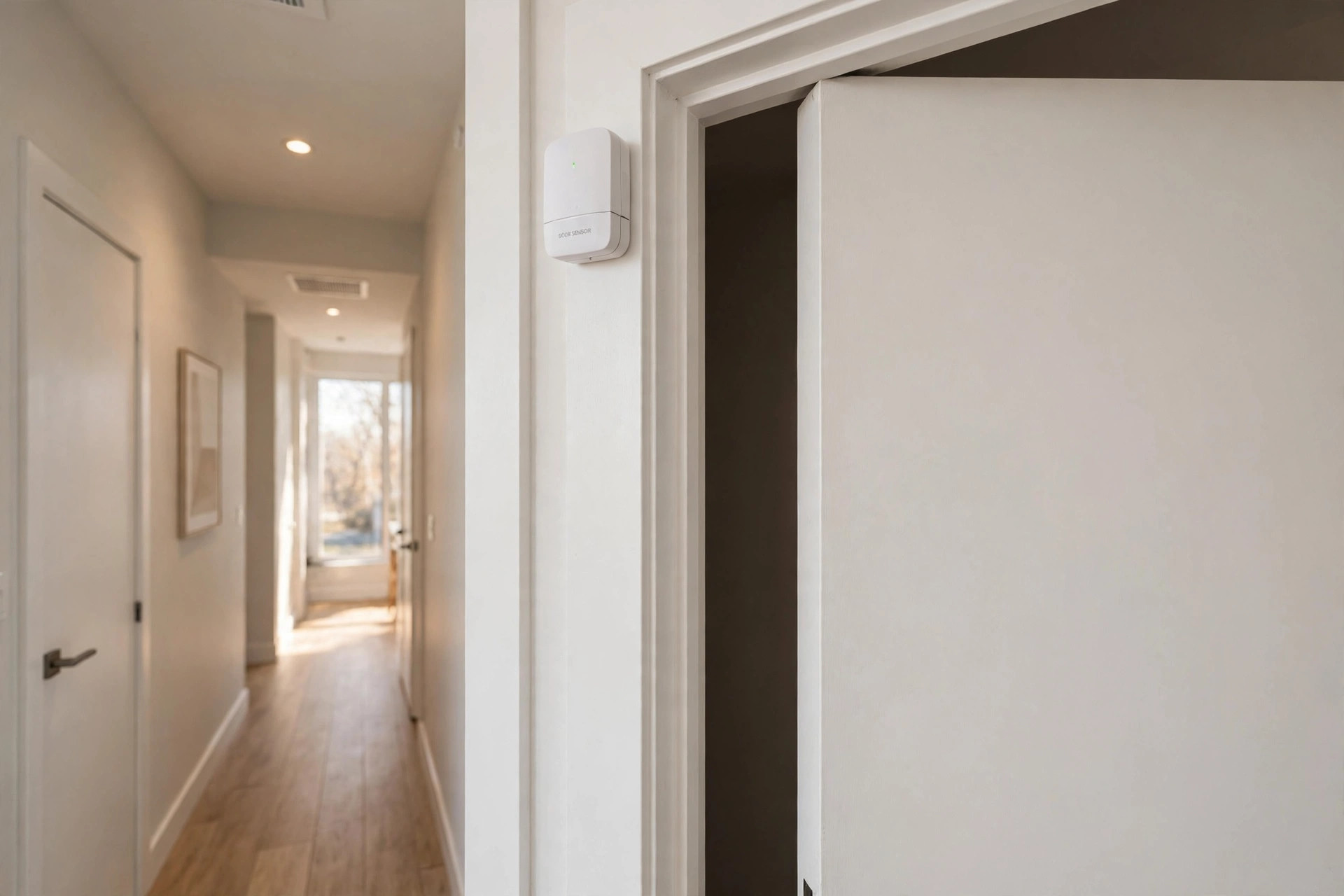
Apartment life brings a simple worry. You want a safe front door, but the flat is not yours. You cannot drill holes or run wires through the walls. The best door alarm sensor for apartments usa buyers choose today was made for this exact problem. These are small battery powered devices that mount with adhesive tape. One part sticks to the door, the other part sticks to the frame. When the door opens, the two parts move apart and the unit sounds a loud alarm. No tools are needed, and nothing gets damaged. This guide explains how these sensors work, what to look for, and how much they cost, so you can pick the right one for your home.
Why a Door Alarm Sensor Matters in an Apartment
Most break-ins begin at a door. A thief checks the handle first. In an apartment building, the front door is often the only barrier between your home and a busy hallway. Many renters cannot change the lock because the lease forbids it. A door alarm sensor fills this gap. It adds a layer of notice that a lock alone cannot give.
The value of a door alarm sensor is the warning it gives. A loud alarm of 100 decibels or more will startle an intruder. It also tells you, and sometimes your neighbors, that a door has opened. For people who live alone, sleep lightly, or travel often, that early warning is worth more than the small price of the device.
These sensors also suit the rules of rental life. Landlords in the United States generally allow devices that do not alter the property. A peel and stick sensor leaves no marks when it is removed at the end of a lease. You take it with you to the next flat. For this reason, the best door alarm sensor for apartments usa renters pick is almost always a wireless, adhesive mounted model.
What to Look For When You Choose: Best Door Alarm Sensor for Apartments Usa
Not every door alarm sensor is built the same way. A few key points decide whether a unit is a good buy.
Volume. The alarm must be loud enough to be heard from another room and to scare off a stranger. Look for a rating of 110 to 120 decibels. Units below 90 decibels are easy to ignore.
Battery life. Most sensors run on small button cell batteries or AAA batteries. Good models last six to twelve months on one set. Check whether the unit gives a low battery warning so you are not caught by surprise.
Mounting method. Renters should only buy sensors that mount with adhesive tape. Screws are out of the question in most leases. Some tape is strong and still removes cleanly. Read the notes on the box before you buy.
False alarm control. A sensor that trips when you bump the door is a nuisance. Better models have a delay setting or a chime mode. Chime mode gives a soft tone instead of a full alarm, which is useful when family members come and go during the day.
Range and pairing. Some door sensors connect to a base station or a phone app. If you want alerts on your phone, make sure the sensor works with your Wi-Fi and your phone system. Many renters prefer stand alone units that need no hub at all, because they are simpler and cheaper.
Pet and child safety. Small button batteries can be a danger to children and pets if the case breaks open. Choose a sensor with a screw free but child resistant battery door, and keep spare batteries out of reach. Guidance on product safety from the U.S. Consumer Product Safety Commission is worth reading before you buy any battery powered device.
Types of Door Alarm Sensors for Apartments
Magnetic Contact Sensors
This is the most common type. Two small magnets sit near each other, one on the door and one on the frame. When the door opens, the contact breaks and the alarm sounds. They are slim, cheap, and easy to hide behind a door frame. Most of the best door alarm sensor for apartments usa options sold today are of this kind.
Vibration and Shock Sensors
These sensors feel the shock of a knock or a kick. They sound the alarm before the door even opens. They are useful for renters who want an early warning. The drawback is that a hard knock from a delivery driver can set them off, so look for models with adjustable sensitivity.
Keypad and PIN Alarms
These units mount on the door itself and arm with a personal code. You press your code when you come home, and the alarm will not sound. Guests and children can be given their own codes. They cost more than simple contact sensors, but they remove the need to remember a remote or a key fob.
Smart Connected Sensors
Smart sensors pair with a phone app or a home security system. When the door opens, your phone gets a push alert even if you are at work. Many of these work with the smart home devices found in American homes, and some link to door sensors that work with video doorbells. If you want phone alerts, this is the category to study. Just remember that most smart models need Wi-Fi, which can be a problem in buildings with weak signals.
Stand Alone Siren Alarms
The simplest type is a single unit with a built in siren. It needs no app, no hub, and no subscription. You stick it on the door and it is ready. For renters on a tight budget, this is often the best door alarm sensor for apartments usa shoppers can buy. Home security systems made for renters often include these simple sirens alongside smarter parts.
Cost and Price
Prices in the United States are kind to renters. A single stand alone door alarm sensor usually costs between five and twenty dollars. Multi packs of four or six units bring the price per door down to three or four dollars. These are one time purchases with no monthly fee.
Smart connected sensors cost more, often thirty to eighty dollars per sensor. Some brands then charge a monthly fee of ten to twenty dollars for phone alerts and cloud storage. Compare this with full professional monitoring plans, which can cost thirty to sixty dollars a month for a whole apartment system.
For most renters, a pack of simple magnetic sensors is enough. Spend twenty dollars, cover the front door and two windows, and you have solid protection. If you want phone alerts while you are away, budget fifty to one hundred dollars for one smart sensor, and check whether a subscription is required.
Door alarms at home stores often go on sale in the fall and during holiday weekends, so a patient buyer can save a few dollars by watching prices for a month.
Installation in a Rented Apartment
Installation takes about five minutes and no tools. Clean the door and frame with a dry cloth so the tape sticks well. Peel the backing off the adhesive strip. Press one half of the sensor on the door and the other half on the frame, lined up as the instructions show. Test it by opening the door. If the alarm sounds, you are done.
Place the sensor high on the door, out of easy reach, so a child cannot tamper with it. On a sliding glass door, mount the two halves on the fixed frame and the sliding panel. Many renters pair a door sensor with window alarm sensors for renters, which use the same peel and stick method on window frames.
Before you mount anything, read your lease. Most leases allow adhesive mounted devices, but a few restrict any item on the front door of the building. A quick note to your landlord avoids trouble later. When you move out, pull the sensor off slowly. Warm the tape with a hair dryer for a minute if it resists, and the wall or door frame will stay clean.
If you want a camera as well, wire-free video doorbells for apartments mount the same way and pair well with a door sensor.
Care and Upkeep
A door alarm sensor needs little care, but a few habits keep it working for years.
– Test the alarm once a month by opening the door and listening for the full siren. – Change the batteries when the sound grows weak or when the unit blinks a low battery signal. Keep a spare set in a drawer. – Wipe dust off the sensor with a dry cloth. Dust on the contacts of a magnetic sensor can cause false alarms. – Check the adhesive twice a year. Heat from a sunny door can loosen tape over time. Press the unit back firmly or replace the strip. – If the sensor connects to an app, keep the app updated so alerts keep coming through.
Write the date of the battery change on a small piece of tape inside the battery door. This simple habit stops you from guessing later.
Safety Notes
Door alarm sensors are safe when they are used as directed, but a few safety points matter.
First, the alarm is very loud by design. Do not test it with your ear next to the unit, and teach children not to press the test button. A 120 decibel siren at close range can hurt hearing.
Second, keep spare button batteries away from children and pets. Swallowed button batteries are a serious medical emergency. Store them in a sealed container on a high shelf.
Third, remember that a sensor is an alert, not a lock. It warns you, but it does not stop a door from opening. Keep your deadbolt locked, and consider a portable door lock or a security bar as a second layer.
Finally, check independent product tests and detailed gadget reviews before you buy. Sites such as The Verge and independent ratings from Consumer Reports help you compare volume, battery life, and build quality across brands.
Frequently Asked Questions
Do door alarm sensors work on all door types?
They work on almost all doors: wood, metal, and fiberglass. They also work on sliding glass doors and patio doors. The only rule is that the two halves must sit close together when the door is closed, usually within half an inch. Check the gap on your door before you buy.
Will a door alarm sensor damage my rental?
No, if you buy an adhesive mounted model. The tape is made to come off cleanly. To be safe, test a small piece of the tape on a hidden spot first. Avoid models that require screws unless your landlord gives written permission.
Do I need Wi-Fi or a subscription?
Not for basic models. Stand alone sirens work with no Wi-Fi, no app, and no monthly fee. You only need Wi-Fi and possibly a subscription if you want alerts sent to your phone. Renters who want simple protection can skip the smart features entirely.
How loud should the alarm be?
Aim for 110 decibels or more. That is about as loud as a car horn. It will be heard through a closed bedroom door and will startle anyone who opens the door without warning. Units rated under 100 decibels are better suited to a gentle chime than to security.
Can I use a door sensor with a security system I already own?
Often yes. Many sensors pair with popular security hubs and with glass break sensors from the same brand. Check the product page for a list of systems it works with before you order. If your system is from a monitored provider, ask the company whether a third party sensor will trigger their response.
What is the difference between a door alarm sensor and a doorbell camera?
A door alarm sensor watches the door from the inside and sounds a siren when the door opens. A doorbell camera watches from the outside and records video of visitors. They do different jobs. Many renters use both: the sensor for the alarm, the camera for the record of who came to the door.
A Final Word
The best door alarm sensor for apartments usa renters can buy is the one that fits the rules of rental life: no drilling, no wiring, no damage, and a price that does not hurt. A simple magnetic sensor with a loud siren covers the front door in minutes. A smart sensor adds phone alerts for renters who want to know what happens while they are away. Either way, the small device on your door frame turns a quiet entry into a loud warning, and that warning is what keeps an apartment safe.
References
ADT. (n.d.). Home security and automation. https://www.adt.com CNET. (n.d.). Technology news and reviews. https://www.cnet.com Consumer Reports. (n.d.). Product reviews and ratings. https://www.consumerreports.org Google Store. (n.d.). Smart home devices. https://store.google.com PCMag. (n.d.). Technology product reviews. https://www.pcmag.com Ring. (n.d.). Smart home security devices. https://www.ring.com SimpliSafe. (n.d.). Home security systems. https://www.simplisafe.com The Home Depot. (n.d.). Home improvement products. https://www.homedepot.com The Verge. (n.d.). Technology news and reviews. https://www.theverge.com U.S. Consumer Product Safety Commission. (n.d.). Product safety information. https://www.cpsc.gov
Was this guide helpful?

About Robert Taylor
The My Garden US editorial team writes practical, in-depth home and garden guides for American homeowners — tested advice, no fluff.