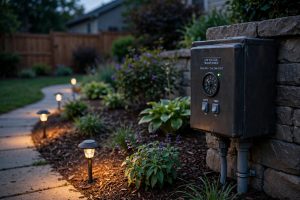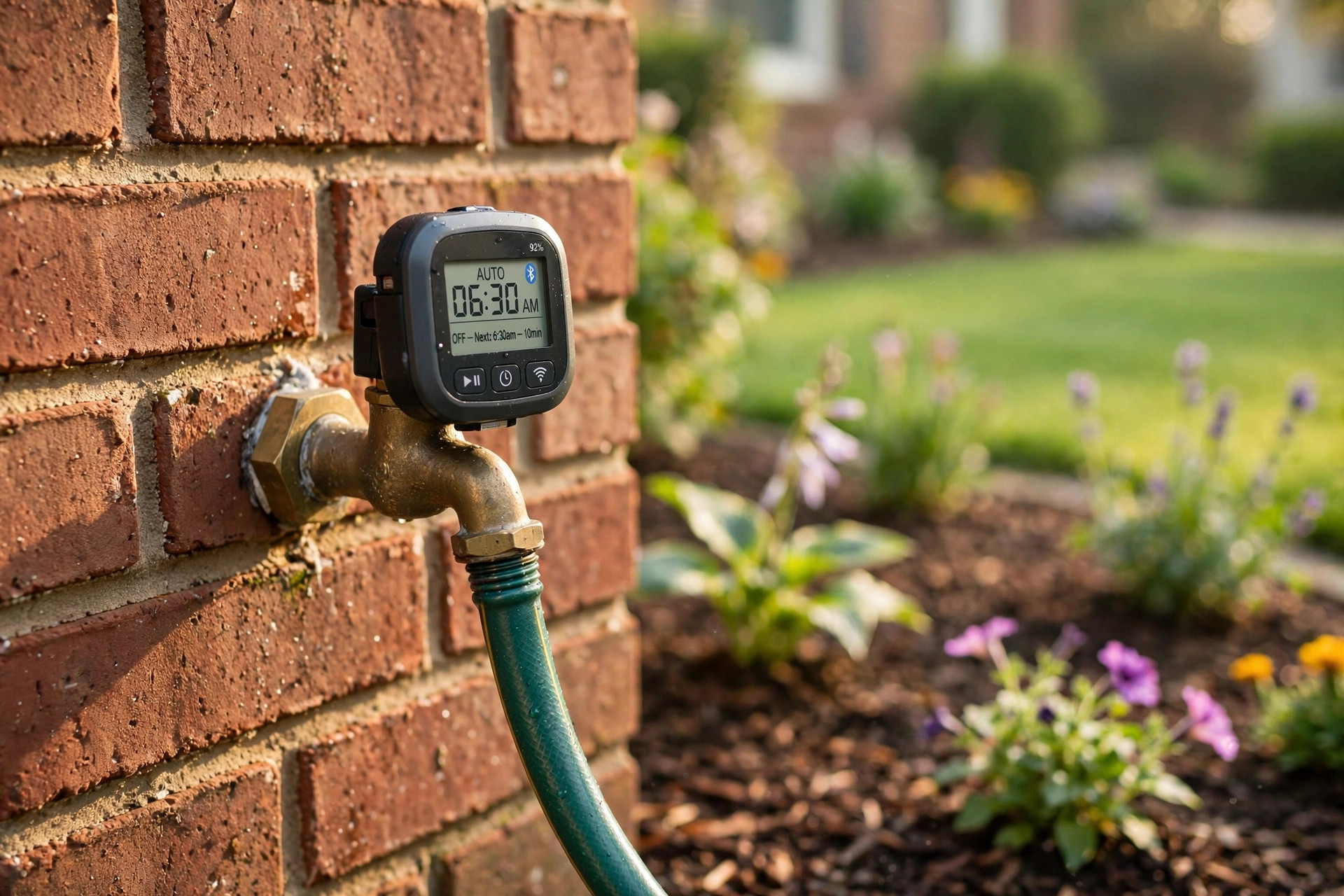

A summer lawn in Ohio or Texas drinks more water in one week than a house uses in a month. Most of that water is wasted. Sprinklers run in the rain. Hoses are left on all night. Grass drowns in one corner and turns brown in another. The best smart hose timer reviews 2026 USA shoppers can find all point to the same fix: a small device that screws onto the spigot and runs your watering plan without you. You set the schedule in an app. The timer opens and closes the valve. It even skips a watering day when the weather report says rain. This guide explains how these timers work, what to look for, what they cost, and which features matter most for an American yard.
Why It Matters
Water is no longer cheap in much of the country. Cities from Denver to Los Angeles limit outdoor watering to certain days. Some charge fines when water runs into the street. A smart hose timer takes the worry out of these rules. You program the allowed days once. The timer follows the plan all season.
There is also the matter of plant health. Lawns and flower beds like deep, even watering in the morning. Most people water in the evening because that is when they get home. Evening water sits on leaves all night and feeds disease. A timer can start the hose at 5:30 in the morning, every other day, without you getting out of bed. Review sites like Consumer Reports and CNET note that the best savings come not from the timer itself, but from the habits it makes automatic: morning watering, fixed run times, and no more forgotten hoses.
For gardeners who travel, the device is cheap insurance. A week in August without water can kill new sod. A smart timer keeps the beds alive and sends a notice to your phone when a cycle runs. That notice also helps you catch leaks early, since many new models measure flow.
What to Look For and How to Choose: Best Smart Hose Timer Reviews 2026 Usa
Buying a smart hose timer is simple once you know the few things that separate a good one from a bad one. Read the product page with a cold eye. Pretty pictures mean nothing. The spec sheet tells the story.
App and phone control
The “smart” part is the app. It should pair in minutes, show the schedule on one screen, and let you change a run time without standing next to the spigot. Check the phone rating of the app before you buy. A timer with a two-star app is a dumb timer with extra steps. Many buyers also want voice control through a home assistant, and a smart hose timer with wifi that links cleanly to the big platforms scores well in reviews. If you already run smart gear at home, this matters more than any other feature. Read up on the app and setup standards tech reviewers expect before you decide.
Zones and valves
Some timers control one hose. Others control two or four outlets from one box. A single-zone timer is fine for one lawn area or one row of beds. If you water the front lawn, the side bed, and a vegetable garden on different plans, buy a multi-zone unit. It costs more up front but is cheaper than three single timers.
Rain delay and weather data
The best models check local weather and skip or shorten a cycle when rain is coming. This is called rain delay, or weather intelligence. Without it you must watch the sky yourself and pause the schedule by hand. A hose timer with rain delay does the thinking for you. Look for a rain-sensing option if your town fines watering during rain.
Flow meter
A flow meter measures gallons per minute. This lets the app report how much water each cycle used. More important, it can warn you when flow is far above normal. That is the sign of a burst hose or a broken sprinkler head. For homes with old plumbing this feature pays for itself the first time it catches a leak.
Battery life and build
Most hose timers run on AA batteries and claim a full season per set. In hot states the truth is closer to two months. Check what battery type the unit takes and whether the battery door seals well. The housing should be rated for outdoor use with a proper gasket. Frost will crack a cheap timer, so bring it indoors before the first freeze. Builders’ guides at This Old House and Bob Vila remind readers that outdoor gear lasts only as long as its weakest seal.
Connection type
Older timers use a hub that plugs into your router. Newer ones use wifi direct or Bluetooth. Wifi gives you control from anywhere. Bluetooth works only when you are near the yard. If you travel, wifi is the right choice. If the spigot is far from your router, test the wifi signal there with your phone before you buy.
Types and Options
The market divides into three broad types. Each suits a different kind of yard.
Single-outlet smart timers
The simplest type. One spigot, one schedule, one app screen. These suit apartments with a small patio garden or homes with a single lawn area. They are the cheapest to buy and the easiest to set up. Look for a unit with a flow meter even at this level, since that is the feature that saves the most money over time.
Multi-zone smart timers
These boxes have two to four outlets on one body. Each outlet runs its own schedule. They suit the typical suburban lot: lawn out front, beds on the side, a drip line in the back. One app screen shows all zones. The price is higher, but one multi-zone box costs less than three single ones, and it needs one set of batteries.
Wifi irrigation controllers
A step above hose timers. These wire into an in-ground sprinkler system and control full valve manifolds. They are not hose timers in the strict sense, but many buyers compare them side by side. If you already have buried sprinkler lines, a controller is the better buy. If you water with hoses and above-ground sprinklers, stay with a hose timer. Retailers such as The Home Depot and Lowe’s stock both types side by side, which makes the price gap easy to see.
Solar-powered extras
A few new models add a small solar panel to charge the batteries. These suit sunny states where changing batteries twice a summer is a chore. They still need a battery backup for cloudy weeks, but the panel stretches each set much further. If you are also shopping for outdoor smart gear, you may like the solar approach found in the best solar security camera reviews 2026 usa lists and similar outdoor guides.
Cost and Price
Smart hose timers are one of the cheaper ways into a smart home. A basic single-outlet timer sells for twenty to forty dollars. Add a flow meter and wifi, and the price climbs to sixty to ninety dollars. Multi-zone units run eighty to one hundred and fifty dollars. Wifi irrigation controllers start near one hundred and fifty dollars and rise from there.
That is only the shelf price. Watch for the hidden costs. Some brands lock weather features behind a yearly app subscription. Others need a separate hub that sells for thirty dollars or more. Ask two questions before checkout: does the app need a subscription, and does the box need a hub? If the answer to either is yes, add that cost to the price tag and compare again.
Against this cost stands the water bill. The EPA’s long-running studies of home water use show that outdoor watering makes up a large share of summer use in American homes, and most of it is waste. A timer that skips rainy days and stops forgotten hoses can cut that waste by a third. In a city with high water rates, a sixty-dollar timer can pay for itself in one summer. Even where water is cheap, the saved weekends and the greener lawn have real value.
Care and Upkeep
A hose timer is a small machine, and small machines last when they are kept clean and dry. Start with the filter. Most units have a small mesh screen where the hose connects. Pull it out twice a season and rinse it under the tap. Sand and grit wear out the valve and cause slow leaks.
Watch the battery door. Alkaline batteries leak acid in heat, and one leaked battery can eat the contacts inside the box. Check the batteries once a month in summer. Replace them at the start of each season, not when the app warns you they are low.
Before winter, take the timer off the spigot. Drain it by shaking it once and leaving it open in the garage for a day. Store it indoors where it will not freeze. Safety resources from the U.S. Consumer Product Safety Commission stress that any outdoor electrical or battery device should be checked and stored before hard freezes arrive.
Clean the app once in a while too. Old schedules pile up. At the start of spring, delete last year’s plans and rebuild them fresh. Check that rain delay is still turned on after each app update, since updates sometimes reset settings to defaults.
Safety
A hose timer is low voltage and low risk, but a few rules keep it that way. Never open the housing while the batteries are in. Water and batteries do not mix. If the box has been flooded, pull the batteries and let it dry for two full days before use.
Keep the timer away from the electric meter and the breaker box. This is a small thing, but inspectors frown at water gear near service panels. Mount it on the spigot only, with the hose hanging free so weight does not pull on the pipe.
Check local rules. Some cities ban watering during the heat of the day. Some water districts require a backflow preventer on any hose that runs unattended. A timer is “unattended” by design. A five-dollar backflow valve on the spigot keeps fertilizer or hose water from flowing back into the house line. If you are building a wider outdoor safety plan, the same thinking runs through best smart floodlight for backyard usa guides and outdoor camera setups, where safe mounting and weather sealing come first.
Frequently Asked Questions
Do smart hose timers work without wifi? Most do, with limits. Bluetooth models work fine without home wifi as long as your phone is close. Wifi models need the home network for remote control and weather data, but they will still run a saved schedule if the wifi drops. Program the schedule at home first. Then a storm-day outage will not stop the watering plan.
How long do the batteries last? Plan on one set of AA batteries per season for a single-outlet timer. Hot climates cut that to two or three months. Multi-zone units use more power and may need two changes a year. Lithium AA cells last longer in heat than cheap alkaline cells, and they resist leaking.
Can a smart hose timer run a sprinkler? Yes, within reason. Any above-ground oscillating or impact sprinkler works fine. The timer only opens the water; the sprinkler does the rest. Keep the run time within the sprinkler’s range and check coverage with tuna cans on the lawn. For in-ground sprinkler valves, you need a wired irrigation controller instead.
Will it freeze and crack in winter? Any timer left on a spigot through a hard freeze can crack. The fix is simple: remove it in fall, drain it, and store it indoors. This takes five minutes and is the most important care step in northern states.
Do I need an app subscription? It depends on the brand. Most basic scheduling is free. Some brands charge a yearly fee for weather intelligence, flow history, or unlimited zones. Read the fine print on the product page and in the app store listing. Add the subscription cost to your comparison before you pick a winner.
Are they worth it for a small garden? For one small bed, a simple mechanical timer may be enough. The smart timer earns its keep when you have two or more areas, travel in summer, or face watering-day rules. If you want leak alerts, the flow meter models are worth the extra cost even for a single bed. For renters watching water use closely, a related smart device worth a look is the smart water leak detector reviews 2026 usa category, which guards the indoor side of the same problem.
A Short Final Word
A smart hose timer is a quiet tool. It does not water the lawn itself. It makes sure the lawn is watered the way you meant to water it, on the days you meant, at the hour you meant, even when you are away. The best smart hose timer reviews 2026 USA shoppers post keep coming back to the same lessons: buy for your number of zones, insist on a good app, check for a subscription, and bring the unit inside before winter. Do that, and a sixty-dollar device will give you greener grass, a smaller water bill, and one less chore every summer. For wider coverage of the smart home world, from entry locks to alarms, start with the broad security brand pages at ADT and work outward from there.
References
ADT. (n.d.). Home security and automation. https://www.adt.com Bob Vila. (n.d.). Home improvement advice. https://www.bobvila.com CNET. (n.d.). Technology news and reviews. https://www.cnet.com Consumer Reports. (n.d.). Product reviews and ratings. https://www.consumerreports.org Lowe’s. (n.d.). Home improvement products. https://www.lowes.com PCMag. (n.d.). Technology product reviews. https://www.pcmag.com The Home Depot. (n.d.). Home improvement products. https://www.homedepot.com This Old House. (n.d.). Home renovation guidance. https://www.thisoldhouse.com U.S. Consumer Product Safety Commission. (n.d.). Product safety information. https://www.cpsc.gov
Was this guide helpful?

About James Carter
The My Garden US editorial team writes practical, in-depth home and garden guides for American homeowners — tested advice, no fluff.
You May Also Like

Smart Medication Reminder Dispenser Reviews USA: What Really Works
September 2, 2026 0 views
Apartment Security System No Drilling Reviews: A Complete Guide for Renters
July 25, 2026 0 views
Best Door Alarm Sensor for Apartments USA
February 14, 2026 0 views