
Power outages are part of life in many parts of the United States. Storms bring down lines. Heat waves strain the grid. When the lights go out, a home battery can keep the fridge cold and the phone charged. Two names come up again and again in the tesla powerwall vs generac pwrcell comparison. The Tesla Powerwall is the famous one. The Generac PWRcell is the challenger from a company that has made standby generators for decades. Both store electricity. Both pair with rooftop solar. But they differ in design, size, price, and how they behave when the grid fails. This article walks through each point in plain terms so you can pick the right one for your home.
Why Home Battery Storage Matters
A battery gives you control. Solar panels make power while the sun shines. Without a battery, that power either gets used at once or sent back to the grid. With a battery, you save it for the evening. When rates rise at dinner time, the battery covers your loads. When the grid drops, it keeps the essentials running.
The main reasons homeowners buy a battery are backup power, lower bills, and solar self-use.
Battery technology has matured. Lithium-ion packs are smaller, safer, and longer-lived than the lead-acid banks of years past. Both the Powerwall and the PWRcell use lithium chemistries. Both come with apps that show your power flow in real time. The choice is less about basic quality and more about fit: your home, your panels, your budget.
How To Choose Between Them: Tesla Powerwall vs Generac Pwrcell Comparison
Start with your power needs. Walk through your house during a blackout and list what must stay on. A refrigerator uses about 150 to 200 watts while running. A freezer is similar. A phone charger is small. A well pump can draw 1,000 watts or more at start. Add these up. That number is your critical load.
Then think about how long outages last where you live. A few hours call for a smaller battery. A day or more calls for a larger one, or several batteries stacked together. Both brands let you add units as needs grow.
Also check your main electrical panel. Some homes need a panel upgrade before a battery can be installed. Your installer will confirm this during a site visit. Reviews of the best home battery backup system reviews usa can give you a wider view of the market before you narrow your list.
Get quotes from certified installers for both brands. Prices vary by region, wiring, and permit fees. A quote on paper beats any guess. Ask each installer how many of these systems they have put in. Experience matters with battery work.
Tesla Powerwall: Key Facts
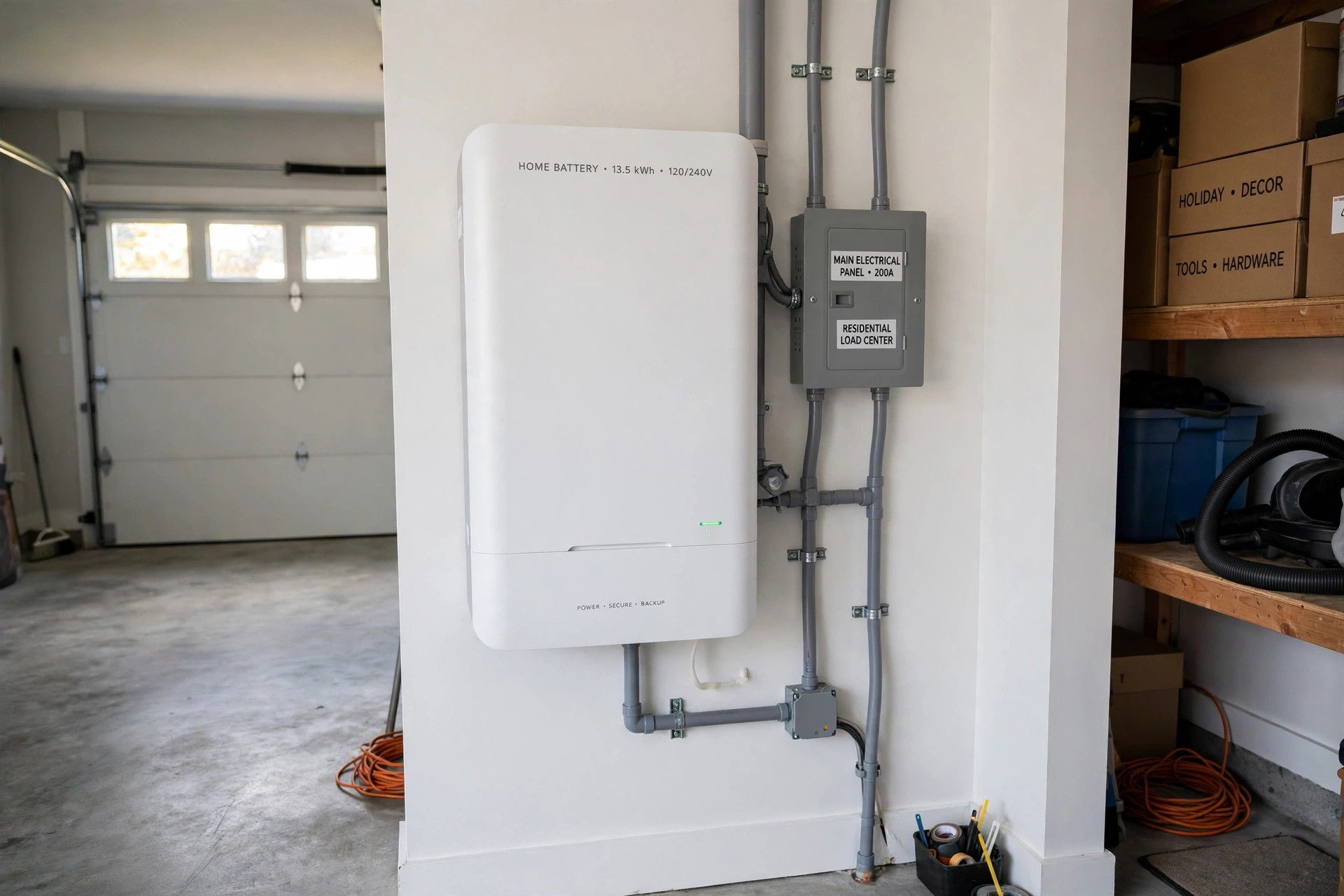
The Tesla Powerwall is an all-in-one unit. Battery, inverter, and controls sit in one sleek box that mounts on a wall or on the floor. It is designed to be simple. One box, one warranty, one app.
The current Powerwall model holds about 13.5 kilowatt-hours of usable energy. That is enough to run a fridge, some lights, a router, and a few small devices through the night. It can deliver 11.5 kilowatts of continuous power in its newest version, which covers most household peaks. Earlier versions delivered less, so confirm which model your installer quotes.
The Powerwall works with solar through its built-in inverter, which accepts DC power from panels. It also works in homes without solar, charging from the grid during cheap off-peak hours and discharging when rates peak. This is called time-based control.
The Tesla app is one of the strong points. It shows solar production, home use, battery charge, and grid flow on one screen. Alerts tell you when the grid goes down or when a storm is forecast.
Tesla sells through its own network and through certified installers. In some markets you must buy solar and battery together from Tesla. Third-party installers often sell the Powerwall on its own. Installation usually takes one day once permits are in hand.
Generac PWRcell: Key Facts
The Generac PWRcell is a modular system. The inverter and battery modules are separate parts inside a cabinet. You can start small and add battery modules later. This design comes from Generac’s long history with generators and backup power equipment.
PWRcell battery modules come in about 3 kilowatt-hour blocks. A full cabinet can hold up to 18 kilowatt-hours, which is larger than a single Powerwall. For bigger homes, you can install more than one cabinet. Power output scales with the number of modules you install.
The PWRcell system can be set up in DC-coupled or AC-coupled form. In plain terms, it can connect to new solar installs or be added to an existing solar system. It includes a transfer switch function so the home can island from the grid during an outage. This is the same kind of function that makes Generac’s standby generac vs kohler generator comparison usa models trusted in blackout country.
Generac’s monitoring platform shows production, storage, and grid use.
Generac sells through a wide dealer network. Because Generac dealers also sell generators, they tend to be strong on backup-power design. They can help you plan whole-home versus partial-home backup with a clean load plan.
Head-To-Head Comparison
This section puts the two systems side by side on the points that matter most.
Energy Capacity
A single Powerwall stores about 13.5 kilowatt-hours. A single PWRcell cabinet stores from about 9 up to 18 kilowatt-hours depending on how many modules you buy. If you want the largest single unit, the PWRcell cabinet wins. If 13.5 is enough, one Powerwall does the job. Both let you stack more units for bigger homes.
Power Output
The newest Powerwall delivers up to 11.5 kilowatts continuous. The PWRcell output depends on its inverter and module count, and it can be sized to match heavy loads like well pumps and air conditioners. For homes with big starting loads, the PWRcell’s flexible sizing is an advantage. For typical homes, either handles the job.
Solar Pairing
The Powerwall is DC-coupled with a built-in solar inverter on newer models, which keeps wiring simple for new installs. The PWRcell works with both new and existing solar arrays, which helps homeowners who already have panels and want to add storage. If you already own a solar system, the PWRcell often fits more easily. If you are starting from scratch, both work well.
Backup Behavior
Both switch to battery power automatically when the grid fails. The Powerwall’s gateway detects the outage and islands the home in a fraction of a second. The PWRcell does the same through its inverter controls. In real use, the fridge keeps running and most people notice only the lights blink. Both can be set to protect selected circuits or the whole home.
App And Monitoring
Tesla’s app is simpler and more popular with owners. Generac’s platform is deeper for installers and service teams. If you enjoy watching your power flow on your phone, the Powerwall app is the nicer one. If you want your dealer to watch the system for you, Generac’s setup works well.
Warranty
Both brands offer a ten-year warranty as standard. Tesla’s warranty covers the unit against defects and guarantees a level of capacity over time. Generac’s warranty covers the cabinet, inverter, and modules with similar terms. Read the fine print on both. Warranties usually require installation by a certified contractor and registration of the system.
Cost And Price
Price is where many decisions are made. A single installed Powerwall typically runs between $11,000 and $16,000 in the United States before incentives. A PWRcell system varies more because of its modular design. A smaller PWRcell setup can cost about the same as a Powerwall. A full 18 kilowatt-hour cabinet with a larger inverter can run higher, often in the range of $15,000 to $25,000 installed.
These figures include equipment, labor, permits, and the gateway or transfer hardware. They do not include any main panel upgrade, which can add $1,500 to $3,000 if your panel is old or full.
The federal tax credit for home energy storage cuts the net cost in a major way. As of recent years, residential battery storage paired with solar qualifies for a credit worth about 30 percent of the project cost. Rules change, so check current law before you buy. Some states and utilities add their own rebates or bring-your-own-battery programs that pay you for sharing stored power during grid peaks.
Get at least three quotes. Ask each installer for the price before incentives, the price after incentives, and the warranty terms in writing. A cheap quote that skips proper permits is not a bargain.
Care And Upkeep
Home batteries need little care. There are no fluids to check and no filters to change. The main tasks are simple.
Keep the unit clear of clutter. Both systems need airflow around the cabinet for cooling. Do not stack boxes against the battery. If the unit sits outdoors, keep plants and leaves away from the vents.
Check the app once a month. Look at the charge level and make sure the system cycled as expected. If the app shows a fault or the battery stays empty, call your installer. Do not open the cabinet yourself. High-voltage equipment should only be serviced by trained people.
Software updates arrive over the air. The battery downloads them on its own through its internet connection. Keep the unit connected to your home network so updates and monitoring keep working. If your internet drops, the battery still backs up the house; only remote monitoring stops.
Batteries lose some capacity over the years. This is normal for lithium chemistry. Both makers guarantee a minimum capacity after ten years. In practice, most units outlast their warranty with useful life left.
Safety
Battery safety starts with a certified installer. Both systems carry listings from recognized testing labs. Your installer should pull a permit and pass inspection. This is not red tape. It is how you know the wiring, grounding, and disconnects are correct.
Mount the battery where it belongs. Follow the maker’s rules on indoor versus outdoor placement, clearances from doors and windows, and distance from heat sources. Garages are common spots. Some local codes require bollards or barriers if a car could strike the unit.
Keep smoke alarms working near the install area. Modern smart alarms can alert your phone if something goes wrong while you are away. Many homeowners pair battery storage with broader home safety gear, and guides to the best solar security camera reviews 2026 usa show how solar gear can protect the home in other ways too.
The U.S. Consumer Product Safety Commission publishes guidance on home energy products and recalls. Checking cpsc.gov before you buy is a sensible habit.
In a fire or flood, stay out of the way and let trained crews handle the scene. Lithium batteries can behave in special ways during fires, and firefighters are trained for it. Your job is to get people out and call for help.
Frequently Asked Questions
Can I add a battery to my existing solar panels?
Yes, with both brands. The PWRcell is often the easier add-on for existing arrays because it can work in AC-coupled form. The Powerwall can also retrofit to existing solar in many cases. Your installer will check your inverter and wiring first.
How long will a battery run my house in an outage?
It depends on your loads. A single 13.5 kilowatt-hour unit can run a fridge, lights, router, and phone chargers for roughly a day if you are careful. Add air conditioning or an electric water heater and the hours drop fast. Bigger loads need bigger or multiple batteries.
Do I need solar for a battery to make sense?
No. A battery can charge from the grid at night when rates are low and discharge during pricey evening hours. This is called rate arbitrage. It can also serve as pure backup power. Solar plus battery is the strongest pairing, but grid-charged backup is common too.
Which one is better for whole-home backup?
Both can back up a whole home if sized right. The PWRcell’s modular design makes whole-home sizing simpler because you can add modules to match heavy loads. The Powerwall handles whole-home backup too, often with two or more units for larger houses. A load study by your installer settles the question.
How long do these batteries last?
Expect ten to fifteen years of useful service. Both carry ten-year warranties. Capacity fades slowly over time, and most owners replace or expand the system well before it stops working.
Can I install a battery myself?
No. This is not a do-it-yourself project. The equipment runs at high voltage, ties into your main panel, and must pass inspection. Use a certified installer for either brand. Bad wiring is a fire risk and voids the warranty.
A Final Word
The tesla powerwall vs generac pwrcell comparison comes down to fit. The Powerwall is the simple, elegant pick with the best app and a clean one-box design. The PWRcell is the flexible pick with modular sizing, a larger maximum cabinet, and a dealer network rooted in backup power. Both are proven, both carry strong warranties, and both can keep your home running when the grid goes dark.
List your critical loads. Decide how long you need backup. Get firm quotes from installers who have done both systems. Then choose the one that matches your home and your budget. Either way, you gain the same core benefit: power on your terms, whether the grid is up or down.
For more background, see PCMag, The Verge, and Consumer Reports. For more background, see Ring, SimpliSafe, and ADT.
References
ADT. (n.d.). Home security and automation. https://www.adt.com Consumer Reports. (n.d.). Product reviews and ratings. https://www.consumerreports.org Google Store. (n.d.). Smart home devices. https://store.google.com PCMag. (n.d.). Technology product reviews. https://www.pcmag.com Ring. (n.d.). Smart home security devices. https://www.ring.com SimpliSafe. (n.d.). Home security systems. https://www.simplisafe.com The Verge. (n.d.). Technology news and reviews. https://www.theverge.com U.S. Consumer Product Safety Commission. (n.d.). Product safety information. https://www.cpsc.gov
Was this guide helpful?

About James Carter
The My Garden US editorial team writes practical, in-depth home and garden guides for American homeowners — tested advice, no fluff.
You May Also Like
Video Doorbell for Apartments With No Wiring: A Complete Guide for USA Renters
May 27, 2026 0 views
Best Outdoor Security Camera Without Wifi Subscription: A Plain Guide
June 30, 2026 0 views
Smart Home WiFi Network Setup Guide USA: A Plain Plan for a Strong Home
August 28, 2026 0 views