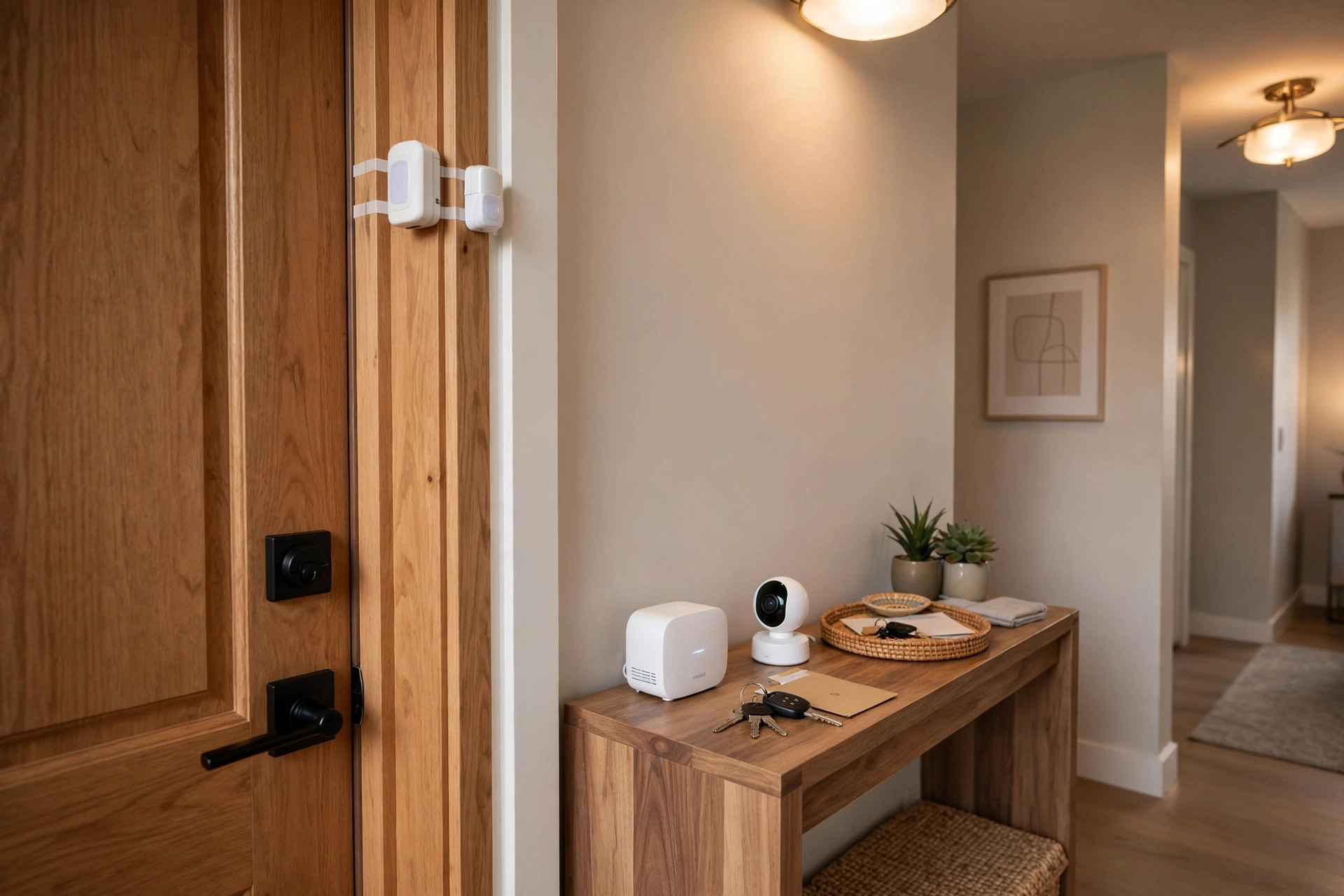

Apartment security system no drilling reviews are written for one kind of reader. That reader rents. The reader wants a home alarm but the lease forbids holes in the wall. This guide explains what these systems are, how they work, what they cost, and how to pick one. It is written in plain words. Every part of this guide aims at the renter who cannot drill.
Why a No-Drilling Apartment Security System Matters
Most leases have a simple rule. Do not drill into walls. Do not drill into doors. Do not drill into window frames. A renter who drills may lose the security deposit. Some landlords charge a repair fee for each hole.
A regular alarm system needs screws. It needs wire holes. It needs a panel bolted to the wall. None of that fits a rental. A no-drilling system fits. It uses sticky mounts, brackets, and freestanding parts. It can be taken down at the end of the lease. It leaves no marks when removed with care.
Break-ins do not spare apartments. A strong lock helps. A door sensor helps more. A camera at the door helps even more. A full system ties these parts together. One phone app can show the door status, the window status, and the motion in the living room. That is peace of mind for a renter.
How These Systems Work: Apartment Security System No Drilling Reviews
A no-drilling apartment security system is a set of small wireless parts. Each part runs on batteries. Each part talks to a base station by radio. The base station talks to your phone by Wi-Fi or cell signal.
The parts are small. A door sensor is two pieces. One piece sticks to the door frame. The other sticks to the door. When the door opens, the pieces part. The system sends an alert.
A motion sensor sits on a shelf or a stand. It watches a room for movement. A glass-break sensor listens for the sound of breaking glass. A small camera can sit on a table and face the door.
Mounting is done with adhesive strips. These strips hold strong but pull off clean. Some kits include stands that hold sensors at the right height. No tools are needed. No screws are needed. Most renters finish setup in under one hour.
Types of No-Drilling Apartment Security Systems
Do-It-Yourself Kits
Do-it-yourself kits are the most common choice. The box holds a base station, two or three door sensors, one motion sensor, and a keypad. The user sticks each part in place. The user sets up the app. There is no installer and no visit from a company.
These kits cost less than monitored systems. They let the renter add parts over time. They can be packed and moved to a new apartment.
Professionally Monitored Systems
Some companies offer monitoring with no-drilling gear. The parts are the same sticky-mount type. The difference is the plan. When an alarm sounds, a call center is alerted. The center calls the renter. If no one answers, the center calls the police.
This costs a monthly fee. For some renters the fee is worth it. A monitored plan helps when the renter is at work or on a trip. Read the contract before signing. Some plans ask for a one-year term.
Standalone Wireless Sensors
Some renters want less than a full system. A single door sensor with a loud alarm can guard the main door. A small indoor camera can watch the living room. These parts work on their own. They cost little. They need no base station.
This is a good path for a tight budget. The renter can add parts later. A door sensor today and a camera next month is fine.
Video Doorbells Made for Apartments
A video doorbell for an apartment uses battery power and a no-drill mount. The mount can clamp to the door or use adhesive. The renter can see who is at the door from the phone. This is a strong add-on to any apartment alarm kit.
One warning is needed. Some buildings do not allow doorbells on the front of the unit door. Check with the landlord first. A unit that sits inside the apartment, facing the door through a window or peephole mount, can be a fair middle path.
What to Look for When You Choose
Battery Life
Batteries power every part. Good door sensors last one to two years on one set of batteries. Cameras with video need charging every few months. Check the battery spec for each part. A system that needs charging every week will be a chore.
Adhesive Strength and Clean Removal
The mount strips must hold the part but come off clean. Look for reviews that mention clean removal. Cheap tape can pull paint. Good strips release with a pull tab. The apartment security system no drilling reviews that renters trust most always mention how the parts came down.
Phone App Quality
The app is the control panel. It must show each sensor. It must send fast alerts. It must be easy to arm and disarm. Read recent app reviews. An app that fails at two in the morning is worse than no app at all.
Range and Signal
Apartment walls are thick. Concrete and brick can block radio signals. The base station must reach every sensor. A kit with good range matters in a large unit. Some kits add a range extender.
Camera Rules in the Lease
An indoor camera is usually fine in a rented unit. A camera that points out a window at other tenants can cause trouble. Keep cameras inside the unit. Point them at doors and entry points only.
Professional Monitoring or Self-Monitoring
Self-monitoring costs nothing each month. The renter gets the alerts and calls the police if needed. Monitored plans cost a monthly fee but add a call center. The right choice depends on the budget and the schedule of the renter.
Cost and Price
A basic no-drilling kit costs between 150 and 300 dollars. That kit guards a door and a room. It includes the base station and the app.
A larger kit with four door sensors, two motion sensors, and a camera costs between 300 and 600 dollars. A video doorbell adds about 100 to 200 dollars.
Monitored plans cost between 15 and 35 dollars a month. Some plans need a one-year contract. Others run month to month.
Extra parts cost between 20 and 60 dollars each. A spare door sensor is about 25 dollars. A motion sensor is about 40 dollars. An outdoor-rated camera costs more than an indoor one.
There are no install fees for do-it-yourself kits. That is a real saving. A drilled-in system can cost 200 dollars or more just for the install visit.
Care and Upkeep
Battery care is the main chore. Check battery levels in the app once a month. Keep spare batteries in a drawer. Door sensors use coin batteries. Motion sensors use larger cells.
Keep adhesive mounts clean. Dust behind a sensor can loosen the strip. Wipe the wall and the part with a dry cloth when you check batteries.
Update the app when updates appear. Updates fix bugs and add features. Old software can miss alerts.
Test the system each month. Open a door and check that the alert arrives. Walk past the motion sensor and check the app. A test takes five minutes.
When moving out, remove each part with care. Pull the adhesive tab slow and low. Clean any marks with a damp cloth. Pack parts in the original box if you have it.
Safety
An alarm does not replace a good lock. Use both. Keep the deadbolt locked. A door sensor tells you when a door opens. A deadbolt makes the door hard to open at all.
Keep the base station near the center of the apartment. This gives the best signal to all parts. Do not hide it in a metal cabinet. Metal blocks radio waves.
Use strong passwords for the app and the Wi-Fi. A weak password lets others see your cameras. Turn on two-step login if the app offers it. Guidance on securing smart home gear explains this step in plain terms.
Check local rules about cameras. Some states limit where cameras can point. Keep cameras inside the unit and never in a shared bathroom or laundry room.
Buy gear that meets safety marks. The federal safety agency warns that cheap electronics can be a fire risk. Stick to known brands with real support lines.
Apartment Security System No Drilling Reviews: What Renters Say
Renter reviews share a pattern. The good reviews mention fast setup. They mention clean removal at move-out. They mention loud sirens and fast phone alerts.
The bad reviews mention weak adhesive in hot rooms. They mention app lag. They mention cameras that drain batteries fast. They mention poor range in concrete buildings.
Read reviews from renters, not homeowners. A homeowner review talks about drill mounts and wired parts. That does not help you. Look for words like lease, deposit, renter, and move-out in the review text.
Test reports from Consumer Reports and hands-on tests at CNET give honest scores on siren volume, app speed, and battery life. These tests are worth reading before you buy.
FAQ
Can a landlord stop me from using a no-drilling security system?
In most cases no. A system that makes no holes and adds no wires does not change the unit. The lease ban on drilling does not cover sticky mounts. Still, read your lease. A few leases ban cameras in common halls. Tell the landlord what you plan to put up. A short note can prevent a fight later.
Will the adhesive strips damage paint?
Good strips come off clean if used right. Pull the tab slowly. Pull it flat along the wall. Do not yank it outward. Heat from a sunlit wall can make cheap tape melt into paint. Use the strips that come in the box. They are made for clean removal.
Do these systems need Wi-Fi?
Most need Wi-Fi for phone alerts and camera video. Some base stations use a cell signal instead. A cell-signal base station works during a Wi-Fi outage. It costs more each month. If your building Wi-Fi is weak, pick a kit with a cell backup option.
Can I take the system to my next apartment?
Yes. That is the main point of a no-drilling kit. Pull each part down. Pack it in a box. Stick it up in the new unit. The app keeps your settings. Many renters move the same kit two or three times.
Are cheap standalone door alarms enough?
For one door, yes. A 20-dollar standalone door alarm makes a loud sound when the door opens. It will not call your phone. It will not link to other sensors. It is a fair start for a small budget. A full kit gives more cover.
How loud are the sirens?
Most base station sirens reach 85 to 100 decibels. That is as loud as a passing truck. It is enough to wake a sleeper and scare off a burglar. Siren loudness is one of the scores to compare in alarm system test reviews.
A Short Final Word
A renter does not need holes in the wall to be safe. A no-drilling apartment security system guards doors, windows, and rooms with sticky mounts and wireless parts. Pick a kit with long battery life, clean-removal strips, and a good app. Read renter reviews before you buy. Test the system each month. Take it with you when you move. Safety can follow you from one lease to the next.
For related reading, see our guides on the best security system for renters 2026 usa, the best door alarm sensor for apartments usa, and window alarm sensors reviews for renters usa. Product guides at SimpliSafe, Ring, and the Google Store show current no-drill options, while ADT covers monitored plans for renters.
References
ADT. (n.d.). Home security and automation. https://www.adt.com CNET. (n.d.). Technology news and reviews. https://www.cnet.com Consumer Reports. (n.d.). Product reviews and ratings. https://www.consumerreports.org Google Store. (n.d.). Smart home devices. https://store.google.com PCMag. (n.d.). Technology product reviews. https://www.pcmag.com Ring. (n.d.). Smart home security devices. https://www.ring.com SimpliSafe. (n.d.). Home security systems. https://www.simplisafe.com The Verge. (n.d.). Technology news and reviews. https://www.theverge.com U.S. Consumer Product Safety Commission. (n.d.). Product safety information. https://www.cpsc.gov
Was this guide helpful?

About Robert Taylor
The My Garden US editorial team writes practical, in-depth home and garden guides for American homeowners — tested advice, no fluff.
You May Also Like
Motion Sensor Flood Light Reviews 2026 USA: What Really Works
May 15, 2026 0 views
Smart Medication Reminder Dispenser Reviews USA: What Really Works
September 2, 2026 0 views
EV Charger Tax Credit 2026 for Homeowners in the USA: A Plain Guide
July 24, 2026 0 views