This kitchen pantry cabinets buying guide USA homeowners can rely on begins with one simple truth. A pantry cabinet is one of the most used pieces of furniture in a kitchen. It holds your canned goods, your dry food, your small appliances, and the items you reach for every day. When it is chosen well, cooking is easier and the kitchen stays calm. When it is chosen poorly, shelves bow, doors sag, and food gets lost in dark corners. This guide walks through every step of the purchase, from measuring your space to setting a budget and keeping the cabinet in good shape for years.
Why a Good Pantry Cabinet Matters
A pantry cabinet does more work than most people expect. It stores hundreds of pounds of food and goods in a small footprint. It keeps dry goods away from heat, light, and moisture. It gives every box, jar, and can a fixed place. In smaller kitchens, a tall pantry cabinet can stand in for a whole closet. In larger kitchens, it keeps the countertops clear and the cabinets uncluttered.
The right cabinet also protects your money. Food that sits in a hot or damp cabinet spoils faster. Shelves that bend under weight crack jars and cans. Doors that do not close let in dust and pests. A well-built pantry cabinet pays for itself in less waste and fewer repairs. Shoppers who read reviews of home goods at Consumer Reports know that storage furniture fails most often at weak shelves and cheap hinges. Those two parts deserve your closest attention.
What to Look For Before You Buy: Kitchen Pantry Cabinets Buying Guide Usa
Size and Fit
Measure your space before you look at a single product page. Write down three numbers: width, height, and depth of the spot where the cabinet will stand. Then measure the doorway and the hallway path into the kitchen. Many buyers in the United States discover that a tall pantry cabinet will not fit through a narrow door or under a low ceiling. Leave at least two inches of clearance above the cabinet for airflow and easy setup. Leave room in front for the doors to swing open fully.
Standard pantry cabinets run 12 to 24 inches wide, 12 to 24 inches deep, and 60 to 96 inches tall. A cabinet 18 inches wide and 84 inches tall is a common middle choice. If your ceiling is low, look at shorter models or stacking units. Guides to kitchen planning at This Old House stress that careful measuring prevents the most common remodeling errors. A tape measure is the cheapest tool in this whole project.
Materials and Build Quality
Pantry cabinets are sold in several materials. Solid wood is the strongest and the most costly. It holds heavy loads well and can be repaired if scratched. Plywood is a strong and lighter option that resists warping better than particleboard. Medium-density fiberboard, often called MDF, gives a smooth surface for painted finishes but swells when wet. Particleboard is the cheapest and the weakest. It can sag under canned goods within a year.
Look at how the cabinet is joined. Dowels, screws, and metal brackets hold better than glue alone. Pull gently on a shelf to test for wobble. Check that the back panel is solid, not thin cardboard, because a solid back keeps the cabinet square and strong. The finish matters too. A sealed finish resists spills and steam from the stove. Unsealed wood inside a cabinet absorbs odors and moisture. If you want to match the rest of your kitchen, read a guide to shaker cabinet doors buying guide usa so the door style of your pantry fits your current cabinets.
Storage Layout
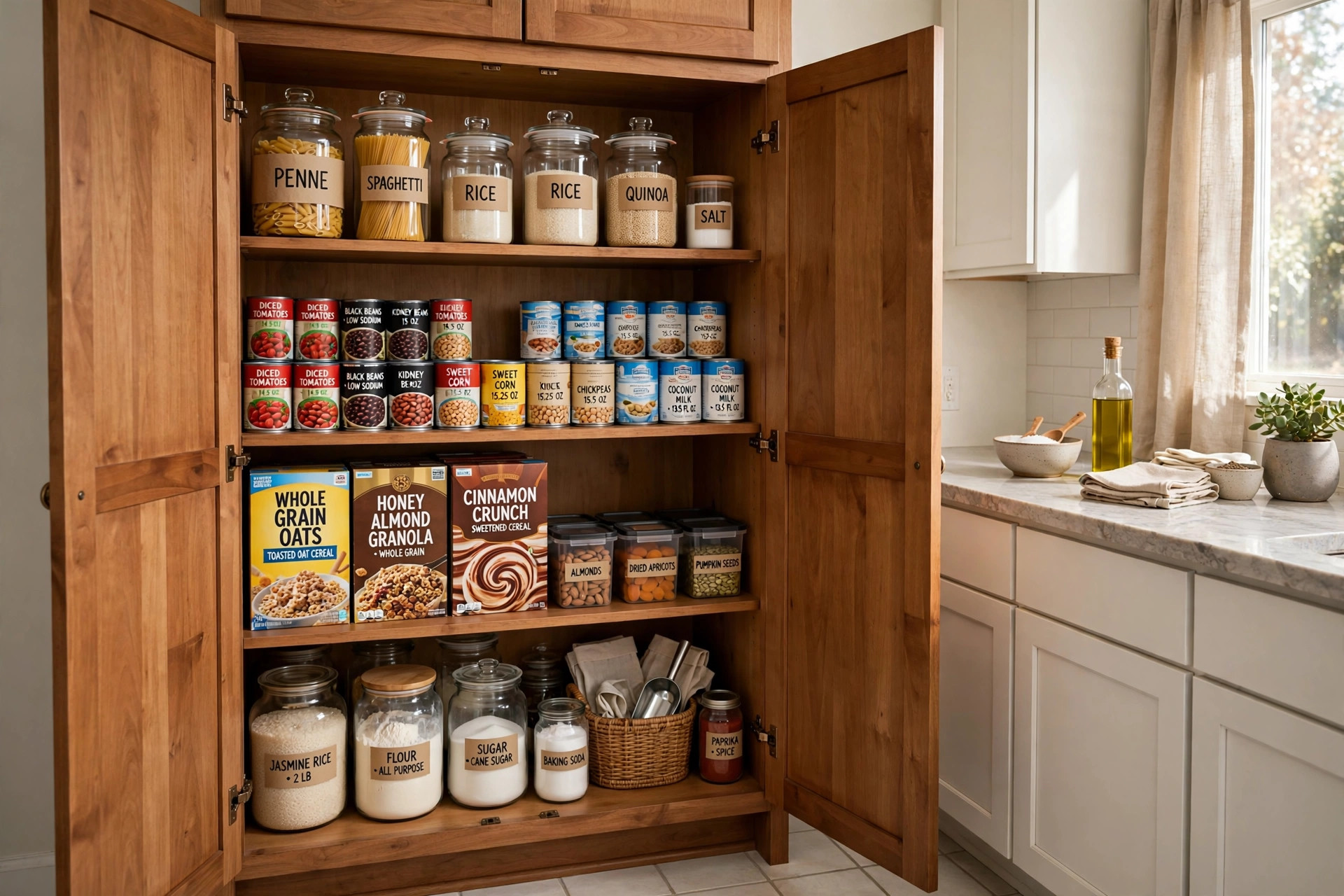
Think about what you will store. Cans and jars need shallow, strong shelves so nothing hides in the back. Cereal boxes and bulk bags need taller gaps between shelves. Adjustable shelves are worth the extra cost. They let you change the layout as your needs change. Fixed shelves lock you into one arrangement.
Pull-out shelves and drawers bring items at the back into reach. They are kind to older cooks and to anyone with a deep cabinet. A lazy Susan on a lower shelf can hold oils and sauces. Door racks give extra space for spices and small packets. Make sure the shelves are at least three-quarters of an inch thick if you plan to store heavy cans. Thin shelves will bow. Product listings at The Home Depot and Lowe’s usually show shelf thickness in the specifications, so read them before you order.
Door and Hardware Style
Doors change both the look and the daily use of a pantry cabinet. A single tall door is simple and costs less. Double doors give a wide view of everything inside and let you reach both sides at once. Glass doors show off neat shelves but demand that the inside stays tidy. Solid doors hide clutter and block light, which is better for food storage.
Hardware decides how the cabinet feels in your hands. Soft-close hinges keep doors from slamming. Full-extension drawer slides let drawers open all the way. Metal knobs and pulls last longer than plastic ones. Oil-rubbed bronze, brushed nickel, and black are common finishes that match most kitchens. Before you settle on a style, compare notes with a kitchen island seating buying guide usa if you are planning the whole kitchen at once, so finishes match across the room.
Types of Kitchen Pantry Cabinets
Freestanding pantry cabinets stand alone against a wall. They need no installation beyond leveling the feet. They are the best choice for renters and for anyone who wants to move the cabinet later. Most are 60 to 72 inches tall.
Built-in pantry cabinets are fixed to the wall and often match the kitchen cabinets. They look like part of the kitchen and use space from floor to ceiling. A carpenter or installer usually fits them. They cost more but hold more.
Pull-out pantry towers are narrow cabinets, often 9 to 15 inches wide, with shelves that slide out like drawers. They fit into slim gaps between appliances. They are excellent for cans and spices.
Walk-in pantry shelving units are open shelf systems for a small closet or corner. They are not cabinets with doors, but many buyers group them with pantry cabinets. They give the most storage per dollar but need a clean, dry room.
Corner pantry cabinets use a corner of the kitchen with a diagonal or L-shaped door. They turn dead space into storage. They work well in galley kitchens.
When you plan the whole project, a quartz countertop installation buying guide usa can help you time the pantry work with other kitchen upgrades, so the kitchen is out of use only once.
Cost and Price in the USA
Prices vary widely. A simple particleboard freestanding pantry cabinet can cost as little as one hundred dollars. A solid plywood cabinet of good quality usually runs three hundred to eight hundred dollars. A custom built-in pantry in solid wood can cost one thousand five hundred dollars or more, not counting installation.
Three factors set the price. First is material. Solid wood costs the most. Plywood sits in the middle. Particleboard costs the least. Second is size. Taller and wider cabinets cost more. Third is hardware and finish. Soft-close hinges, pull-out shelves, and factory paint add to the bill.
Set your budget before you shop, and add ten percent for small extras like wall anchors, shelf liner, and leveling shims. Watch for sales at major retailers, which often cut prices on storage furniture in January and over holiday weekends. Do not choose the cheapest cabinet if you plan to keep it for ten years. A mid-range plywood cabinet with strong shelves is often the best value. Shoppers who want their whole kitchen to work together sometimes check appliance brands such as GE Appliances and Bosch to match finishes and handle styles across the room.
Care and Upkeep
A pantry cabinet lasts longer with simple care. Wipe spills at once, especially on particleboard or MDF, which swell when wet. Use shelf liner under cans and jars to catch leaks and to make cleaning easy. Once a year, take everything out and wipe the shelves with warm water and mild soap. Let the shelves dry fully before you reload them.
Check the hinges and screws once a year. Tighten anything loose. If a shelf starts to bow, move heavy cans to lower shelves or add a center support. Keep the cabinet away from the stove and the dishwasher, where heat and steam are strongest. If you store food in a warm kitchen, a thermometer inside the cabinet helps. Most dry goods keep best below seventy-five degrees. Advice on home upkeep from Bob Vila and The Spruce repeats the same lesson. Small, regular care beats big repairs.
Safety Notes
Anchor every tall pantry cabinet to the wall. A loaded cabinet is top-heavy. Children climb shelves. A tip-over can cause serious injury. Use the wall anchors or anti-tip straps that come with the cabinet, or buy them at a hardware store. Screw them into a wall stud, not just drywall.
Keep cleaning chemicals on a high shelf or in a locked cabinet, away from food. Do not overload a shelf beyond its rated weight, which is usually printed in the manual. Let paint or stain dry fully, and air out the cabinet for a day or two before you store food, so fumes clear. If the cabinet stands near a heat source, check that the finish is heat-safe. Homes aiming for lower energy use can find guidance at ENERGY STAR on keeping storage areas cool and dry.
Frequently Asked Questions
What is the best depth for a kitchen pantry cabinet? Twelve to eighteen inches is best for most kitchens. Shallow shelves keep cans and jars in sight. Deeper cabinets hold more but let items hide in the back. Pull-out shelves fix that problem in deep cabinets.
How much weight can pantry shelves hold? It depends on the material. Solid wood and thick plywood shelves often hold fifty to seventy-five pounds each. Particleboard shelves hold less and sag over time. Check the manual for the exact rating of your model.
Should I buy a pantry cabinet with adjustable shelves? Yes, if your budget allows. Adjustable shelves let you fit tall cereal boxes one month and short cans the next. They make the cabinet useful for years as your needs change.
Can I put a pantry cabinet next to the oven? It is better to keep some distance. Heat dries out wood and warms the food inside. Leave at least a few inches of space, and never place a cabinet where the oven door hits it when opened.
How do I stop pantry doors from sagging? Tighten the hinge screws first. If the screws have stripped the wood, fill the holes with wood glue and toothpicks, let it dry, and drive the screws again. Heavy doors may need a third hinge. Good hinges from the start prevent most sagging.
Is a custom built-in pantry worth the cost? It is worth it if you own your home and plan to stay for years. Built-ins use every inch of space and match your kitchen. For renters or short stays, a freestanding cabinet is the smarter buy.
A Short Final Word
Buying a pantry cabinet is a small project with a long payoff. Measure your space. Choose strong materials. Pick shelves that adjust to your life. Anchor the cabinet to the wall. Spend a little time on care each year. Do these simple things, and your pantry cabinet will serve your kitchen well for a decade or more.
References
Bob Vila. (n.d.). Home improvement advice. https://www.bobvila.com Bosch. (n.d.). Home appliances. https://www.bosch-home.com Consumer Reports. (n.d.). Product reviews and ratings. https://www.consumerreports.org ENERGY STAR. (n.d.). Energy efficient products. https://www.energystar.gov GE Appliances. (n.d.). Kitchen and home appliances. https://www.geappliances.com Lowe’s. (n.d.). Home improvement products. https://www.lowes.com The Home Depot. (n.d.). Home improvement products. https://www.homedepot.com The Spruce. (n.d.). Home and garden advice. https://www.thespruce.com This Old House. (n.d.). Home renovation guidance. https://www.thisoldhouse.com
Was this guide helpful?

About Lisa Anderson
The My Garden US editorial team writes practical, in-depth home and garden guides for American homeowners — tested advice, no fluff.