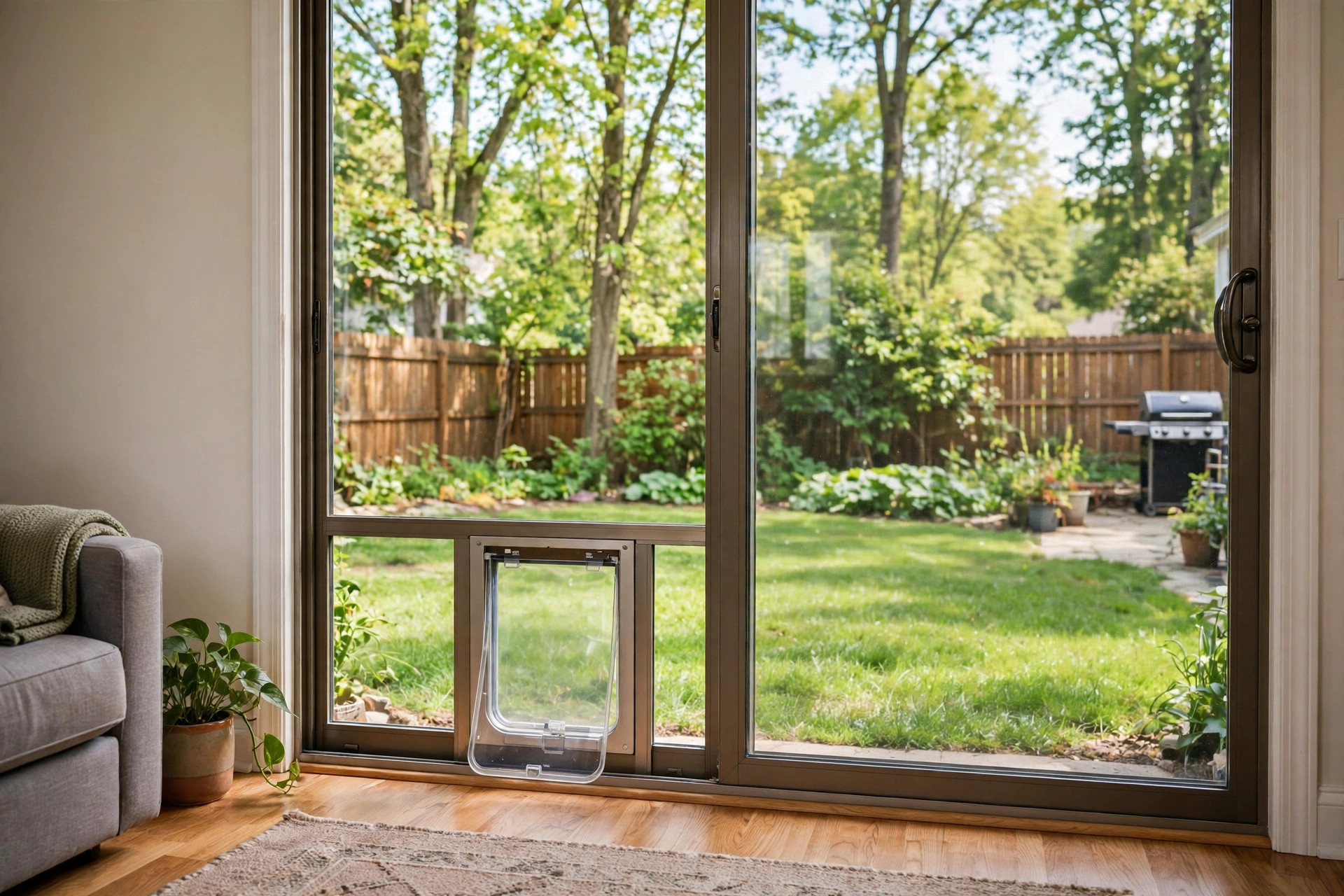

A dog asks to go out many times a day. An owner who works from home hears the whine and the scratch at the door. An owner who is away from home worries about the long hours. The best dog door for sliding glass door installation solves this problem in a clean and simple way. It fits into the track of a sliding patio door. It needs no saw and no cutting of walls or doors. It gives the dog a way in and out while the owner is busy or away.
Millions of American homes have sliding glass doors that open onto a patio or a yard. A pet door made for this track turns that door into a passage for the dog. This guide explains why it matters, what to look for, the main types, the cost, the steps of installation, and the care it needs. It also answers the questions that buyers ask most often.
Why a Dog Door in a Sliding Glass Door Matters
A dog that can go out on its own stays calmer. It does not scratch the door or bark to be let out. It learns a routine. Young dogs house-train faster when the yard is easy to reach. Older dogs with weak bladders keep their comfort. Working owners gain peace of mind because the dog is not held inside for ten hours at a stretch.
The sliding glass door is the natural place for a pet door in many homes. It opens onto the back yard. It is wide enough for a panel insert. A panel insert slides into the door track and fills the gap. The glass door itself still slides closed against it, so the house keeps its look. For renters, this is a strong point. No holes are cut. Nothing is damaged. The panel comes out when the lease ends.
A person who opens the whole sliding door lets in cold air in winter and warm air in summer. A dog flap opens only for a moment and shuts on its own. The American Society for the Prevention of Cruelty to Animals notes that safe and reliable access to the outdoors is part of good care for dogs. A well-fitted door meets that need without wasting heat.
How to Choose the Right Dog Door: Best Dog Door for Sliding Glass Door Installation
Measure Your Dog and Your Door
The dog must pass through with ease. Measure the dog from the top of the shoulders to the floor. Measure the widest point of the chest. The flap should be at least two inches taller than the shoulder height and two inches wider than the chest. A small dog needs a small flap. A large dog needs a large one. A flap that is too small will rub the dog’s back. A flap that is far too big lets in drafts and small wildlife.
Then measure the sliding door track. Most patio doors in the United States have tracks from 76 to 81 inches tall. Take the tape measure and check the inside of the track from top to bottom. Many panels come in adjustable heights that stretch or shrink to fit the exact track. This is the easiest choice for most homes.
Flap Types and Materials
The flap is the part the dog pushes through. Single flaps are thin and light. They suit mild climates. Dual flaps have two layers with an air gap between them. They block wind and hold heat much better. In cold states, a dual flap is worth the extra cost. In hot states, it keeps cooled air inside.
Look at the flap material. Vinyl flaps are common and quiet. Rigid plastic flaps last longer and swing less in the wind. Some panels use magnetic strips along the bottom of the flap. The magnets pull the flap shut after the dog passes. This stops the flap from hanging open on a windy day.
The frame should be strong. Aluminum frames hold up well and do not rust. Plastic frames cost less but can crack in strong sun after some years. Read the maker’s rating for the frame and the flap. Pet owners who want a tested product can look up panel ratings and reviews on sites such as Chewy and Consumer Reports, which compare pet products by real use.
What the Dog Will Learn
Dogs learn a flap door fast. Most learn in a day or two. Hold the flap open and let the dog walk through for a treat. Then let the flap touch the dog’s back lightly as it passes. Praise each trip. Shy dogs need more time. Never push the dog through. A few short lessons each day will do the work. The American Kennel Club offers training notes on its site that explain how to shape this kind of new habit step by step.
Types of Dog Doors for Sliding Glass Doors
Panel Inserts
The panel insert is the most common type. It is a tall narrow panel, often made of aluminum with a glass or plastic top. The pet flap sits at the bottom of the panel. The panel slides into the track of the sliding door. The owner slides the glass door shut against the panel. A lock or a latch holds everything in place.
Panel inserts come in small, medium, and large flap sizes. Some have adjustable height. Most cost between 100 and 400 dollars. The PetMD library explains how to size a pet door to the animal, which helps when the flap size chart seems unclear. A panel insert is the best choice for renters and for owners who do not want to cut into a door.
Through-Glass Units
A through-glass unit mounts right in the glass of the sliding door. A glass shop cuts a round or square hole in the pane and sets the pet door in it. This looks neat. It keeps the full width of the door track free. But it costs more. Glass cutting runs from 200 to 500 dollars on top of the door price. It also voids the warranty on many patio doors. Homeowners who plan to stay in the house for years may still choose it for the clean look.
Electronic Doors
Electronic doors open only for a pet that wears a small collar tag. They block stray animals and wild creatures. They suit yards that attract raccoons or neighborhood cats. They need batteries or a power outlet. They cost more than plain flap doors. Owners who use a pet door for wall installation for large dogs sometimes pair it with an electronic lock for extra control.
Cost and Price
A simple single-flap panel insert costs 80 to 150 dollars. A dual-flap aluminum panel with a lock costs 150 to 350 dollars. Large sizes for big dogs run 250 to 450 dollars. Electronic panel doors run 300 to 600 dollars. A through-glass job, with cutting and labor, runs 400 to 900 dollars.
Prices shift by brand, size, and store. Big home stores such as Home Depot carry the main brands and list exact sizes online. Installation is free if the owner does it, since a panel insert is a do-it-yourself job. A handyman charges 50 to 100 dollars to fit one if the owner prefers help.
Think of the cost over years. A door that lasts ten years and costs 200 dollars costs about 20 dollars a year. A cheap door that cracks in two years and must be replaced costs more in the end. Buy the stronger frame when the budget allows.
Installing a Panel Dog Door: Step by Step
Most panel inserts go in within thirty minutes. No power tools are needed for the basic fit. The This Old House site and Family Handyman both publish plain step guides for home fittings like this one. The steps below follow the standard method.
1. Measure the track height inside the frame. Write the number down. 2. Set the panel to the right height. Most panels telescope or use spring pins. Lock the height in place. 3. Open the sliding glass door fully. Slide the panel into the track from the inside. Push it up into the top track first, then set it down into the bottom track. 4. Slide the glass door closed against the panel. The panel should sit snug with no gap at the top or bottom. 5. Add the weather strip that comes in the box. It fills the seam where the panel meets the door. This stops drafts. 6. Fit the lock. Many panels include a small lock or a clamp that stops the glass door from sliding open past the panel. Some owners also add a secondary patio door lock for security. 7. Test the flap. Push it with a hand. It should swing free and fall shut on its own. Watch that the magnetic strip catches at the bottom. 8. Train the dog with the flap. Prop it open at first, then lower it a little more each day.
If the panel is loose, check the height setting again. A panel that is even a quarter inch short will wobble. If the flap drags on the floor, the panel sits too low, or the dog has outgrown the flap size.
Homes with very tall or very short tracks can order a custom panel. Custom sizes take a few weeks.
Care and Upkeep
A dog door needs little care. Wipe the flap with a damp cloth once a month. Mud and hair build up on the edges and keep the flap from shutting tight. Check the weather strip each season. Sun and cold wear it down. A worn strip lets in air and noise. Strips are cheap and press into place by hand.
Oil the flap hinge with a drop of silicone spray once or twice a year. Do not use heavy grease, which gathers dirt. In winter, check that the flap does not freeze to the frame. A thin smear of petroleum jelly on the edge stops icing in most cases.
Look at the panel frame each spring. Tighten any loose screws. Aluminum panels last a decade or more with this small care.
Safety for Pets and Home
A pet door changes the safety picture of a home. Think it through before fitting one. A flap big enough for a large dog may admit a small intruder in rare cases. Keep the panel locked when the family is away for days. Lock the flap itself at night if the panel has a locking cover. Many do.
The yard must be safe too. A dog that can go out at any hour needs a fenced yard. An outdoor dog run with roof adds shelter and keeps the dog in one safe zone. A pet gate with a cat door can block the stairs while the dog uses the patio door. Check the fence for gaps. Make sure the gate latch holds.
Glass safety matters. The panel should not put stress on the glass door. Slide the glass door gently against the panel rather than slamming it. The U.S. Consumer Product Safety Commission publishes home safety guidance that covers doors, locks, and glass in family homes. Keep small children in mind. A toddler can learn to crawl through a large flap. Use the locking cover when young children are in the room.
Fire safety is another point. A dog door is not an exit for people. Keep the main escape routes clear.
Frequently Asked Questions
Can a dog door fit any sliding glass door? Almost any standard sliding patio door accepts a panel insert. The key number is the track height. Panels come in adjustable sizes that cover the common range of 76 to 81 inches. Doors with extra tall or short tracks need a custom panel.
Will a dog door let in cold air? A good dual-flap panel lets in very little air. The two flaps trap air between them, much like a double window. The weather strip around the panel stops drafts at the seams. Single-flap panels leak more and suit mild climates best.
Can other animals get in through the dog door? A plain flap can admit a bold raccoon or a neighbor’s cat. Magnetic flaps deter most wildlife. Electronic doors that read a collar tag block all other animals. Locking the flap at night is the simplest defense.
Is a panel dog door good for renters? Yes. It fits into the track and comes out without a mark. No screws go into the door frame on most models. Keep the box and the instructions so the panel can be removed cleanly at move-out time.
How do I keep the glass door secure with a panel in place? Use the lock that comes with the panel. It clamps the sliding door against the panel so the door cannot be forced open from outside. Many owners add a secondary patio door bar or a pin lock for extra peace of mind.
What size flap does my dog need? Measure the dog’s shoulder height and chest width. Add two inches to each number. Match those numbers to the maker’s flap chart. When the dog falls between sizes, choose the larger flap. Puppies that will grow need the adult size.
A Final Word
The best dog door for sliding glass door installation is the one that fits the track, fits the dog, and fits the climate. A strong aluminum panel with a dual flap suits most homes. It installs in minutes. It needs no tools and no damage to the door. The dog gains freedom. The owner gains quiet. Measure with care, fit it snug, and train the dog with patience. The door will serve the household for years.
References
American Kennel Club. (n.d.). Dog care and training resources. https://www.akc.org ASPCA. (n.d.). Pet care and animal welfare resources. https://www.aspca.org Chewy. (n.d.). Pet supplies. https://www.chewy.com Consumer Reports. (n.d.). Product reviews and ratings. https://www.consumerreports.org Family Handyman. (n.d.). DIY home repair and maintenance. https://www.familyhandyman.com PetMD. (n.d.). Pet health information. https://www.petmd.com The Home Depot. (n.d.). Home improvement products. https://www.homedepot.com This Old House. (n.d.). Home renovation guidance. https://www.thisoldhouse.com U.S. Consumer Product Safety Commission. (n.d.). Product safety information. https://www.cpsc.gov
Was this guide helpful?

About Lisa Anderson
The My Garden US editorial team writes practical, in-depth home and garden guides for American homeowners — tested advice, no fluff.
You May Also Like

Outdoor Cat House Insulated for Winter Shelter: A Complete Guide
March 19, 2026 0 views
The Best Dog Collar with Nameplate Engraved in the USA
July 14, 2026 0 views
Best Pet Safe Lawn Fertilizer for Dog Owners
January 27, 2026 0 views