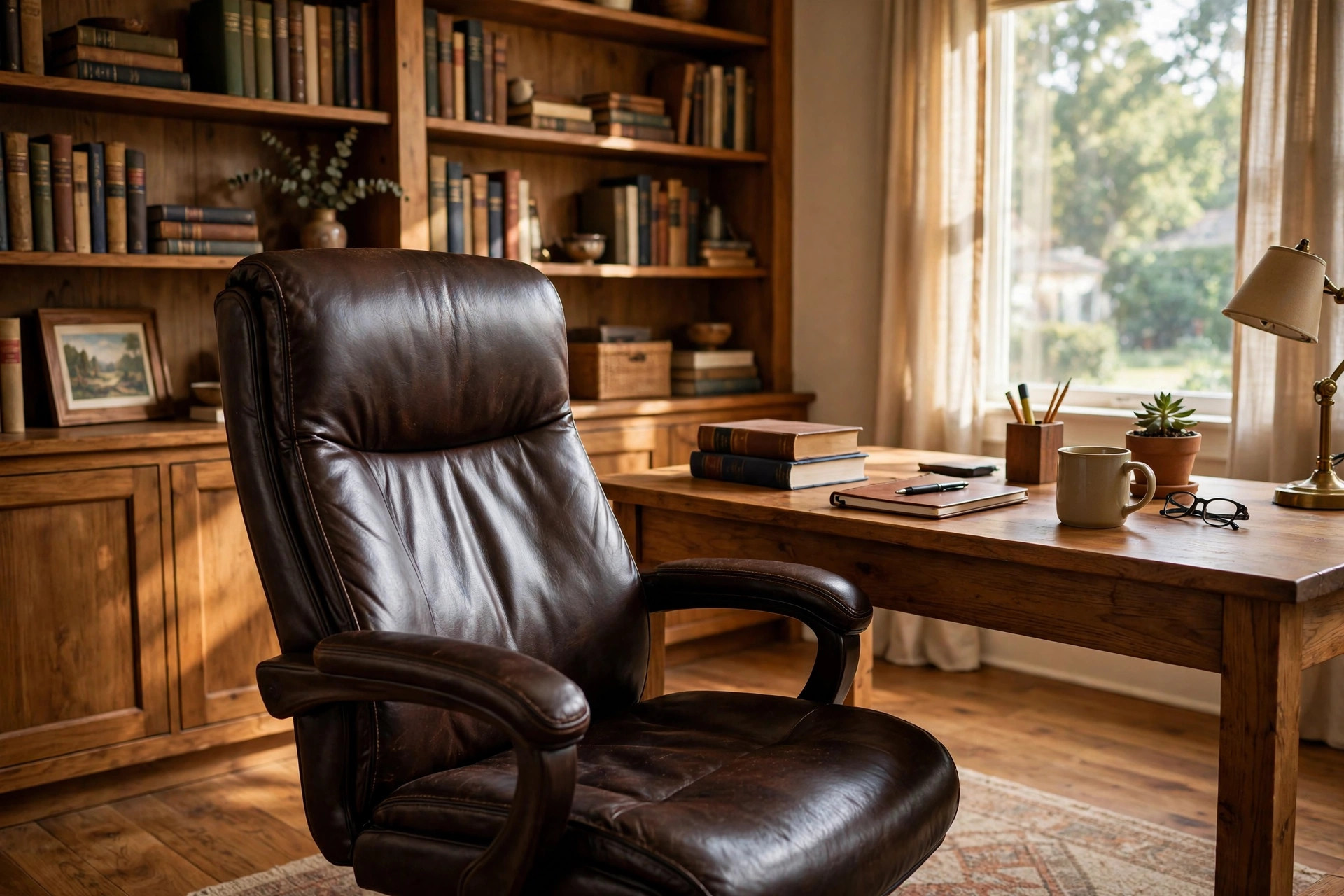

Many people now work or study from home. A good chair is one of the most important pieces of furniture in a home study. An ergonomic executive office chair for home study gives both comfort and a classic, strong look. It supports the back, the neck, and the arms during long hours at a desk. This guide explains what to look for, the types you can buy, what they cost, and how to keep your chair in good shape for years.
Why It Matters
A person who works or studies at home may sit for six to ten hours a day. A poor chair can cause back pain, neck stiffness, and tired legs. These problems grow worse over time. An ergonomic executive office chair for home study is built to stop this. It holds the body in a natural sitting position. The lower back gets firm support. The shoulders stay relaxed. The hips stay level.
An executive chair also looks good. It has a tall back, wide seat, and strong armrests. It gives a home study a serious, professional feel. This matters when you join video calls or meet clients from home. A room with a fine chair looks organized and ready for work.
Health experts have long said that sitting posture matters. A chair that fits your body helps you sit upright without effort. When your body is well supported, you can focus longer. You feel less tired at the end of the day. For students and home workers alike, this is a real gain.
What to Look for and How to Choose: Ergonomic Executive Office Chair for Home Study
The Right Size and Fit
The seat should fit your body. Sit with your feet flat on the floor. Your knees should bend at about a right angle. The seat should not press into the back of your knees. Leave a small gap, about two fingers wide, between the seat edge and the back of your knee.
The backrest should reach at least to your shoulders. Many executive chairs have a tall back that supports the upper back and the head. Check the seat width too. You should be able to sit without feeling squeezed.
Lumbar Support
The lower back curves inward. This area is called the lumbar region. A good ergonomic executive office chair for home study has a lumbar support that presses gently into this curve. Some chairs have a fixed lumbar pad. Better chairs have a lumbar support you can move up, down, in, or out. Adjustable lumbar support lets you match the chair to your body.
Seat Height and Tilt
Seat height must be adjustable. You should raise or lower the seat so your feet rest flat on the floor and your eyes meet the top of your screen. Look for a pneumatic lift lever under the seat. This is standard on good chairs.
The chair should also tilt. A tilt lock lets you lean back a little for reading or thinking. A tension knob under the seat controls how hard the tilt feels. Heavier users need more tension.
Armrests
Armrests keep the shoulders from rising up toward the ears. Look for armrests you can raise or lower. Some move forward, back, or side to side. Padded armrests are more comfortable than hard plastic. For a home study, armrests that fit under the desk are useful. They let the chair roll close to the desk.
Material and Padding
Leather, bonded leather, and fine fabric are common on executive chairs. Real leather looks rich and lasts long, but it costs more. Bonded leather looks like leather at a lower price, though it may wear faster. Mesh backs allow air flow and keep you cool. Many office workers prefer a mesh back with a padded seat.
The padding should be thick and firm. Press your hand into the seat. It should give a little, then push back. Thin foam flattens in months. High-density foam holds its shape for years.
Base and Casters
A five-point star base is the standard for office chairs. It is stable and will not tip easily. Aluminum bases last longer than plastic ones. The casters, or wheels, should roll smoothly. If your study has a hard floor, soft rubber casters will protect it. On carpet, hard casters roll better.
Types and Options
High-Back Executive Chairs
The classic executive chair has a high back, thick padding, and a leather finish. It looks strong and formal. It suits a home study with wood furniture and a classic style. These chairs often have a tilt lock and padded armrests. They are heavier than task chairs but very comfortable.
Mid-Back Ergonomic Chairs
Mid-back chairs are smaller and lighter. They fit well in small studies. They still give lumbar support and adjustable height. They cost less than high-back models. They are a good pick when space is tight.
Mesh-Back Executive Chairs
Mesh-back chairs mix the executive look with a breathable back. The seat is padded and the back is open mesh. Air moves through the mesh, which helps in warm rooms. These chairs look modern. Many home workers in warm climates prefer them.
Big and Tall Executive Chairs
Some chairs are built for larger or taller users. They have wider seats, stronger frames, and higher weight limits. If you are tall, look for a chair with a taller back and a deeper seat. A standard chair can feel cramped for a tall person.
Reclining Executive Chairs with Footrest
Some models tilt far back and include a pull-out footrest. They let you rest between tasks. They cost more and take more room. They suit people who spend very long hours in the study.
Readers who also sit for other tasks may want to compare this guide with our piece on the adjustable office chair for short person petite. Fit matters more than style.
Cost and Price
Prices for an ergonomic executive office chair for home study vary widely. Simple models start near one hundred dollars. These have basic padding and fixed armrests. They work for light use.
Mid-range chairs cost between two hundred and five hundred dollars. This is where most home workers should shop. These chairs have adjustable armrests, lumbar support, and better foam. They last longer and feel much better after many hours.
High-end executive chairs cost five hundred dollars or more. Brands like Herman Miller and Steelcase make chairs in this range. They use top-grade materials and come with long warranties. Many are used in fine offices around the world. For a home study that is used daily for years, a high-end chair can be worth the price.
Watch for sales at large retailers such as IKEA and Wayfair. Prices often drop during holiday sales. Read reviews from trusted sources like Wirecutter and PCMag before you buy. Reviews tell you how a chair holds up after months of use.
Think about cost per year. A five-hundred-dollar chair that lasts ten years costs fifty dollars a year. A one-hundred-dollar chair that wears out in one year costs more over time.
Care and Upkeep
A good chair will last many years with simple care. Follow these steps.
Dust the chair each week with a soft cloth. For leather, wipe with a slightly damp cloth, then dry it. Use a leather conditioner a few times a year. It keeps the leather soft and stops cracks.
For fabric seats, vacuum with a brush tool to remove dust. Clean spots with mild soap and water. Test the cleaner on a hidden spot first. Mesh backs can be wiped with a damp cloth.
Check the screws and bolts every few months. Chairs loosen with use. Tighten them with the tools that came with the chair. This keeps the chair firm and safe.
Keep the chair out of direct sun. Sun fades leather and fabric. It also dries out leather, which leads to cracks. If your study has a sunny window, place the chair a few feet away or use curtains.
Oil the moving parts once a year. A small drop of machine oil on the tilt parts keeps them quiet. Wipe away extra oil so it does not stain the floor.
A site like The Spruce has clear guides on cleaning office furniture. Many home workers also raise their desks for part of the day; see our guide to the home office desk riser for treadmill walking for another way to stay active while you work.
Safety
Office chairs are safe when used as intended. Still, a few rules matter.
Do not stand on the chair. The base is made for sitting weight, not standing weight. Standing on a chair can tip it over and cause injury.
Do not lean far back beyond the tilt limit. The tilt lock is there for a reason. Leaning too far can make the chair tip backward.
Keep small children away from the moving parts. The lift lever and tilt parts can pinch fingers. Many chairs have a gap under the seat that can catch little hands.
Check the weight limit before you buy. Every chair has a stated limit. Going over it can break the lift or the base. Most executive chairs hold between two hundred fifty and three hundred fifty pounds. Big and tall models hold more.
Place the chair on a level floor. A wobbly floor makes the chair unstable. Use a chair mat on carpet to help the wheels roll and to protect the floor.
The UPLIFT Desk site and other makers note that a stable setup, chair plus desk, lowers strain. Keep cables off the floor so wheels do not catch on them.
Frequently Asked Questions
What is the best seat height for a home study chair?
Set the seat so your feet rest flat on the floor. Your knees should form about a right angle. Your thighs should be level or slope slightly down toward the knees. If your feet dangle, the seat is too high. If your knees sit above your hips, the seat is too low.
How long should an ergonomic executive chair last?
A well-made chair should last seven to ten years with daily use. High-density foam, a strong frame, and a good lift make this possible. Cheap chairs may last only one to three years. Care matters too. Clean it, tighten screws, and keep it out of sun, and it will serve longer.
Is leather or mesh better for a home study?
It depends on your room and taste. Leather looks rich and classic. It suits a formal study. Mesh keeps you cool and needs less care. It suits warm rooms and modern style. Both can be ergonomic if the shape is right. Choose the one that fits your climate and style.
Do I need a headrest on my executive chair?
A headrest helps if you lean back often to read or think. It supports the neck and head. If you sit upright most of the time, you may not need one. High-back executive chairs often reach the head without a separate rest.
Can a short person use an executive chair?
Yes, but fit matters. The seat must go low enough for the feet to reach the floor. A footrest can help. Look for chairs with a low minimum seat height and a shallow seat depth. Our guide to the best led strip lights for home office desk also helps short users set up a comfortable study, since good light matters as much as a good chair.
How do I stop my chair from sinking?
A chair that sinks has a worn gas lift. First check that the lever is not stuck. If the chair still sinks, the lift cylinder is worn. You can buy a replacement cylinder and fit it yourself in most cases. Cylinders are sold by size, so measure yours first. If the chair is old and cheap, a new chair may be the better choice.
A Final Word
An ergonomic executive office chair for home study is one of the best buys for a home worker or student. It protects your back, helps you focus, and gives your study a strong, professional look. Take time to choose. Sit in the chair if you can before you buy. Check the adjustments. Read reviews. A good chair will serve you every workday for years to come.
References
Herman Miller. (n.d.). Office furniture and ergonomic seating. https://www.hermanmiller.com IKEA. (n.d.). Home furnishings. https://www.ikea.com PCMag. (n.d.). Technology product reviews. https://www.pcmag.com Steelcase. (n.d.). Office furniture and workplace research. https://www.steelcase.com The Spruce. (n.d.). Home and garden advice. https://www.thespruce.com UPLIFT Desk. (n.d.). Standing desks and ergonomic office furniture. https://www.uplift-desk.com Wayfair. (n.d.). Furniture and home goods. https://www.wayfair.com Wirecutter. (n.d.). Product reviews from The New York Times. https://www.nytimes.com/wirecutter
Was this guide helpful?

About Robert Taylor
The My Garden US editorial team writes practical, in-depth home and garden guides for American homeowners — tested advice, no fluff.
You May Also Like

Home Office Bookshelf with Closed Storage Bins: A Complete Buying Guide
June 27, 2026 0 views
Home Office Desk Riser for Treadmill Walking
January 17, 2026 0 views
The Wall Mounted Fold Down Desk for Small Spaces: A Plain Guide
August 30, 2026 0 views