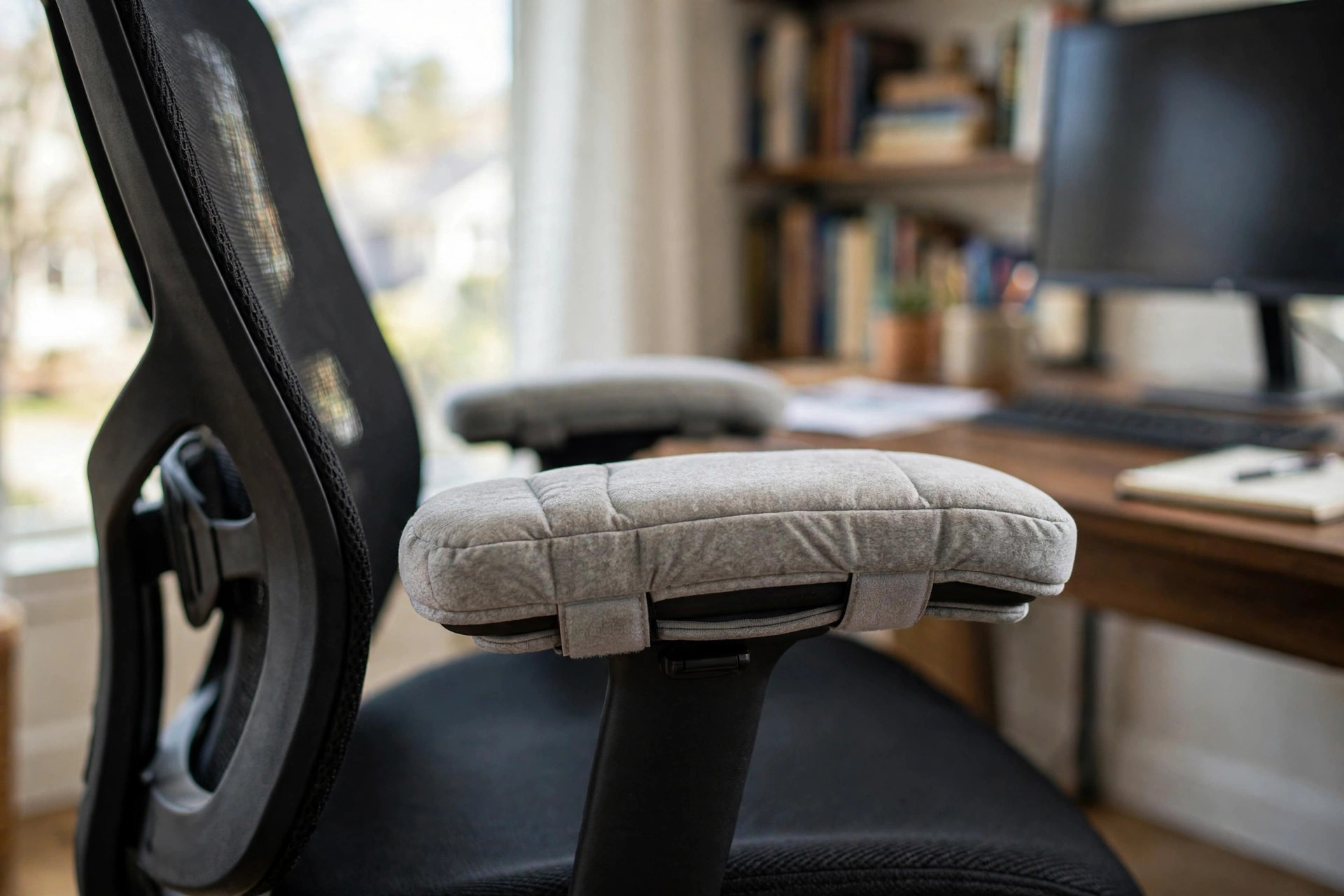

Many workers sit at a desk for eight hours a day or more. Their elbows and forearms rest on the armrests of the chair for most of that time. When the armrests are hard plastic or bare metal, pain and soreness can follow. Adjustable armrest pads for office chair comfort offer a simple fix. These small cushions slip or strap over the existing armrests. They add soft padding and many allow height or width changes. The result is a chair that feels kinder to the body, often at a very low cost.
Why It Matters
Hard armrests press on nerves and blood vessels in the forearms. Over weeks and months, this pressure can cause a dull ache in the elbows. Some people feel tingling in the fingers. Others find their shoulders rise up because the armrests sit too low, and tension builds in the neck. Small changes in posture help, but comfort at the contact point matters just as much.
A good pad spreads the load over a wider area. The foam or gel inside gives a little under weight. The skin no longer presses on a hard edge. Workers who type all day notice the difference first in the forearms. The arms stay relaxed, and the shoulders drop to a natural height. Studies of workplace comfort have long shown that small improvements in seating add up over a full day. Comfort also helps focus. A person who is not thinking about sore elbows can give more thought to the work in front of them.
Adjustable models go one step further. The height can be raised for tall users or lowered for short users. Some pads tilt slightly to match the natural angle of the arm. This adjustment keeps the wrist in a straighter line while typing, which reduces strain. For anyone who bought a best office chair for long hours home office but finds the armrests lacking, pads are an easy upgrade that costs far less than a new chair.
What to Look For: Adjustable Armrest Pads for Office Chair Comfort
Not all pads fit all chairs. A little care in choosing saves money and trouble.
Fit and Attachment
Measure the length and width of each armrest before buying. Most pads list the size range they fit. Slip-on styles stretch over the armrest like a sleeve. Strap styles fasten with hook-and-loop strips underneath. Elastic and strap types tend to stay in place better than simple slip covers. A pad that slides off every week becomes a chore rather than a comfort aid.
Padding Material
Three materials are common. Memory foam molds to the shape of the arm and feels soft at first touch. It can hold heat in warm rooms. Gel pads feel cool and firm, and they return to shape quickly. Standard polyurethane foam is light and cheap, but it may flatten after a year of heavy use. For office chair armrest pads in shared offices, gel or high-density foam holds up best.
Adjustability
True adjustable pads let you change height, width, or angle. Some use small levers under the pad. Others use layered inserts that you add or remove. Check that the adjustment locks firmly. A pad that slowly sinks during the day defeats its own purpose. For people whose chairs already have adjustable armrests, a simple fixed cushion may be enough, and it will cost less.
Cover Fabric
The cover touches the skin all day. Mesh covers breathe well and suit warm climates. Neoprene feels smooth and wipes clean with a damp cloth. Cotton and polyester blends are common and washable. Dark colors hide wear in busy offices. Removable covers are worth the small extra cost because they can be washed on their own.
Weight and Build Quality
Pads add little weight, but build quality still matters. Stitching along the edges should be even and tight. Loose thread or open seams point to poor work and will fail early. The foam or gel core should feel even all over. Press the pad in several spots before use. If one corner feels thin or empty, the pad may wear unevenly.
Check the strap buckles and hook-and-loop strips as well. Cheap plastic buckles can crack after months of pressure. Wide straps spread the hold and stay put longer than narrow ones. A pad that stays centered works better and looks tidier. For use in a warm home office, choose covers that do not trap heat against the skin, since comfort drops fast when the arms feel sweaty.
Types and Options
The market offers several styles, each suited to a different need.
Slip-on foam sleeves. These are the simplest type. A foam core is wrapped in fabric and pulled over the armrest. They cost little and fit many chairs. The padding is fixed, so they suit users who only need softness.
Strap-on gel pads. A gel cushion sits on top of the armrest and fastens with straps below. Gel spreads pressure well and stays cool. These suit people with elbow pain from hard plastic rests.
Height-adjustable armrest pads. These include a base plate and a padded top with a small lift mechanism. They add one to two inches of height. Tall users who feel their armrests sit too low gain the most from this type.
Ergonomic contour pads. The top surface is shaped with a slight channel for the forearm. The arm sits in a cradle rather than on a flat pad. Users who rest their whole forearm on the arm while using a mouse often prefer this shape.
Wide desk pads. Some workers skip the chair armrests and rest their arms on the desk edge instead. A wide padded strip along the desk front serves the same purpose. This option helps when the chair has no armrests at all.
People building a full comfort setup often pair pads with other small upgrades. An ergonomic footrest for under desk at home supports the legs, while pads support the arms. Together they make a basic chair feel much more complete.
Cost and Price
Prices are modest compared with most office furniture. Simple slip-on foam pads sell for about five to twelve dollars a pair. Strap-on gel models range from twelve to twenty-five dollars. Height-adjustable pads with a lift mechanism cost twenty to forty dollars. Contour ergonomic designs sit in the middle, near fifteen to thirty dollars.
Bulk packs for offices cost less per pair. Some office supply stores offer sets of four or six pairs at a discount. Prices also shift with brand and material. Memory foam and gel pads cost more than plain foam. Removable washable covers add a few dollars but extend the useful life of the pad.
A full chair replacement may cost two hundred dollars or more, even for an ergonomic mesh office chair under 200 dollars. Pads deliver a share of that comfort for a tenth of the price. For tight budgets, they are one of the best value upgrades in the home office.
Watch for extra shipping fees when ordering online. A few sellers offer free returns, which makes it safe to try two styles and keep the one that fits. Some brands give a one-year warranty against stitching and strap failure. Keep the receipt until the pads have survived a month of daily use.
Care and Upkeep
Pads last longer with simple care. Wipe neoprene and gel covers with a damp cloth each week. Fabric covers should go through the wash once a month or when they show soil. Always check the label for washing rules. Heat from a hot dryer can damage foam cores, so air drying is safer.
Rotate the pads every few months if one side gets more use. Check straps and elastic for wear. Loose straps let the pad shift, which reduces comfort. When foam stops springing back after pressure, it is time for a new set. Most pads last one to three years in daily office use, depending on material and body weight.
Keep the pads out of direct sun when not in use. Long sun exposure fades fabric and can dry out some foams. In shared workspaces, wash or wipe pads between users for basic hygiene.
Safety
Pads are simple products, but a few points deserve care. Make sure the pad does not raise the armrest so high that the shoulders hunch up. The elbows should rest at a natural angle near ninety degrees. If the pad adds height, the chair seat or desk may need a small adjustment to match.
Check that straps do not hang loose where they could catch on clothing or bag straps. Gel pads can feel cold on bare skin in air-conditioned rooms; a thin fabric cover over the gel fixes this. People with skin allergies should check the cover material list before buying.
Office safety guidance from agencies such as the Consumer Product Safety Commission covers many workplace products, and general rules apply here too: keep small parts out of reach of children, and stop using a pad if its stitching breaks and filling escapes.
Frequently Asked Questions
Buyers ask the same questions again and again. The answers below cover the ones that come up most often in stores and online reviews.
Do armrest pads fit every office chair? Most pads fit standard T-shaped or loop armrests. Measure your armrest length and width, then match them to the size range on the package. Very wide or oddly shaped armrests may need a specific model.
Are adjustable armrest pads better than fixed pads? Adjustable pads help when the armrest height is wrong for your body. Fixed pads suit chairs whose height is already right and only the surface is too hard. If your shoulders feel raised or your elbows hang in the air, choose adjustable.
How thick should an armrest pad be? One to two inches of padding works for most people. Thinner pads add little comfort. Thicker pads may push the arm too high and change typing posture.
Can I use armrest pads on a gaming chair? Yes, if the armrests match the size range. Many gaming chairs have firm armrests that benefit from extra cushioning. Check strap fit first, since gaming armrests are often wider than office ones.
Do gel pads or foam pads last longer? Gel pads keep their shape for more years and do not flatten the way foam can. High-density foam lasts longer than cheap low-density foam. In heavy daily use, expect gel to outlast plain foam.
Will armrest pads help with elbow pain? They help when pain comes from pressure on hard armrests. Soft padding spreads the load and often eases the ache. They do not treat joint disease or injury. See a doctor if pain persists after a few weeks of better support.
A Final Word
A comfortable office chair does not always need to be an expensive one. Small add-ons make a real difference. Adjustable armrest pads for office chair comfort soften the hardest contact points and let the arms rest in a natural position. They cost little, fit most chairs, and take minutes to install.
Start by measuring your armrests and noting what bothers you most: hard edges, wrong height, or heat. Match the pad type to the problem. Then enjoy the quiet change a little extra padding brings to the workday. For more ideas on home office comfort, see guides at IKEA, Wayfair, Herman Miller, Steelcase, UPLIFT Desk, The Spruce, Wirecutter, and PCMag.
References
Herman Miller. (n.d.). Office furniture and ergonomic seating. https://www.hermanmiller.com IKEA. (n.d.). Home furnishings. https://www.ikea.com PCMag. (n.d.). Technology product reviews. https://www.pcmag.com Steelcase. (n.d.). Office furniture and workplace research. https://www.steelcase.com The Spruce. (n.d.). Home and garden advice. https://www.thespruce.com U.S. Consumer Product Safety Commission. (n.d.). Product safety information. https://www.cpsc.gov UPLIFT Desk. (n.d.). Standing desks and ergonomic office furniture. https://www.uplift-desk.com Wayfair. (n.d.). Furniture and home goods. https://www.wayfair.com Wirecutter. (n.d.). Product reviews from The New York Times. https://www.nytimes.com/wirecutter
Was this guide helpful?

About Sarah Mitchell
The My Garden US editorial team writes practical, in-depth home and garden guides for American homeowners — tested advice, no fluff.
You May Also Like
The Right Home Office Side Table for Printer and Supplies
May 15, 2026 0 views
The Best Laptop Stand for Standing Desk Posture: A Plain Guide
June 7, 2026 0 views
Home Office Rug to Protect Hardwood Floors: A Complete Guide
August 7, 2026 0 views