
Introduction
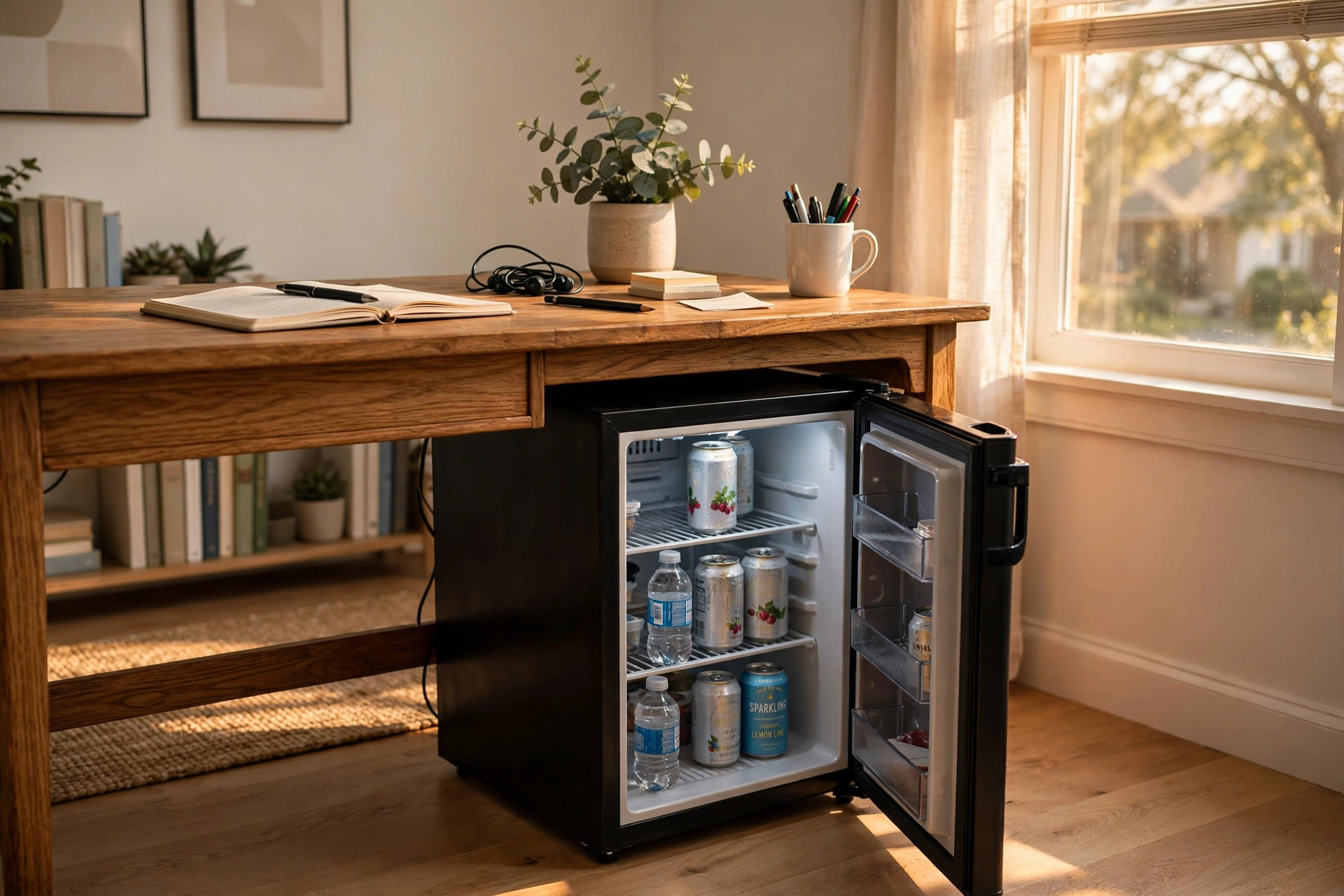
A long work day runs smoother when cold drinks and fresh snacks sit within arm’s reach. That is why so many people now search for the best mini fridge for home office under desk placement. A small fridge under your desk saves trips to the kitchen. It keeps water, fruit, and a packed lunch cold for hours. It also keeps your work area tidy, since you no longer pile bottles and cans on the desktop. In the past, the home office was just a desk and a chair. Today it is a full work station. A quiet cooler fits that plan well. It uses little power, makes little noise, and holds enough for one person through a full day. This guide will help you pick the right model. It covers what matters most, the types you can buy, what you should pay, and how to keep the unit clean and safe for years of steady use.
Why a Small Fridge Under Your Desk Makes Sense: Best Mini Fridge for Home Office under Desk
Time and Focus
Every trip to the kitchen breaks your train of thought. You get up, walk down the hall, open the main fridge, and on the way back you check your phone. Ten minutes pass. With the best mini fridge for home office under desk use, that trip disappears. You reach down, grab a cold drink, and keep working. Studies of office design have long shown that short breaks help the mind, but long detours hurt focus. A desk-side fridge gives you the best of both. You still stand and stretch, but you stay near your task.
Fewer Kitchen Trips, Less Mess
Home workers often eat lunch at the desk. Without a fridge nearby, milk for coffee turns sour on the counter. Leftovers sit too long at room heat. A small cooler holds your lunch, creamer, and fruit through the morning. It also keeps your desk clear. Bottles and cans move off the desktop and into the fridge. Your mouse has room. Your papers stay dry.
A Calmer, Better Work Station
A well-planned home office feels good to sit in. Desk makers like Uplift Desk have shown how the right gear turns a corner of a room into a real office. Adding a small fridge is part of the same idea. Pair it with an adjustable monitor stand riser for neck pain and a quiet mechanical keyboard for home office night work, and the room becomes quiet, neat, and easy to use. A home office bulletin board fabric covered large board on the wall can hold notes and plans, while the fridge below the desk handles food and drink. Each piece has its place. Nothing fights for space.
What to Look for When You Choose One
Size and Fit
Measure before you buy. This is the step most buyers skip, and it causes the most trouble. Measure the width, height, and depth of the open space under your desk. Leave at least two inches of clear air around the sides and back of the fridge. The unit must breathe, or the motor will run hot and loud.
Most under-desk models hold between 1.6 and 4.5 cubic feet. A 1.6-cubic-foot cube fits six cans and a small lunch box. A 3.2-cubic-foot model holds about a dozen cans plus taller bottles. For one worker, 2.5 to 3.5 cubic feet is often the sweet spot. It holds a full day of food and drink without taking over the leg room.
Check the door swing too. A fridge with a reversible door lets you flip the hinge to the side that suits your desk. This small feature matters a lot in tight rooms. Product listings on sites like Wayfair often show door-swing options, and it pays to read them before you order.
Noise Level
A fridge hums. The question is how loud. In a quiet home office, even a soft hum can wear on you during a long day. Look for models rated under 40 decibels. That is about the sound of a soft library. Thermoelectric coolers often run quieter than compressor models, but they cool less well in warm rooms.
Noise ratings are hard to trust from the box alone. Independent tests from reviewers such as Wirecutter and PC Mag often measure real noise at desk distance. Reading one or two of those tests can save you from a model that drones all day. If you work on calls, pick a unit you can switch off or move to a low mode during meetings.
Cooling Power and Temperature Range
Not all small fridges are true fridges. Some are coolers that only drop the inside air about 35 degrees below room heat. In a warm room, that means 50 degrees inside. That is fine for soda, but not safe for milk or meat. If you plan to store lunch, yogurt, or baby bottles, buy a compressor model that holds 35 to 40 degrees no matter the room.
Check the freezer box too. Many small fridges have a tiny freezer area. It keeps ice packs hard and ice cream firm. If you want frozen meals at your desk, look for a model with a real freezer section, not just a cold plate.
Energy Use
A mini fridge runs all day, so its power use adds up. Most models draw between 50 and 100 watts while the motor runs. Over a year, that can cost 30 to 80 dollars in power, based on local rates. Models with an Energy Star mark use less. Guides from Energy Star show how a small, efficient unit can cost less per year than an old dorm fridge from the last decade.
Look for a fridge with an adjustable thermostat. You do not need arctic cold for water and fruit. Setting the dial to a middle range cuts both noise and power bills.
Shelves, Bins, and Small Details
Inside layout matters more than buyers expect. Glass shelves are easy to wipe. A can dispenser keeps drinks neat. A door bin tall enough for a two-liter bottle is useful if you drink a lot of water. Leveling feet keep the door sealed on uneven floors. A door alarm that beeps when left open saves food and power.
Types and Options
Compressor Mini Fridges
This is the most common type. A small motor pumps coolant through coils, just like a full-size fridge. Compressor models hold safe food temperatures, often cool fastest, and work well in warm rooms. They cost more and make more noise than other types, but for food storage they are the safe pick. Most reviews at CNET and The Spruce point buyers toward compressor models for daily office use.
Thermoelectric Coolers
These use a solid plate and a fan instead of a motor. They are light, cheap, and very quiet. They are a fine pick for drinks and snacks in a cool room. They are not safe for milk, meat, or medicine, because they cannot hold a steady cold temperature when the room gets warm. If your office faces the sun in summer, skip this type.
Drawer Fridges and Beverage Centers
Some under-desk units open as a drawer instead of a door. A drawer fridge slides out under a desk with no door swing at all. Beverage centers are tall, narrow units with glass doors made for cans and bottles. Both cost more than a plain cube fridge. Retailers like The Home Depot carry several of these styles, and seeing them in person helps you judge the size.
Retro and Design Models
Small retro fridges with rounded doors have become popular. They cost more for the same cooling power, but they fit a styled room. Style notes from Herman Miller show how matching finishes across furniture keeps a small office calm.
Cost and Price
A basic cube fridge costs 90 to 150 dollars. These hold drinks and snacks and last a few years with care. Mid-range models with real compressors, reversible doors, and better shelves run 150 to 280 dollars. These are the workhorses most home workers buy. High-end drawer fridges and beverage centers cost 300 to 700 dollars. They suit a finished office or a shared work space.
Do not judge by price alone. A 120-dollar fridge that dies in two years costs more than a 200-dollar fridge that runs for eight. Check the warranty. One year of full coverage is the bare minimum. Five years on the compressor is a good sign. Read buyer comments about how the maker handles claims. A cheap unit with no support is no bargain.
Watch for added costs. A surge protector guards the motor from power spikes and costs about 20 dollars. A small drip tray under the unit guards wood floors from water.
Care and Upkeep
Daily and Weekly Habits
Wipe spills the day they happen. Milk and juice turn sticky fast. Once a week, take a quick look inside. Throw out old food. Wipe the door gasket with a damp cloth so the seal stays tight. A loose seal lets cold air leak and makes the motor run all day. Small-space care guides from IKEA give the same advice for tight home offices.
Deep Cleaning
Four times a year, empty the fridge and unplug it. Wash shelves and bins in warm soapy water. Wipe the inside walls with a mix of water and a spoon of baking soda. Dry everything before you plug it back in. Pull the unit out and vacuum the coils on the back or bottom. Dust on the coils makes the motor work harder and shortens its life.
Defrosting
If your model is not frost-free, ice will build up in the freezer box. When the frost reaches a quarter inch thick, defrost the unit. Move food to a cooler, unplug the fridge, and let the ice melt. Never chip at ice with a knife. One slip can puncture a coolant line and ruin the fridge. After defrosting, dry the inside and restart the unit.
Where to Place It
Set the fridge on a flat, hard floor. If your office has thick carpet, put a firm board under the unit so air flows below. Keep it away from heaters and sunny windows. Heat forces the motor to run longer. Leave the vent grille clear. Do not push the fridge tight against the wall. Two inches of air at the back is the rule most makers print in the manual.
Safety
Electrical Safety
Plug the fridge straight into a wall outlet. Avoid long extension cords, which can overheat under a steady load. If you must use a cord, pick a short, heavy one rated for appliances. Keep the cord away from chair wheels. A crushed cord is a fire risk.
Food Safety
Keep the inside at or below 40 degrees if you store milk, meat, or leftovers. A five-dollar fridge thermometer takes the guesswork out. Throw out any food left at room heat for more than two hours. Clean the drip pan often, since still water can grow mold.
Tip-Over and Child Safety
A tall, narrow fridge can tip if a child climbs it. Anchor tall units to the wall with a simple strap. If your model has a lock, use it when small children visit. Keep the power cord out of reach of toddlers who might pull. Steelcase publishes office safety notes that cover the same ground for all under-desk gear. Heavy items low, cords tucked away, nothing that can tip within a child’s reach.
Ventilation
Never box the fridge inside a closed cabinet unless the maker says it is safe. Trapped heat can overwork the motor and, in rare cases, start a fire. If you want a built-in look, buy a model rated for built-in use. These have front vents made for tight spaces.
FAQ
How cold should a home office mini fridge run?
For drinks only, 45 degrees is fine. For milk, yogurt, meat, or leftovers, keep it at 35 to 40 degrees. Use a small thermometer inside the unit to check. The dial setting alone is not a good guide.
Can a mini fridge really fit under a standard desk?
Most desks give you 28 to 30 inches of knee space. A cube fridge under 20 inches tall fits with room to spare. Taller 3.2-cubic-foot models run about 33 inches high and may not fit under a low desk. Measure first, then shop.
Will it raise my power bill a lot?
A modern small fridge adds about 3 to 7 dollars a month to a typical bill. A model with an efficient rating costs less.
Is a thermoelectric cooler enough for office snacks?
Yes, for sealed drinks and dry snacks in a cool room. No, for milk, meat, or any food that can spoil. When in doubt, buy a compressor model. The price gap is small, and the safety gap is large.
How long do these small fridges last?
With regular cleaning and good air flow, a well-made unit lasts seven to ten years. Cheap models with thin seals and weak motors may fail in two to three years. The warranty length is often a fair hint of how long the maker expects it to run.
Can I put the fridge on carpet?
You can, but it is better not to. Thick carpet blocks air flow under the unit and traps heat. Place a firm board or a low mat under the fridge if carpet is your only choice.
A Short Final Word
The best mini fridge for home office under desk use is the one that fits your space, stays quiet, and holds a safe temperature for what you store. Measure your desk space first. Pick a compressor model if food safety matters. Read a trusted review before you buy. Clean the coils, mind the door seal, and give the unit room to breathe. Do these simple things, and your little fridge will serve you well for many years. Cold water at your side, lunch kept fresh, no more lost minutes in the kitchen. That is a small change with a large payoff for the home worker.
References
CNET. (n.d.). Technology news and reviews. https://www.cnet.com Herman Miller. (n.d.). Office furniture and ergonomic seating. https://www.hermanmiller.com IKEA. (n.d.). Home furnishings. https://www.ikea.com PCMag. (n.d.). Technology product reviews. https://www.pcmag.com Steelcase. (n.d.). Office furniture and workplace research. https://www.steelcase.com The Home Depot. (n.d.). Home improvement products. https://www.homedepot.com The Spruce. (n.d.). Home and garden advice. https://www.thespruce.com UPLIFT Desk. (n.d.). Standing desks and ergonomic office furniture. https://www.uplift-desk.com Wayfair. (n.d.). Furniture and home goods. https://www.wayfair.com Wirecutter. (n.d.). Product reviews from The New York Times. https://www.nytimes.com/wirecutter
Was this guide helpful?

About Michael Thompson
The My Garden US editorial team writes practical, in-depth home and garden guides for American homeowners — tested advice, no fluff.
You May Also Like

Home Office Storage Ottoman With Lid: A Practical Buying Guide
September 12, 2026 0 views
Best Standing Desk Mat for Concrete Floors: A Practical Guide
January 2, 2026 0 views
Ergonomic Executive Office Chair for Home Study: A Complete Guide
March 9, 2026 0 views