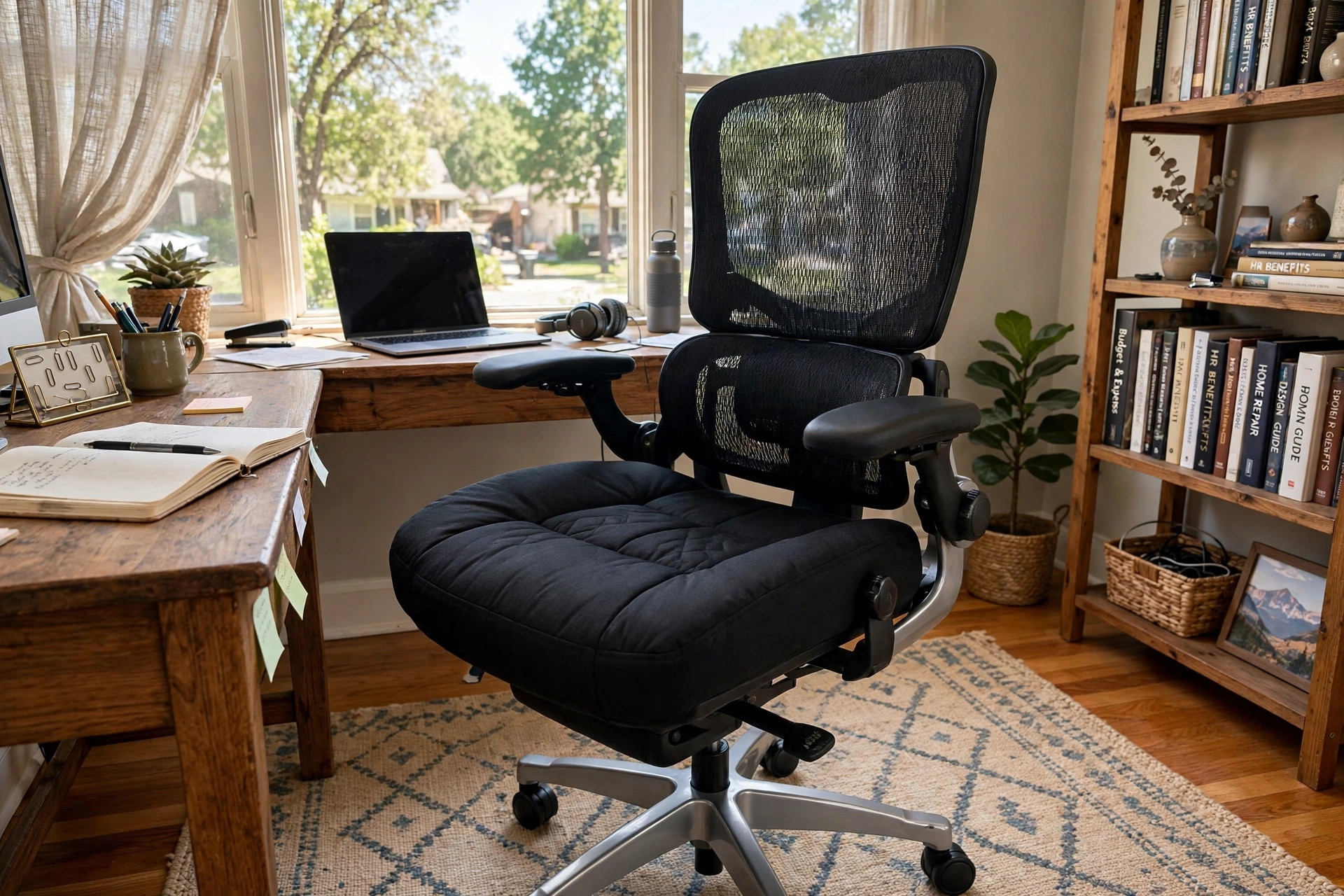

Introduction
Many people spend eight or more hours a day at a desk. A chair that is too small makes those hours painful. The standard office chair is built for an average body. It may feel cramped, unstable, or fragile for a larger person. An ergonomic desk chair for plus size adults solves this problem. It is built with a wider seat, stronger frame, and higher weight rating. It also offers the adjustments that protect the back, neck, and legs during long work days.
This guide explains what makes these chairs different. It covers weight capacity, seat size, lumbar support, and materials. It also looks at cost, care, and safety. Whether you work from home or in a company office, this article will help you choose a chair that fits your body and your budget.
Why a Proper Chair Matters: Ergonomic Desk Chair for Plus Size Adults
Sitting is the most common posture of the modern workday. Most desk workers sit far more than they stand or walk. Poor seating leads to back pain, stiff necks, numb legs, and tired shoulders. For a larger adult, the wrong chair adds extra problems. Armrests may dig into the hips. A narrow seat may press on the thighs and cut off circulation. A weak gas cylinder may sink slowly through the day.
A well-designed ergonomic desk chair for plus size adults removes these strains. The seat is wide enough for the hips to rest flat. The backrest supports the full spine. The base and cylinder are rated for the real weight of the person who will use them. Good support changes how the whole body feels at the end of the day. Many users report less back pain within a few weeks of switching to a chair that fits.
Doctors and workplace safety experts have studied sitting for decades. Their advice stays the same. Sit with the feet flat on the floor. Keep the knees near a right angle. Rest the lower back against the chair. Keep the screen at eye level. None of this is possible in a chair that is too small. That is why choosing the right size matters as much as choosing the right features.
What to Look For in an Ergonomic Desk Chair for Plus Size Adults
Shopping for a big and tall chair is not the same as shopping for a regular one. A few key numbers tell you whether a chair will truly fit.
Weight Capacity
This is the first number to check. A standard office chair often supports 225 to 275 pounds. An ergonomic desk chair for plus size adults should support at least 300 pounds. Many models are rated for 350, 400, or even 500 pounds. Choose a chair rated at least 50 pounds above your body weight. This gives a safety margin. It also means the chair will not wear out early under daily use.
Seat Width and Depth
Seat width is the second key number. Standard seats measure about 19 to 20 inches across. Big and tall models offer 22 to 26 inches. Sit in the chair if you can. Your hips should fit without touching the armrests. Seat depth matters too. A good seat supports most of the thigh. There should be a gap of two to three inches between the front edge of the seat and the back of your knees. A seat that is too deep presses on the knees. A seat that is too shallow leaves the thighs hanging.
Adjustable Features
A true ergonomic chair adjusts to your body. Look for these controls. Seat height should adjust so the feet rest flat. The backrest should adjust in height and tilt. Lumbar support should move up, down, in, and out. Armrests should move up and down, and ideally in and out. A chair with a synchro-tilt mechanism lets the seat and back move in a natural ratio when you lean back. These adjustments are what separate an ergonomic chair from a simple padded chair.
Materials and Build
Strong materials last longer. Look for a steel or reinforced aluminum base. Avoid plastic bases on chairs rated above 300 pounds. The gas cylinder should be heavy duty, often class 4. For the seat and back, mesh keeps the body cool. Leather and bonded leather look fine but can feel hot. Thick high-density foam holds its shape for years. Thin foam flattens fast.
Types of Big and Tall Office Chairs
Chairs in this category come in several styles. Each suits a different need and budget.
Executive big and tall chairs. These look like classic office chairs with high backs and thick padding. They suit managers and home offices where looks matter. Many have leather or faux leather upholstery. They often cost more because of the finish and brand name. Premium makers such as Herman Miller are known for this class of chair.
Mesh big and tall chairs. These use breathable mesh on the back and sometimes the seat. They keep the user cooler during long sessions. The mesh flexes with the back and gives even support. A search for an ergonomic mesh office chair under 200 dollars shows how many affordable mesh models now exist.
Task chairs with high ratings. Some brands, including Steelcase, build heavy duty task chairs without the big-and-tall label. These can be a good value. Check the weight rating and seat width before you buy. A chair sold as heavy duty should still meet the numbers above.
Gaming-style big and tall chairs. These borrow the bucket-seat look of racing games. They often have tall backs and strong frames. Some larger adults find them comfortable. Others find the side bolsters too narrow. Sit in one before you buy if possible.
For readers who need pain relief first, a comparison of the best ergonomic office desk chair for back pain pairs well with this guide. Back support features overlap in both kinds of chairs.
How to Choose the Right Chair for Your Body
Start with your measurements. Note your weight. Measure the width of your hips while seated. Measure the length from your back to the back of your knees. Bring these numbers when you shop. Online listings show seat width, seat depth, and weight capacity in the product details.
Think about your desk setup too. The chair must fit under the desk with the armrests at a height that lets your shoulders relax. If you use a standing desk part of the day, the chair still needs a height range that works for the seated hours. Your chair is one piece of a larger system. A review of the best office chair for long hours home office can help you match the chair to the rest of your desk setup.
Test the adjustments. Raise and lower the seat. Move the lumbar support. Lock and unlock the tilt. Every control should move smoothly and hold its position. Cheap chairs often have controls that slip. Read buyer reviews that mention long-term use, and compare roundups from sites like PCMag and Wirecutter. A chair that feels fine on day one may lose its support after six months.
Consider how the chair will be used. A chair for full-time office work needs more adjustment than a chair for an hour of bills at night. If two people share the chair, wide adjustment ranges matter more. If the chair stays in one spot, heavy weight and a wide base are fine. If it must roll on carpet, larger wheels help.
Cost and Price
Prices for an ergonomic desk chair for plus size adults vary widely. Budget models start near 150 dollars. Mid-range chairs cost 250 to 500 dollars. Premium brands charge 800 to 1,500 dollars or more. What do you get for the extra money? Usually stronger materials, better adjustment, longer warranties, and finer comfort.
A budget chair can serve well if the weight rating and seat size are right. Large home stores like IKEA carry affordable models with clear size listings. Many buyers find good value in the 250 to 400 dollar range. Premium chairs often carry 10 to 12 year warranties. That long warranty lowers the yearly cost of ownership. A 900 dollar chair with a 12 year warranty costs 75 dollars a year. A 200 dollar chair replaced every two years costs 100 dollars a year.
Watch for extra costs. Some chairs ship flat and need assembly. Most people can assemble them in 30 to 60 minutes. White-glove delivery costs more. A separate headrest or footrest may cost extra. Check the return policy before you buy. Many online sellers give 30 days, and large retailers like Wayfair and Amazon list return windows on the product page. You need at least two weeks of daily use to know if a chair fits.
Care and Upkeep
A good chair lasts longer with simple care. Vacuum the seat and back once a month. Dust and crumbs work into the fabric and wear it down. Wipe the base and wheels with a damp cloth. Hair wraps around caster wheels and makes them drag. Pull it free with tweezers or cut it away.
Check the bolts twice a year. Chairs loosen with use. Tighten every bolt you can reach. This takes five minutes and prevents wobble. Oil the tilt mechanism if it starts to squeak. A drop of machine oil on the moving parts is enough.
Treat the upholstery by type. Mesh cleans with a vacuum and a damp cloth. Leather needs a conditioner a few times a year to keep it from cracking. Fabric seats stain less if you spot-clean spills right away. Home care guides such as The Spruce cover each material in more detail. Keep the chair out of direct sun. Sun fades fabric and dries out leather.
The gas cylinder is the part most likely to fail. If the chair starts to sink, the cylinder is worn. Many brands sell replacement cylinders for 20 to 40 dollars. Swapping one takes a rubber mallet and ten minutes. This repair can add years to a chair that is otherwise fine.
Safety
A chair rated for your weight is a safety issue, not just a comfort issue. A cylinder or base that fails under load can cause a fall. Always buy a chair with a weight rating above your body weight. Never stand on an office chair. The casters can roll and the base can tip.
Set up the chair on a flat surface. A floor mat under the chair protects hard floors and helps the chair roll straight. Lock the tilt when you lean far back to reach something behind you. Keep the chair away from open heat sources. Mesh and foam can melt or catch fire near a space heater.
Check for safety marks. Chairs sold in the United States often meet BIFMA standards. BIFMA is a trade group that tests office furniture for strength and stability. A chair that passes BIFMA tests has been checked under loads beyond its rating. The U.S. Consumer Product Safety Commission also publishes guidance on furniture safety in the home.
Frequently Asked Questions
What weight capacity should an ergonomic desk chair for plus size adults have? Look for at least 300 pounds. Many good models are rated for 350 to 400 pounds. Heavy duty models reach 500 pounds. Pick a rating at least 50 pounds above your weight for safety and long life.
How wide should the seat be? Aim for 22 inches or more. Standard chairs offer about 19 to 20 inches. Measure your seated hip width and add two inches for comfort. The armrests should not press on your hips.
Are mesh chairs good for plus size adults? Yes, when they are rated for the weight. Mesh breathes well and supports the back evenly. Make sure the mesh is thick and the frame is reinforced. Thin mesh on a weak frame will sag.
Can a big and tall chair help with back pain? It can help a great deal if back pain comes from poor support. Adjustable lumbar support holds the natural curve of the lower spine. A seat that fits lets you sit back fully. If pain is severe or does not improve, see a doctor.
How long should a good chair last? A well-built chair lasts 7 to 12 years with daily use. Budget chairs may last 2 to 4 years. Long warranties are a good sign. Check what the warranty covers. Some cover only parts, not labor or shipping.
Is it worth paying more for a premium brand? It depends on use. For full-time work, a premium chair often pays for itself in comfort and years of service. For light use, a mid-range chair with the right size and rating is enough. Compare the warranty length as well as the price.
A Final Word
The right chair is a tool, not a luxury. An ergonomic desk chair for plus size adults protects the back, hips, and legs through thousands of hours of work. The key numbers are simple. Weight rating above your weight. Seat wide enough for your hips. Adjustable lumbar support and armrests. Strong base and cylinder.
Take time to measure and compare. Read reviews from people of similar size. Test the chair for two weeks if the seller allows returns. A chair that fits will fade into the background of your day. That is exactly what good seating should do. You will notice the work, not the chair.
References
Amazon. (n.d.). Online shopping. https://www.amazon.com Herman Miller. (n.d.). Office furniture and ergonomic seating. https://www.hermanmiller.com IKEA. (n.d.). Home furnishings. https://www.ikea.com PCMag. (n.d.). Technology product reviews. https://www.pcmag.com Steelcase. (n.d.). Office furniture and workplace research. https://www.steelcase.com The Spruce. (n.d.). Home and garden advice. https://www.thespruce.com U.S. Consumer Product Safety Commission. (n.d.). Product safety information. https://www.cpsc.gov UPLIFT Desk. (n.d.). Standing desks and ergonomic office furniture. https://www.uplift-desk.com Wayfair. (n.d.). Furniture and home goods. https://www.wayfair.com Wirecutter. (n.d.). Product reviews from The New York Times. https://www.nytimes.com/wirecutter
Was this guide helpful?

About Michael Thompson
The My Garden US editorial team writes practical, in-depth home and garden guides for American homeowners — tested advice, no fluff.
You May Also Like
Adjustable Height Stool for Standing Desk Break: A Practical Guide
September 29, 2026 0 views
A Home Office Bulletin Board with Wooden Frame: How to Choose and Use One
March 17, 2026 0 views
Rolling Standing Desk With Locking Wheels: A Practical Guide for the Home Office
January 13, 2026 0 views