Homeowners who search for motion flood lights deals near me usually have one plain goal. They want a bright light that turns on when something moves, and they want it at a fair price. A motion flood light guards a driveway, a backyard, or a side door. It also makes late nights safer and easier. When you find a good deal close to home, you can see the product in person, ask questions, and carry it home the same day.
This guide walks you through the search. It explains why these lights matter, what to look for, the main types on the shelf, what they cost, how to keep them working, and how to stay safe. It also answers common questions. By the end, you will know how to spot a true bargain and avoid a poor one.
Why Motion Flood Lights Matter
A flood light that reacts to motion serves two purposes at once. It gives light exactly when it is needed, and it stays dark when no one is around. This cuts waste. It also lowers the power bill. Many homeowners put these lights over the garage, along the fence, or near the back door.
Security is the first reason people buy. A sudden burst of light surprises prowlers. It also helps you see who is at the door at night. The second reason is safety. Steps, walkways, and driveways become easy to see. Falls and stumbles go down. The third reason is comfort. You can arrive home late, carry groceries, or let the dog out without fumbling for a switch.
When you look for motion flood lights deals near me, keep this purpose in mind. The cheapest unit is not always the best deal. A slightly higher price for a brighter, longer lasting light often saves money over time.
What to Look for When You Shop: Motion Flood Lights Deals near Me
Brightness and Lumens
Brightness is measured in lumens. For a small porch, 700 to 1,500 lumens may be enough. For a large driveway or backyard, look for 2,000 to 4,000 lumens. Check the box for this number. Do not judge brightness by the size of the unit alone. Two lights of the same size can differ a great deal in output.
Motion Sensor Range and Angle
The sensor is the heart of the unit. Most home models detect motion from 30 to 70 feet away. The angle often runs from 180 to 270 degrees. Think about where you will mount the light. A narrow side yard may need a wide angle. A long driveway may need long range. Test the aim after mounting, and walk the area at night to check the coverage.
Power Source
Three main types exist. Hardwired lights connect to your home wiring and run on line voltage. Battery lights use rechargeable packs and mount almost anywhere. Solar lights charge by day and need no wiring at all. Hardwired units cost more to install but run strong for years. Solar and battery units are easy to place but may dim in dark winters. Choose the type that fits your home and your skill level.
Weather Resistance
Outdoor lights face rain, snow, heat, and dust. Look for an IP rating of IP65 or higher on the package. This rating means the unit stands up to water jets and dust. Sealed lenses and rust proof housings last longer. A light mounted under an eave lasts longer than one fully exposed to storms.
Color Temperature
Color temperature is measured in Kelvin. Warm white, around 2700 to 3000K, feels soft and homelike. Cool white, around 4000 to 5000K, feels sharp and bright. Daylight, near 5000 to 6500K, is the brightest and clearest. For security, many people prefer cool white or daylight. For a patio where guests gather, warm white may feel more pleasant.
Types and Options on the Market
Twin Head LED Flood Lights
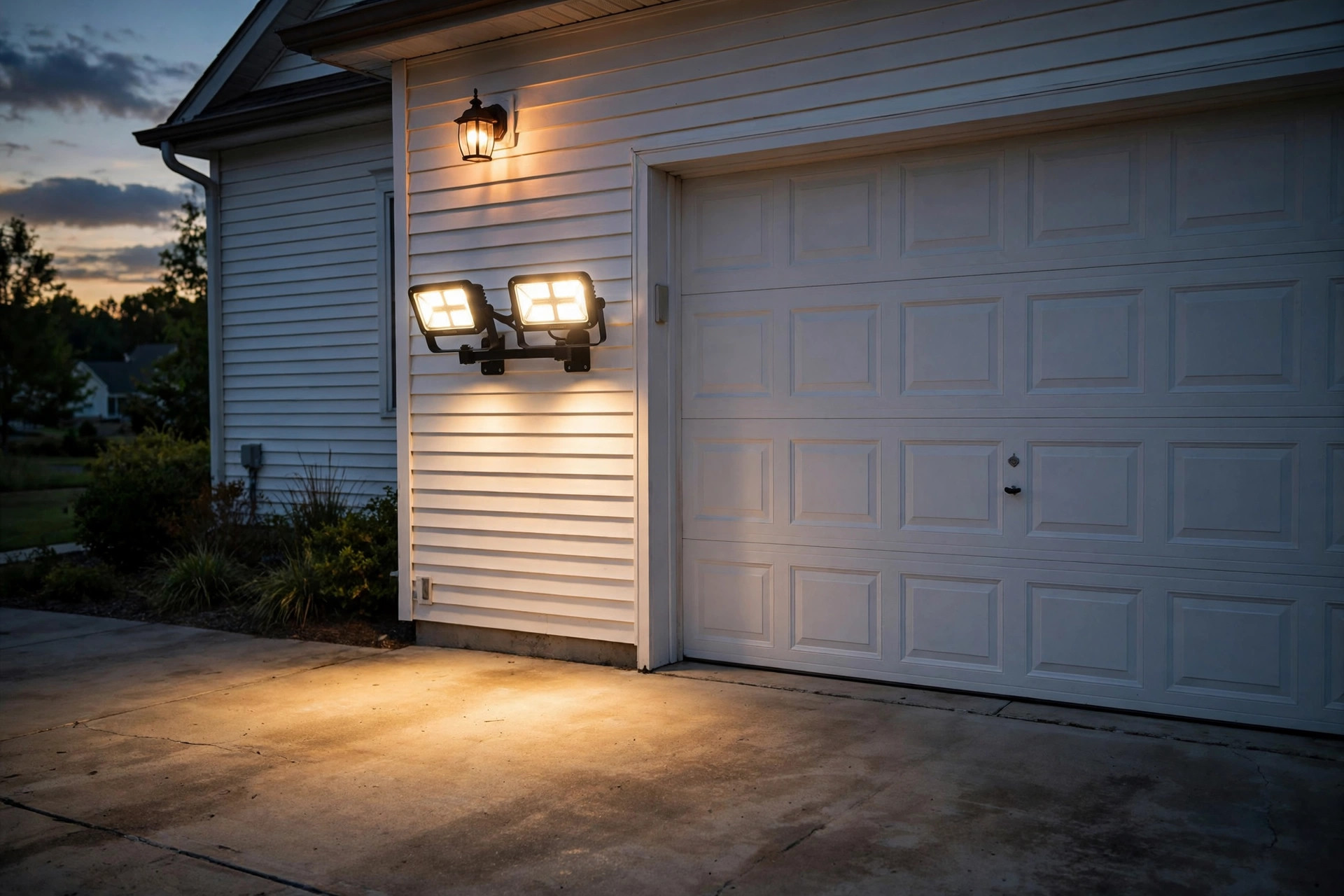
The twin head style is the most common. Two lamp heads sit on one base. You can aim each head in a different direction. Most models use LEDs that last 25,000 hours or more. They are a solid pick for garages and backyards. When you compare motion flood lights deals near me, you will see this style in nearly every store.
Single Head Flood Lights
Single head units are smaller and cheaper. They work well over a door or a small deck. They use less power. If your area is small, a single head may be all you need. Do not pay for two heads when one covers the space.
Solar Motion Flood Lights
Solar models charge a panel by day and light up at night. They need no electrician. Place them where the panel gets full sun for at least six hours. They shine best in the early evening. After many cloudy days, they may run short. They are a good pick for sheds, fences, and far corners of the yard.
Smart Motion Flood Lights
Smart models connect to WiFi. You can change settings from a phone. Some send alerts when motion is found. Some record video like a camera. These cost more, often two to three times the price of a basic unit. They add real value if you want remote control. If you only want light, a basic model is enough.
Motion Flood Lights With Cameras
Some units pair a flood light with a small camera. The light turns on, and the camera records. This can replace a separate security camera. Check the storage terms before you buy. Some brands charge a monthly fee for video storage. A free local storage option keeps long term costs down.
Cost and Price: What Is a Fair Deal
Prices in the United States vary by brand, brightness, and features. As a rough guide, basic twin head LED units run from 25 to 60 dollars. Mid range models with better sensors and longer range run from 60 to 120 dollars. Smart and camera models run from 120 to 300 dollars or more. Solar units often fall in the 30 to 80 dollar range.
A good deal means more than a low price. Watch for these signs of real value. First, the box lists clear lumen and range numbers. Second, the warranty runs at least two years. Third, the brand has a service line in the United States. Fourth, the light uses replaceable or long life LEDs. A 15 dollar unit with no warranty and weak light is no bargain.
Seasonal sales bring the best prices. Late fall and winter holidays often bring markdowns on outdoor lighting. Store clearance sections can hold open box units at half price. Compare the sale price with the everyday price online before you drive to the store. Big chains such as Home Depot and Lowe’s post local stock and prices on their websites, so you can check a deal from home.
If you are already planning other lighting projects, it helps to browse related guides. For example, a look at our deck cap lights buying guide usa can sharpen your eye for outdoor fixture quality. Readers who light a kitchen work area may also enjoy our notes on kitchen island pendants for sale usa. And for task lighting under cabinets, see under cabinet strips texas homes usa.
Care and Upkeep
A motion flood light needs little care, but small steps keep it bright for years.
Clean the lens twice a year. Dust and bugs cut light output. Use a soft cloth and mild soap. Do not use harsh chemicals. Wipe the motion sensor window too. A dirty sensor may trigger late or miss motion.
Check the aim each season. Wind and bumps can shift the heads. Walk the area at night and adjust as needed. Tighten loose screws. Look for water inside the lens after heavy rain. If you see fog or drops inside, the seal may be failing. Contact the maker if the unit is still under warranty.
For solar models, keep the panel clean and free of leaves. Trim branches that shade the panel. Replace the rechargeable battery every two to three years if the run time drops. For battery models, charge or swap batteries on schedule so the light never goes dark.
Safety Tips
Electricity and ladders demand respect. Turn off power at the breaker before you wire a hardwired unit. Test with a voltage tester before you touch any wire. If you are unsure, hire a licensed electrician. The install cost is small next to the risk.
Mount the light high enough that it cannot be reached or tampered with, but low enough to service. Ten to twelve feet is common for driveways. Aim heads away from neighbors’ windows to avoid glare and hard feelings. Use outdoor rated wire and boxes only. Keep all splices inside weatherproof boxes.
For general guidance on safe electrical work around the home, This Old House offers plain how to articles. The Consumer Product Safety Commission publishes safety standards for outdoor electrical products.
Also think about light pollution. Point heads downward toward the ground, not up at the sky or across the street. Shields and proper aim keep light where it belongs. Many towns have rules about bright outdoor lights. A quick check of local codes can save trouble.
Frequently Asked Questions
How much should I pay for a good motion flood light?
Most homeowners pay between 25 and 120 dollars for a solid LED unit without a camera. Basic models start near 25 dollars. Better sensors, longer range, and metal housings push the price toward 80 to 120 dollars. Smart and camera models cost 120 to 300 dollars. A fair price pairs decent brightness with a warranty of two years or more.
Where is the best place to mount a motion flood light?
Mount it 8 to 12 feet high near the area you want to cover. Common spots are above the garage door, beside the front door, over the back patio, and along the driveway. Aim the sensor at the approach path, not at the street, so passing cars do not trigger it. Walk the area at night after install to fine tune the aim.
How far can a motion sensor detect?
Home models usually detect motion from 30 to 70 feet. Range depends on the sensor type, the mounting height, and the weather. Heat, rain, and wind can shorten the range. Check the package for the stated range and test it yourself after mounting. Place the light so the main walkway falls inside the stated range.
Do motion flood lights waste a lot of electricity?
No. LED motion flood lights use little power. A 20 watt LED unit running one hour a night costs only a few dollars per year to run. The motion sensor keeps the light off most of the time, which is the whole point. Solar models use no grid power at all. For more on efficient home lighting, visit ENERGY STAR and the U.S. Department of Energy.
Can I install a motion flood light myself?
Battery and solar units are easy for most homeowners. They mount with a few screws and need no wiring. Hardwired units need basic electrical skill. You must turn off the breaker, connect wires in a weatherproof box, and seal the mount. If you lack experience, hire an electrician. Local handyman guides such as The Spruce explain the basic steps in plain terms.
Why does my motion light keep turning on and off?
Frequent on and off cycles often come from a sensor aimed at moving branches, a busy street, or a heat vent. Wind blown plants are a common cause. Re aim the sensor away from the trigger. Some units have a sensitivity dial. Turn it down one notch and test again. If the problem stays, the sensor may be faulty and covered under warranty.
A Short Final Word
Searching for motion flood lights deals near me is worth the effort. A good light makes your home safer and your nights easier. Take time to compare lumens, sensor range, and warranty before you buy. A fair deal is not just the lowest price. It is the right light at a price that lasts. For design ideas and fixture reviews, browse Lumens and Lamps Plus. For LED options from a major maker, see Philips. With the tips in this guide, you can shop with confidence and bring home a light that serves you well for years.
References
ENERGY STAR. (n.d.). Energy efficient products. https://www.energystar.gov Lamps Plus. (n.d.). Lighting and home decor. https://www.lampsplus.com Lowe’s. (n.d.). Home improvement products. https://www.lowes.com Lumens. (n.d.). Lighting and ceiling fans. https://www.lumens.com Philips. (n.d.). Lighting products. https://www.philips.com The Home Depot. (n.d.). Home improvement products. https://www.homedepot.com The Spruce. (n.d.). Home and garden advice. https://www.thespruce.com This Old House. (n.d.). Home renovation guidance. https://www.thisoldhouse.com U.S. Consumer Product Safety Commission. (n.d.). Product safety information. https://www.cpsc.gov U.S. Department of Energy. (n.d.). Energy efficiency and renewable energy. https://www.energy.gov
Was this guide helpful?

About Lisa Anderson
The My Garden US editorial team writes practical, in-depth home and garden guides for American homeowners — tested advice, no fluff.