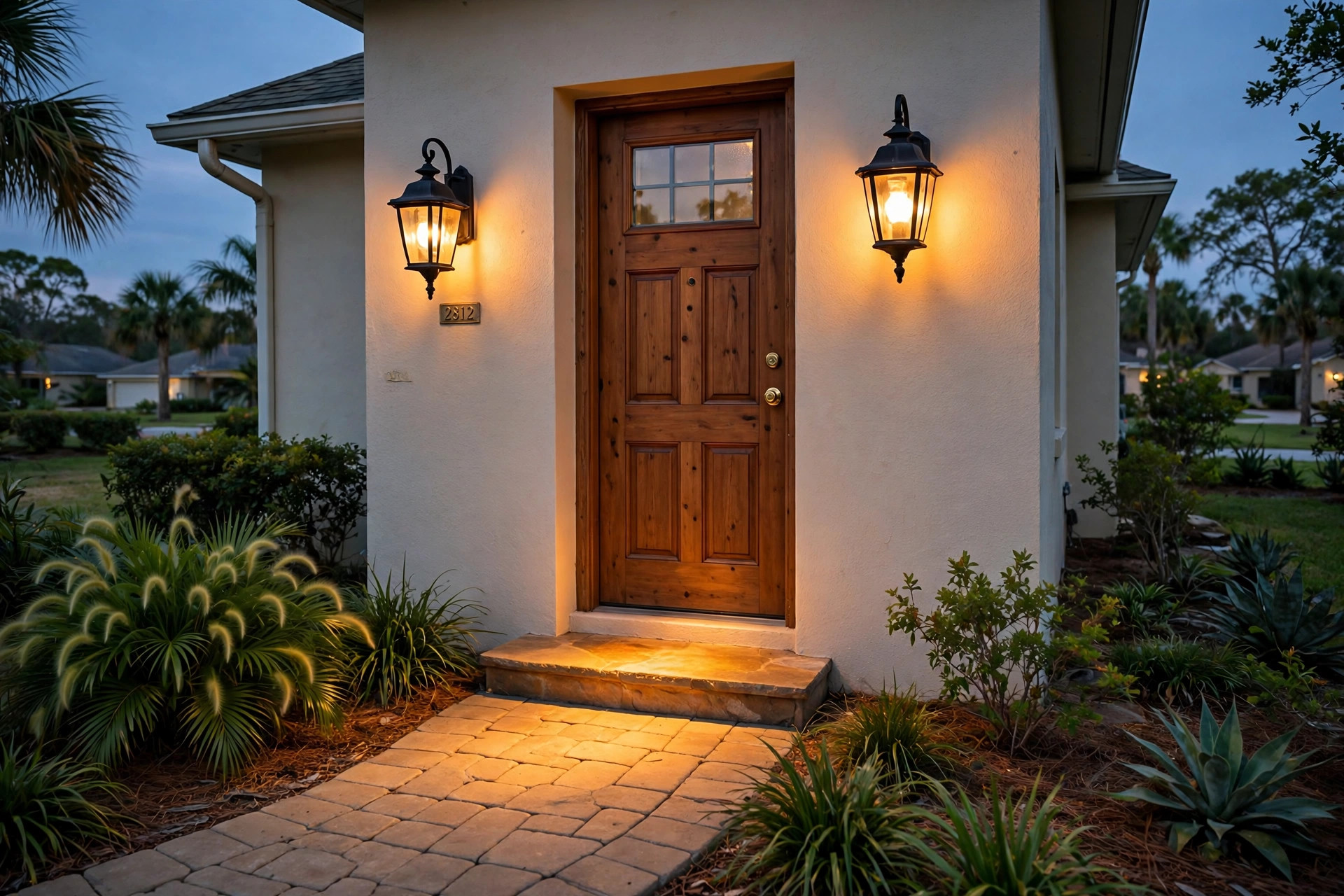

Outdoor wall lanterns Florida homes USA buyers choose are not just lamps. They are small fixtures that sit beside the front door, on the garage wall, or along the porch. They greet guests, light the steps, and make a house look finished. In Florida the warm weather brings long evenings outside. Good lanterns make those evenings safer and more pleasant. This guide covers what they are, what to look for, what kinds you can buy, what they cost, how to care for them, and how to use them safely.
Why Wall Lanterns Matter in Florida
Florida evenings stay warm for much of the year. Families eat on the porch. Neighbors stop by. Children play in the yard until dark. A dark doorway invites stumbles and falls. A lit doorway does not. Wall lanterns give steady light where it counts: by the door, the steps, and the walk.
They also help with security. A house with lit walls looks watched. A house with dark walls does not. Lanterns by each door and on the garage wall cut the number of dark corners. That alone makes many homes feel safer.
Looks matter too. Florida homes often have stucco walls, tile roofs, and warm paint colors. A pair of matching lanterns beside the front door frames the entry. It gives the house a neat, cared-for look. Real estate agents say small touches like this help a home show well. Whether you sell or stay, the entry is the first thing people see.
What to Look for When You Shop: Outdoor Wall Lanterns Florida Homes Usa
An outdoor wall lanterns buying guide starts with fit. The fixture must suit the house, the wiring, and the weather. A lantern that works in a dry climate may fail in a humid one.
Fixtures Built for Salt Air and Humidity
Florida air is wet and salty, even miles from the beach. Cheap metal rusts fast. Look for lanterns rated for damp or wet locations. A wet-location rating means the fixture can stand direct rain. A damp-location rating means it can stand covered moisture, such as under a porch roof.
Good housing materials last longer. Powder-coated aluminum, marine-grade stainless steel, and solid brass hold up well near the coast. Painted steel can work inland if the finish is sound. Check the screws and mounts too. Rust starts at the fasteners.
Glass matters as well. Seeded or frosted glass hides water spots. Clear glass shows every mark and needs more wiping. Plastic lenses cost less but can yellow in strong sun.
The Right Size and Height
Size should match the door. A small lantern beside a tall double door looks lost. A large lantern beside a small side door looks wrong. A common rule is simple: each lantern should stand about one sixth as tall as the door. For a standard six-foot door, a lantern of twelve to fourteen inches works well.
Mount the lantern so the bottom of the fixture sits about sixty to sixty-six inches above the ground. That puts the light near face height. It lights the door, the lock, and the steps below. On a garage wall, hang lanterns higher to spread light across the driveway.
If you have an outdoor wall lanterns buying guide handy, keep it open while you shop. It lists many of the same checks in short form.
Bulbs and Brightness
Most new lanterns use LED bulbs. LEDs use far less power than old incandescent bulbs and last for years. Choose a warm color, around 2700 to 3000 kelvin. Warm light looks welcoming. Cool blue-white light looks harsh on a front porch.
Brightness is measured in lumens. For a front door, four hundred to eight hundred lumens per lantern is plenty. More than that can glare. Look for Energy Star labels on fixtures and bulbs. The label means the product meets set standards for efficiency. The U.S. Department of Energy also posts simple outdoor lighting tips that help you plan before you buy.
Types of Outdoor Wall Lanterns
Shops group lanterns by style and by power. Pick the style first, then the power type that fits your wiring.
Traditional lanterns. These have the old lamp-post look: a glass box, a cap on top, and a finial below. They suit brick, stucco, and colonial homes. They are the most common pick for Florida front doors.
Modern lanterns. These are simple boxes, tubes, or flat plates. They suit new stucco and concrete homes. They give clean light and need little wiping.
Carriage lanterns. These hang from a short arm and swing a little in the breeze. They suit wide porches and homes with trim work. They cost more and need solid mounting.
Wired electric lanterns. These wire into the house power. They turn on with a wall switch or a dusk-to-dawn sensor. They give the steadiest light. If you already have wall boxes by the door, swap in new lanterns is a short job for a licensed electrician.
Solar wall lanterns. These hold a small panel and battery. They need no wiring. They charge by day and glow by night. They cost little to run. They give softer light and fade on cloudy days. They work best as extra accents, not as the main door light.
Lanterns with motion sensors. These stay dim until someone walks near, then they brighten. They save power and startle no one. They suit garage walls, side doors, and dark yard gates. Check the sensor range before you buy. Some are too eager. Some miss small dogs and children.
For the rest of the yard, patio string lights add soft light above tables and pools. They pair well with wall lanterns at the doors.
What They Cost
Prices run wide. A single basic wall lantern costs about twenty to sixty dollars. A mid-range lantern in solid brass or coated aluminum costs about sixty to one hundred fifty dollars. A large designer lantern can cost two hundred dollars or more.
Bulbs add to the price. LED bulbs cost a few dollars each and last for years. Old-style bulbs cost less up front but burn out fast.
If you need new wiring, an electrician may charge one hundred fifty to four hundred dollars per fixture, based on how far the wire must run. Replacing an old lantern on an existing box is cheaper. Many handymen can do a swap in under an hour.
Solar lanterns cost thirty to ninety dollars each. They need no electrician. They still need good sun to charge.
You can compare stock and prices at large retailers such as Home Depot’s outdoor lighting aisle and Lowe’s project guides. Specialty shops like Lamps Plus wall lantern selections and the Lumens lighting catalog carry wider style ranges. Philips outdoor LED bulbs fit most standard lantern sockets. The Spruce lighting guides offer side-by-side reviews if you want a second opinion before you buy.
Care and Upkeep
Outdoor wall lanterns need little care, but they need some. In Florida, rain, salt, and bugs leave marks fast.
Wipe the glass. Clean the glass every few months with a soft cloth and mild soap. Do not use harsh cleaners. They scratch glass and dull plastic.
Check for rust. Look at the mounts and screws each spring. If you see rust, scrub it with a brush and touch it up with outdoor paint. Small rust spots are easy. Big rust patches mean the fixture is failing.
Clear the bugs. Insects love light. Dead bugs pile up inside the glass. Open the fixture and brush them out. Some lanterns have bug screens. They help.
Mind the sun. Strong Florida sun fades painted finishes. Lanterns on west walls fade fastest. Powder-coated finishes hold color longer than cheap paint.
Replace seals. Most lanterns have a small gasket where the glass meets the frame. If the gasket cracks, water gets in. Replacement gaskets cost little and stop most leaks.
Check timers and sensors. If your lantern runs on a dusk-to-dawn sensor, wipe the small eye clean. Dust makes it run at the wrong times. If you use a timer, reset it after power outages and daylight saving changes.
For inside the house, matching indoor wall sconces for sale can tie the entry hall to the porch.
Safety
Wall lanterns are simple, but they use power and heat. Treat them with care.
Wet ratings first. Use wet-rated lanterns in open rain. Use damp-rated lanterns only under cover. A wrong rating can let water reach the wires.
Turn off the breaker. Always cut power at the breaker before you touch wires. Test with a meter to be sure the line is dead.
Hire an electrician for new wire. If you need a new line through a wall, hire a licensed electrician. Florida codes set rules for outdoor wire, boxes, and ground fault protection. A wrong job can void insurance.
Keep bulbs in range. Use only the bulb size and type the label allows. A bulb too hot for the fixture can melt parts or start a fire.
Watch the heat. Even LED bulbs make some heat. Keep dry leaves, webs, and decor away from the fixture.
Mount them solid. A lantern on a loose box can fall in a storm. Florida storms are strong. Use the right anchors for stucco or brick.
Mind the wildlife. Bright lights near nests can bother birds and sea turtles. On beach-side lots, aim lights down and use warm colors. Shielded lanterns keep light where you need it and out of the sky.
Common Questions
How many lanterns do I need by the front door? One lantern works for a narrow single door. Two lanterns, one on each side, look best for a standard or double door. Three or more suit a wide entry with windows.
Can I mix lantern styles on one house? Keep the finish the same across all outdoor lights. You can mix sizes, but the color and metal should match. Mixed finishes look messy from the street.
Do solar wall lanterns work in Florida’s rainy season? They work, but they glow less after cloudy days. Place the panel where it gets full sun. Keep it clean. For the main door, wired lanterns are more sure.
What color temperature looks best? Most owners like 2700 to 3000 kelvin, which is warm white. It flatters stucco and brick. Cooler bulbs look stark and can wash out skin tones.
How often should I replace the bulbs? LED bulbs often last five to ten years in home use. Replace them when they dim or flicker. Keep one spare bulb in the house so a dark night never waits on a store run.
Will lanterns raise my power bill much? No. A pair of LED lanterns uses a few dollars of power per year. Solar and sensor models use even less.
A Short Final Word
Outdoor wall lanterns Florida homes USA owners trust are simple fixtures with a big job. They light the door, guard the steps, and dress the front of the house. Pick a wet-rated fixture, match the size to the door, and use warm LED bulbs. Wipe the glass now and then. Check the mounts after storm season. Do those small things, and your lanterns will serve you well for many years.
References
ENERGY STAR. (n.d.). Energy efficient products. https://www.energystar.gov Lamps Plus. (n.d.). Lighting and home decor. https://www.lampsplus.com Lowe’s. (n.d.). Home improvement products. https://www.lowes.com Lumens. (n.d.). Lighting and ceiling fans. https://www.lumens.com Philips. (n.d.). Lighting products. https://www.philips.com The Home Depot. (n.d.). Home improvement products. https://www.homedepot.com The Spruce. (n.d.). Home and garden advice. https://www.thespruce.com U.S. Department of Energy. (n.d.). Energy efficiency and renewable energy. https://www.energy.gov
Was this guide helpful?

About Emily Rodriguez
The My Garden US editorial team writes practical, in-depth home and garden guides for American homeowners — tested advice, no fluff.
You May Also Like

Kitchen Island Pendants: A Buyer’s Guide to USA Online Deals
January 9, 2026 0 views
Reading Floor Lamps for Texas Homes: A Practical Buying Guide
May 14, 2026 0 views
Where to Find Vanity Light Bars Deals Near Me
June 14, 2026 0 views