A search for indoor wall sconces deals near me is a search for two things at once: good light and a fair price. Wall sconces are small fixtures that mount to the wall. They give rooms a soft, steady glow. They also free up table space and floor space. When you shop close to home, you can see the finish in real light, check the size with your own hands, and carry the box home the same day.
This guide explains what sconces are, which kinds suit which rooms, what they cost, and how to find deals without paying for things you do not need.
Why Wall Sconces Are Worth the Search
Most homes have too little light on the walls. Ceiling lights shine down and leave dark corners. Lamps take up tables and desks. A sconce solves both problems. It sits flat on the wall. It throws light up, down, or both ways. The room feels warmer and more finished.
Sconces also save space. A small hallway has no room for a table lamp. A bathroom mirror has no counter space to spare. A sconce mounts at eye level and does the job. For a reading nook, a swing-arm sconce puts light right where the book is. For a long corridor, a row of sconces leads the eye down the hall.
Energy use is modest. Most sconces now use LED bulbs or built-in LED parts. An LED uses far less power than an old incandescent bulb and lasts much longer. If you want lower bills, look for energy-saving fixtures with clear labels.
Layered light is another benefit. Good rooms use more than one light source. A ceiling fixture gives general light. A lamp gives task light. Sconces add accent light. Together they let you set the mood for each hour of the day. Bright in the morning for getting ready. Soft in the evening for rest. This layering is the quiet trick behind rooms that feel comfortable without trying hard.
Finish and Style
Sconces come in brass, bronze, black metal, chrome, and painted finishes. Pick a finish that repeats something else in the room. A bronze sconce suits bronze door handles. A black sconce suits dark curtain rods. Glass shades spread light softly. Metal shades direct it. Fabric shades give a warm look but need more care. If your decor is simple, a plain shape with a clean shade is safest. Fancy fixtures can date fast, while simple ones last for years.
What to Look for When You Shop: Indoor Wall Sconces Deals near Me
Deals are only deals if the fixture fits your home. Check these points before you buy.
Size and Scale
Sconces range from small six-inch lights to large two-foot statements. A good rule is to match the size to the wall. A tiny sconce looks lost on a wide wall. A large one crowds a narrow hall. Hold your hand up against the wall and picture the shape. Most makers print the height, width, and depth on the box. Measure your space with a tape before you leave the house.
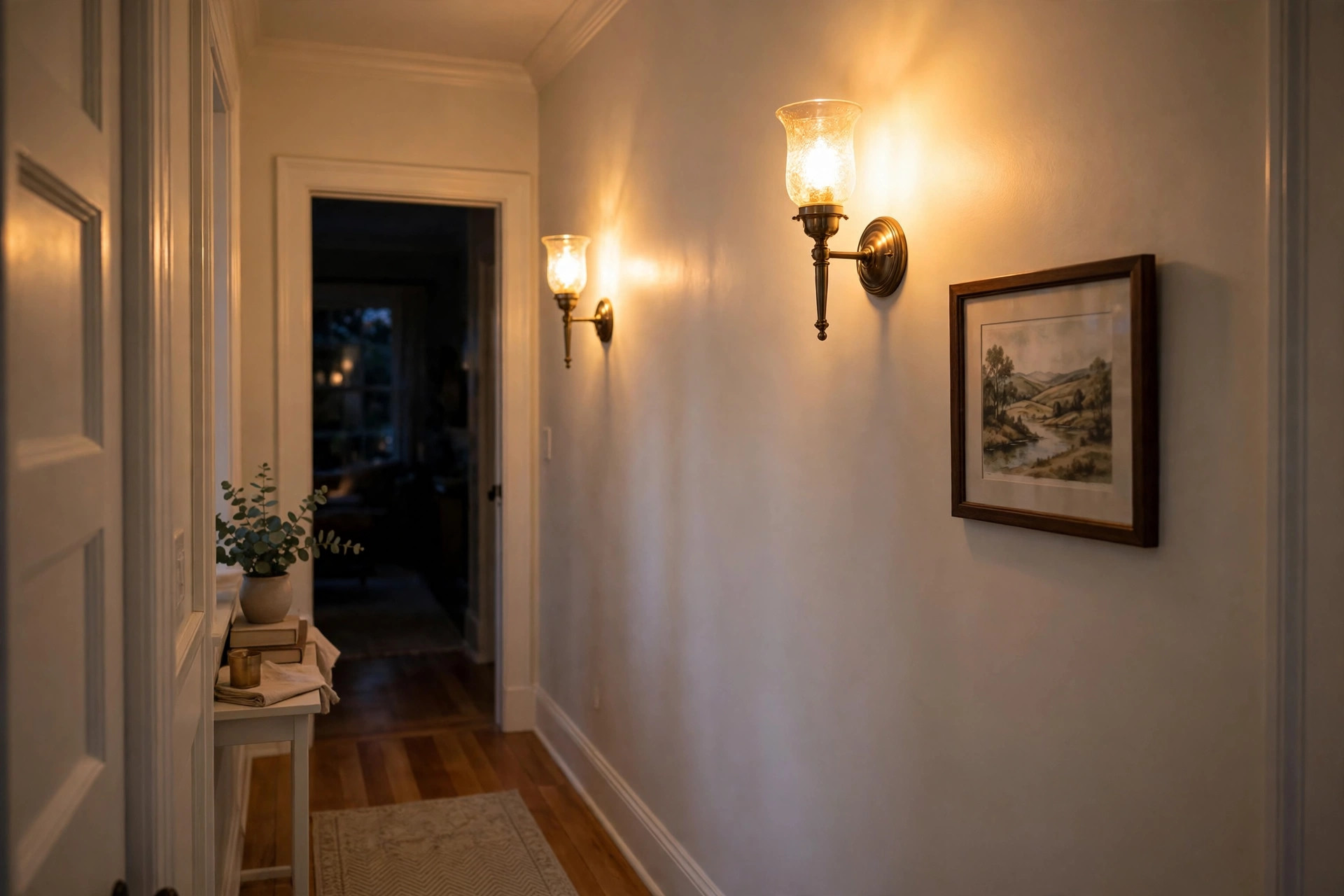
Mounting height matters too. In a hallway, the center of the shade often sits about 60 inches from the floor. By a mirror, the light should sit near eye level so it does not cast harsh shadows on the face. If the sconce shades the wall above or below, step back and look from across the room.
Light Quality
Color temperature tells you how the light looks. Warm white, around 2700K, feels cozy like an old bulb. Neutral white, around 3500K to 4000K, looks clean and helps you see detail. Cool white above 5000K looks sharp and blue. For living rooms and bedrooms, warm light is best. For bathrooms and work areas, neutral light works well.
Brightness is measured in lumens. A single sconce for mood lighting may give 300 to 500 lumens. Task lighting by a mirror or desk may need 800 lumens or more. Major lighting brands publish both numbers on the box.
Types of Indoor Wall Sconces
Not all sconces work the same way. The main kinds are up-light, down-light, swing arm, plug-in, and candle style.
Up-Light and Down-Light Sconces
An up-light sconce shines toward the ceiling. The ceiling bounces the light back down as a soft glow. This kind is kind to the eyes. A down-light sconce shines toward the floor and lights the path. Many fixtures do both at once, which suits hallways and stair walls.
Swing-Arm and Plug-In Sconces
A swing arm pivots. You pull it out to read, then push it back against the wall. This kind is common beside beds and armchairs. A plug-in sconce needs no wiring in the wall. It hangs on a bracket and the cord runs to an outlet. Renters like plug-in models because they leave no marks beyond a small bracket.
Decorative and Candle-Style Sconces
Candle-style sconces look like old wall candles. They often have a slim arm and a small shade. They suit dining rooms, foyers, and traditional decor. Modern styles use plain metal, glass globes, or bare bulbs. Pair them with home design ideas to match your room’s look.
What They Cost
Prices vary with size, finish, and brand. A basic plug-in sconce may cost fifteen to thirty dollars on sale. Mid-range hardwired sconces often run forty to ninety dollars each. Designer or large fixtures can pass one hundred fifty dollars and keep climbing.
Watch the full cost, not just the tag. A hardwired sconce may need an electrician if there is no wire in the wall. That labor can cost more than the fixture. A plug-in model avoids that cost. Built-in LED sconces cost more up front but the light source lasts for years, which saves on replacement bulbs.
Sets can lower the per-unit price. Many stores sell pairs or four-packs of matching sconces. If you need three or four for one hallway, a set often beats buying singles. Check the indoor wall sconces for sale pages to compare set prices against singles.
Where to Find Deals Near You
Shopping near home has real benefits. You avoid shipping damage. You can return a fixture in person if the finish does not match. Here are the main places to check.
Large home improvement stores. Chains such as large home improvement stores and home improvement stores carry dozens of sconce models. They run seasonal sales around holidays. Floor models and clearance aisles often hold the deepest discounts. Ask staff about open-box items; many are brand new returns sold at a cut price.
Specialty lighting shops. Stores that sell only lighting tend to carry wider styles. Online specialty lighting shops and lighting retailers list local showrooms on their sites. Showroom staff can show how the fixture looks when lit, which a box cannot do.
Local lighting outlets and salvage shops. Many cities have lighting outlets that sell last year’s models at half price or less. Architectural salvage shops sell used fixtures cheap. With a used sconce, check the wiring and socket before you buy. Rewiring a simple sconce is a small job for an electrician.
Tips that save real money:
– Shop end-of-season clearances, when stores make room for new lines. – Compare the price per fixture in multi-packs before choosing singles. – Sign up for store flyers; coupon mailings often include lighting discounts. – Bring your old fixture or a photo so finishes match on the first trip. – Read the return policy before you buy, since colors vary under home light.
If you want a fuller overview before you shop, an indoor wall sconces buying guide can help you compare features side by side.
Care and Upkeep
Sconces are easy to care for. Dust the shades and arms every month with a soft cloth. Glass shades come off most mounts and wash in warm soapy water. Turn the power off before you touch any part of a hardwired fixture.
Change bulbs as they dim. With screw-in sockets, keep a spare bulb on hand so the pair of sconces stays matched. With built-in LED models, the light module is part of the fixture; if it fails early, check the warranty. Most carry a warranty of one to five years.
Keep cords clear on plug-in models. Do not run cords under rugs or pinch them behind heavy furniture. Check the cord once a year for cracks or fraying. Replace the cord set if the insulation looks worn.
Safety First
Wall lights deal with electricity, so safety rules are firm. Turn off the breaker before you wire a sconce. Test with a voltage tester to be sure the wires are dead. If the box in the wall is old or loose, replace it; a heavy fixture on a weak box can pull free.
Use bulbs that match the socket rating. A fixture rated for 60 watts should never take a 100-watt bulb. LED bulbs solve this because they draw far less power for the same brightness. Read lighting energy use tips to pick safe, efficient bulbs.
Keep fabric shades away from heat. Some shades sit close to the bulb. Make sure the bulb type and shade are made for each other. If a shade browns or smells hot, turn the light off and change the bulb type at once.
Plug-in sconces need safe outlets. Do not plug them into overloaded power strips. Keep them away from water in bathrooms unless the fixture is rated for damp locations. The box carries a rating mark; damp-rated is fine near sinks, wet-rated is needed inside showers.
Frequently Asked Questions
How many sconces do I need for one hallway? Space them six to eight feet apart on the wall. A short hall needs one or two. A long hall may need three or four. Keep the height the same for all of them so the line looks neat.
Are plug-in sconces as good as hardwired ones? For light quality, yes. The same bulbs and shades work in both. The difference is the cord. A plug-in cord shows on the wall, which some people hide with a cord cover. Hardwired sconces cost more to install but look cleaner.
What is the best height to mount a wall sconce? About 60 inches from the floor to the center of the light works for most rooms. Beside a bathroom mirror, match eye level, which is often 60 to 65 inches. Beside a bed, mount it a few inches above the pillow top so reading light falls on the page.
Can I use sconces as my only bedroom light? You can, but pair them with care. Two swing-arm sconces by the bed give fine reading light. Add one or two more on the far wall for general glow. Most rooms still benefit from one overhead light for cleaning and dressing.
Do sconces work in bathrooms? Yes, if the fixture is rated for damp locations. Vanity sconces on each side of the mirror give the best light for grooming. If you are also shopping for mirror lighting, a vanity light bars buying guide covers bar-style fixtures in detail.
How do I know a deal is really a deal? Check the regular price at two other stores first. A “sale” tag on an inflated price is not a saving. Also compare specs: a cheaper sconce with poor parts may cost more in the long run than a fairly priced solid one.
A Final Word
Finding indoor wall sconces deals near me is mostly legwork. Walk the lighting aisle. Ask about clearance and open-box stock. Compare set prices against singles. Check the size, the light color, and the safety rating before you fall in love with a finish.
Buyers who pair local shopping with a little homework get the best of both worlds: fixtures they have seen with their own eyes, at prices that beat the catalog. For more on styles and finishes, browse home decor guides and home repair guides. With the right sconces in place, a plain wall becomes the warmest part of the room.
References
Bob Vila. (n.d.). Home improvement advice. https://www.bobvila.com ENERGY STAR. (n.d.). Energy efficient products. https://www.energystar.gov Houzz. (n.d.). Home design and remodeling. https://www.houzz.com Lamps Plus. (n.d.). Lighting and home decor. https://www.lampsplus.com Lowe’s. (n.d.). Home improvement products. https://www.lowes.com Lumens. (n.d.). Lighting and ceiling fans. https://www.lumens.com Philips. (n.d.). Lighting products. https://www.philips.com The Home Depot. (n.d.). Home improvement products. https://www.homedepot.com The Spruce. (n.d.). Home and garden advice. https://www.thespruce.com U.S. Department of Energy. (n.d.). Energy efficiency and renewable energy. https://www.energy.gov
Was this guide helpful?

About Lisa Anderson
The My Garden US editorial team writes practical, in-depth home and garden guides for American homeowners — tested advice, no fluff.