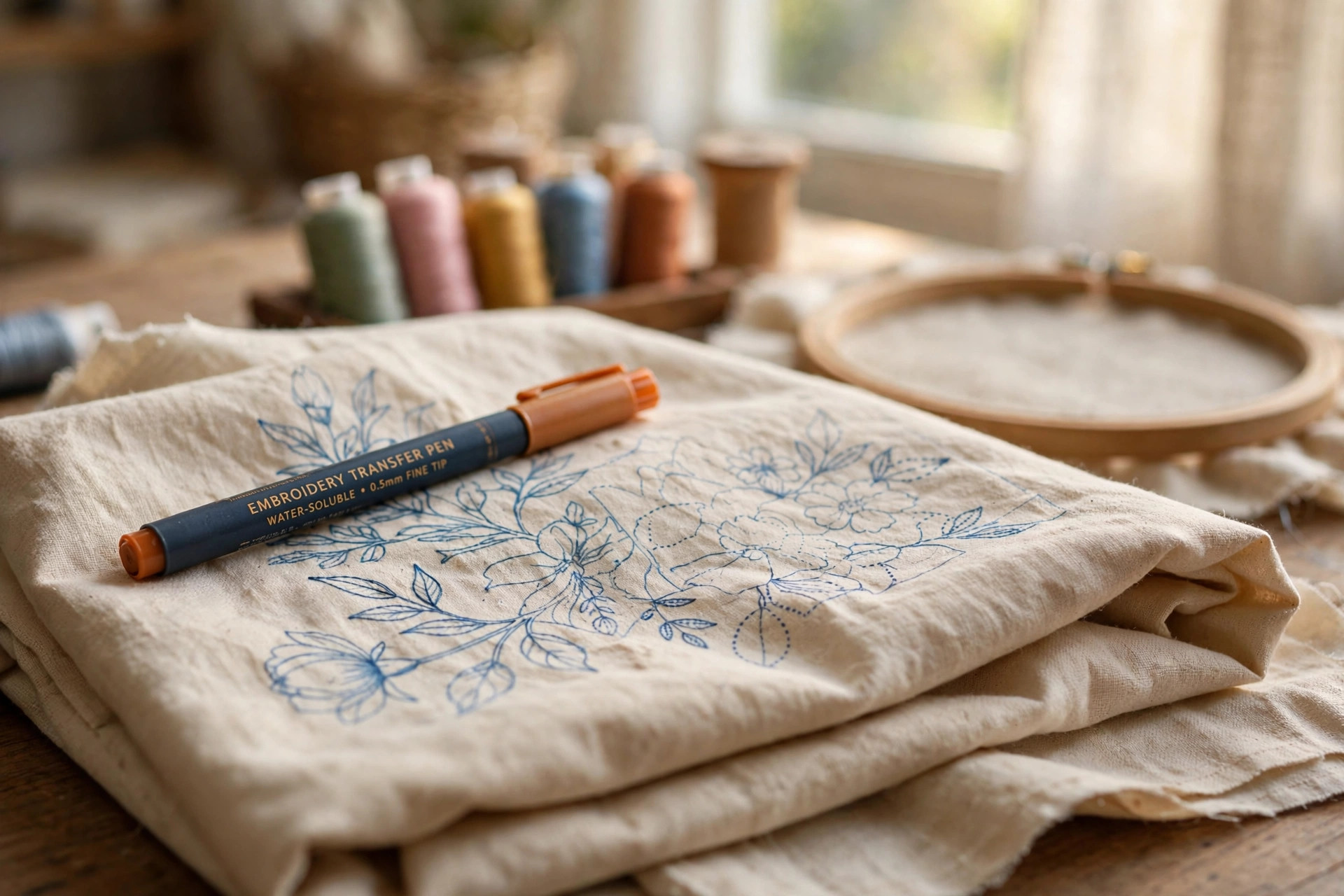

Every hand embroidery project starts with a line on cloth. Before the first stitch, the maker must move the design from paper to fabric. An embroidery pattern transfer pen for fabric crafts does this work. It is a small, simple tool. It draws a clear line that the needle can follow. Many makers learned with carbon paper or plain pencil. Those old methods work, but they are rough. They smudge. They tear the paper. A pen made for fabric gives a neater line. The ink washes out or fades on its own. This guide explains what the pen is, why it matters, how to choose one, and how to use it well.
Why a Transfer Pen Matters
A good pattern line decides how clean the finished work will look. If the line is too thick, stitches land in the wrong place. If it is too faint, the maker cannot see it in low light. If it will not wash out, a blue ghost remains on the cloth. An embroidery pattern transfer pen for fabric crafts solves all three problems at once. The tip makes a fine, steady mark. The ink stays bright while the work goes on. When the piece is done, the line leaves.
Many home sewers once used dressmaker chalk. Chalk rubs off too fast. It falls away on soft knits and brushed cotton. Others used wax pencils. Wax stains light fabric. A fabric transfer pen for embroidery sits between those extremes. It holds long enough for a slow project and then disappears.
The pen also saves time. Tracing a full floral hoop with pencil can take an hour. A smooth pen glides over the paper and cloth in half that time. For makers who sell at craft fair, that saved hour adds up. It means more pieces done in a week.
Beginners gain from it too. A clear line gives courage. The first satin stitch lands where it should. The first stem stitch runs straight. That early success keeps a new stitcher going. Crafters who pair their pen with a best sewing kit for beginners adults crafts often finish their first hoop faster and with neater results.
How the Pen Works: Embroidery Pattern Transfer Pen for Fabric Crafts
Most pens in this class use one of three inks. The first is water soluble ink. It dissolves when the cloth touches water. The maker draws the design, stitches over the lines, and rinses the finished piece. The second is air fading ink. It vanishes on its own after several hours or days. No rinsing is needed. The third is heat erasable ink. It disappears when an iron touches it. Each type suits a different kind of work, and each has a catch worth knowing.
Water soluble ink is the most forgiving. The line stays until water reaches it. That gives weeks or months of working time. The catch is plain: any damp spot removes the line. A wet hand or a drop of coffee will erase part of the pattern before the stitching is done.
Air fading ink suits fast projects. A small motif done in one evening needs no wash. The catch is timing. On a large tablecloth, the first lines may fade before the last are stitched. Some makers date their pieces on the back to track the fading window.
Heat erasable ink is popular with quilters. It holds well and leaves with one pass of the iron. The catch is cold. In very cold rooms, some of these inks return faintly. This is rarely a problem on wall hangings, but makers of baby clothes read the pen label with care.
What to Look For When You Choose
Line width comes first. Fine tips, near one millimeter, suit lettering and small petals. Medium tips suit stems and leaves. A few pens have a dual tip, one fine and one bold, in a single barrel. For most home projects, a fine tip covers every need.
Color comes next. Blue ink shows well on white and cream cloth. Purple shows on pale green and yellow. White or light gray pens suit dark denim and black linen. Some brands sell a three-pen set, one of each tone. Buyers who work on many cloth shades find the set worth the small extra cost.
Ease of washing matters. Read the label before the first draw. Water soluble pens need cold water and no soap on the first rinse. Hot water can set some inks instead of lifting them. Heat erasable pens need a dry iron, not steam, to clear the line fully.
Grip and barrel shape matter for long evenings. A slim barrel tires the hand faster than a thick one. This small comfort point is easy to overlook in the store, but the hand feels it by midnight.
Price tells a story too. Single pens cost little. Twin packs and sets cost more per pen but less per project. Beginners do well to start with one water soluble blue pen and add colors as projects demand. Seasoned crafters keep a small box with every type on hand.
Craft guides at Michaels and Joann often show these pens next to hoop art supplies, which makes it easy to compare tips and colors side by side before buying.
Types of Transfer Pens Compared
The water soluble marker is the workhorse. It writes on most cotton, linen, and blends. It rinses out in cool water. It is the best first pen for a new stitcher. Retail craft stores stock it under many brand names, and large craft retailers such as Hobby Lobby carry several widths and colors in the embroidery aisle.
The air fading marker, sometimes called a disappearing ink pen, suits short jobs. It marks clearly and leaves within two to seven days. It is handy for marking quilting lines that the machine will cover the same day. It is poor for wedding gifts started in spring and finished in summer. The line will be gone by the time the hoop comes back out.
The heat erasable pen suits precise machine work. The line stays through handling and pressing, then leaves with the iron. Some ink colors return in freezing weather, so finished goods stored in cold rooms deserve a second look before gifting.
The iron-on transfer pen is a fourth kind. It holds a special ink. The maker draws on paper, turns the paper face down on the cloth, and presses with an iron. Heat moves the ink to the fabric. It suits bold folk designs and gives a mirror image, so lettering must be drawn backward first. It does not wash out as easily, which makes it better for wall art than for wearables.
A chalk pencil pen hybrid rounds out the set, though it suits framed pieces more than clothing since it smudges under heavy handling.
Cost and Price
Most single pens sell for a few dollars. A well-known water soluble marker often costs between two and five dollars in the United States. Twin packs run from five to nine dollars. Three-pen color sets run from seven to twelve dollars. Iron-on transfer pens cost a bit more, often six to ten dollars each, because the ink formula is special.
Guilds and classrooms that buy bulk boxes of school-grade fabric markers pay less per pen than any single retail pen.
Store brands can be a smart buy. The house label at large craft chains often matches the name brand in washout tests. Readers who want a quick price check can look at the notions wall at Joann or compare with the art pen shelves at Blick, where fabric markers sit near textile paints.
The true cost of a pen is pennies per piece. One five-dollar pen marks twenty or thirty hoops.
How to Use the Pen Step by Step
Start with clean cloth. Oils from the hands can block the ink or set it. Wash and press the fabric first. Work on a flat, hard surface with the pattern under the cloth.
Trace slowly. A steady hand beats a fast one. Hold the pen upright for the finest line. Let the tip touch the cloth without pressing hard. Hard pressure floods the tip and makes a fat line that spreads.
Test first on a scrap. Draw a short line, wait a minute, then remove it the way the label says. If any shadow stays, pick another pen or another cloth. This one test saves more grief than any other step.
Stitch inside the line when you can. Many teachers tell students to split the line with the needle. The ink then hides under the thread. This habit makes even a stubborn pen safe to use.
Remove the line only when the stitching is done. For water soluble ink, soak the piece in cold water until the blue is gone. Do not add soap at first. Soap can set the ink in some blends. For heat erasable ink, press with a dry iron and check in good light. For air fading ink, simply wait, and keep the piece away from bright sun, which can yellow the cloth.
Crafters building a full sewing corner often pair this tool with a best rotary cutter for quilting fabric crafts for clean fabric edges, and makers who move from hand work to machine work can read about an embroidery machine for home business beginners as a next step.
Care and Upkeep
Cap the pen after every use. These inks dry fast in open air. A pen left open overnight may never write again. Store pens flat or tip down so ink feeds to the point.
Keep pens away from heat. A car dashboard in summer can push heat erasable ink to clear inside the barrel. It can also cook the tip of a water soluble pen into a hard nub.
Do not share tips between ink types. A water soluble tip dipped in a heat erasable barrel writes a line that no single method will remove. Label the barrels if the colors look alike.
Check the date on old pens. Air fading ink weakens after a year or two on the shelf. The line may fade in hours instead of days, or never darken at all. A quick test on scrap cloth shows whether the pen is still good.
Store finished cloth before it is fully cleaned. If a water soluble line is still on the piece, keep it dry and flat. A damp storage box will blur the pattern into the fibers.
Safety Notes
These pens are craft tools, not toys. Keep them away from small children who may draw on skin or mouth the tips. Most inks are low in toxicity, but they are not made for skin contact.
Read the label if the finished item will touch food. Tea towels and napkins need a pen whose ink rinses fully. The test scrap is the proof. If any tint stays after washing, the pen is wrong for food cloth.
Ventilate when using iron-on transfer pens. The heat step gives off a faint smell. Open a window or work near a fan. This is a small caution, but it costs nothing to follow.
Check school rules before bringing fabric markers to class. Some schools allow only washable art supplies. A water soluble pen usually passes, but a quick note to the teacher settles it.
Home project guides at This Old House and Family Handyman remind readers that even small tools deserve the same care as power tools: read the label, test first, and store safely.
Frequently Asked Questions
Will the ink come out of all fabrics? It comes out of most plain cotton, linen, and common blends when the maker follows the label. It may cling to silk, rayon, and some dark dyes. Always test on a scrap of the exact cloth first.
Can I use a transfer pen on dark fabric? Standard blue and purple inks barely show on dark cloth. Use a white or light gray fabric pen, or a chalk pencil hybrid, for denim, black linen, and navy twill. Test the removal method on a hidden seam.
How long does air fading ink last? Most brands fade in two to seven days at room temperature. Heat and bright light speed the fading. Cold slows it. For longer projects, choose water soluble ink instead.
Is a disappearing ink pen the same as a water soluble pen? No. Disappearing ink fades on its own in air. Water soluble ink stays until water touches it. The two look alike in the store, so read the barrel before buying.
Can I press over the lines with an iron? Ironing can set water soluble and air fading inks into the cloth. Finish all pressing before tracing, or trace after the final press. Heat erasable ink is the one type made to meet the iron.
Where should a beginner buy their first pen? Any large craft store carries them. Shoppers can compare brands at Michaels, check sewing notions at Home Depot, or read project ideas at Bob Vila.
A Final Word
An embroidery pattern transfer pen for fabric crafts is a humble tool with an honest job. It carries the design from paper to cloth and then steps aside. Choose the ink that fits the project length. Test it on scrap. Trace with a light hand and stitch inside the line. The finished piece will show the stitches, not the tool that guided them. That is the whole point of a good transfer pen.
References
Blick Art Materials. (n.d.). Art and craft supplies. https://www.dickblick.com Bob Vila. (n.d.). Home improvement advice. https://www.bobvila.com Family Handyman. (n.d.). DIY home repair and maintenance. https://www.familyhandyman.com Hobby Lobby. (n.d.). Arts, crafts, and home decor. https://www.hobbylobby.com JOANN. (n.d.). Fabric and craft supplies. https://www.joann.com Michaels. (n.d.). Arts and crafts supplies. https://www.michaels.com The Home Depot. (n.d.). Home improvement products. https://www.homedepot.com This Old House. (n.d.). Home renovation guidance. https://www.thisoldhouse.com
Was this guide helpful?

About Michael Thompson
The My Garden US editorial team writes practical, in-depth home and garden guides for American homeowners — tested advice, no fluff.
You May Also Like
The Best Embroidery Stand for Hands Free Stitching
August 9, 2026 0 views
Best Embroidery Machine for Small Business USA: A Plain Guide for New Owners
January 1, 2026 0 views
DIY Flower Arrangement Kit for Home Decor: A Practical Guide
July 18, 2026 0 views