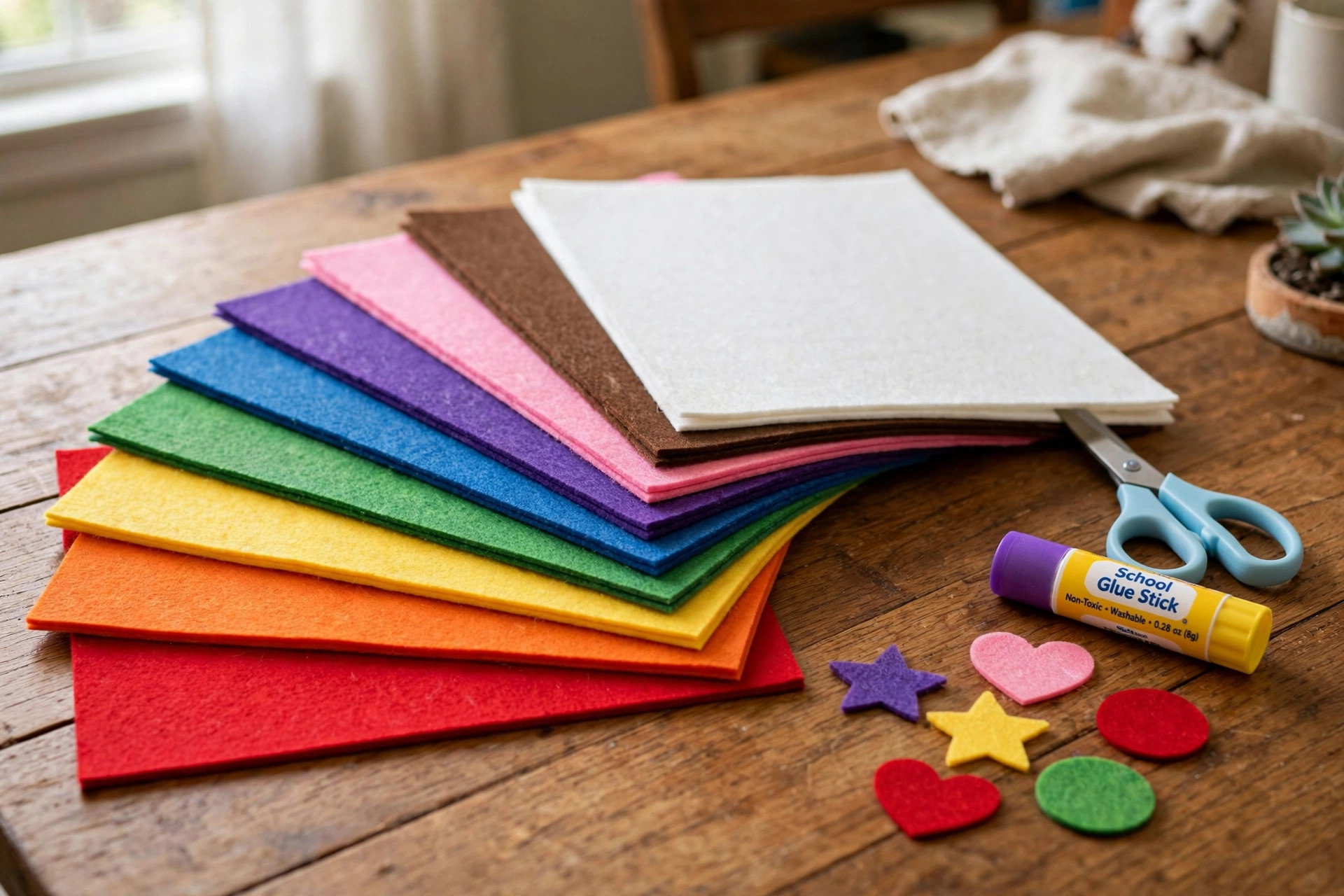
A craft felt sheets assortment for kids projects is one of the simplest ways to start art time at home. The sheets come in bright colors. They cut with plain scissors. They need no glue gun heat and no sewing machine. Children as young as three can make shapes with a little help, and older kids can build puppets, masks, and wall art on their own. This guide explains what felt is, how to choose a good pack, what projects work best, what it costs, and how to keep little makers safe.
Why Felt Works So Well for Kids’ Crafts
Felt is a forgiving material. It does not fray when cut. Edges stay neat with no hemming. A child can cut a wobbly circle and still have a usable piece. That small kindness matters. It keeps young crafters from getting frustrated.
Felt also holds glue well. White school glue soaks into the fibers and dries clear. Tacky craft glue bonds felt to felt in minutes. Hot glue works too, though an adult should handle it. Felt sticks to itself with simple stitches as well, which makes it a gentle first sewing material for school-age children.
Another strength is color. Felt sheets come dyed through the fibers. Both sides look the same. There is no right side and no wrong side. That removes one more source of confusion for beginners.
Parents like felt because it is quiet and clean. There is no sawdust. There is no paint to spill. Cut scraps fall straight down and sweep up in a minute. A kitchen table becomes a craft table with nothing more than a plastic tablecloth underneath.
What to Look for When You Buy: Craft Felt Sheets Assortment for Kids Projects
Not all felt packs are equal. A little care at the store or online saves disappointment later.
Material: Acrylic Felt or Wool Blend
Most cheap packs are 100 percent acrylic felt. This kind is made from plastic fibers. It is thin, bright, and very low cost. It works fine for paper-style crafts, masks, and collages. It does pill and shed a little with heavy handling.
Wool blend felt, usually 20 to 35 percent wool mixed with rayon, feels thicker and softer. It cuts more cleanly and holds its shape better. It costs more. For projects that children will keep, such as finger puppets or ornaments, a wool blend is worth the price.
Pure wool felt is the finest grade. It is dense, smooth, and takes stitching beautifully. It is overkill for most kids’ projects. Save it for special keepsake crafts.
Size and Thickness
The standard craft sheet measures 9 by 12 inches, the same size as a sheet of construction paper. This size fits easily in a child’s hands. It is also easy to store.
Thickness matters more than many buyers expect. Thin felt, about 1 millimeter, bends and flops. It is fine for flat collages. Medium felt, 2 to 3 millimeters, stands up better for puppets and three-dimensional shapes. Very thick felt, 4 millimeters or more, is hard for small hands to cut. For a craft felt sheets assortment for kids projects, medium thickness is the sweet spot.
Color Range in the Assortment
A good pack holds 20 to 40 colors. Look for packs that include skin tones, browns, and grays along with the brights. Kids making people or animals need brown, tan, peach, and black. Packs that hold only neon colors run out of useful shades fast.
Check the count of sheets, not just the count of colors. A pack that lists 40 pieces may hold only 20 colors with two sheets each. That is fine for one child. For a classroom or a group of siblings, look for packs of 60 to 100 sheets.
Pre-Cut Shapes and Adhesive Backing
Some assortments include pre-cut shapes: circles, stars, hearts, flowers. These are handy for toddlers who cannot cut yet. The trade-off is less freedom. Older children prefer full sheets they can cut themselves.
Self-adhesive felt sheets have a sticky back under a paper liner. They work like stickers. They are fun for quick crafts but the adhesive can gum up scissors. Keep a separate pair of scissors for sticky felt if you buy this type.
Types of Felt Projects by Age
Ages 3 to 5: Stick and Layer
Young children do best with simple layering. Peel-and-stick felt shapes on a felt board make a fine first project. The shapes stick without glue and come off again. Finger puppets made by an adult, then decorated by the child with glued-on felt shapes, teach gluing without cutting.
Simple masks work well too. An adult cuts the mask shape and eye holes. The child decorates it with felt scraps, yarn hair, and glued-on shapes. Projects at this age should take 15 to 20 minutes. Attention spans are short.
Ages 6 to 9: Cut, Glue, and Build
School-age children can handle real scissors and full sheets. Good projects include:
– Felt bookmarks. Cut a strip, glue on shapes, add a yarn tassel. – Animal finger puppets. Cut two body shapes, glue three edges, add felt eyes and ears. – Felt food for play kitchens. Sandwiches, cookies, and pizza slices made from layered felt are classics. – Wall pennants. Triangle flags strung on yarn, decorated with cut letters.
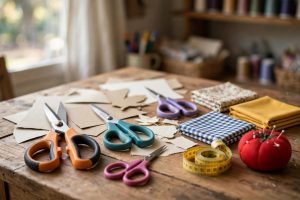
At this age, children benefit from a decent pair of child-safe scissors. A best craft scissors set for paper and fabric gives them small, sharp-enough blades sized for little hands, which makes cutting felt much easier than using dull school scissors.
Ages 10 and Up: Stitch and Design
Older kids can learn a running stitch and a whipstitch on felt. Hand-sewn phone pouches, coin purses, and small stuffed animals teach real sewing skills. Felt holds stitches well and hides uneven work kindly.
This age group also enjoys design projects: felt banners for bedroom doors, holiday ornaments with layered detail, and costume accessories. A set of brushes helps with detail work too, and a best craft paint brushes set for acrylics lets older kids add painted faces and fine lines on their felt figures.
Pairing Felt With Other Craft Supplies
Felt rarely works alone. A few companion supplies stretch an assortment much further.
Glue. White school glue works for flat work. Tacky craft glue, the thick kind in a gold bottle, bonds faster and holds 3D shapes. Keep hot glue for adult use only.
Markers and paint. Fabric markers draw clean lines on felt. Acrylic paint works for details but stiffens the fabric. Use it sparingly.
Yarn and thread. Yarn makes hair, tails, and hanging loops. Embroidery thread in a few basic colors covers most stitching needs.
Googly eyes. A bag of mixed-size googly eyes turns any felt animal from plain to charming. They glue on in seconds.
Buttons and beads. Older children can sew buttons on as eyes or decoration. Beads add weight to the bottom of puppets so they sit upright.
Families who enjoy messy color crafts may also like a diy tie dye kit for shirts and crafts as a companion project. The tie-dyed shirts and the felt puppets make a fun pair for dress-up play.
Cost and Price
Craft felt is one of the cheapest art supplies per project. A pack of 40 acrylic sheets, 9 by 12 inches, usually sells for 8 to 15 dollars at large craft stores such as Michaels or JOANN. That breaks down to 20 to 40 cents a sheet. One sheet can make two to four small projects, so the cost per craft stays under a dime.
Wool blend assortments cost more: 20 to 35 dollars for 30 to 40 sheets. The price per sheet runs 60 cents to a dollar. For keepsake projects, the extra cost is justified.
Bulk classroom packs of 100 or more sheets sell for 25 to 45 dollars. Teachers and scout leaders should buy in bulk. The per-sheet price drops below 30 cents even for decent quality felt.
Specialty items cost extra. Pre-cut shape packs, glitter felt, and adhesive-backed sheets run 50 percent to 100 percent more than plain sheets. Buy plain sheets for everyday crafts and specialty sheets only for specific projects.
Watch for coupons at craft stores. Felt goes on sale often, especially before the winter holidays. Stocking up in November covers spring craft needs.
Care and Upkeep of Your Felt Supply
Felt lasts for years if stored well. Keep sheets flat. Rolling or folding leaves creases that are hard to remove. A shallow box, a portfolio folder, or a stack between two pieces of cardboard works.
Sort by color. A simple file organizer or a set of labeled zip bags keeps colors findable. Children craft more when they can see their choices at a glance.
Keep felt dry. Acrylic felt resists water, but wool blends can shrink or mat when wet. Store packs away from damp basements.
Save the scraps. Small felt pieces work for eyes, noses, spots, and confetti. A scrap jar teaches thrift and cuts waste. When the jar fills up, use the scraps for a mosaic collage project.
Finished felt crafts need little care. Dust them with a soft brush. If a puppet gets dirty, spot-clean with a damp cloth and mild soap. Do not machine wash felt crafts. The agitation mats the fibers and warps the shapes.
Safety Notes for Young Makers
Felt itself is safe. It is non-toxic and soft. The risks in felt crafting come from the tools around it.
Scissors. Match the scissors to the child’s age. Blunt-tip scissors for ages three to five. Sharper craft scissors for older kids, with supervision at first. An adult should do any cutting that needs force, such as thick stacked layers.
Glue. White glue and glue sticks are safe. Tacky glue is safe but harder to wash off hands. Hot glue guns cause burns. Keep them in adult hands only, or buy a low-temperature gun and supervise closely.
Small parts. Buttons, beads, and googly eyes are choking hazards for children under three. Keep them out of reach of toddlers. The U.S. Consumer Product Safety Commission publishes age-grading guidance for toys and craft supplies that parents should review.
Felt dust. Cutting felt releases tiny fibers. Most children have no trouble. Kids with dust allergies or asthma should craft in a ventilated room, and a quick wipe of the table after crafting keeps fibers down.
Adhesive-backed felt. The paper liner peels off easily, but the sticky side can bond to skin and pull fine hairs. It is not dangerous, but young children may find it unpleasant. Test one sheet before buying a large pack.
Frequently Asked Questions
What is the difference between craft felt and wool felt? Craft felt is usually 100 percent acrylic. It is thin, cheap, and brightly colored. Wool felt and wool-blend felt contain animal fibers. They are thicker, softer, and hold shape better. Acrylic works for most kids’ projects. Wool blend is better for keepsakes.
How many sheets does a child need for a typical project? Most small projects use less than one sheet. A finger puppet needs about half a sheet. A mask needs one sheet. A pack of 40 sheets can supply a child with crafts for months.
Can kids cut felt with regular scissors? Yes, with decent scissors. Dull school scissors struggle and frustrate children. A sharp pair of child-size craft scissors cuts felt cleanly. Adults should pre-cut small or detailed shapes for children under six.
Does felt need to be washed before crafting? No. Felt comes ready to use. Washing can shrink wool blends and is unnecessary for acrylic. If a sheet smells strongly of chemicals, air it out for a day before giving it to children.
Can felt be ironed? Acrylic felt melts under a hot iron. Never iron it directly. Wool felt can be pressed with a cool iron through a damp cloth. For kids’ crafts, skip ironing entirely. Smooth sheets by hand or stack them under a heavy book overnight.
What glue works best on felt? Tacky craft glue bonds felt to felt best. White school glue works for flat collages. A glue stick is fine for sticking felt to paper. Hot glue holds fast but should be handled by adults.
A Final Word
A craft felt sheets assortment for kids projects is a small purchase that pays off for a long time. It asks little of parents: no special tools, no big mess, no steep learning curve. It gives children color, texture, and the pride of making something with their hands. Start with a basic acrylic pack in medium thickness. Add glue, scissors, and a few googly eyes. Then let the young makers lead. The projects will not be perfect. That is the point.
For more background, see The Home Depot, Blick Art Materials, and Family Handyman. Buying guides are also published by This Old House and Bob Vila.
References
Blick Art Materials. (n.d.). Art and craft supplies. https://www.dickblick.com Bob Vila. (n.d.). Home improvement advice. https://www.bobvila.com Family Handyman. (n.d.). DIY home repair and maintenance. https://www.familyhandyman.com JOANN. (n.d.). Fabric and craft supplies. https://www.joann.com Michaels. (n.d.). Arts and crafts supplies. https://www.michaels.com The Home Depot. (n.d.). Home improvement products. https://www.homedepot.com This Old House. (n.d.). Home renovation guidance. https://www.thisoldhouse.com U.S. Consumer Product Safety Commission. (n.d.). Product safety information. https://www.cpsc.gov
Was this guide helpful?

About James Carter
The My Garden US editorial team writes practical, in-depth home and garden guides for American homeowners — tested advice, no fluff.