Beads are small. They roll. They hide in carpet. They slip into couch cushions. Any person who makes jewelry knows this trouble well. The best craft storage drawers for beads and findings solve it. They give every bead a home. They keep clasps, jump rings, crimps, and head pins in order. This guide shows what to buy, how to choose, and how to care for it. It fits a beginner with one shoebox of supplies. It also fits a long-time maker with ten pounds of glass beads.
Why Drawer Storage Matters for Beads and Findings
A loose bead is a lost bead. That is the first rule of jewelry making. Drawers fix this problem at its root. Each drawer holds one type of supply. You open it, take what you need, and close it. Nothing spills across the table. Nothing mixes.
Bags and jars have limits. Bags tear. Jars tip over. Open bins invite spills when a cat walks by. Drawers close flat. They stack. They keep dust off your supplies. They let you see at a glance what you own.
Drawers also save time. Makers report that sorting cuts project time in half. You no longer dig through a tackle box of mixed beads. You open the drawer marked “6mm round, blue.” You take five beads. You move on.
Findings need this order even more. Findings are the small metal parts: clasps, jump rings, crimp beads, ear wires, head pins. They look alike. A lobster clasp and a spring ring clasp can sit in one pile and confuse you. Separate drawers end that confusion. They also keep metal findings away from damp air, which slows tarnish.
What to Look for When You Choose: Best Craft Storage Drawers for Beads and Findings
Compartment Size and Layout
Beads range from tiny seed beads to large focal pieces. Your drawers must fit both. Look for units with mixed drawer sizes. Small shallow drawers hold seed beads, crimps, and jump rings. Deeper drawers hold string, tools, and half-finished pieces.
Some cabinets have fixed drawers. Others use removable bins inside the drawers. Removable bins are better. You can lift out one bin of 4mm fire-polished beads and carry it to your work table. You return it when done. This is how a good small parts organizer for seed beads should work.
Count your supplies before you shop. Sort them into rough groups: round beads, shaped beads, metal findings, wire and cord, tools. Count the groups. Buy a unit with at least that many drawers, plus a few spare for growth.
Material and Build
Plastic drawers are light and cheap. They suit beads well because beads are light. Pick drawers made of clear plastic. Clear drawers let you see contents without opening them. This saves time and keeps dust out.
Check the frame. Thin frames bend under weight. Wire and metal findings are heavy. A sturdy frame matters if you store pounds of Czech glass or stone beads. Wood frames look nice in a living room studio. Metal frames last longest. Reinforced plastic frames work for most makers and cost less.
Look at how the drawers slide. Cheap drawers stick. Good ones glide on small rails. Test the slide if you can. A drawer that sticks will annoy you every day for years.
Labeling and Visibility
Labels turn drawers from storage into a system. Buy a cabinet that takes labels. Many units have label holders on each drawer front. Others have flat fronts that take stick-on labels. A simple label maker works well. Write the bead type, size, and color on each label. Update the label when the stock changes.
Portability and Placement
Think about where you work. If you bead at one desk, a desktop cabinet is ideal. It sits within arm’s reach. If you work at the kitchen table, pick a unit with a carry handle or a rolling cart. Portability keeps your hobby welcome in shared rooms. You pack up in minutes.
Measure your space. Desktop cabinets range from twelve inches to two feet wide. Rolling carts stand about three feet tall. A bead storage cabinet with tiny drawers sounds small until you place it on a crowded desk. Tape the outline on your table first. See if it fits.
Types of Craft Storage Drawers
Small Apothecary-Style Cabinets
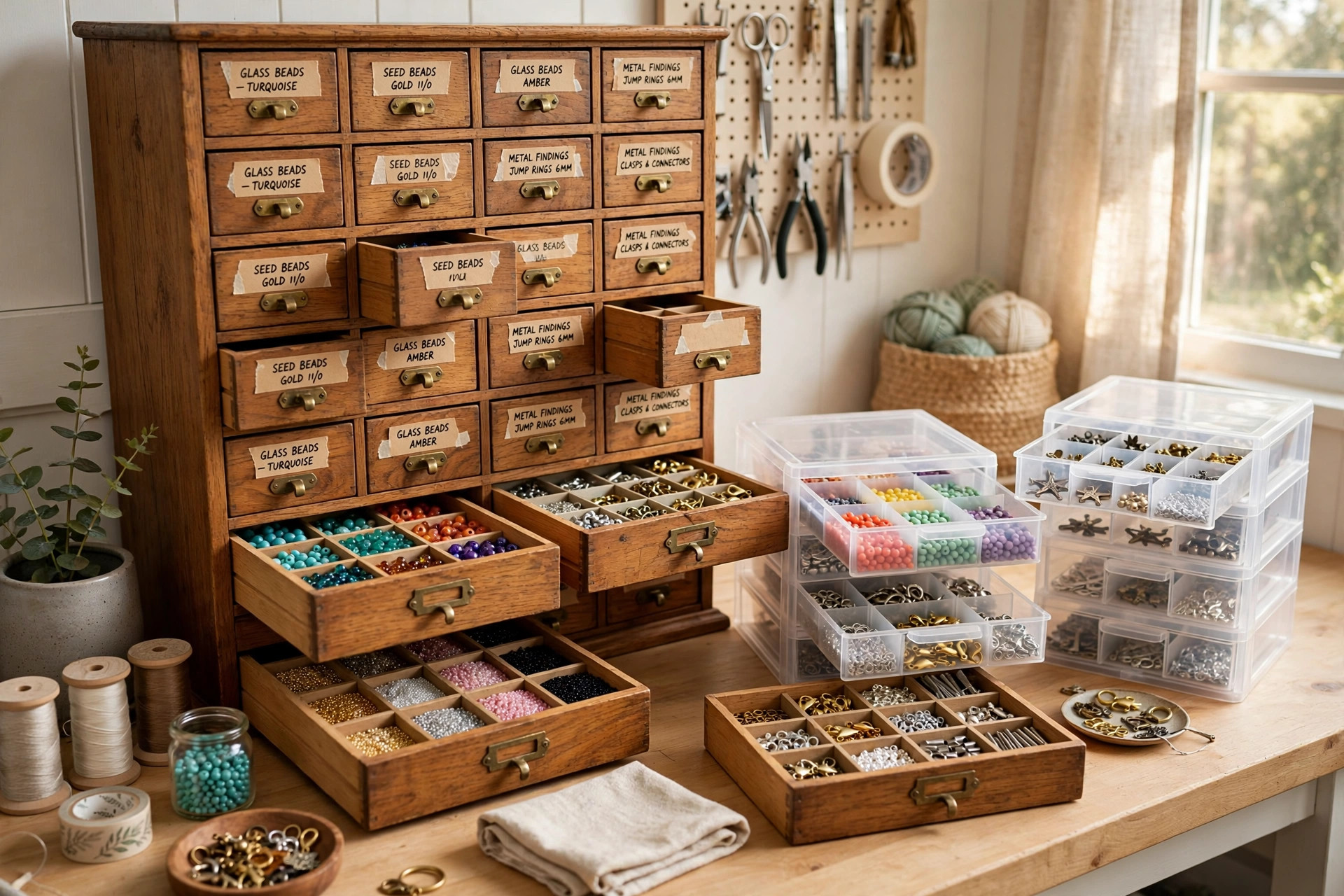
These look like old drugstore cabinets. They have many small drawers in a wooden or metal case. Each drawer holds one bead color or one finding type. They are the classic choice for serious beaders.
The best units have forty to sixty-four drawers. Each drawer is about two inches square. That size fits seed beads, small rounds, and jump rings well. The wood looks warm in a craft room. Some makers at craft retailers such as Michaels find these on sale in the storage aisle.
The drawback is price. Real wood cabinets cost more than plastic. They are also heavy. Once filled, they stay in one place.
Stackable Plastic Drawer Units
These are the workhorses of craft storage. You buy one unit of three to six drawers. You stack more on top as your collection grows. Brands differ, but the idea is the same everywhere.
Stackable units shine for mixed collections. Put beads in the top unit. Put findings in the middle. Put tools and string in the bottom. Some makers line each drawer with a small parts organizer for seed beads, using tiny jars inside the drawer for extra sorting.
Home stores like Home Depot carry these in several sizes. The Container Store sells sturdier versions with smoother slides. Both are worth a look before you decide.
Rolling Carts with Drawers
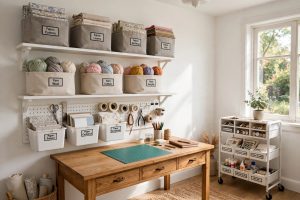
A rolling cart is a small tower of drawers on wheels. You roll it to your chair. You work. You roll it back to the closet. This suits makers who share rooms or who bead in front of the television.
Carts usually hold three to five drawers. The drawers are wider than desktop cabinets. They fit beading boards, patterns, and pliers along with the beads. Some carts have side pockets for magazines and sketchbooks.
Look for locking wheels. A cart that rolls away mid-project is a bad cart. Lock the wheels before you open the drawers. This keeps the tower stable.
Wall-Mounted Drawer Organizers
Some makers mount shallow drawer units on the wall above the desk. This frees desk space. The drawers sit at eye level. You see every label at once.
Wall mounting needs care. A full cabinet is heavy. Use wall anchors rated for the load. Test them before you fill the drawers. If you rent, ask your landlord first. Damage to drywall costs more than a desktop unit.
DIY plans for wall-mounted bead storage appear on sites like Family Handyman and This Old House, where builders show how to hang shallow cabinets safely. Bob Vila also carries project guides for home craft storage.
Divided Craft Carriers and Toolboxes
Some bead makers skip drawers and use divided carriers with lift-out trays. These work for travel to bead shows and classes. They are less ideal for home storage. Trays spill when bumped. Drawers stay shut. If you buy one, use it for travel only. Keep your main stock in drawers.
Cost and Price
Price tracks size and material. A small stackable plastic unit with three drawers costs about eight to fifteen dollars. These are fine for beginners. They hold a starter set of beads and one drawer of findings.
Mid-size units with twenty to thirty drawers run twenty to fifty dollars. This is the sweet spot for most makers. You get real organization without a big bill. Online sellers like Amazon and Target stock these in many colors.
Apothecary-style cabinets cost sixty to two hundred dollars. The price reflects wood, joinery, and looks. They last for decades. If you plan to bead for years, they are a fair buy.
Rolling carts run thirty to eighty dollars. Check the wheel quality before you judge the price. Cheap wheels fail first.
Do not forget the small costs. Labels, small jars, and drawer liners add ten to twenty dollars. A full setup still costs less than one bag of wasted beads spilled and lost over a year.
Shop sales. Craft chains like Joann and Blick run storage sales several times a year. Sign up for their flyers. A forty-percent-off coupon turns a fifty-dollar cabinet into thirty dollars.
Care and Upkeep
Drawers need little care, but they are not care-free. Wipe them out twice a year. Bead dust and metal filings gather in corners. A damp cloth works. Let the drawer dry fully before you refill it. Damp beads grow cloudy spots.
Check findings for tarnish each year. Sterling silver and copper darken in air. Drawers slow this but do not stop it. Add an anti-tarnish strip to drawers that hold silver findings. These strips are cheap. Jewelry supply shops sell them in packs.
Do not overfill drawers. A drawer that will not close spills when you force it. Leave a finger of space at the top. If a drawer overflows, split it into two drawers. This is a sign your collection grew. It is a good problem.
Keep drawers out of direct sun. Sun fades bead colors over time. It also warps cheap plastic. A shelf against an inside wall is better than a windowsill.
Dust the cabinet fronts when you clean the room. Dust on labels makes them hard to read. Clean labels keep your system fast.
Safety
Small drawers and small beads need safe habits. Keep bead storage out of reach of small children and pets. Seed beads look like candy. Findings have sharp ends. A locked room or a high shelf solves this. The CPSC notes that small parts pose choking hazards for young children, and craft supplies are no exception.
Mind heavy cabinets. A full wooden cabinet can weigh thirty pounds or more. Do not let children climb it. Anchor tall carts to the wall if a toddler is in the house.
Watch for sharp wire ends. Findings drawers hold cut wire and head pins. Wear no gloves when sorting; you need to feel the parts. But keep a small first-aid kit nearby. Punctures from beading wire are minor but common.
Ventilation matters if you use adhesives or sealants near your storage. Work in a room with an open window. Store glue in a separate drawer from beads. Fumes can cloud some bead finishes.
Frequently Asked Questions
How many drawers does a bead maker really need?
Start with twenty drawers. That covers the basics: ten bead types, five finding types, and five drawers for tools, wire, and works in progress. Most makers outgrow twenty within a year. A unit that stacks or accepts add-on cabinets is the wiser buy. You add as you grow.
Should beads be stored in the dark or in clear drawers?
Both choices have merit. Clear drawers let you see stock at a glance. Dark drawers protect beads from light. For most indoor craft rooms, clear drawers are fine. Keep the cabinet away from direct sun. That one step prevents most fading. Put light-sensitive beads, such as some dyed pearls, in the lower drawers.
What is the best way to sort findings in drawers?
Sort by type first, then by size, then by metal. One drawer holds lobster clasps. Inside it, small jars separate 10mm from 12mm. Another drawer holds jump rings, split by gauge and inner diameter. Label each drawer on the front. Tape a small sample card inside the lid or drawer front. This jewelry making supply organizer method ends the daily hunt for the right clasp.
Can I use hardware store drawer cabinets for beads?
Yes. Hardware drawer cabinets, the kind sold for screws and bolts, work well for beads. They have many small drawers and sturdy frames. The drawers may lack dividers, so add small jars or boxes inside. Wipe new hardware cabinets before use. Metal filings from the factory can scratch beads.
How do I stop tiny seed beads from spilling between drawers?
Use drawers with tight lids or add small capped jars inside each drawer. A bead storage cabinet with tiny drawers keeps spills local. Never carry an open drawer across the room. Carry the whole closed unit, or lift out one capped jar. If a spill happens, lay a damp paper towel over the area. The beads stick to it.
Are expensive wooden cabinets worth it over plastic?
They last longer and look better. That is the honest answer. Plastic cracks after years of sun and weight. Wood survives decades. But plastic organizes just as well today. If money is tight, buy plastic now and upgrade later. Your beads will not mind. Your system of labels and sorting matters more than the cabinet material.
A Final Word
Good storage is a quiet gift to your future self. The best craft storage drawers for beads and findings do not need to cost much. They need to fit your space, hold your supplies, and close flat. Start with a count of what you own. Pick a unit with room to grow. Label every drawer. Keep findings sorted by type and size. Your projects will go faster. Your beads will stay safe. And your craft room, whether it is a whole studio or one corner of the kitchen, will feel like a place where good work happens. Many makers pair their storage upgrade with sharper tools, and a look at the best craft scissors for fabric cutting sharp can round out the kit. If you work with best iron on vinyl for cricut projects usa designs alongside beading, a shared drawer unit keeps both crafts tidy. And beginners who enjoy cross stitch kit for beginners adults patterns will find the same drawer cabinets store floss and needles just as neatly.
References
Amazon. (n.d.). Online shopping. https://www.amazon.com Blick Art Materials. (n.d.). Art and craft supplies. https://www.dickblick.com Bob Vila. (n.d.). Home improvement advice. https://www.bobvila.com Family Handyman. (n.d.). DIY home repair and maintenance. https://www.familyhandyman.com JOANN. (n.d.). Fabric and craft supplies. https://www.joann.com Michaels. (n.d.). Arts and crafts supplies. https://www.michaels.com Target. (n.d.). Retail store. https://www.target.com The Container Store. (n.d.). Storage and organization products. https://www.containerstore.com The Home Depot. (n.d.). Home improvement products. https://www.homedepot.com This Old House. (n.d.). Home renovation guidance. https://www.thisoldhouse.com
Was this guide helpful?

About Robert Taylor
The My Garden US editorial team writes practical, in-depth home and garden guides for American homeowners — tested advice, no fluff.