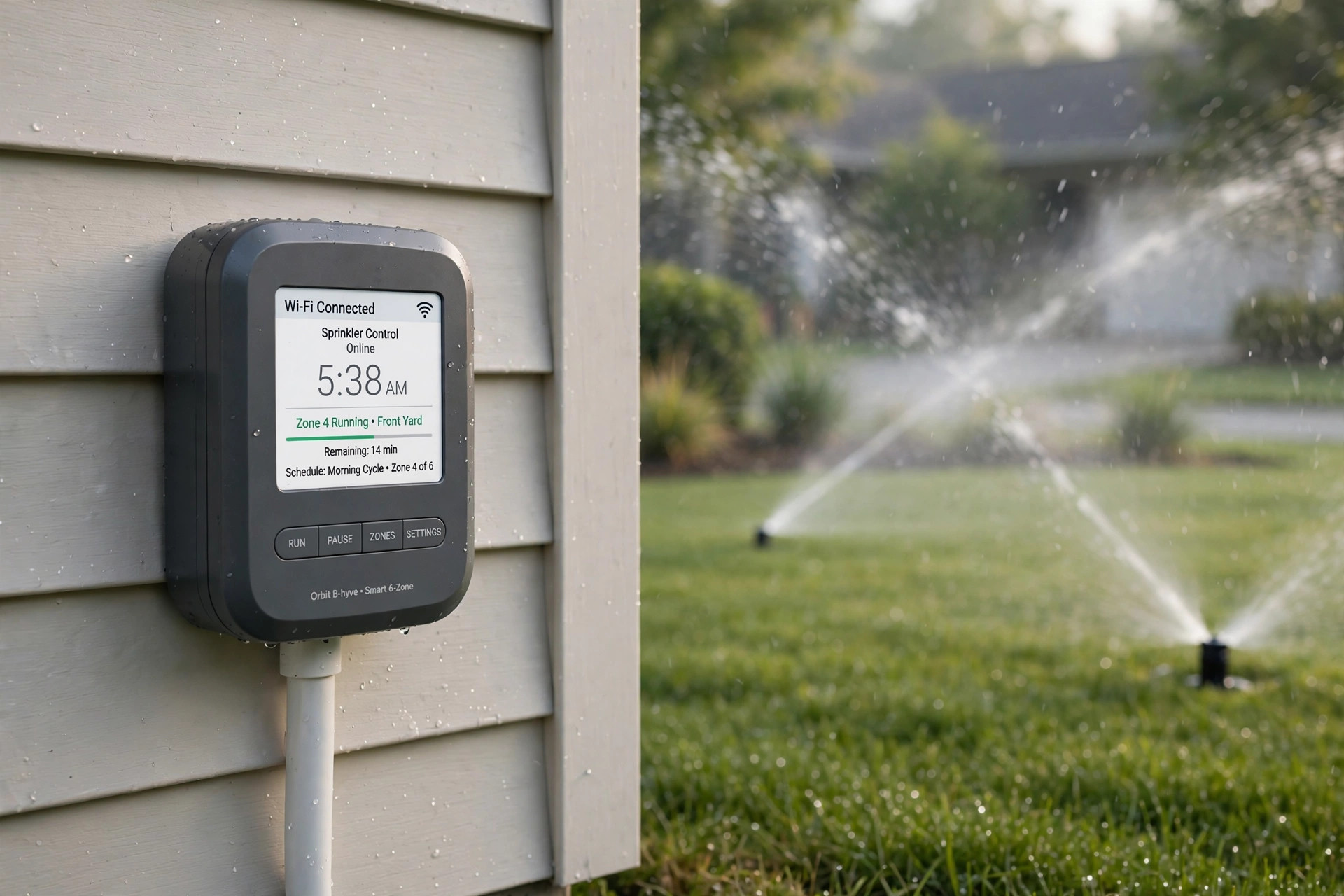

The best wifi sprinkler timer reviews 2026 usa point to one clear fact. A smart outdoor controller can save water and keep a lawn green. It does this with less work than the old dial timer in the garage. Many homes in the United States still run sprinklers by hand or by a fixed clock. The result is dry spots, wet spots, and a high water bill. A WiFi sprinkler timer solves this problem. It connects to the internet. It checks the weather. It changes the schedule on its own.
This guide explains what these timers do. It shows how to choose one. It lists what to look for, what they cost, and how to keep them running. It answers common questions. The goal is simple. A homeowner should be able to read this once and make a good choice.
Why a WiFi Sprinkler Timer Matters
Water is one of the largest outdoor costs for a home. A sprinkler system that runs too long wastes money. A system that runs too little lets the lawn die. In the summer months, a yard can drink more water than the whole house uses indoors. The tested smart home reviews show that smart controllers cut outdoor water use by a large share.
The reason is simple. Old timers do the same thing every day. They water in the rain. They water on cool days. They water at noon when the sun burns the drops away. A WiFi timer is different. It knows the forecast. It skips a cycle when rain is coming. It waters early in the morning when the air is cool. It gives each zone only the water it needs.
A second benefit is remote control. A phone app runs the whole system. A homeowner can start a zone from the couch. A landlord can check a rental yard from another state. When a pipe breaks, the app can shut the zone down in seconds. This control was not possible with old timers. It is standard now.
A third benefit is data. The app shows how much water each zone used. It shows the schedule for the week. It can warn about flow problems that may point to a leak. Reviews of smart outdoor gear often note that this data helps people spot trouble early. The same kind of alerts are useful on other outdoor devices, from wireless outdoor security camera reviews 2026 to yard sensors. Good information leads to fast fixes.
What to Look for When You Choose: Best Wifi Sprinkler Timer Reviews 2026 Usa
Number of Zones
A zone is one area of the yard that waters as a group. The front lawn may be one zone. The flower beds may be another. Count the wires on the old timer to learn how many zones exist. Most homes need 6 to 12 zones. Buy a timer with at least that many. A little extra room helps if the yard grows later.
Weather Awareness
The core feature of a smart timer is weather data. Look for terms like weather intelligence, rain skip, or freeze skip. These features stop watering when rain is near or when the temperature drops near freezing. Some timers also adjust run time based on heat. On hot weeks they water more. On mild weeks they water less. This single feature does most of the saving.
App Quality
The app is the daily tool. It should be easy to open and easy to read. Look for a clear zone list, a simple calendar, and one-tap manual run. Read user reviews of the app before buying. A good timer with a poor app is still a poor buy. The reviewed buying guides test both the hardware and the software.
Voice and Smart Home Links
Many timers work with voice helpers. A person can say, “Water the front lawn for ten minutes.” The timer obeys. Some timers also link with larger smart home systems. This matters for homes that already use smart locks, lights, and cameras. The store.google.com line of home products shows how common these links have become. For a timer that lives outdoors, a solid connection to the home network is more important than any single voice trick.
Power and Wiring
Most WiFi timers use the same low-voltage wires as old timers. Install takes about 20 to 30 minutes for a person who can use a screwdriver. The timer plugs into a standard outlet. Some models have battery backup so the schedule survives a power cut. Check that the outlet is close to the mounting spot and that the WiFi signal reaches there. A weak signal is the top cause of complaints in reviews.
Local Rules and Watering Limits
Many cities limit watering days and hours. A good timer can follow these rules. Look for a setting that sets allowed days. Some apps even load local rules by zip code. This feature keeps the homeowner on the right side of the law and saves water at the same time.
Types of WiFi Sprinkler Timers
Full Replacement Controllers
These mount on the wall and replace the old timer box. They wire into the existing valve wires. They are the most common choice. They handle 6 to 16 zones. They run on house power with a transformer. For most homes, this is the right type.
Hose-End Smart Timers
These screw onto an outdoor spigot. They control one or two hose lines. They are a good fit for small yards, gardens, and renters who cannot change the wired system. They run on batteries. The range of features is smaller, but the price is low and setup takes minutes.
In-Ground Hub Systems
A few systems use a hub inside the home and small modules near the valves. These suit large or odd lots where the valve box is far from the house. They cost more. They need more planning. Most buyers do not need them.
Commercial Grade Units
Large lots and small farms may need units with 16 or more zones. These timers add flow meters and stronger weather tools. They are built for daily heavy use. A normal home does not need this level. But a buyer with a big yard and many zones should look at them.
Cost and Price: What to Expect in 2026
Prices fall into three bands. Hose-end smart timers cost about 40 to 90 dollars. They control a small area. They are the cheapest way to try smart watering.
Wall-mount smart controllers cost about 100 to 250 dollars. This is the main market. Eight-zone models sit near the low end. Twelve and sixteen-zone models sit near the high end. Price differences often come from app features and build quality, not from basic watering ability.
High-end and commercial units cost 250 to 500 dollars or more. They add flow sensing, more zones, and pro tools. Some need a paid plan for full weather data. Check this before buying. A paid plan can add 30 to 60 dollars per year.
Installation is cheap. Most people do it themselves in under an hour. A pro install costs 75 to 150 dollars if the wires need work. There is no monthly fee for most home models. The best wifi sprinkler timer reviews 2026 usa note that the unit often pays for itself in one to two summers through lower water bills.
Water savings are real but vary. A home that over-waters by habit may save 30 percent or more. A home with a careful manual routine may save less. The biggest gains come from rain skip and from watering at the right hour.
Care and Upkeep
A WiFi timer needs little care. But a few habits keep it working for years.
First, check the mount each spring. The box should be dry inside. Seals should be tight. If the timer sits in full sun, a small shade helps the plastic last longer.
Second, test each zone in spring. Run every zone for two minutes. Walk the yard. Look for broken heads, tilted heads, and puddles. The timer can only do its job if the heads work right. Fix clogs and leaks before the hot season starts.
Third, update the app and the firmware. Makers add features and fix bugs through updates. An old firmware can lose its connection or miss weather data. Set updates to run on their own if the app allows it.
Fourth, watch the WiFi signal. Routers move. New walls go up. If the timer drops offline, move the router or add a simple extender. A timer that cannot reach the network is just an old clock again.
Fifth, winterize in cold states. Drain the lines or have them blown out. Turn the timer to rain mode or off for the winter. This protects valves and heads from freeze damage. Reviews of home products often stress this step, and safety bodies like the cpsc.gov remind homeowners to protect outdoor gear from the cold.
Sixth, replace the backup battery on time. A dead battery means the schedule can vanish in a power cut. Most use a small coin cell or a short-term pack. Check it once a year.
Safety Notes for Outdoor Electronics
A sprinkler timer mixes water and power. That mix demands care. Mount the unit where sprinklers cannot spray it directly. Keep the plug and outlet dry and off the ground. Use a ground fault outlet if the code calls for it. Do not open the box in a storm.
Low-voltage valve wires are safe to handle. But turn off the breaker to the outlet before wiring. Read the manual first. If the old wiring looks burnt or chewed by rodents, call an electrician. Product safety guides from adt.com and simplisafe.com make the same point for other outdoor devices. Care with power is never wasted.
For data safety, use a strong WiFi password. Update the app password if it is shared with past workers. A timer holds the watering schedule of a home. That data is not very secret. But good habits cost nothing.
Setting Up for the First Time
Setup has five steps. First, take a photo of the old wiring. Label each wire by zone. Second, turn off the power. Third, move the wires to the new unit, one by one. The labels on the new unit match the old ones. Fourth, power it on and join it to the home WiFi with the app. Fifth, walk the yard and test each zone.
After the hardware works, set the schedule. Enter the soil type, plant type, and sun exposure for each zone if the app asks. These details feed the weather engine. Then set allowed watering days. Let the app build the plan. Check it for one week and adjust.
The first month is a learning period. Watch for dry corners and soggy spots. Move a head or change a run time as needed. After that, the timer should need little touch. Many owners check the app only when the bill comes.
Common Mistakes to Avoid
The first mistake is buying too few zones. Count twice. A timer with fewer zones than the yard forces zones to share. That breaks the schedule.
The second mistake is mounting it out of WiFi range. Test the signal with a phone at the mount spot before buying. If the phone shows one bar, the timer will struggle.
The third mistake is skipping the soil and plant setup. The weather engine needs this data. Without it, the smart features are just guesses.
The fourth mistake is watering at midday. Even a smart timer cannot fix bad run hours. Set watering for early morning, before sunrise if the rules allow. Less water burns off. More water reaches the roots.
The fifth mistake is ignoring heads. A smart timer with broken heads still wastes water. Walk the yard each spring. The best wifi sprinkler timer reviews 2026 usa all assume working heads. The reviews cannot test a broken yard.
The sixth mistake is trusting the rain skip blindly. It works well. But it reads forecasts, not the soil. After a light shower, check the yard. Run a short manual cycle if the roots are still dry.
Smart Yard Extras Worth Knowing
A timer is the heart of a smart yard. Other devices add to it. A best smart floodlight for backyard usa lights the yard for evening use and adds safety. A smart water leak detector reviews 2026 usa device can catch indoor leaks while the timer guards the yard. Together they cover water risk inside and out.
FAQ
How much water can a WiFi sprinkler timer save?
It depends on the home. Homes that water by a fixed clock often save 20 to 40 percent. The savings come from skipping rainy days and watering at better hours. Homes that already water with care save less. The best wifi sprinkler timer reviews 2026 usa report that rain skip alone does most of the work.
Do these timers need a monthly plan?
Most home models do not. The app and basic weather data are free. A few high-end models charge for advanced data or pro tools. Check the box and the app store page before buying. Avoid surprises.
Will it work with my old valves?
In most cases, yes. Standard 24-volt valves from the last 30 years wire right in. Take a photo of the old wiring first. If the valves are very old or the wires are damaged, a pro should look at them.
What happens when the WiFi goes down?
The timer keeps the last schedule and keeps watering. It cannot pull new weather data until the network returns. It cannot be controlled by the app. This is why a strong signal at the mount spot matters.
Can I install it myself?
Yes, in most cases. The wires are low voltage. The app guides the steps. A basic install takes 20 to 30 minutes. Call a pro if the outlet needs moving or the wires look damaged.
Does it work in winter states?
Yes, with winter care. Drain the lines before the first hard freeze. Set the timer to off or rain mode for the season. Power it back on in spring and test each zone. The steps are the same as for an old timer.
Final Word
A WiFi sprinkler timer is one of the best small upgrades a homeowner can make. It costs little. It installs fast. It saves water and money. The best wifi sprinkler timer reviews 2026 usa agree on the basics. Buy enough zones. Test the WiFi at the mount spot. Read three tested reviews before you choose. Set the soil and plant data with care. Then let the weather engine do its job.
For homes that pair the timer with other smart yard gear, the gains grow. Check ring.com style outdoor devices for yard coverage, and read smart home coverage on cnet.com and theverge.com to stay current. A yard that waters itself at the right hour, skips the rain, and reports trouble to a phone is no longer a dream. It is a normal home in 2026.
References
ADT. (n.d.). Home security and automation. https://www.adt.com CNET. (n.d.). Technology news and reviews. https://www.cnet.com Consumer Reports. (n.d.). Product reviews and ratings. https://www.consumerreports.org Google Store. (n.d.). Smart home devices. https://store.google.com PCMag. (n.d.). Technology product reviews. https://www.pcmag.com Ring. (n.d.). Smart home security devices. https://www.ring.com SimpliSafe. (n.d.). Home security systems. https://www.simplisafe.com The Verge. (n.d.). Technology news and reviews. https://www.theverge.com U.S. Consumer Product Safety Commission. (n.d.). Product safety information. https://www.cpsc.gov
Was this guide helpful?

About Sarah Mitchell
The My Garden US editorial team writes practical, in-depth home and garden guides for American homeowners — tested advice, no fluff.
You May Also Like
Door Jammer Security Bar Reviews 2026 USA: A Plain Guide for Every Home
January 30, 2026 0 views
Best Automatic Driveway Gate Cost Installed
February 26, 2026 0 views
Best Door Reinforcement Kit Reviews USA: What Makes a Door Strong
March 22, 2026 0 views