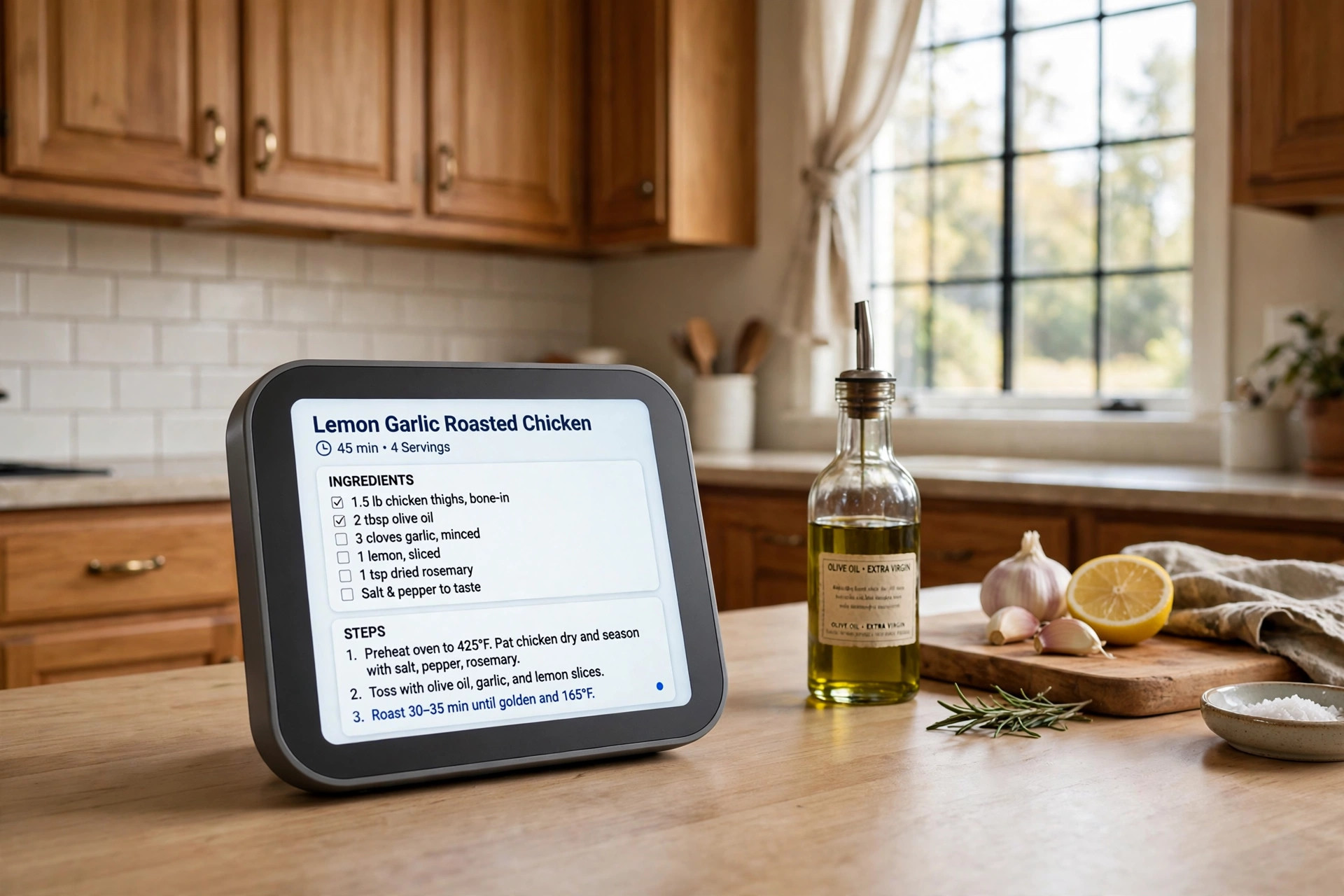

A smart display on the kitchen counter is a small screen that talks back. It shows recipes, sets timers, plays music, and answers questions. It also works as the control point for the rest of the smart home. Many shoppers in the United States now search for the best smart display for kitchen counter usa models because the kitchen is where the family gathers. This guide explains what matters, what to buy, and what to avoid.
Why a Smart Display Belongs in the Kitchen
The kitchen is a busy place. Hands are wet, flour is on the fingers, and a timer is always running. A smart display lets you give voice commands instead of touching buttons. You can say the words and the screen answers. The recipe stays on the screen while you chop. The timer rings when the roast is done.
A display is better than a plain speaker for one reason. It shows. It shows the cooking steps in large print. It shows a short video of how to fold dough. It shows a live feed from the front door camera so you can see the delivery driver while the pasta boils. For more on door cameras that pair well with a display, see our guide to the best video doorbell without subscription usa models.
It also keeps the family on one page. The screen can show a shared calendar, a shopping list, and photos of the kids. Some households leave it on all day as a digital picture frame. When it is idle, it does not look like dead tech on the counter. It looks like part of the room.
What to Look for When You Choose One: Best Smart Display for Kitchen Counter Usa
Not every display suits the kitchen. Heat, steam, and grease are hard on electronics. The counter is a working surface, not a shelf. Use these points to judge any model.
Screen Size and Stand
For the kitchen, a screen between 8 and 10 inches works best. A smaller 5-inch screen is hard to read from the stove. A larger 10-inch screen shows recipes in print you can read from across the room. A 15-inch model exists, but it takes up too much counter for most homes.
The stand matters as much as the screen. The base must be wide and heavy. A light display can slide when you tap it with a wet hand. Some models tilt. A tilt helps when you stand and look down at it. Check that the power cord is long enough to reach the outlet without running across the work area. Review sites such as CNET test how stable each model feels in real use.
Sound Quality
You will use the display for music and for voice answers. A kitchen has noise. The range hood hums, the dishwasher roars, and the microwave beeps. A display with one small speaker will get lost in that noise. Look for a model with a fuller sound, ideally with a bass port or a larger driver.
If sound matters to you, our page on the best smart speaker for kitchen reviews usa compares audio quality in depth. For a counter display, though, the screen is the point. Do not buy a display with great sound and a weak screen. The screen is what you pay for.
Voice Assistant
Two assistants lead the market in the United States: Amazon Alexa and Google Assistant. Both answer questions, set timers, and run smart home gear. Your choice should match the phones and devices you already own.
If your home runs on Amazon devices, Alexa fits. If you use Google services and Android phones, Google Assistant fits. A side-by-side look at the two systems can help. See our alexa vs google home 2026 comparison usa article for details. You can also check hands-on reviews at PCMag and The Verge before you buy.
Camera and Privacy
Many displays have a front camera for video calls. In the kitchen, that is handy for calling family while you cook. It also raises a privacy question. A camera in the busiest room of the house records a lot of daily life.
Choose a model with a physical camera shutter or a microphone mute switch. A hardware shutter is better than a software switch. You can see it closed with your own eyes. Keep the display out of the direct line of sight of the dining table if video calls make guests uneasy. The U.S. Consumer Product Safety Commission offers general guidance on home electronics safety at CPSC.gov.
The Main Types and Options
The market has three clear groups. Each fits a different kind of kitchen.
Amazon Echo Show Models
The Echo Show line comes in several sizes. The 8-inch model is the most popular for counters. It shows recipes from food sites, streams video, and works with Ring doorbells and cameras. You can say, “Alexa, show me the front door,” and the live feed appears on the screen. Ring covers its own product line at Ring.
The larger 10-inch and 15-inch models suit big kitchens and open floor plans. The 15-inch version can mount on the wall like a small TV. For most counters, the 8-inch model is the right balance of size and price.
Google Nest Hub Models
The Nest Hub is Google’s answer. It has a clean screen and deep ties to Google services. It reads Google Calendar, shows photos from Google Photos, and plays YouTube. You can buy and compare models at the Google Store.
The Nest Hub has one feature many kitchens like: no front camera on the smaller model. It uses motion sensing instead. You wave a hand to pause a video without touching the screen. That is a real help when your hands are covered in dough. The Nest Hub Max adds a camera and a bigger screen for those who want both.
For a head-to-head view of the two leading lines, read our echo show vs nest hub comparison 2026 page.
Smaller and Budget Screens
Some brands sell smaller displays at lower prices. These work for a simple timer, a weather check, and basic music. They do not handle video well. The screens are small and the speakers are thin.
A budget screen can still serve a second kitchen, a dorm, or a small apartment galley. Do not expect it to run a full smart home. If you want the display to control lights, locks, and cameras, spend more on a full-size model.
Cost and Price
Prices move with the seasons. A mid-size display usually sells between 100 and 150 dollars at list price. Larger models run 200 to 280 dollars. The small entry models sell for 50 to 80 dollars.
Sales change these numbers fast. Major shopping events in the fall often cut prices by 30 to 50 percent. If you are not in a hurry, wait for a sale. Refurbished units from the maker can save more, and they carry a full warranty.
Think about the total cost, not just the price tag. Some features need a subscription. Video doorbell storage is one example. If you plan to view doorbell clips on the display, check the storage plan first. Independent ratings at Consumer Reports compare long-term value across brands.
Using the Display With a Smart Home System
A kitchen display is also a control panel. It shows the status of the whole house. You can arm the alarm, lock the doors, and check the thermostat from the counter. Families with a full security setup get the most from this.
If your home uses a monitored system, the display can show alerts and camera feeds. Both ADT and SimpliSafe sell systems that link with voice assistants. When the door sensor trips, the display can show which door opened. When the alarm is armed for the night, one voice command from the kitchen does the job.
Even without a full system, the display can run smart plugs and bulbs. A smart plug on the coffee maker lets you start it with your voice. Smart bulbs over the island dim for dinner. These small touches add up to a kitchen that works with you.
Care and Upkeep
A kitchen display lives in a tough spot. Steam from pots, grease from the stove, and dust from the counter all land on the screen. Wipe it with a soft dry cloth once a week. Do not spray cleaner on the screen. Spray the cloth first, then wipe. Abrasive pads will scratch the surface.
Keep the display away from direct steam. The spot next to the stove looks handy, but steam will fog the screen and wear out the seals over time. Place it near the end of the counter, away from the cooktop and the sink. Leave a few inches of space behind it so air can move.
Update the software when the maker offers it. Updates fix bugs and close security holes. Turn on automatic updates if the option exists. Restart the display once a month. A fresh start clears small glitches before they grow.
Safety in the Kitchen
Electricity and water do not mix. Keep the power cord off the wet zones of the counter. Do not run the cord across the sink or under a dish rack. Plug the display into a grounded outlet. If your counter outlets have test and reset buttons, use them.
Mount or place the display where a pot cannot tip onto it. A display that falls into a hot pan is a fire risk. Keep it stable and out of the main cooking lane. If the cord or plug looks worn, stop using it and get a new power adapter from the maker.
For general product safety news and recalls, the CPSC site lists official notices. Check it if you buy a used or older model.
FAQ
Can a smart display replace a kitchen TV?
For most people, yes. A 10-inch display streams news, shows, and music videos. It cannot replace a large TV for movie night, but it covers the news and cooking shows that used to run on the small kitchen TV. It uses less power and takes less space.
Does it work without the internet?
No. A smart display needs a steady internet link for almost every feature. Voice commands, recipes, video, and music all run through the cloud. Without internet, it is just a clock. Place your router so the kitchen gets a strong signal, or add a mesh node nearby.
Which size is best for a small kitchen?
The 8-inch size fits a small kitchen best. It shows recipes in readable print and does not eat the counter. The 5-inch models are too small for recipe text. The 10-inch models suit larger counters and open kitchens.
Can two people use one display?
Yes. Both Alexa and Google models support more than one voice profile. Each person gets their own calendar, lists, and music. Set up voice match during the first install. Guests can still ask basic questions without a profile.
Is a camera model safe for kids?
A display with a camera can be fine for kids with the right settings. Use the physical shutter when the camera is not in use. Set up parental controls and kid profiles. Keep the display in a common area, not a bedroom. Review the privacy settings once every few months.
How long do these displays last?
Most last four to six years with daily use. The maker may stop sending software updates before the hardware fails. When updates stop, the display still works, but it gets no new features or security fixes. That is a good time to replace it.
A Final Word
The best smart display for kitchen counter usa kitchens is the one that fits your counter, your ears, and your habits. Pick the 8 to 10 inch size. Match the voice assistant to the devices you own. Keep it away from steam and water. Buy it on sale if you can.
Start simple. Set timers, read recipes, and play music. Then add the front door camera, the smart plugs, and the shared calendar. A good display earns its counter space one small job at a time.
References
ADT. (n.d.). Home security and automation. https://www.adt.com CNET. (n.d.). Technology news and reviews. https://www.cnet.com Consumer Reports. (n.d.). Product reviews and ratings. https://www.consumerreports.org Google Store. (n.d.). Smart home devices. https://store.google.com PCMag. (n.d.). Technology product reviews. https://www.pcmag.com Ring. (n.d.). Smart home security devices. https://www.ring.com SimpliSafe. (n.d.). Home security systems. https://www.simplisafe.com The Verge. (n.d.). Technology news and reviews. https://www.theverge.com U.S. Consumer Product Safety Commission. (n.d.). Product safety information. https://www.cpsc.gov
Was this guide helpful?

About Jennifer Lee
The My Garden US editorial team writes practical, in-depth home and garden guides for American homeowners — tested advice, no fluff.
You May Also Like

Smart Pool Monitor Reviews for Homeowners: A Clear Guide
February 13, 2026 0 views
Smart Water Valve Shutoff Reviews 2026 USA: An Honest Guide
July 23, 2026 0 views
Best Robot Mop Combo Reviews 2026 USA: A Plain Guide for Hard Floors
June 30, 2026 0 views