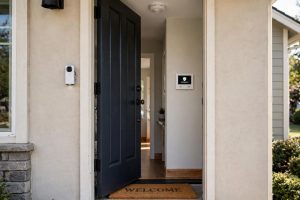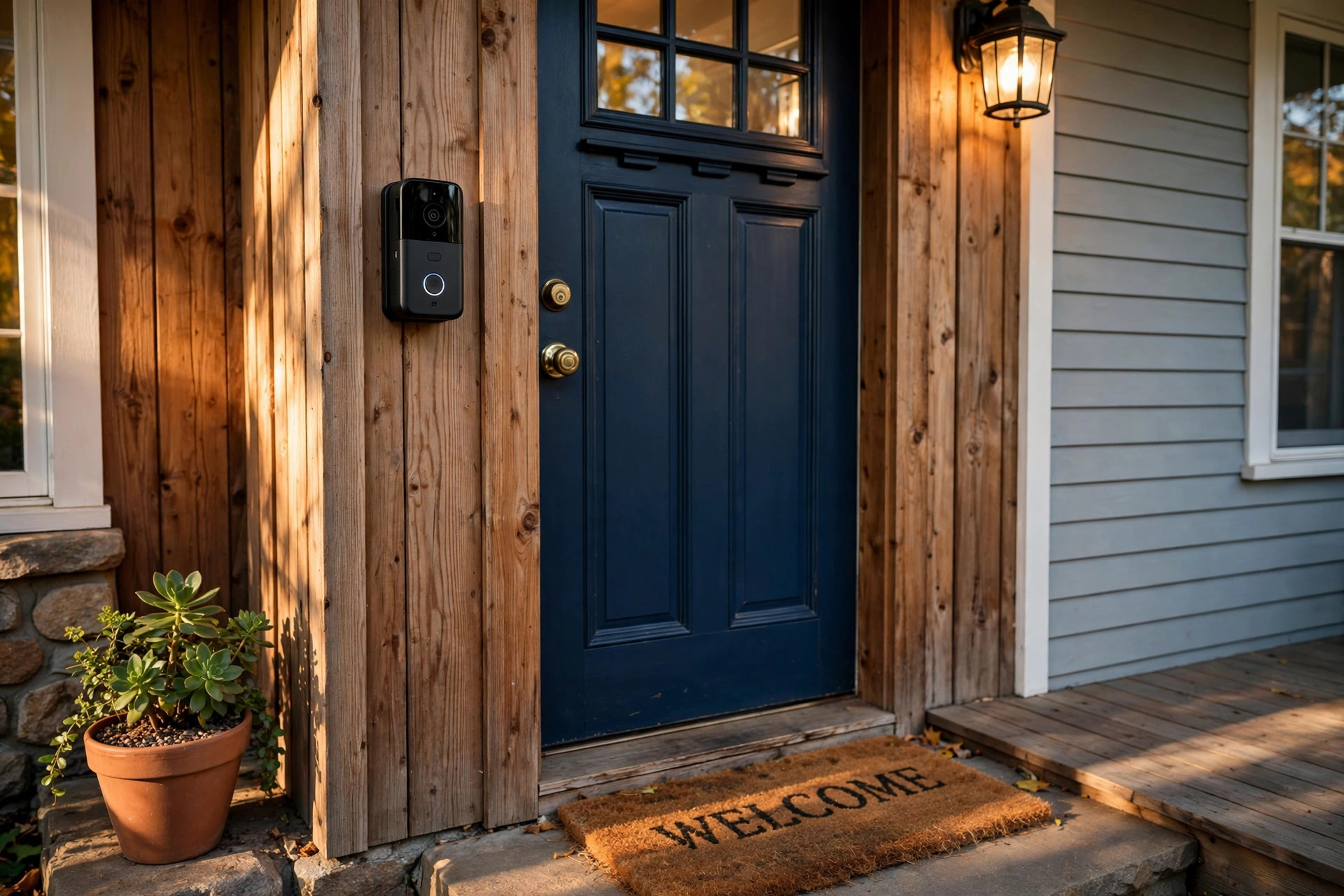

A video doorbell is a small camera that sits by your front door. It shows you who is there. It records visitors. It talks to you through your phone. Many of these doorbells need a paid plan to save video. The best video doorbell without subscription in the USA does not. It saves your clips for free, at your house, on its own memory. This guide explains how these doorbells work. It shows what to compare. It helps you pick one that fits your home and your budget. No monthly bill. No surprise fees. Just a clear picture of your front porch, whenever you want it.
Why a Subscription-Free Doorbell Matters
A monthly fee adds up fast. Ten dollars a month is one hundred twenty dollars a year. Some plans cost more. Over five years, you may pay more for the plan than you paid for the doorbell itself. Many buyers do not expect this when they open the box.
A doorbell that works without a subscription saves that money for good. You buy it once. You own it. You use it.
There is also a privacy point. Cloud storage sends your video to company servers. Local storage keeps it inside your home. Some families prefer that. They know where their recordings are. They do not rely on a company to guard them.
A subscription-free doorbell also works well in an internet outage, in some cases. Many models record to a base station even when the internet drops.
How Video Doorbells Store Footage: Best Video Doorbell Without Subscription Usa
Before you buy, it helps to know where the video goes. There are two main ways.
Cloud Storage
Cloud storage sends clips to the maker over the internet. You watch them in an app. The company keeps them for a set time. Thirty days is common. The catch is the fee. Without a paid plan, many doorbells limit what you can do. You may get only live view. You may get no saved clips at all. Some brands block two-way talk behind the plan. This is the model behind most well-known brands.
Local Storage
Local storage keeps clips inside your own home. It may use a small memory card in the doorbell. It may use a base station with a hard drive. It may use a hub plugged into your router. The best video doorbell without subscription in the USA uses one of these methods. There is no monthly charge because no company server is involved.
Local storage has its own limits. Memory fills up. Old clips get erased to make room. A base station can be stolen in a break-in, though most are hidden indoors. Still, for most homes, local storage is simple and dependable. You keep control of your own recordings.
Types of Subscription-Free Doorbells
Battery-Powered Doorbells
Battery doorbells run on a rechargeable pack. You charge it every few months. There are no wires to run. This makes them a good pick for renters and for older homes. Many top subscription-free models are battery powered. They pair with a small hub that stores video.
The battery life depends on traffic. A busy street means more motion alerts. That means more drain. In cold states, batteries fade faster in winter. Look for a stated life of three to six months per charge. Keep the spare battery idea in mind. Some owners buy a second pack so the doorbell never goes dark.
Wired Doorbells
Wired doorbells connect to your existing doorbell wires. They draw power from your home. You never charge them. They ring your old indoor chime. This is the tidy choice for homes that already have a doorbell transformer.
Wired models can record all day in some cases. Constant power allows constant recording on some units. That uses more storage. But you never miss a moment. The trade is the install work. If your wiring is old, you may need an electrician.
Doorbells With a Storage Hub
Some systems pair the doorbell with a hub. The hub sits by your router. It holds a hard drive or a memory card. The doorbell sends clips to the hub over your home Wi-Fi. The hub is the heart of the system. Many buyers call this the true no-fee setup. It is popular because it works even if the doorbell is taken from the mount.
What to Look For When You Choose
Start with storage. Ask where the video goes. If it needs a cloud plan for saved clips, it is not what you want. Look for words like local storage, hub storage, or no monthly fee. Read the fine print. Some makers offer free local clips but charge for extras like smart alerts.
Check the video quality. A clear picture matters more than a big number on the box. Full high definition, known as 1080p, is fine for most doors. Higher resolution helps you read a license plate or a face at night. Wide view matters too. A tall, wide field of view shows packages left at your step.
Night vision is key. Most visitors come after dark in winter. Look for strong infrared night vision. Color night vision is a bonus. It uses a small light to add color. Some neighbors may not like the light. Check before you buy.
Two-way talk is standard now. You speak through your phone. The visitor hears you at the door. Make sure this works without a paid plan. On some models, basic talk is free. On others, it is not. Test this detail before you trust the box.
Motion detection should be smart. A good doorbell can tell a person from a passing car. This cuts false alerts. Zones help too. You can draw a zone around your porch and ignore the street. This saves battery and saves your patience.
Power source matters. Battery is easy. Wired is steady. Some units do both. Pick the one that fits your door and your skill level.
Phone alerts should be fast and free. The doorbell should ring your phone in seconds. It should not ask you to pay for that speed. Check reviews for alert lag. A slow alert misses the visitor.
Weather rating counts. Your doorbell lives outside. It must face rain, snow, and summer heat. Look for a stated rating for water and dust. In the northern states, check the low temperature limit. Batteries suffer in deep cold.
Privacy features help. Some doorbells let you mask a neighbor’s yard. Some store video with encryption. A physical privacy cover for the lens is a nice touch. These details show a maker that takes privacy to heart.
Price and Cost
A subscription-free doorbell often costs more up front. Prices in the USA tend to fall between eighty and two hundred fifty dollars. Budget models start near eighty. Mid-range units sit near one hundred fifty. Premium kits with a hub can reach two hundred fifty or more.
Compare that to a cloud doorbell. The device may cost less. But the plan adds ten to fifteen dollars a month. After two years, the no-fee doorbell usually wins. After five years, it wins by a wide margin.
Watch for hidden costs. A hub may be sold apart from the doorbell. A second battery may be extra. Mounting brackets and wedges may cost more. Add it all up before you judge the price. The true cost is the full kit, ready to hang.
Sales are common. Major holidays bring price drops. A premium kit may fall by thirty to fifty dollars in November. If you can wait, wait. Set a price alert on a trusted retailer page. Review sites like CNET and PCMag track prices and test results side by side. Consumer Reports also rates doorbells for picture quality and ease of use.
How to Install It
Most battery doorbells take under an hour to mount. You need a drill, a screwdriver, and the mount in the box. Pick a spot at chest height, near the door frame. Test the Wi-Fi signal first. A weak signal means slow video. Move your router closer if you can, or add a Wi-Fi extender.
Angle wedges help. Many doors sit in a corner. A wedge turns the camera toward the walkway. Use one if your view is cut off. The box often has one. If not, the maker sells them.
Wired installs take more care. Turn off the power at the breaker first. This is not a step to skip. Connect the wires as the guide shows. Check that your transformer gives enough power. Old transformers may be too weak. A doorbell transformer for smart doorbell search can help, but the safest path is an electrician. If you are unsure, call one. A short visit costs less than a damaged unit.
For homes with more devices to protect, a steady network helps every camera. Some owners add a backup power unit for their home network gear so alerts keep flowing in an outage. Pairing your doorbell with a full home camera system is another common step once the front door is covered.
Care and Upkeep
Keep the lens clean. Dust and spider webs blur the picture. Wipe the lens with a soft cloth once a month. Check the mount screws twice a year. Wind and door slams loosen them.
Charge the battery on schedule. Do not wait for a dead alert. Cold months need more checks. A battery that reads half in October may die in January. Keep a spare charged if your model allows it.
Update the software. Makers fix bugs and add features through updates. Most apps update on their own. Check now and then to be sure. An old version may miss security fixes.
Back up key clips. Local storage is safe, but it is not magic. A fire or theft can take the hub with it. If a clip matters, save it to your phone or computer. Do it the same day. Do not trust memory alone.
Check your smoke and safety devices on the same schedule. A front door camera and working alarms make a strong pair. Safety works best as a system, not as one gadget.
Safety
Mount the doorbell out of easy reach if you can. A higher mount is harder to grab. Use the security screw in the box. It needs a special tool to remove. That small screw stops most grab-and-go theft.
Do not share clips with strangers. A clip of a porch pirate may feel worth posting. Think first. Faces, plates, and addresses can be misused. Share with police if there is a crime. Skip public posts when you can.
Check local rules. Some states limit audio recording. Video of your own porch is usually fine. Recording sound of passersby may not be. A quick check of your state law keeps you safe. The U.S. Consumer Product Safety Commission also posts guidance on safe use of home electronics.
Secure your Wi-Fi. A doorbell is only as safe as your network. Use a strong password on your router. Keep the router software current. Do not use the default admin password. This one step guards every smart device in your home.
Frequently Asked Questions
Do I need Wi-Fi for a no-subscription doorbell?
Yes, in most cases. The doorbell uses Wi-Fi to send alerts to your phone. Some hubs can record without the internet. But phone alerts and remote viewing need a connection. A strong signal at the door gives the best results.
Can I watch live video for free?
Yes. Nearly all subscription-free doorbells give free live view. You open the app and see your door in real time. Two-way talk is also free on most models. Saved clips go to local storage at no charge.
How much video can local storage hold?
It varies. A small memory card may hold days of clips. A hub with a hard drive may hold weeks or months. Motion-only recording saves space. All-day recording fills storage fast. Check the stated capacity before you buy.
Will a no-subscription doorbell work with Alexa or Google Home?
Many do. Check the box for voice assistant support. Some models ring on smart speakers. Some show the door feed on a smart display. Features differ by brand. The Google Store and Ring pages list which models pair with which systems.
What happens if someone steals the doorbell?
The hub still has your clips. That is the point of hub storage. The thief gets the camera, not the video. Report it to the police. Some makers replace stolen units under their policy. Check the terms when you buy. SimpliSafe and ADT also publish advice on layering door security with alarms.
Is local storage really private?
It is more private than cloud storage. Your clips stay in your home. No company server holds them. But no system is perfect. Keep your hub hidden. Use strong passwords. Update the software. These habits matter more than the storage type.
A Final Word
The best video doorbell without subscription in the USA is the one that fits your door, your Wi-Fi, and your habits. Start with local storage. Check the picture quality. Make sure talk and alerts are free. Count the true cost of the full kit. Then mount it with care and keep it updated. You get a clear view of your front door. You pay once. You own your video. That is a fair trade, and for many American homes, it is the right one.
For wider buying advice, tech reviewers at The Verge cover new doorbell releases each year with hands-on tests. Take their notes, match them to your door, and buy with confidence.
References
ADT. (n.d.). Home security and automation. https://www.adt.com CNET. (n.d.). Technology news and reviews. https://www.cnet.com Consumer Reports. (n.d.). Product reviews and ratings. https://www.consumerreports.org Google Store. (n.d.). Smart home devices. https://store.google.com PCMag. (n.d.). Technology product reviews. https://www.pcmag.com Ring. (n.d.). Smart home security devices. https://www.ring.com SimpliSafe. (n.d.). Home security systems. https://www.simplisafe.com The Verge. (n.d.). Technology news and reviews. https://www.theverge.com U.S. Consumer Product Safety Commission. (n.d.). Product safety information. https://www.cpsc.gov
Was this guide helpful?

About Lisa Anderson
The My Garden US editorial team writes practical, in-depth home and garden guides for American homeowners — tested advice, no fluff.
You May Also Like
Smart Home WiFi Network Setup Guide USA: A Plain Plan for a Strong Home
August 28, 2026 0 views
Best Solar Panels for Home: 2026 Reviews USA
August 1, 2026 0 views
Best Trail Camera for Home Security USA: A Plain Guide
January 24, 2026 0 views