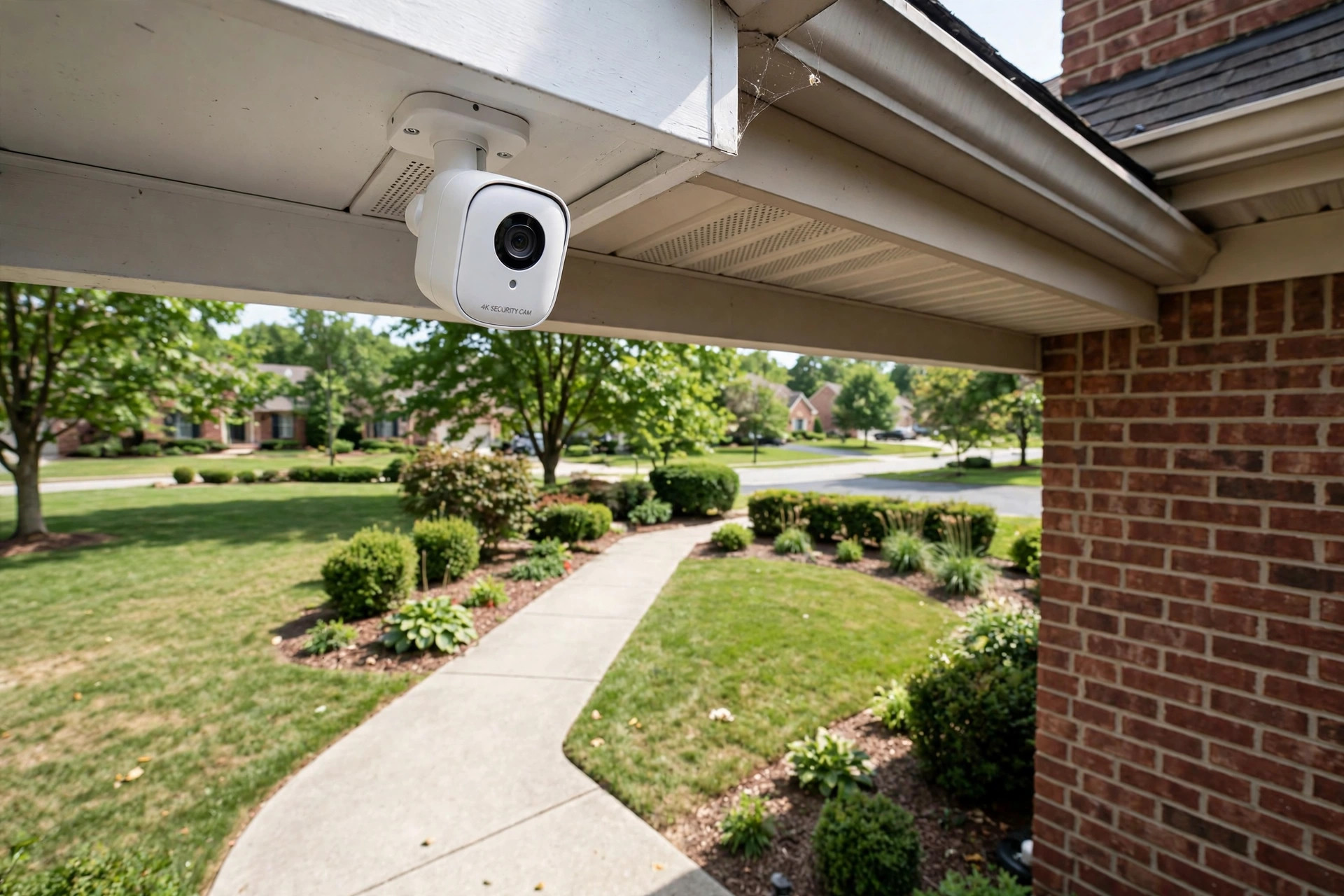

A 4k security camera system for home reviews can teach a buyer more than any sales page. The reviews explain how these systems work in real homes, what they record, and where they fail. A camera box may promise sharp video, but a good review will show whether the picture stays sharp at night, at the far end of a driveway, and during a storm. This guide walks through what 4k security camera system for home reviews tell us, how to read them well, and how to pick a system with a clear head. It is written in plain words for a normal home owner. No expert degree is needed to follow it.
Why These Reviews Matter
A 4k security camera system is a large purchase. Most full systems cost several hundred dollars, and some pass one thousand. A review written by a careful tester can save the buyer from a bad choice. It shows the system working in a real house, not a studio. It records the same kinds of scenes a buyer will see: a front porch at dusk, a dark backyard at midnight, a license plate across the street.
Reviews also reveal problems that sellers hide. A camera may claim 4k resolution, but the review may find that the 4k only works on one channel, or only during live view. A system may claim easy setup, but the reviewer may need three hours and a ladder. These details never appear on the box. They appear only in honest hands-on tests.
Another reason to read reviews is the software. A modern camera system is half hardware and half app. The app controls the alerts, the clips, the storage, and the sharing. A review can show whether the app is quick and clear or slow and full of ads. Many buyers are happy with the cameras but angry at the app. Reading about it first helps set fair hopes.
What 4k Means on a Home Camera: 4k Security Camera System for Home Reviews
The term 4k refers to a video resolution of about 3840 by 2160 pixels. That is roughly four times the pixels of 1080p, the common high-definition standard. More pixels mean more detail. A face across the yard is clearer. A plate number is easier to read. A package on the porch is sharper.
But 4k is not magic. The lens, the sensor, and the light all matter too. A cheap 4k camera with a poor lens can look worse than a good 2k camera. Reviews test this by pointing cameras at the same scene side by side. They compare faces at 20 feet, plates at 40 feet, and doors at night. The results are often a surprise. Buyers should read the comparison photos before they pay for the highest number on the box.
Field of view matters as well. A camera can be 4k and still miss the corner of a yard if the lens is too narrow. Reviewers measure how wide the view is and whether the edges of the frame stay sharp. This is the kind of plain fact that only a real test can give.
What Reviewers Test
Careful 4k security camera system for home reviews test the same set of points. Knowing the list helps a reader judge whether a review is full or thin.
First comes day picture. The reviewer records the front of the house in bright light and looks for true color, clean edges, and readable plates. Next comes night picture. Infrared lights take over after dark, and the reviewer checks how far the night view reaches and whether faces wash out in a white glow.
Then comes motion detection. The reviewer walks across the view at different speeds and watches how fast the camera wakes and records. Slow cameras miss the event. The best reviews count the seconds between motion and alert. Alert speed on the phone matters too. Some systems send the phone alert in two seconds. Others take twenty. That gap can decide whether the clip is useful.
Storage is tested next. Systems record to a local drive, to a memory card, or to a cloud service. Reviewers check how many days of video fit before old clips are erased. They also check whether the system keeps recording when the internet drops. A camera that stops without Wi-Fi is a weak guard.
Finally comes the app and the smart features. Reviewers test person detection, package detection, and car detection. They check whether the system can tell a dog from a thief. They count false alerts across a week. A system that cries wolf fifty times a day will be ignored, and a ignored system is no system at all.
Many test labs also check build quality. They mount the cameras outside for weeks and see whether rain or heat hurts them. PCMag and Consumer Reports publish long test notes of this kind, and their scores give a buyer a steady base to stand on. News sites such as CNET and The Verge add real-home impressions that labs sometimes miss.
Types of 4k Home Camera Systems
Not all systems are built the same. Reviews group them into a few kinds.
Wired PoE systems use one cable per camera for power and data. They are the most steady. The picture never breaks up. But they need cable runs through walls or attics, and the install can take a full day. Reviews often call these the best choice for a new build or a full remodel.
Wireless Wi-Fi systems are easier to hang. Each camera needs only power from an outlet or a battery. The video travels over the home network. Reviews warn that weak Wi-Fi makes the 4k feed stutter or drop to a lower resolution. A buyer with a large house may need a stronger router or a mesh unit before the cameras work well.
Battery cameras are the simplest of all. They charge by sun or by plug and send clips on motion. Reviews note that battery cameras often record in 4k but only for short clips to save power. They suit a renter or a shed more than a full perimeter watch.
Doorbell cameras with 4k sensors are a fourth kind. They guard one spot, the front door, and they do it well. Brand stores like Ring and Google Store show the current models, while full-system makers such as SimpliSafe and ADT sell cameras as part of a wider monitored plan. Reviews compare doorbells to full systems so the buyer can see what one camera cannot cover.
How to Choose From the Reviews
A buyer can follow a simple path through the reviews.
Start with the use case. Count the doors, the windows on the ground floor, and the dark corners of the yard. Most homes need four to eight cameras for full cover. A review of a four-camera kit means little if the house needs eight.
Read three reviews, not one. One tester may love a system that another finds slow. Three views show the pattern. Give more weight to reviews that show raw video stills than to those that only give stars.
Check the fine print on features. Some systems charge a monthly fee for person alerts, cloud clips, or even basic playback. Reviews list these fees in plain dollars. A system that looks cheap at the store can cost more than a dear one after two years of fees.
Look at the phone in the review. If the tester uses the same phone system as the buyer, the app notes will match better. If not, the buyer should read the app store ratings too.
Watch for the update history. A brand that ships fixes often is a good sign. A brand with an app that has not changed in two years is a warning. The U.S. Consumer Product Safety Commission also posts recalls for electronics, and a quick check there is wise before any big purchase.
Cost and Price
Prices for 4k home camera systems fall into clear bands. A two-camera wireless kit often sells for 200 to 400 dollars. A four-camera PoE kit with a recorder runs 400 to 800 dollars. An eight-camera pro-style kit can reach 1,000 to 1,800 dollars. These are store prices before any monthly plan.
Monthly plans change the math. Cloud storage often costs 5 to 15 dollars per camera per month, or 10 to 30 dollars for a whole home plan. Local storage costs nothing per month, but the buyer must buy the drive or cards up front. Reviews do the two-year math, and the buyer should too.
Install cost is the hidden line. A wired system may need a pro at 100 to 200 dollars per camera. A wireless kit needs no pro at all. Battery cameras need new batteries or solar panels every few years. Add these lines before comparing two systems.
Value is not the lowest price. Value is the system that still works well in year three. Reviews that revisit a system after a year are gold. They tell whether the app got better or worse and whether the hardware held up.
Care and Upkeep
A camera system needs small care to stay sharp. Wipe the lens domes every few months. Dust and spider webs blur the night view. Check the mounts after storms. A camera that has slipped by an inch may now watch the sky.
Keep the software current. Updates fix bugs and close security holes. Turn on auto update if the app allows it. Change the default password on day one, and use a strong unique one. Turn on two-step sign in where it is offered.
Check the storage each season. Make sure old clips are being saved as planned and that the drive is not full of errors. Test one camera each month by walking through its view and confirming the alert arrives. A system that is never tested is a hope, not a guard.
For homes that pair cameras with other gear, a home battery backup keeps the recorder alive in a blackout, and a smart CO detector with app alerts adds a second layer of phone warnings. Readers who are still picking a voice platform may like a 2026 comparison of Alexa and Google Home.
Safety and Privacy
Cameras watch people, and that brings duty. Point cameras at the buyer own property. Avoid aiming straight into a neighbor window or a public sidewalk where the law is strict. Local rules differ, so a quick check of city or state law is smart before the ladders come out.
Indoor cameras need house rules. Tell guests and workers that cameras are on. Some states require all-party consent for audio recording. If the system records sound, the buyer should know the rule in their state and turn audio off where it is not allowed.
Secure the feed itself. A camera with a weak password can be watched by strangers. Use the strong password, the updates, and the two-step sign in noted above. Keep the home router firmware current too, since the cameras ride on it.
FAQ
Do I really need 4k, or is 1080p enough? For a small porch, 1080p is often enough to see a face at the door. For a long driveway or a wide yard, 4k keeps plates and faces readable at distance. Reviews show the gap clearly in side-by-side stills. Buy the resolution that matches the longest distance to be watched.
How many cameras does a normal home need? Most single-family homes use four to eight. Cover the front door, the back door, the driveway, and the darkest side of the yard first. Add more only after the main paths are watched. Reviews of kits in each size help match the kit to the house.
Do 4k systems work without internet? Wired PoE systems with a local recorder keep recording without internet. Phone alerts and remote viewing stop, but the video is saved. Most wireless and battery cameras need the cloud for full features. Reviews test the offline case, and the buyer should read that part with care.
What is the real monthly cost? It ranges from zero with local storage to about 30 dollars a month for full cloud plans. Some brands charge per camera. Read the review fee tables and add two years of fees to the shelf price before you decide.
Can I install a wired system myself? A handy owner can, but it takes time. Cable runs through an attic, drill work, and camera aiming fill a full day for four cameras. Reviews with install diaries give a true sense of the work. When in doubt, get a quote from a local installer first.
Will a 4k camera slow my Wi-Fi? It can. One 4k stream uses far more bandwidth than a 1080p stream. Four wireless 4k cameras can crowd a weak router. Reviews often note the router used in the test. A mesh system or a wired backhaul fixes most trouble.
A Short Final Word
The best use of 4k security camera system for home reviews is simple. Read them to learn what the box will not say. Compare day and night stills. Count the fees. Check the app. Then match the system to the house, not to the hype. A well-chosen 4k system, aimed with care and kept up with small tasks, gives a home owner clear eyes day and night. That peace of mind is the true product, and the reviews are the map that leads to it.
References
ADT. (n.d.). Home security and automation. https://www.adt.com CNET. (n.d.). Technology news and reviews. https://www.cnet.com Consumer Reports. (n.d.). Product reviews and ratings. https://www.consumerreports.org Google Store. (n.d.). Smart home devices. https://store.google.com PCMag. (n.d.). Technology product reviews. https://www.pcmag.com Ring. (n.d.). Smart home security devices. https://www.ring.com SimpliSafe. (n.d.). Home security systems. https://www.simplisafe.com The Verge. (n.d.). Technology news and reviews. https://www.theverge.com U.S. Consumer Product Safety Commission. (n.d.). Product safety information. https://www.cpsc.gov
Was this guide helpful?

About Lisa Anderson
The My Garden US editorial team writes practical, in-depth home and garden guides for American homeowners — tested advice, no fluff.
You May Also Like
Outdoor Motion Sensor Lights Solar Reviews USA: What Buyers Should Know
October 1, 2026 0 views
Security Camera With Local Storage Reviews USA: A Plain Buyer Guide
August 18, 2026 0 views
Smart Mailbox Sensor Reviews 2026 USA: Best Picks for Every Home
May 21, 2026 0 views