
A smoke alarm is only useful when the person can hear it. For deaf and hard-of-hearing people, a standard alarm does almost nothing. That is why the best strobe smoke alarm for deaf reviews USA matter so much. These alarms use a bright flashing light and a strong bed shaker instead of sound. When they work well, they wake a sleeper and warn a whole household. When they do not, the risk is real. This guide looks at what these alarms do, which types sell best, what to look for, and what they cost.
Why Strobe Smoke Alarms Matter
Fire does not wait. Smoke can fill a hallway in minutes. A hearing person wakes to a loud siren. A deaf person sleeps through it. That gap has cost lives. Fire services in the United States say that people with hearing loss face a higher risk of injury in home fires. A visual alarm closes the gap. It flashes a powerful light, often with a pillow or mattress shaker that vibrates under the head. The combination is hard to ignore, even in deep sleep.
Local fire codes back this up. Many states now ask for visual alarms in new housing and in rentals where a deaf resident lives. Hotels must provide them when asked. Still, many homes lack them. Reviews from buyers in the USA point to the same story again and again: once the alarm is fitted, the whole family sleeps better. Peace of mind is one of the most common words in buyer feedback.
How Strobe Smoke Alarms Work: Best Strobe Smoke Alarm for Deaf Reviews Usa
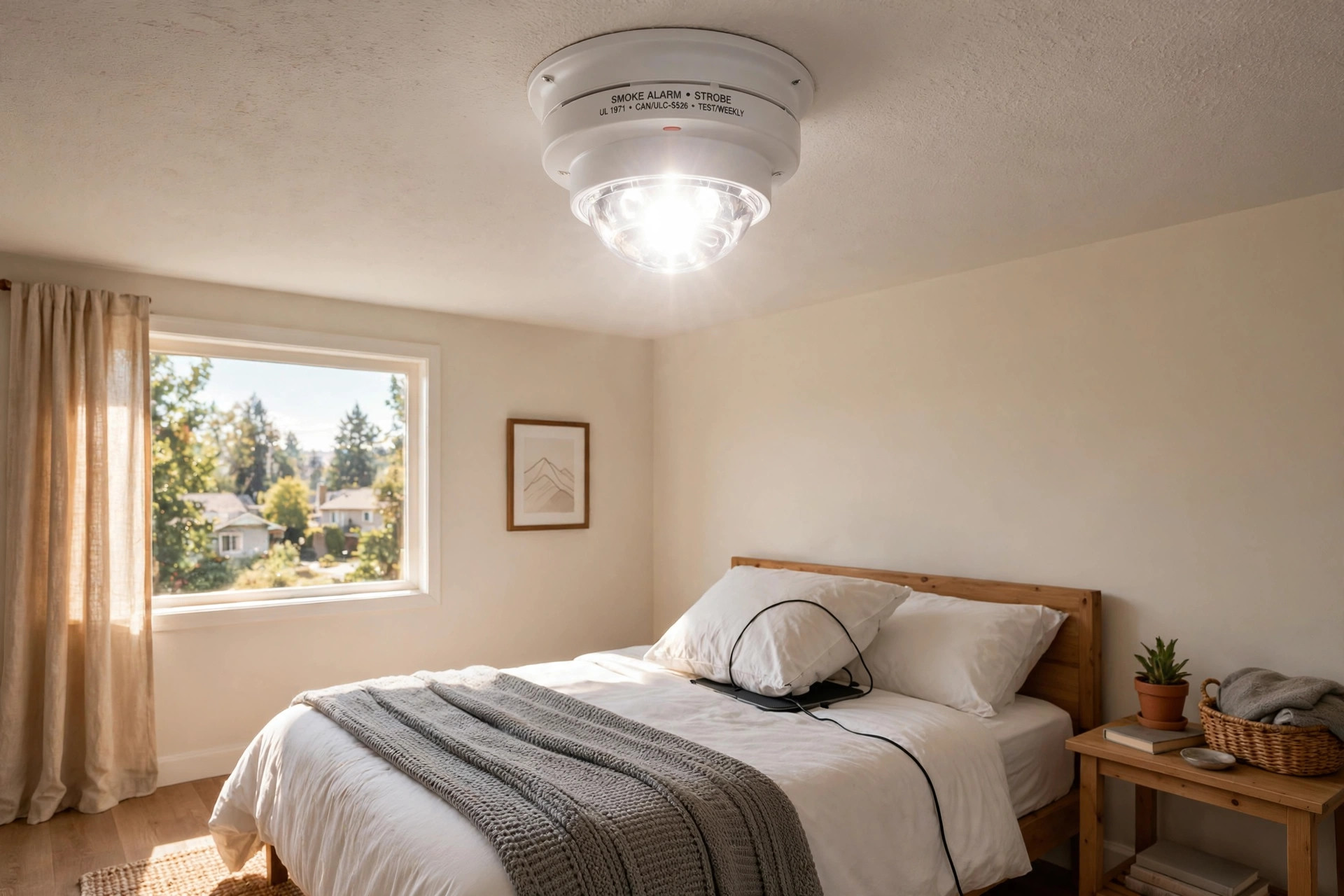
A strobe smoke alarm has the same smoke sensor as a normal alarm. It looks for smoke in the air. The difference is the warning it sends. Instead of a horn, it fires a xenon or LED strobe, a light so bright that it bounces off walls and wakes a sleeper. Most models add a bed shaker, a small pad that sits under the pillow or mattress and shakes hard when the alarm trips.
Many units link together. A smoke detector in the kitchen can trigger the strobe unit in the bedroom. This matters because the bedroom is where the sleeper needs the warning. Wireless links between units have made this easier. Some models also listen for the sound of an existing smoke alarm and then fire the strobe. These are called alarm listeners or transmitters, and they are popular in rentals where the tenant cannot change the wired alarms.
The best strobe smoke alarm for deaf reviews USA often focus on three things: how bright the flash is, how strong the shake is, and how simple the setup is. Buyers also care about battery life and whether the unit has a backup battery for power cuts.
Types of Strobe Alarms for Deaf Households
All-in-one strobe smoke alarms. These combine a smoke sensor, a strobe light, and a bed shaker in one box. You mount the sensor on the ceiling and run a wire or place the shaker under the pillow. They cost more, but there is only one device to keep up.
Strobe receivers with bed shakers. These have no smoke sensor of their own. They listen for the sound of your existing alarms and then flash and shake. They suit renters. You do not touch the building’s alarms. You just place the receiver by the bed.
Wired interconnected strobe kits. These tie into the home’s wired alarm circuit. When any alarm on the circuit trips, the strobe fires. They need basic wiring skill or an electrician. They are common in new homes and in apartments built to current codes.
Combination smoke and carbon monoxide strobe units. These warn of both smoke and carbon monoxide with different flash patterns. A best carbon monoxide detector reviews 2026 roundup can help you compare CO features. For a deaf household, a combo unit cuts the number of devices on the ceiling.
Portable travel strobes. Small units with a smoke listener and a shaker, made for hotels and guest rooms. They do not replace a home system, but travelers with hearing loss like them.
What to Look for When You Choose
Flash brightness. Look for a strobe rated at 177 candela or higher. That is the level many codes call for in a bedroom. A brighter flash reaches the eye even when the unit sits behind a curtain or across the room.
Bed shaker strength. A weak shaker gets missed. Reviews praise shakers that shake the whole pillow. Place the shaker under the pillow, not under the mattress, for the strongest feel.
Link to other alarms. The bedroom strobe must fire when the kitchen alarm trips. Check that the model links to your existing alarms, either by wireless radio or by listening for the alarm sound.
Power and backup. Mains-powered units with a battery backup are the safest pick. Battery-only units work too, but you must test them often. A sealed long-life battery saves hassle.
Ease of testing. Every alarm needs a monthly test. Look for a large test button and a clear status light. Some units self-test and report faults with a light blink.
Certification. In the USA, look for UL listing on the alarm. UL-listed strobes meet tested safety standards. The CPSC site gives guidance on smoke alarm safety and recalls, which is worth a look before you buy.
Smoke versus combination. If your state requires carbon monoxide alarms, a combo strobe unit saves money and ceiling space. Just make sure the unit gives a different flash pattern for CO so you know which danger you face.
Popular Models in the USA
Reviews across American retailers point to a few names again and again. Bellman Visit systems pair a smoke transmitter with a flashing receiver and bed shaker, and buyers praise the strong shake. Sonic Alert units are a long-standing choice, with models that flash, shake, and even connect to doorbells and phones. Lifetone bedside units listen for the standard alarm tone and fire a loud low-frequency sound plus a strobe and shaker, which suits homes with mixed hearing levels.
First Alert and Kidde also sell strobe-capable alarms that work with standard systems. A nest protect vs first alert comparison usa can help if you are weighing a smart alarm against a classic one. Smart models like those sold through Ring or the Google Store can send phone alerts too, though a phone buzz should never be the only warning for a deaf sleeper.
Prices shift often, so check current figures on retailer sites such as Consumer Reports or review pages on CNET and PCMag before you decide.
Cost and Price Ranges
Strobe alarms cost more than sound-only alarms. A basic sound-listening receiver with a shaker starts near 100 dollars. All-in-one strobe smoke alarms with a sensor run 150 to 300 dollars. Full kits with several transmitters, a receiver, and extra shakers can pass 400 dollars.
Installation adds to the bill. A plug-in receiver needs no installer. A wired interconnected strobe may need an electrician, which can add 100 to 200 dollars per unit. Some landlords cover the cost for deaf tenants under fair housing rules. It never hurts to ask.
Batteries are a small running cost. Units with sealed ten-year batteries cost more up front but save on replacements. The tech press at The Verge has noted that smart home gear keeps getting simpler to link, and strobe makers are following that trend.
Where to Place Them
Put a strobe unit in every bedroom where a deaf or hard-of-hearing person sleeps. Mount it on the wall or ceiling near the bed, where the flash hits the eyes. Keep the bed shaker under the pillow.
Also cover hallways near bedrooms and living areas, following the same rules as normal smoke alarms. The bedroom strobe must connect to these so it fires when a distant alarm trips. Test the whole chain after setup: trigger one alarm and check that the bedroom strobe fires.
Do not place strobes where bright sunlight washes them out, and do not hide them behind curtains or tall furniture. The flash needs a clear path to the sleeper.
Care and Upkeep
Test the alarm every month. Press the test button and confirm that the light flashes and the shaker shakes. Vacuum the sensor vents twice a year to clear dust, which causes false alarms. Replace batteries on schedule, or replace the whole unit at ten years, which is the standard life of a smoke alarm.
Check the shaker cord for wear. A frayed cord can fail when you need it most. Keep the manual in a drawer near the alarm so any visitor or carer can test it. If the unit uses a wireless link, change batteries in the transmitter too, and re-pair the units after a battery swap.
Many buyers who read best smart smoke detector reviews 2026 usa still keep a strobe system as the main warning for deaf family members. A smart detector can add a phone alert, but the flash and shake remain the core.
Safety Tips for Deaf Households
Plan two ways out of every room. Practice them with everyone in the home, including children and guests. Keep keys and phones by the bed. Close bedroom doors at night; a closed door slows smoke and buys minutes.
Tell your local fire department that a deaf person lives in the home. Many departments keep such notes and will check on residents during an emergency. Some departments even supply free strobe alarms through community programs.
Make sure guests know about the system. A babysitter or an overnight visitor should know what the flash means and where the exits are. SimpliSafe and ADT both offer monitored systems with visual alert add-ons, which some families pair with standalone strobes for extra cover.
Never rely on a phone vibration alone. Phones run out of battery, get left in other rooms, and miss alerts in deep sleep. The strobe and the bed shaker are the warning. Everything else is backup.
FAQ
Are strobe smoke alarms required by law? Rules vary by state and city. Many codes require visual alarms in new homes and in rentals where a deaf resident lives. Hotels must provide them on request under federal access rules. Check your local code before you buy.
Will a strobe alarm really wake a deep sleeper? For most people, yes. The flash is very bright, and the bed shaker adds a physical jolt. Studies of bed shaker alarms show high wake rates in deaf sleepers. Still, test your own unit after setup to be sure it wakes you.
Can I use a strobe alarm in a rental? Yes. Sound-listening receivers need no wiring and no changes to the building’s alarms. Check your lease for rules about mounting, and ask your landlord about wired options if you want a fuller system.
Do strobe alarms need Wi-Fi? No. Most strobe alarms work with their own wireless radio or with a wired link. Some newer models add Wi-Fi for phone alerts, but the core warning does not need the internet.
How long do strobe smoke alarms last? About ten years, like normal smoke alarms. The sensor wears out over time. Write the install date on the unit and replace it at ten years even if it still tests fine.
Are strobe and smart alarms the same thing? No. A strobe alarm warns with light and vibration. A smart alarm adds phone alerts and app control. The best setup for many deaf households is a strobe system for the core warning plus a smart detector for extra alerts.
A Short Final Word
The best strobe smoke alarm for deaf reviews USA all point to the same lesson: the right warning saves lives. Pick a bright strobe, a strong shaker, and a unit that links to the rest of your alarms. Test it monthly. Keep it for ten years, then replace it. A little care here buys real safety for every night of sleep.
References
ADT. (n.d.). Home security and automation. https://www.adt.com CNET. (n.d.). Technology news and reviews. https://www.cnet.com Consumer Reports. (n.d.). Product reviews and ratings. https://www.consumerreports.org Google Store. (n.d.). Smart home devices. https://store.google.com PCMag. (n.d.). Technology product reviews. https://www.pcmag.com Ring. (n.d.). Smart home security devices. https://www.ring.com SimpliSafe. (n.d.). Home security systems. https://www.simplisafe.com The Verge. (n.d.). Technology news and reviews. https://www.theverge.com U.S. Consumer Product Safety Commission. (n.d.). Product safety information. https://www.cpsc.gov
Was this guide helpful?

About David Wilson
The My Garden US editorial team writes practical, in-depth home and garden guides for American homeowners — tested advice, no fluff.
You May Also Like
Best Smart Lock for Front Door Reviews USA: A Full Buyer Guide
May 28, 2026 0 views
Window Security Film Installation Cost USA: A Plain Guide
February 12, 2026 0 views
Vivint vs ADT Reviews for Homeowners USA
January 6, 2026 0 views