
Many pet owners face one common problem at home. The dog or the cat runs up and down the stairs all day. Stairs can be risky for pets. An older dog can slip and hurt a leg. A small puppy can fall between wide railings. A curious cat can dart underfoot and cause a fall for the owner too.
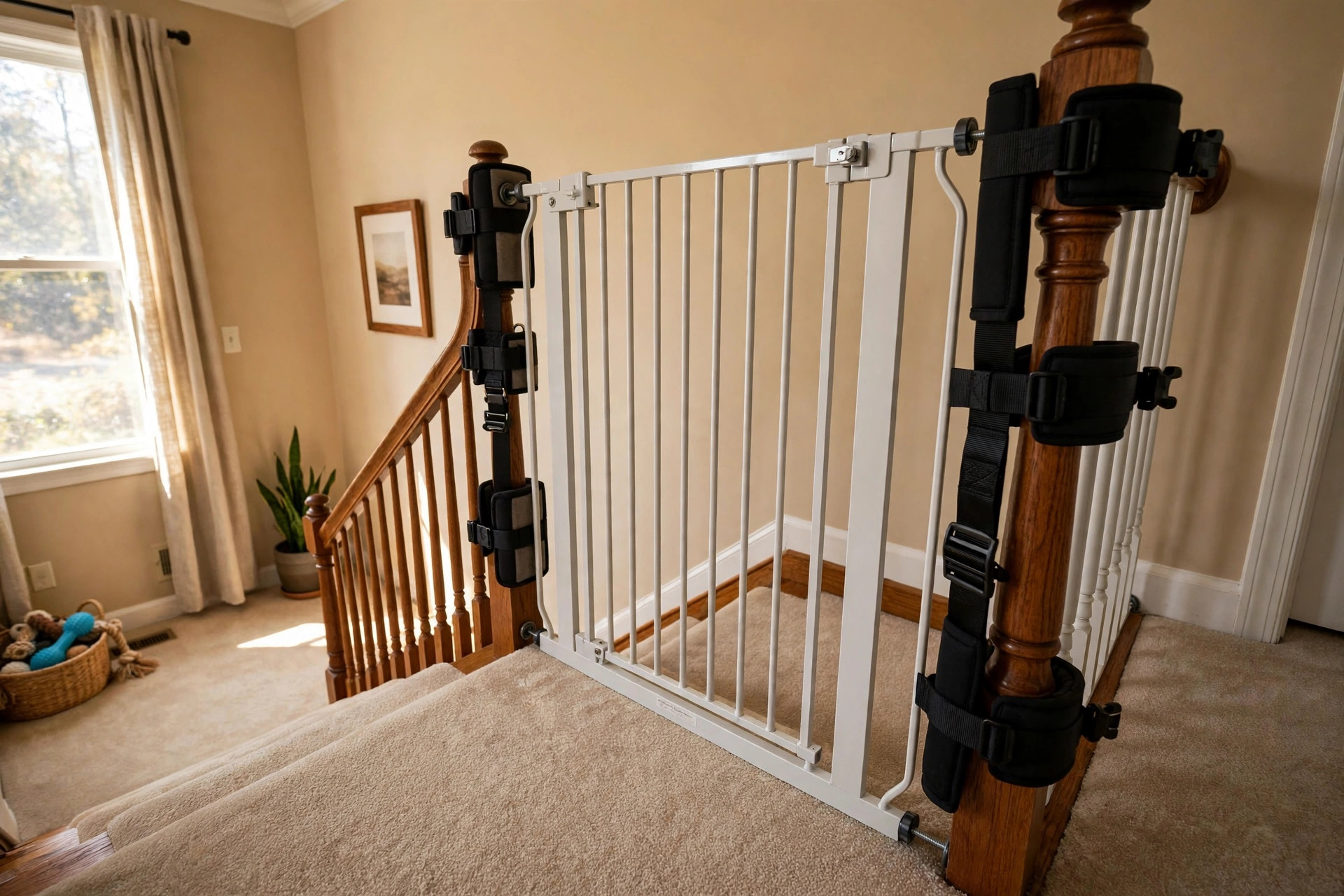
The best pet gate for stairs with banister kit gives a simple answer. It blocks the stairway without damage to the wood. Most stairways have a banister on one side and a wall on the other. Some have banisters on both sides. A standard gate needs flat walls on both sides. A banister kit changes that. It adds clamps or straps that hold the gate to a round or square newel post.
This guide explains how to choose the right gate. It covers fit, gate types, prices, and safe use. It also answers common questions from pet owners. By the end, the choice will feel clear.
Why a Stair Gate Matters for Pets
Stairs are one of the most dangerous spots in a house for a pet. Hard steps, sharp edges, and long falls can injure even a healthy animal.
Older dogs face the greatest risk. Their joints grow stiff with age. A fall can tear a ligament or break a hip. Recovery from such an injury can take months. Some older dogs never walk well again. A gate at the top of the stairs removes this risk in a simple way.
Puppies are at risk in a different way. They are clumsy and fast. They chase toys and people without care. A puppy can tumble down a full flight of stairs in seconds. Small breeds can also slip through wide balusters. A gate with narrow bars keeps them on one level.
Cats bring their own trouble. A cat may not fall, but it can trip a person. Many owners have slipped on stairs while a cat crossed their path. A gate keeps the cat away from the steps when needed.
Multi-pet homes need gates most of all. A large dog and a small dog play rough. A pet gate with cat door for stairway safety lets the cat pass while the dog stays put. That kind of control keeps peace in the house.
There is also a training reason. A gate teaches a pet where it may go. Puppies learn house rules faster when the rules are clear. A gate is calmer than shouting. It sets a boundary the pet can see and respect.
What to Look for in a Banister Kit Gate: Best Pet Gate for Stairs with Banister Kit
Not every gate fits every stairway. The wrong gate wobbles or leaves gaps. The right one feels solid from day one. Here is what to check before buying.
Fit and Width
Measure the opening first. Use a tape measure at the narrowest point between the banister post and the wall or second post. Measure at the top, middle, and bottom of the opening. Use the smallest number. Many stairways taper slightly. A gate that fits the top may not fit the bottom.
Check the gate width range on the box. Most gates adjust by a few inches. Some add extension panels for wide openings. Pick a gate whose range covers the measured width with room to spare.
Also check the shape of the banister post. Posts can be round, square, or turned with curves. A good banister kit fits all three. It uses padded clamps or straps that grip the post without screws. The pads protect the wood finish.
Mounting Style
There are two main styles. Pressure-mounted gates push against both sides with rubber pads. They install in minutes and leave no marks. They work well at the bottom of stairs.
Hardware-mounted gates screw into the wall or the banister kit. They hold much tighter. They are the safer pick at the top of stairs. A hard push from a large dog will not move them. The banister kit takes the screws so the wood post stays safe. When the gate comes down, the post shows no holes.
Gate Height
Height matters more than most people think. A gate should stand at least three quarters of the pet’s height at the shoulder. For most dogs, 30 to 36 inches works. For large athletic dogs, look for extra-tall models near 41 inches.
Cats climb, so height alone will not stop them. For cats, a gate mainly slows them and marks a boundary. Some owners add a taller panel above the gate. Others choose gates with vertical bars that are hard to climb.
Types of Pet Gates for Stairs
Gate makers offer several designs. Each suits a different home and a different pet.
Pressure-Mounted Gates
These gates press between two surfaces. Turn a knob or push a lever, and rubber pads grip the sides. They set up fast and move from room to room with ease.
They suit the bottom of stairs best. At the bottom, a push from the pet moves the gate away from the stairs, not toward the drop. Never use a pressure-only gate at the top of stairs. A strong dog can push it loose, and the whole gate can fall with the pet.
Hardware-Mounted Gates
These gates bolt to the wall on one side and to the banister kit on the other. The hold is firm. They do not shift when a dog jumps against them.
They are the standard choice for the top of stairs. The banister kit is the key part. It gives the screws something to bite into without harming the post. This is why the best pet gate for stairs with banister kit often costs a bit more than a plain gate. The kit itself adds real value.
Walk-Through Gates
A walk-through gate has a small door that swings open for people. The owner steps through with hands full of laundry. The pet stays behind. Most models open both ways and close on their own.
This design saves daily effort. Without it, the owner must climb over the gate or remove it each time. Climbing over is risky, especially while carrying a child or a pet. The walk-through door removes that risk.
Free-Standing Gates
A freestanding pet gate for wide doorways stands on its own feet. It needs no wall and no banister. It works in open floor plans where stairs meet a wide room.
These gates suit calm pets. A bold dog can push a free-standing gate aside. For stair tops, a mounted gate is still the safer call. For blocking a hallway or a wide landing, free-standing models do fine.
Outdoor stairs need their own answer. A pet gate for deck stairs for outdoor use must resist rain and sun. Metal models with rust-proof coating last longest outside.
Cost and Price
Prices fall into clear bands. A basic pressure-mounted gate costs 30 to 60 dollars. These suit small dogs and the bottom of stairs.
Mid-range gates cost 60 to 120 dollars. Most of these include a walk-through door. Many ship with a banister kit in the box. This band covers most homes well.
Premium gates cost 120 to 250 dollars. They use steel frames and strong hardware. They often include wide extension panels and extra-tall options. Large dog owners should shop in this band.
The banister kit itself may cost 20 to 40 dollars when sold alone. Some kits fit only one brand of gate. Check the fit before buying parts from different brands. A kit from Chewy may not match a gate bought at Home Depot.
Think of cost over time. A cheap gate that breaks in a year costs more than a solid gate that lasts ten. Steel gates outlast wood and plastic. Consumer Reports notes that sturdier hardware tends to pay off in daily use items.
Sales help. Major sale weekends often cut gate prices by a fifth or more. Amazon and Wayfair run frequent deals. Petco stores let buyers see the gate in person before paying.
Care and Upkeep
A pet gate needs little care, but small habits keep it working for years. Wipe the frame once a month with a damp cloth. Pet hair and dust collect in the corners and slow the latch.
Check the clamps on the banister kit twice a year. Wood posts shrink and swell with the seasons. A clamp that felt tight in winter may feel loose in summer. Tighten the straps a quarter turn as needed.
Oil the hinges once a year. A drop of light machine oil on each hinge keeps the door swing smooth. Wipe off the extra oil so it does not stain the floor or the pet’s coat.
Look at the latch each week. Latches take daily use and wear first. If the gate no longer clicks shut on its own, adjust the strike plate or replace the latch. Never trust a gate that drifts open. The ASPCA reminds owners that broken barriers cause many preventable pet injuries.
For outdoor gates, rinse off dirt each season and check for rust spots. Touch up chips in the coating with rust-proof paint. Store a fabric or mesh gate indoors during harsh winter months.
Safety
A gate only helps when it is used right. A few rules keep pets and people safe.
Always mount the gate on the correct side. At the top of stairs, the gate should sit a few inches back from the first step. This keeps the pet from leaning over the edge. It also gives the owner safe footing when opening the door.
Never use a gate with wide bar spacing for small pets. Bars more than two and a half inches apart let a small dog push its head through. A stuck head can panic the animal and cause injury. Mesh gates can trap claws, so check the weave size too.
Keep the area near the gate clear. Toys, shoes, and loose rugs near the latch can trip the owner. A fall on the stairs hurts the person and may knock the gate loose.
Watch chewers. Some puppies chew gate bars. Metal bars can break teeth. If the pet chews, coat the bars with a bitter spray made for pets, or switch to a solid-panel gate. PetMD notes that chewing on metal can damage teeth and gums.
Test the gate after every move. Push it hard from the pet side. If it shifts, tighten the mounts. A gate that moves is worse than no gate. It gives false trust.
Teach the pet to wait at the gate. The American Kennel Club suggests short training sessions with treats. Reward the pet for sitting calmly at the gate. In a week or two, most dogs learn the rule.
Frequently Asked Questions
Will a banister kit damage my wood posts?
No, not when used as directed. The kit uses padded clamps or straps. They grip the post with pressure, not screws. The pads spread the force so the finish stays safe. Remove the kit once a year and check the wood. Wipe away any trapped dust.
Can I use one gate for both the top and bottom of the stairs?
It is better to buy two gates. The top of the stairs needs a hardware-mounted gate. The bottom can use a pressure-mounted one. Moving one gate back and forth wears the parts fast. It also tempts the owner to skip the gate on busy days.
How do I fit a gate when both sides are banisters?
Use a banister kit on each side. Many kits sell in pairs for this case. Measure the distance between the two posts at several heights. Pick a gate with a wide adjustment range. Mount the gate a few inches back from the top step.
Are these gates safe for cats as well as dogs?
Yes, with the right bar spacing. Bars should sit less than two and a half inches apart. Some owners pick a gate with a built-in cat door. The Spruce Pets site offers care guides that cover multi-pet homes in more depth.
What if my dog jumps over the gate?
Move up to an extra-tall gate, near 41 inches. Place the gate so the dog cannot get a running start. Add training so the dog learns to stay back. A tired dog jumps less, so keep up with daily walks and play.
A Final Word
The best pet gate for stairs with banister kit is the one that fits the stairway, suits the pet, and gets used every day. Measure twice. Pick hardware mounting for the top of the stairs. Keep the latch in good order. A gate is a small purchase that guards against a large vet bill. Pets trust their owners to keep them safe. A good gate does that job around the clock.
References
Amazon. (n.d.). Online shopping. https://www.amazon.com American Kennel Club. (n.d.). Dog care and training resources. https://www.akc.org ASPCA. (n.d.). Pet care and animal welfare resources. https://www.aspca.org Chewy. (n.d.). Pet supplies. https://www.chewy.com Consumer Reports. (n.d.). Product reviews and ratings. https://www.consumerreports.org Petco. (n.d.). Pet supplies and services. https://www.petco.com PetMD. (n.d.). Pet health information. https://www.petmd.com The Home Depot. (n.d.). Home improvement products. https://www.homedepot.com The Spruce Pets. (n.d.). Pet care guides and product reviews. https://www.thesprucepets.com Wayfair. (n.d.). Furniture and home goods. https://www.wayfair.com
Was this guide helpful?

About Michael Thompson
The My Garden US editorial team writes practical, in-depth home and garden guides for American homeowners — tested advice, no fluff.
You May Also Like
Best Outdoor Dog Kennel for Large Breeds USA: A Plain Guide to Choosing Well
July 16, 2026 0 views
Best Dog Muzzle for Vet Visits and Grooming
June 27, 2026 0 views
Outdoor Cat House Insulated for Winter Shelter: A Complete Guide
March 19, 2026 0 views