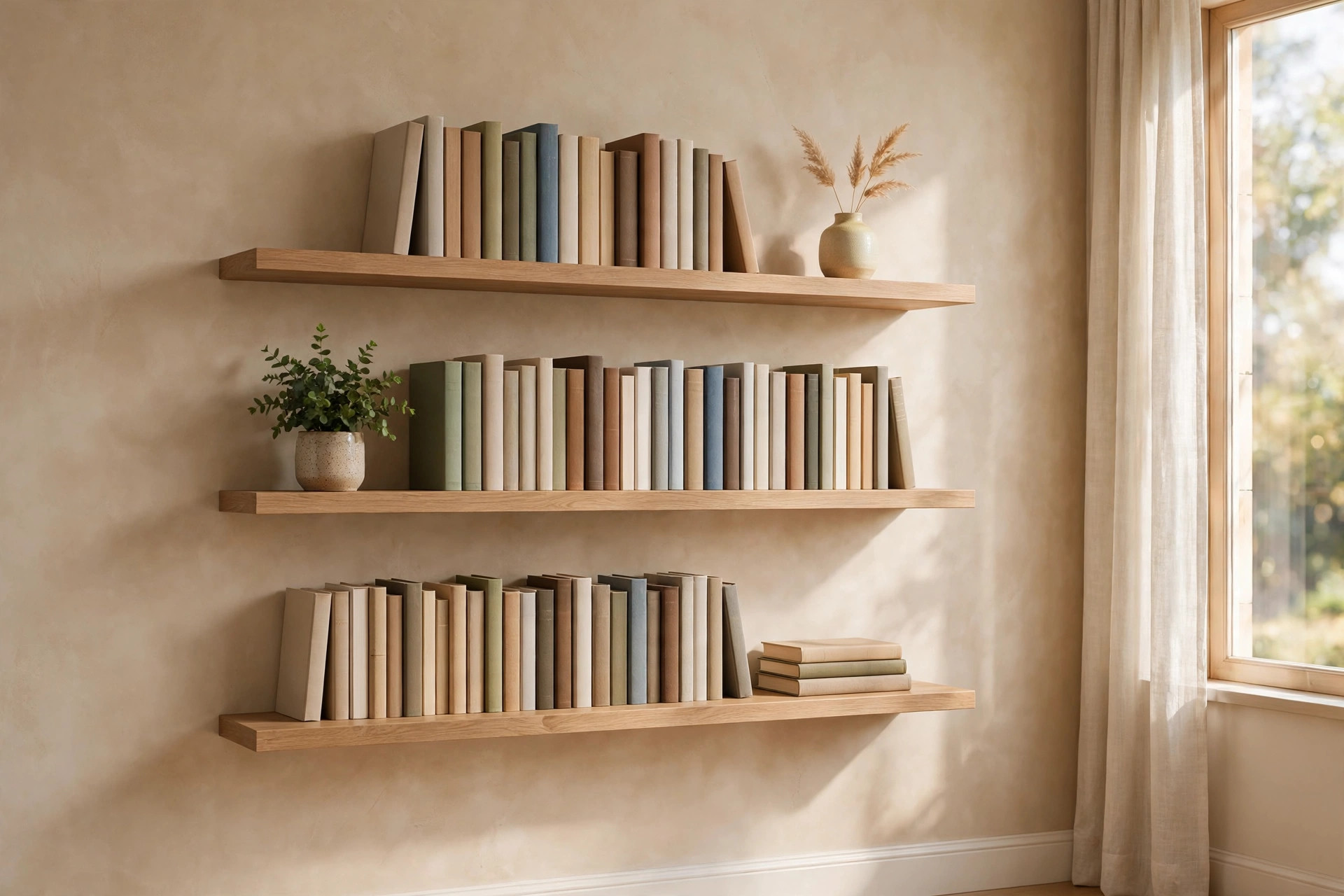

Books give a room its character. Where they live matters just as much as which titles they hold. This modern wall bookshelves american homes guide explains how wall mounted shelves work, why so many American households now choose them, and how to pick a set that fits your home. It covers the main styles, the materials on the market, the true cost, and the simple safety steps that keep heavy shelves on the wall where they belong.
Wall mounted shelving is not new. Homes in the nineteen eighties often used long oak boards with metal brackets. The modern version keeps the idea and drops the bulk. Lines are clean. Brackets are hidden. The shelf itself seems to float against the wall. The look suits ranch houses, colonials, townhouses, and apartments alike.
Why Modern Wall Bookshelves Matter
Floor space is dear. A standard bookcase can take up ten square feet of floor. In a small city apartment that is a real loss. Wall bookshelves give that space back. The floor below stays open. The room feels larger. This is why renters and owners of condos favor them.
Style is the second reason. A bare wall is a missed chance. A row of floating shelves turns plain drywall into a display. Books, framed photos, and small plants sit at eye level where they can be seen. Many home owners use one wall in the living room as a reading wall. Guests notice it. It gives the room a quiet, learned air.
Cost is the third reason. A good solid wood bookcase can cost hundreds of dollars. A set of four wall shelves often costs less than one bookcase. The savings are plain. Stores such as IKEA and Wayfair carry starter sets for well under one hundred dollars.
What to Look for When You Choose: Modern Wall Bookshelves American Homes Guide
Load Capacity
Books are heavy. A three foot shelf of paperbacks can weigh forty pounds or more. Always check the rated load before you buy. The rating should be printed on the box or the product page. A rating of fifteen to twenty pounds per shelf suits decor. For real books, look for thirty pounds or more per shelf.
The mount matters as much as the shelf. Screws must reach the wall studs. A stud is the wood frame behind the drywall. A shelf fixed to two studs can hold far more than one held only by drywall anchors. If your wall is brick or concrete, use masonry anchors. They grip the hard surface and do not pull loose.
Size and Depth
Most modern shelves are eight to ten inches deep. That fits standard books. Art books and photo volumes may need twelve inches. Measure your largest books before you shop. Also measure the wall. A common error is to buy shelves that are too wide for the wall, or too many for the space. Leave at least a few inches of bare wall at each end. The shelf looks better with air around it.
Material and Finish
Solid wood is the classic choice. Oak, walnut, and pine last for decades. They take stain well. Engineered wood is lighter on the wallet. It is made from pressed wood fiber with a veneer skin. It looks clean but chips more easily at the edges. Metal shelves suit industrial rooms. They are strong and slim. Glass shelves suit small rooms because they vanish against the wall, but they show every speck of dust.
Finish should match your room. White shelves suit coastal and farmhouse rooms. Dark walnut suits traditional rooms. Light oak suits Scandinavian rooms. Many sellers, such as Article and West Elm, offer the same shelf in three or four finishes so you can match your trim.
Main Types and Options
Floating Shelves
The floating shelf is the most popular modern form. It has no visible brackets. A hidden rod runs from the wall into the shelf body. The result is a clean line. Floating shelves suit rows of books and small objects. Most hold fifteen to forty pounds, based on the mount. They are easy to install. Two people and a level are enough for most sets.
Picture Ledge Shelves
A picture ledge is a slim shelf with a raised lip at the front. It was made for framed art, but it holds books well. Books face forward, cover out. This turns your shelf into a gallery. Children like this style because the covers are easy to see. The ledge keeps books from sliding off. Depths run three to five inches, so it fits paperbacks but not thick art books.
Box and Cube Shelves
Box shelves are open cubes fixed to the wall. They can hang alone or in a group. They suit modern rooms because their shape is bold. Each cube holds books, a small plant, or a vase. Cube sets from CB2 and Crate & Barrel often come in sets of three that you can arrange as you like.
Corner Shelves
Corner shelves use the dead space where two walls meet. They are shaped like a quarter circle or a triangle. They suit small bedrooms and hallways. Two or three corner shelves can hold a full row of paperbacks without taking any floor.
Ladder and Track Systems
Track systems use two vertical rails fixed to the wall. Shelf brackets hook into the rails and can move up or down. This is the most flexible option. You can raise a shelf as your books grow taller. The look is clean and modern. The rails are thin and paint to match the wall if you wish.
Cost and Price Ranges
Prices vary widely. A single basic floating shelf, thirty six inches long, costs about twenty to forty dollars at a mass market store. A set of three matching shelves costs about fifty to ninety dollars. Solid hardwood shelves cost more. A walnut floating shelf of the same size can cost sixty to one hundred twenty dollars. Designer sets with hidden steel mounts can reach two hundred dollars per shelf.
Track systems cost more up front but give more shelf for the money. A two rail kit with four shelves often costs one hundred fifty to three hundred dollars. Custom built in wall shelves cost the most. A carpenter may charge five hundred to two thousand dollars for a full wall, based on the wood and the finish.
Shop with care. Compare the weight rating, not just the price. A cheap shelf that sags under books is no bargain. Read buyer reviews on sites like The Spruce and Apartment Therapy before you commit. Both sites test and compare shelf brands each year.
Care and Upkeep
Wall bookshelves need little care. Dust them once a month with a dry cloth. Do not use a wet cloth on engineered wood. Water can swell the fiber board and ruin the finish. For solid wood, a light polish twice a year keeps the surface rich.
Check the mounts once a year. Wood studs hold well, but houses settle. Put a level on each shelf. If a shelf has tipped, tighten the screws. If a screw spins free, the hole has worn. Move the mount a half inch to fresh wood or use a larger anchor.
Keep books dry. A wall near a bathroom or a kitchen steam vent can pass damp air to the shelf. Damp pages warp and mold follows. Leave a small gap between the books and the wall so air can move.
Do not overload one shelf while the next sits bare. Spread the weight. Heavy art books belong on the lowest shelf. Light paperbacks can go high. This keeps the wall load balanced and the look even.
Safety Steps You Should Not Skip
Falling shelves hurt people and break floors. Most failures come from poor mounting, not poor shelves. Follow these rules.
First, find the studs. Use a stud finder or tap the wall and listen for the solid sound. Mark each stud with light pencil. Plan your shelf so each bracket hits a stud. If the shelf is longer than the stud spacing, use toggle bolts in the drywall between studs. Toggle bolts spread the load behind the wall.
Second, respect the weight limit. Add up the books, not just the shelf. A shelf rated for thirty pounds should carry no more than thirty pounds of shelf plus books. When in doubt, mount one more bracket than the maker calls for.
Third, mind children and quakes. In homes with small children, fix shelves high enough that they cannot be climbed. In quake country, add a thin lip or a quake strap across the front of each shelf. The United States Consumer Product Safety Commission warns that tipping furniture and wall mounted items injure thousands each year. A few dollars of hardware buys real peace.
Styling Your Wall Bookshelves
A shelf full of books crammed spine to spine looks tired. Give your shelves a planned look with a few simple rules.
Mix heights. Stand most books upright. Lay a short stack flat to break the line. Leave one gap in three empty or hold it for a small vase. This rhythm pleases the eye.
Add one natural item. A small potted plant or a piece of driftwood softens the straight lines. Choose plants that need little water. A trailing pothos looks fine on a high shelf and forgives missed watering.
Mind color. You do not need to sort books by color, though some rooms suit it. In a calm room, pull out the loudest jackets and place them on a lower shelf. Keep the eye level row in soft tones.
Light the shelves. A pair of floor lamps bought from Wayfair nearby will do, or see our guide to living room floor lamps reviews buying guide usa for tested picks. Warm light makes book spines glow. Avoid hot bulbs near wood. LED strips or spots run cool and sip power.
Match the rest of the room. Wall shelves should talk to your other pieces. If your sofa sits on a soft rug, pick shelf wood in the same tone family as your side tables. Our guide to luxury area rugs reviews buying guide usa can help you tie the floor to the walls. And if the shelf wall holds your screen too, read our living room tv stands usa online deals guide before you buy, so the shelf height clears the set.
Design sites such as Houzz and HGTV publish photo galleries of real living rooms each month. Browse them for shelf styling ideas that fit your home.
FAQ
How much weight can a modern wall bookshelf hold?
It depends on the shelf and the mount. Most floating shelves hold fifteen to forty pounds per shelf when fixed to studs. Shelves on drywall anchors alone hold far less, often under ten pounds. Always read the rated load and mount into studs for books.
Can renters install wall bookshelves?
Often yes, with the land lord’s leave. Small shelves need only a few screw holes. When you move, fill the holes with spackle and touch up the paint. For a no hole option, use a tall leaning shelf that rests against the wall, though it is not a true wall mount.
How high should I hang wall bookshelves?
The center shelf should sit near eye level, about fifty seven to sixty inches from the floor. Space shelves nine to twelve inches apart for standard books. Leave twelve to fifteen inches for art books. Above a desk, keep the lowest shelf at least twenty inches above the desk top so you have work room.
What wood is best for floating shelves?
Oak and walnut are strong and handsome. Pine is cheaper but dents more easily. For painted shelves, poplar or maple take paint well. Avoid thin particle board for long spans. It sags over time, even under light loads.
Do wall bookshelves damage walls?
They leave screw holes, which are easy to fix. Properly mounted shelves do not crack drywall. Damage comes from overloaded shelves that rip their anchors out. Keep loads within the rating and the wall stays sound.
How do I keep shelves from sagging?
Keep the span under forty two inches for wood shelves. Add a center bracket on longer runs. Mount into studs. Do not store heavy art books on the longest, highest shelf. Solid hardwood sags less than engineered board.
A Short Final Word
Modern wall bookshelves are a simple win for American homes. They free the floor, dress the wall, and cost less than a bookcase. Pick a solid mount, respect the weight limit, and style with a light hand. Do that, and your shelves will hold your books safely for many years.
References
Apartment Therapy. (n.d.). Home design ideas and inspiration. https://www.apartmenttherapy.com Article. (n.d.). Modern furniture. https://www.article.com CB2. (n.d.). Modern furniture and decor. https://www.cb2.com Crate and Barrel. (n.d.). Furniture and home decor. https://www.crateandbarrel.com HGTV. (n.d.). Home and garden ideas. https://www.hgtv.com Houzz. (n.d.). Home design and remodeling. https://www.houzz.com IKEA. (n.d.). Home furnishings. https://www.ikea.com The Spruce. (n.d.). Home and garden advice. https://www.thespruce.com Wayfair. (n.d.). Furniture and home goods. https://www.wayfair.com West Elm. (n.d.). Modern furniture and home decor. https://www.westelm.com
Was this guide helpful?

About Michael Thompson
The My Garden US editorial team writes practical, in-depth home and garden guides for American homeowners — tested advice, no fluff.
You May Also Like
Living Room TV Stands: A Guide for American Homes
March 20, 2026 0 views
Luxury Area Rugs for Florida Homes: A Complete Guide
February 11, 2026 0 views
Living Room Ottomans Deals Near Me: A Plain Guide to Buying Smart
July 15, 2026 0 views