This luxury area rugs reviews buying guide usa is written for shoppers who want honest facts before they spend. A fine rug can change a whole room. It can also be a costly mistake if you buy the wrong one. Reviews help, but only when you know how to read them. This guide shows you what matters most: fiber, construction, size, price, and care. It also points you to trusted places where you can compare real options.
Why Luxury Area Rugs Matter
A luxury area rug does more than cover a floor. It defines a space. In an open living room, a rug tells your eye where the seating area begins and ends. It softens hard floors and quiets noise. A wool rug under a coffee table can make a cold room feel warm in winter. A thick pile can protect wood floors from scratches and marks.
Rugs also carry the style of a home. A Persian-style rug speaks of tradition. A flat-weave in pale tones speaks of calm modern taste, like the rooms shown by contemporary design stores. Guests notice a good rug at once, even if they cannot name why. Reviews of luxury rugs often mention this feeling. Buyers say the room finally looks finished.
There is also comfort. Bare floors are hard on feet and knees. A dense rug with a good pad feels soft each morning. Families with small children often say the rug became the favorite play spot in the house. Pets like it too.
But a luxury rug is a large purchase. Prices run from a few hundred dollars to several thousand. That is why a buying guide is useful. Take time now and you will enjoy the rug for many years.
How to Choose: What to Look For: Luxury Area Rugs Reviews Buying Guide Usa
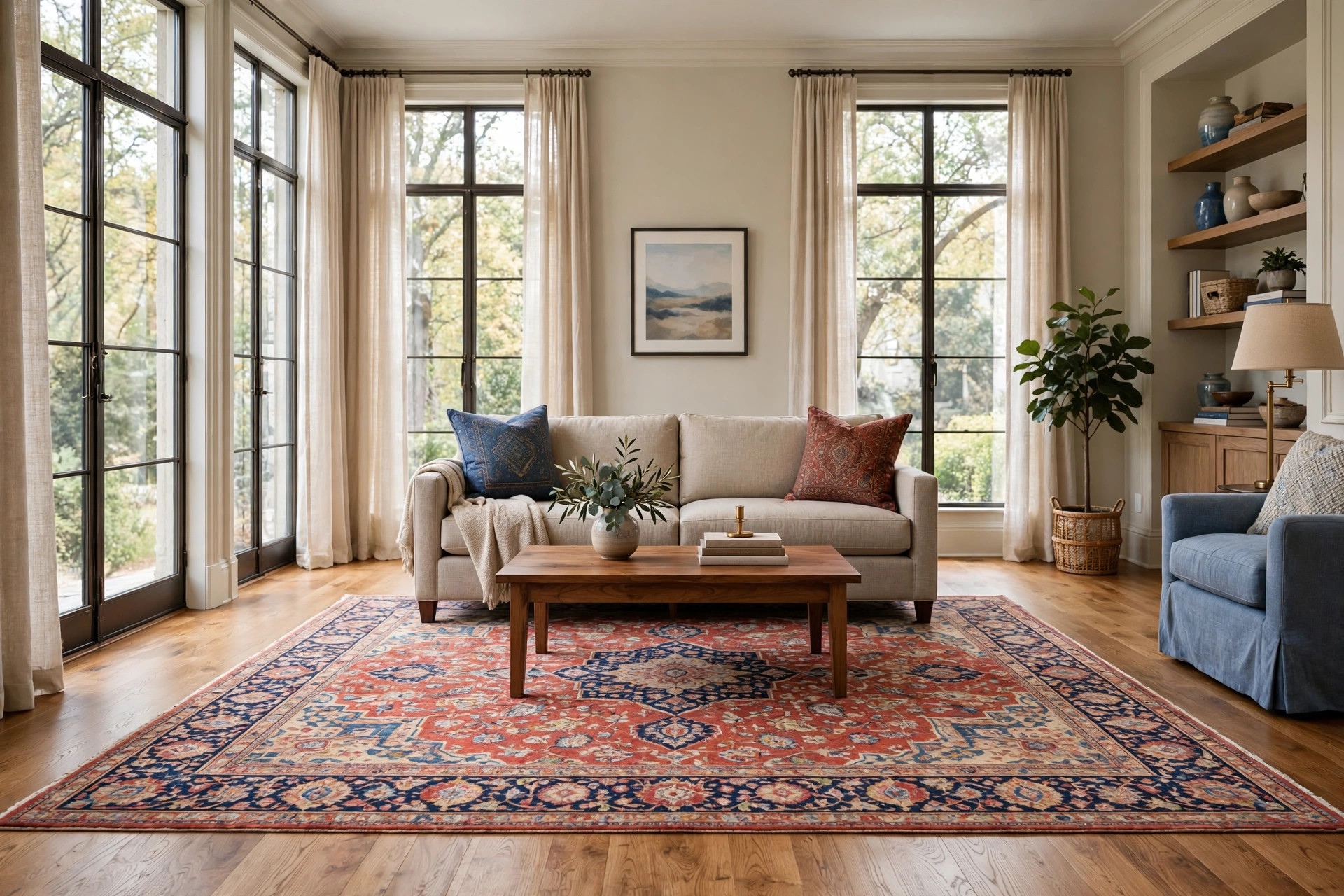
Start with the room, not the rug. Measure the space with a tape measure. Write down the length and width of the seating area. Most living rooms need a rug of 8 by 10 feet or 9 by 12 feet. The front legs of the sofa and chairs should rest on the rug. A rug that is too small makes the room look cramped.
Next, look at the fiber. Wool is the classic choice for luxury rugs. It is soft, strong, and resists stains better than most fibers. Silk adds shine and fine detail, and many high-end rugs mix silk with wool. Cotton is used for flat weaves and is easy to clean. Viscose looks like silk but wears faster, so read reviews with care when a rug lists viscose.
Check the construction. Hand-knotted rugs take months to make and cost the most. They last for decades and can even grow in value. Hand-tufted rugs are made faster with a tufting gun and cost less, but they may shed at first. Machine-made rugs are the least costly and can still look fine, though they rarely feel as rich.
Density matters too. Press your hand into the rug. A dense pile springs back. A thin pile shows the backing. Reviews on large online retailers like Wayfair often include photos from buyers, and these photos show real density better than studio pictures.
Color is a personal choice, but think about light. A dark room looks better with a light rug. A sunny room can handle deeper tones. Pattern hides dirt and wear, which helps in busy homes. Solid colors show every mark.
Types and Options
Persian and Oriental rugs are the most famous luxury type. They come from old designs made in Iran, Turkey, India, and nearby lands. Many are hand-knotted from wool. Their patterns are rich and detailed. They suit traditional and formal rooms. Prices vary widely by age, knot count, and origin.
Modern and contemporary rugs favor clean lines and bold color. Many are made from New Zealand wool or wool blends. They fit well with the clean lines sold by direct-to-consumer furniture brands. If your home has simple furniture, a modern rug can add the one note of color the room needs.
Shag rugs have long, soft piles. They feel wonderful underfoot. But they trap dust and are hard to clean. They work best in low-traffic rooms like bedrooms.
Flat-weave rugs, such as kilims and dhurries, have no pile. They are light and easy to move. They suit casual rooms and layered looks. Some buyers place a flat-weave over a larger neutral rug for depth.
Natural fiber rugs made from jute, sisal, or seagrass bring texture and an earthy feel. They are strong but rough under bare feet. They are a good base layer under softer rugs.
Indoor-outdoor rugs are woven from synthetic fibers that resist sun and rain. They are not truly luxury in feel, but high-end versions now look quite fine. They suit porches and busy family rooms.
When you compare types, home guides can help you learn the terms reviewers use, such as pile height, knot count, and weave type. Knowing the terms helps you judge reviews fairly.
Cost and Price
Luxury area rugs in the USA span a wide price range. A small hand-tufted wool rug of 5 by 8 feet may cost 300 to 800 dollars. A hand-knotted wool rug of 8 by 10 feet often costs 1,500 to 5,000 dollars. Antique or fine silk rugs can pass 10,000 dollars.
What sets the price? Labor is the first factor. A hand-knotted rug may take a team of weavers several months. Material is the second. Fine wool and silk cost more than coarse wool or synthetics. Origin and brand add the rest. A known maker or a rug from a respected region commands a premium.
Machine-made rugs that look luxurious cost far less, often 150 to 600 dollars for large sizes. They can be a smart pick for homes with pets or young children, where stains are likely.
Watch for sales. Major home furnishing stores run rug sales in spring and fall. Holiday weekends bring deep cuts. But be wary of fake list prices. Some sellers mark a rug at 4,000 dollars and sell it forever at 1,200. Read reviews to learn the true street price.
Shipping matters for large rugs. A 9 by 12 rug is heavy. Some sellers ship free, while others charge 100 dollars or more. Check the return policy too. A rug that looks fine online may clash with your floor. Free returns save real money.
Think of cost per year. A 3,000 dollar rug that lasts 20 years costs 150 dollars a year. A 400 dollar rug replaced every three years costs more over time. Quality often wins in the long run.
Care and Upkeep
A luxury rug needs steady, simple care. Vacuum it once or twice a week. Use suction only, or set the beater bar high, so the brush does not tear the fibers. Vacuum both sides twice a year to remove deep dust.
Rotate the rug every six months. Sun fades one side faster than the other. Furniture dents one spot. Rotation spreads the wear and keeps the color even.
Clean spills at once. Blot with a clean white cloth. Do not rub, since rubbing pushes the stain deeper. Use plain water first. For food or wine, a mix of mild dish soap and water often works. Test any cleaner on a hidden corner first.
Have the rug washed by a professional every two to five years, based on traffic. Rug washers use gentle baths that deep-clean without harm. This is not the same as carpet cleaning in your home. Ask for a shop that handles fine rugs.
Use a rug pad. A good pad keeps the rug from sliding, adds cushion, and lets air flow under the fibers. It also protects wood floors. Felt pads suit hard floors. Rubber pads suit carpet over carpet, though many experts prefer felt with a natural rubber back.
Keep pets in mind. Trim nails so they do not snag the weave. Place a washable mat at doors so paws bring in less dirt. If shedding is heavy, choose a low-pile rug that is easy to vacuum.
For apartment decor tips on small-space rug care, note that even a 5 by 7 rug benefits from a pad and rotation. Small rugs wear faster because foot traffic hits the same spot each day.
Safety
Rugs cause many home falls, so safety deserves care. A rug on a hard floor must not slide. A quality rug pad with grip stops most movement. Tape made for rugs can help at the corners, but test it on your floor finish first.
Watch the edges. Curled corners trip feet. If a new rug curls, roll it in the reverse direction and let it rest. Heavy books on the corners for a day can help. If curling stays, a pro can fix the edge.
Keep rugs away from heat vents and fireplaces. Dry heat makes fibers brittle. Sparks can burn wool, though wool resists flame better than synthetics. Keep a clear space of at least three feet from open flames.
Low pile is safer than thick shag near doors. A door must swing clear of the rug. Measure the gap under the door before you buy. Wheelchairs and walkers also move easier on low, firm rugs.
If anyone in the home has dust allergies, choose a low-pile wool rug and vacuum with a HEPA filter. Washable rugs are another option for allergy homes, though they are rarely sold as luxury.
Check product labels for safety notes. Trusted design inspiration galleries often show how pros place rugs to keep walk paths clear. Clear paths mean fewer trips.
Frequently Asked Questions
How do I know if online rug reviews are honest?
Look for reviews with photos and details about the home. Honest reviews mention the exact color in daylight, the feel underfoot, and any smell on arrival. Be wary when every review is five stars and short. A mix of ratings with clear reasons is a good sign. Reviews that span many months show how the rug wears over time.
What size rug should I buy for a living room?
Most living rooms need 8 by 10 feet at least. In large rooms, 9 by 12 feet works better. All front legs of seating should sit on the rug. In a dining room, the rug should extend 24 inches past the table on each side so chairs stay on the rug when pulled out. Measure twice before you order.
Is wool worth the higher price?
For most buyers, yes. Wool springs back after foot traffic, resists stains, and lasts for decades with care. It also takes dye well, so colors stay rich. If your budget is tight, a wool blend can give much of the benefit at a lower price. Read reviews that mention wear after one or two years to judge a blend.
Do luxury rugs shed?
Hand-tufted and some hand-knotted rugs shed loose fibers for the first weeks or months. This is normal. Regular vacuuming picks it up. Shedding should slow down over time. If heavy shedding lasts past six months, contact the seller. Machine-made rugs shed less but rarely feel as soft.
Can I place a luxury rug on carpet?
Yes, with a firm pad made for rug over carpet. Without a pad, the rug will bunch and ripple. Choose a low-pile rug for this setup, since thick rugs wobble on soft carpet. Many buyers layer a flat-weave over wall-to-wall carpet to add pattern to a plain room.
How do I match a rug to my sofa and curtains?
Pull one color from the rug and repeat it in couch throw pillows or curtains. You do not need a perfect match. Close tones look natural. If your velvet living sofas are a strong color, pick a rug with a quiet pattern in neutral tones. If the room is plain, let the rug be the star with bold pattern and color. For more on pairing pieces, see this related luxury area rugs buying guide.
A Short Final Word
Buying a luxury area rug is part research and part taste. The research part is simple: measure the room, learn the fibers, read honest reviews, and compare prices across budget-friendly home stores and contemporary design shops alike. The taste part is yours alone. Trust your eye. A rug you love will make the whole house feel more like home. Take your time, choose well, and enjoy it for years.
References
Apartment Therapy. (n.d.). Home design ideas and inspiration. https://www.apartmenttherapy.com Article. (n.d.). Modern furniture. https://www.article.com CB2. (n.d.). Modern furniture and decor. https://www.cb2.com Crate and Barrel. (n.d.). Furniture and home decor. https://www.crateandbarrel.com Houzz. (n.d.). Home design and remodeling. https://www.houzz.com IKEA. (n.d.). Home furnishings. https://www.ikea.com The Spruce. (n.d.). Home and garden advice. https://www.thespruce.com Wayfair. (n.d.). Furniture and home goods. https://www.wayfair.com West Elm. (n.d.). Modern furniture and home decor. https://www.westelm.com
Was this guide helpful?

About Robert Taylor
The My Garden US editorial team writes practical, in-depth home and garden guides for American homeowners — tested advice, no fluff.