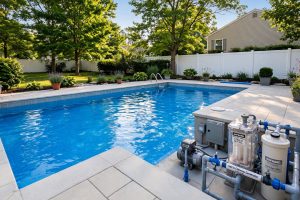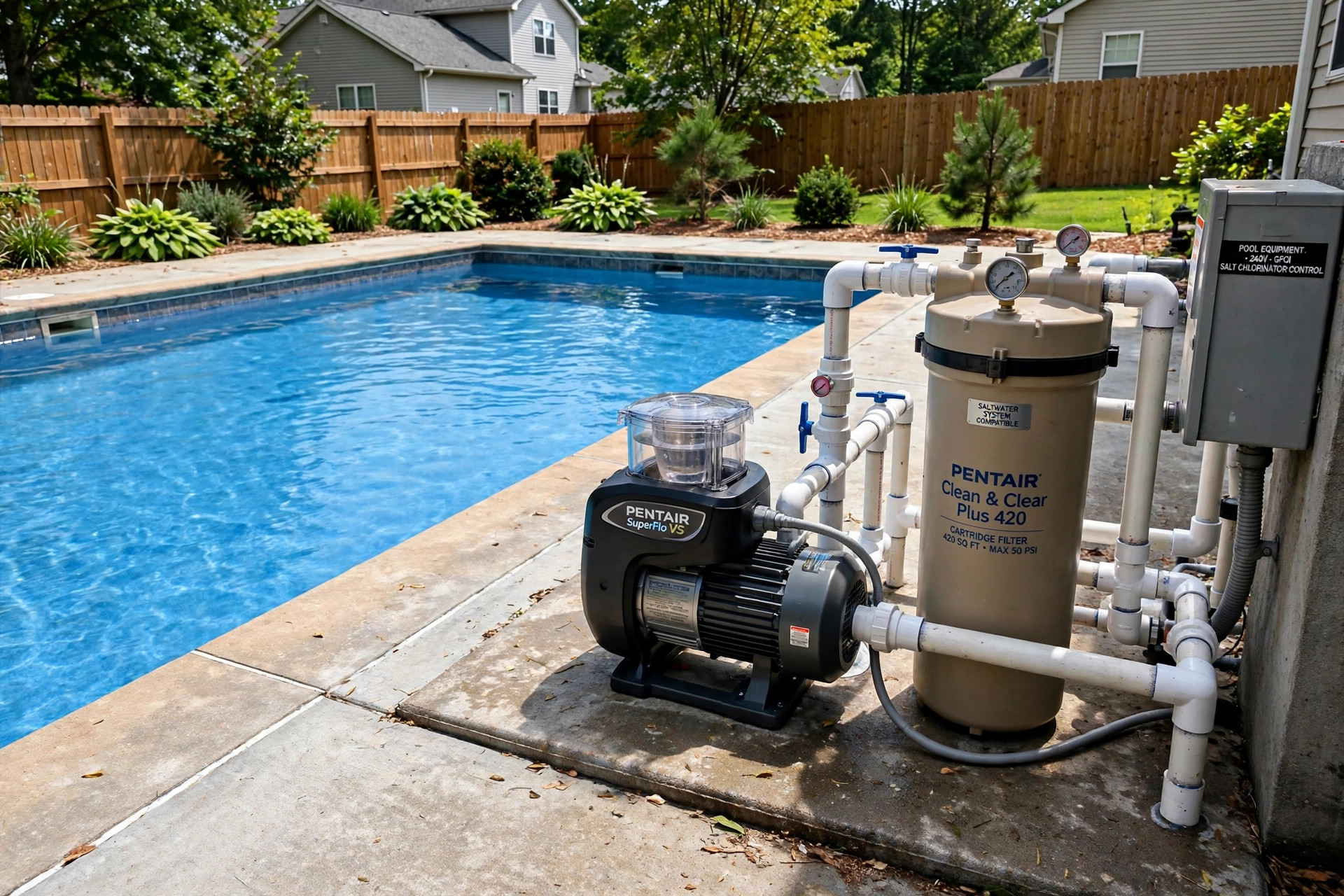
Finding the best pool filter for saltwater systems starts with one plain fact. A salt pool is still a chlorine pool. A salt chlorine generator turns salt into chlorine. The filter still does the same job it does in any pool. It traps dirt, leaves, oils, and fine grit. It keeps the water clear and safe to swim in. But saltwater changes a few things. Salt can corrode cheap metal parts. Fine salt crystals and mineral scale need close watching. This guide walks through the three main filter types, what to look for, what they cost, and how to keep one running for years.
Why the Right Filter Matters for a Saltwater Pool
Salt water is gentle on skin and eyes. Many owners like it for that reason. But the water is also harder on equipment. Salt raises the mineral load in the water. A weak or undersized filter shows it fast. The pool turns cloudy. The pump works too hard. Energy bills climb. In the worst case, the salt cell of the generator scales up and fails early.
A good filter does three things well. It moves enough water each day. It catches fine particles. It stands up to salt without rust or wear. When those three points hold, the rest of pool care gets easier. Chemical use drops. The water stays blue. The generator cell lasts longer. Many owners who fight salt water pool problems and rising salt levels find that a filter upgrade was the missing step.
For most home pools, a filter should turn over the full volume of water every eight hours or less. That means sizing matters more than brand names. A filter that is one size larger than the pump calls for will run quieter, need less backwashing, and last longer between cleanings.
The Three Main Types of Pool Filters: Best Pool Filter for Saltwater Systems
Pool filters come in three designs. Each one works a different way. Each one fits a different kind of owner.
Sand Filters
Sand filters are the old workhorses of the pool world. Water flows down through a bed of special pool sand. The sand traps dirt down to about twenty to forty microns. A pressure gauge tells you when the sand is full. You backwash the filter by reversing the water flow, which flushes the dirt out.
Sand filters suit salt pools well because they have few moving parts and no delicate paper elements. Salt does not harm the sand bed itself. The tank bodies on modern units are fiberglass or polymer, which resist corrosion. The main drawback is the coarsest filtering of the three types. Very fine dust can pass through. Many owners add a small dose of pool filter cleaner or a clarifier to help.
A sand filter needs new sand about every five to seven years. The job takes an afternoon. It is simple work for a homeowner with basic tools.
Cartridge Filters
Cartridge filters push water through pleated polyester fabric. The fabric catches particles down to ten to fifteen microns. That is noticeably finer than sand. There is no backwashing. When the pressure gauge rises, you pull the cartridge out and hose it down. A deep soak in filter cleaner once or twice a season keeps the pleats like new.
Cartridge filters are a strong pick for the best pool filter for saltwater systems. They use less water than backwashing sand units. They catch fine salt scale particles well. Most modern cartridges use corrosion proof housings and stainless steel bands rated for salt pools. The cost to run them is low. The main drawback is the price of replacement cartridges, which run high for large units. You should also know that cheap bargain cartridges fit poorly and tear early. Buy the size your filter housing was built for.
DE Filters
DE stands for diatomaceous earth. These filters coat a set of fabric grids with fine fossil powder. Water passes through the powder layer. DE filters catch particles down to about three to five microns. That is the finest of the three types. The water looks polished.
DE units give the clearest water a home pool can get. They cost more up front and need more care. You must recharge the powder after every backwash. Used DE powder needs proper disposal in many towns. Check local rules before you buy one. For salt pools, DE works fine, but the owner must stay on top of grid cleaning. Scale from hard water can coat the grids if the pool chemistry drifts.
What to Look for When You Choose
Flow rate and size. Match the filter to your pump and pool volume. A filter rated for slightly more flow than your pump gives is ideal. An undersized filter raises pressure, strains the pump, and cleans poorly.
Corrosion resistance. Salt attacks cheap metal. Look for fiberglass or reinforced polymer tanks. Ask whether clamps, bands, and hardware are stainless steel or coated for salt service. A unit built for saltwater will say so on the label or the spec sheet.
Ease of cleaning. Think about how you will service it. Sand filters backwash in minutes. Cartridges need pulling and hosing. DE grids need powder handling. Pick the chore you will actually do on time.
Pressure gauge quality. A clear, large gauge makes the whole system easier to run. High pressure means clean the filter. Low pressure can mean a pump or suction problem. Many pool owners solve a salt water pool ph keeps rising issue only to find the real fault was a dirty filter raising system pressure.
Warranty and parts. A five year tank warranty is common on good units. Check that replacement cartridges, grids, and gaskets are easy to buy. A filter with no parts supply is a throwaway filter.
Union fittings and service valves. Quick disconnect unions let you pull a filter for winter storage or deep cleaning without cutting pipe. This matters most in cold states where pools close each fall.
Comparing the Options Side by Side
Sand filters cost the least up front. They run for years with little care. They filter coarsest. Cartridge filters sit in the middle on price. They filter finer and waste no backwash water. They need periodic cartridge replacement. DE filters cost the most and give the clearest water. They ask the most of the owner.
For most saltwater pools, cartridge filters win the overall race. They pair well with salt systems because they catch fine scale, need no backwash that throws off salt balance, and keep flow steady. Sand filters are a fine budget choice for large pools where the owner wants simple service. DE filters suit owners who want the clearest possible water and do not mind the extra work.
Size rules of thumb help. For pools up to twenty thousand gallons, a cartridge filter of one hundred to one hundred fifty square feet does the job. Sand filters of similar pools run two to three square feet of surface area. DE filters run thirty six to sixty square feet of grid area. When in doubt, go one size up. Oversizing never hurts a filter system.
Cost and Price: What to Expect
Prices vary by region and season. Expect a quality sand filter for a home pool to run a few hundred dollars. Cartridge filters run several hundred to over a thousand dollars for large units. DE filters sit at the top, often over a thousand dollars for full size models.
Installation adds cost. A plumber or pool service may charge a few hundred dollars to swap a filter and repipe the pad. Many handy owners do it themselves in an afternoon. The fittings are standard. The instructions are clear.
Running costs stay low. Electricity for the pump is the main expense. Sand replacement every few years costs little. Cartridges cost the most to replace, sometimes over a hundred dollars each for large ones, and they last two to four seasons with good care. DE powder is cheap per bag but is a recurring buy.
A smart way to hold costs down is to buy a filter that matches a common size. Common sizes mean cheaper parts and more choices at retailers like Home Depot and Lowe’s. Odd sizes lock you into one supplier.
Care and Upkeep Through the Season
Check the gauge weekly. Write down the clean reading when the filter is new. Clean or backwash when pressure rises eight to ten pounds above that mark.
Backwash sand filters on schedule. Do not wait too long. A sand filter that runs too long between backwashes channels, which means water cuts paths through the sand and skips the filtering bed.
Rinse cartridges well. Use a garden hose with a firm spray. Work from top to bottom of each pleat. Soak cartridges in filter cleaner for a few hours when hosing no longer brings the pressure down.
Watch the salt cell. The chlorine generator sits after the filter in most setups. A clean filter keeps flow strong through the cell. Low flow can trip the cell’s safety switch and stop chlorine production.
Keep chemistry balanced. Salt pools still need pH, alkalinity, and stabilizer control. High pH causes scale. Scale coats filters and heater parts alike. Test the water weekly with a reliable kit, not just strips.
Winterize in cold climates. Drain the filter tank. Remove and store cartridges indoors. Open the drain plugs on the pump and heater. Freeze damage cracks tanks and voids warranties.
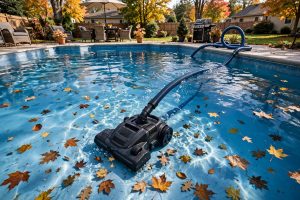
Pairing filter care with regular pool vacuum for large debris cleanups cuts the load on the filter. Less debris in the water means longer runs between cleanings.
Safety Notes Every Owner Should Know
Pool equipment runs on electricity and water pressure. Treat it with respect. Shut off the pump before opening any filter. Open the air relief valve before you restart. A filter tank under pressure can be dangerous if opened wrong. Read the manual once, fully, before the first season.
Store pool chemicals away from the filter pad. Chlorine, acid, and salt should never sit in standing water near electrical gear. Keep the equipment pad dry and clear of clutter.
Check local codes for fencing and drains. The Consumer Product Safety Commission publishes pool safety guidance that every owner should read. Salt systems do not change the drowning or entrapment risks. Covers, alarms, and fences save lives.
DE powder deserves a note. Breathe none of it. Wear a dust mask when handling it. Keep the bag sealed and dry. Dispose of used powder as your town requires.
Frequently Asked Questions
Can I use any pool filter with a saltwater system? Nearly any modern filter works with saltwater. The key is corrosion resistance. Choose fiberglass or polymer tanks with stainless or coated hardware. Older filters with plain steel parts may rust faster in salt service.
Which filter type is best for a saltwater pool? Cartridge filters are the top pick for most owners. They filter fine particles, need no backwash, and keep salt levels steady. Sand filters are a solid budget choice. DE filters give the clearest water but need the most care.
What size filter does my salt pool need? Size the filter to your pump and pool volume. The filter should handle the pump’s full flow with room to spare. For a twenty thousand gallon pool, a one hundred to one hundred fifty square foot cartridge filter is a common fit. Going one size larger is good practice.
How often should I clean a saltwater pool filter? Watch the pressure gauge, not the calendar. Clean when pressure rises eight to ten pounds over the clean reading. In heavy use that may be monthly. In light use it may be once a season. Salt pools in dusty areas need more frequent rinses.
Does salt damage pool filters? Salt itself does not wear out filter media. Sand, fabric, and DE grids are unaffected by salt at normal pool levels. The risk is to metal parts. Cheap steel clamps, bolts, and pump parts can corrode. Buy salt rated equipment and rinse metal parts with fresh water now and then.
Do I still need chlorine with a salt system? The salt system makes its own chlorine from salt. You still test and balance the water. You may still shock the pool after storms or heavy swim days. The filter does not change this. It only keeps the water clean so the chlorine can work.
A Short Final Word
The best pool filter for saltwater systems is the one that fits your pool, resists salt, and gets cleaned on time. Cartridge filters lead for most homes. Sand filters serve well on a budget. DE filters reward the careful owner with glass clear water. Size up one step, buy from a supplier with real parts support, and keep the gauge in sight. Do those things and your salt pool will stay clear with little fuss. For more pool care basics, guides at The Spruce, Swim University, and Consumer Reports pool sections are worth a read, and spa owners may also like what Hot Spring and Bullfrog Spas publish on water care.
Related guides on this site include best above ground pool for families, how to open pool for summer season, and best pool pump for inground pools.
References
Bullfrog Spas. (n.d.). Hot tubs and spas. https://www.bullfrogspas.com Consumer Reports. (n.d.). Product reviews and ratings. https://www.consumerreports.org Hot Spring Spas. (n.d.). Hot tubs and spas. https://www.hotspring.com Lesliespool. (n.d.). Home and garden information. https://www.lesliespool.com/ Lowe’s. (n.d.). Home improvement products. https://www.lowes.com Poolwarehouse. (n.d.). Home and garden information. https://www.poolwarehouse.com/ Swim University. (n.d.). Pool and hot tub care guides. https://www.swimuniversity.com Swimuniversity. (n.d.). Home and garden information. https://www.swimuniversity.com/ The Home Depot. (n.d.). Home improvement products. https://www.homedepot.com The Spruce. (n.d.). Home and garden advice. https://www.thespruce.com U.S. Consumer Product Safety Commission. (n.d.). Product safety information. https://www.cpsc.gov
Was this guide helpful?

About Michael Thompson
The My Garden US editorial team writes practical, in-depth home and garden guides for American homeowners — tested advice, no fluff.