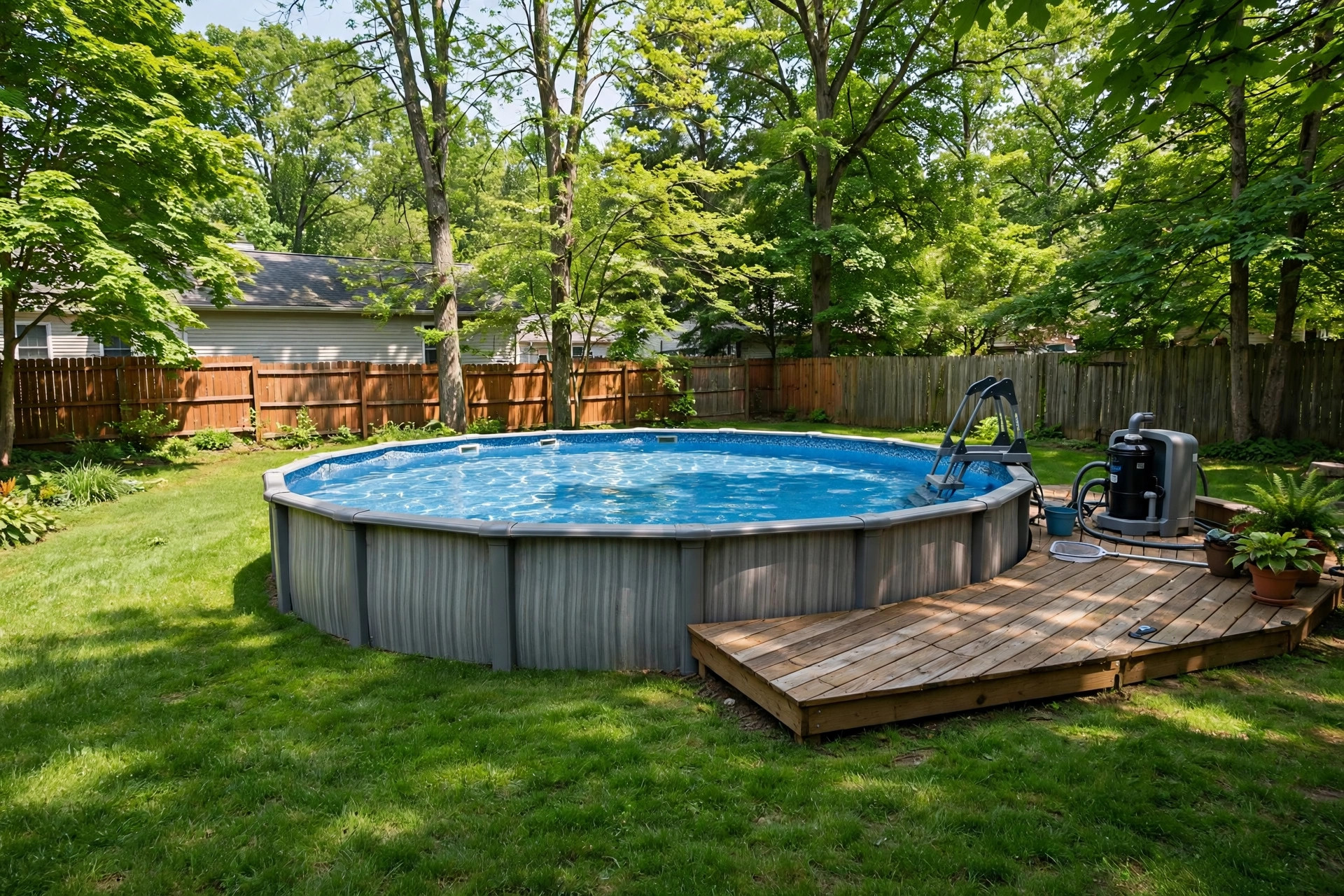

Summer brings long days and warm nights. Many families want a pool in the backyard. An in ground pool costs a great deal of money. It also takes weeks to build. That is why the best above ground pool for families is such a popular choice. It costs far less. It goes up in a weekend. It gives children a place to swim all summer. This guide explains how to pick one with care. It covers sizes, types, prices, care, and safety. Read it before you buy.
Why It Matters
A pool changes how a family spends the summer. Children play outside instead of watching screens. Parents save money on trips to the public pool. Weekends turn into small backyard parties. Grandparents visit more often. These are real gains.
But a pool is also a large purchase. The wrong size can crowd the yard. A weak frame can bend in the first storm. A poor liner can tear in one season. The best above ground pool for families is not the cheapest one on the shelf. It is the one that fits the yard, the budget, and the ages of the children. A good choice lasts for years. A poor choice costs money twice.
Think about who will swim. Toddlers need shallow water and a calm entry. Teenagers want room to play games. Adults want a place to float and rest. A family with small children has needs that differ from a family of grown swimmers. Write down your list before you shop. It will keep you from buying on impulse.
What to Look for and How to Choose: Best Above Ground Pool for Families
Start with the yard. Measure the flat area where the pool will sit. Add three extra feet on each side for the legs and for walking room. An above ground pool needs level ground. A slope of even two inches can put stress on the wall. Many buyers skip this step. They regret it later.
Next, think about size. Pools are measured by diameter for round models and by length and width for oval models. A 15-foot round pool suits a small family. An 18-foot round pool gives room for six or seven swimmers. A 24-foot round pool can hold a large party. Oval pools fit narrow yards. A 12-by-24-foot oval slides into a space where a round pool would not fit. For an above ground pool for families with kids, err on the larger side. Children grow fast. The pool should serve you for five years or more.
Depth matters too. Most above ground pools are 48 to 54 inches deep. That is four feet or four and a half feet of water. It is safe for adults to stand. It is deep enough for children to learn to swim with care. Taller pools hold more water. They also need stronger walls and more time to fill.
The wall material decides how long the pool lasts. Steel walls are strong and hold their shape. Resin walls resist rust and need less care. A mix of steel and resin gives strength where it counts and rust proof parts where water sits. Cheaper pools use thin frames with soft sides. These work for one or two summers. They rarely last longer.
The liner is the inside skin of the pool. A thick liner resists punctures from stones and toys. Look for a liner of 20 mil or more. A printed pattern on the liner makes the water look blue and clean. Overlap liners are simple to fit. Beaded liners lock into a track and give a smoother look. Either type works well when installed right.
Check what comes in the box. A full kit should hold the pool wall, the liner, a filter pump, a ladder, a skimmer, and a cover. Some cheap kits skip the skimmer or give a weak pump. A weak pump will not keep the water clean. That leads to green water in July. It is better to pay a little more for a kit with a strong sand filter pump. Buying guides from Consumer Reports can help you compare pump and filter specs before you choose.
Types and Options
Round pools are the most common choice. The round shape is strong by nature. Water pushes out evenly on all sides. Round pools need less bracing than oval pools. They also cost less per gallon of water. Round above ground pool sizes range from 12 feet to 33 feet in diameter. A family of four to six is often happy with 18 to 24 feet.
Oval pools suit long, narrow yards. They use side supports to hold the straight walls. These supports, called buttresses, take up extra space along the sides. Plan for that when you measure. Oval pools cost more than round pools of the same water volume. They give a long lane for swimming laps. Older children who like to swim back and forth enjoy the oval shape.
Soft sided pools use a metal frame and a vinyl shell. They set up in a few hours. They cost the least. They last two to four seasons with good care. Hard sided pools use steel or resin walls with a separate liner. They take a full weekend to build. They can last ten years or more. Families who want a long term pool should pick hard sided. Families who rent their home may prefer soft sided. The pool can come down when the lease ends.
There are also saltwater systems. A salt system turns mild salt into chlorine in the water. The water feels soft on the skin. Eyes sting less. The system costs more up front. Many families say the comfort is worth it. You can read water care instructions at Swim University to learn how salt systems and chlorine systems differ.
Some families add extras. A pool heater stretches the swim season by weeks in spring and fall. You can learn more in our guide on pool heater for above ground pools. A solar cover warms the water by day and cuts heat loss by night. A wider ladder makes entry safer for small children. Deck kits that wrap around one side give the pool a built in look. If your family also dreams of a spa, spa makers and hot tub brands sell models that sit beside the pool.
Cost and Price
Prices vary widely. A small soft sided kit can cost as little as 300 dollars. A mid size hard sided kit with a good pump often costs 1,500 to 3,000 dollars. A large oval pool with a salt system, heater, and deck can pass 6,000 dollars. These are kit prices only.
Add the hidden costs. Water to fill the pool may add 100 to 400 dollars to the water bill, based on size and local rates. An electrician may be needed for a safe outlet near the pool. That can cost 200 to 500 dollars. Ground work matters. Sand or a foam base under the pool costs 100 to 300 dollars. A fence is often required by local law. A simple fence around the pool area can cost 1,000 dollars or more.
Yearly running costs are modest. Chemicals for a season run 200 to 400 dollars. Electricity for the pump adds a smaller sum each month. A new liner every five to eight years costs 300 to 800 dollars. Compared with an in ground pool, which can cost 35,000 dollars or more to build, the above ground pool is a bargain.
Shop with a full budget in mind. Big box stores like The Home Depot and Lowe’s carry kits in many sizes. Pool specialists such as Leslie’s sell chemicals and parts all year. Online kit sellers like Pool Warehouse often price below stores. Compare the full kit list, not just the headline price.
Care and Upkeep
Clean water is safe water. Test the water two or three times per week. Use test strips or a liquid kit. Keep chlorine between 1 and 3 parts per million. Keep pH between 7.2 and 7.8. When levels drift, fix them the same day. Green water starts fast in hot weather. It takes days to clear.
Run the pump each day. Eight hours is a common rule for a family pool. The pump moves water through the filter. It keeps the surface clear. Skim leaves off the top each morning. Brush the walls once a week. Vacuum the floor once a week. A simple routine takes twenty minutes a day. It saves hours of repair work later.
The liner needs care too. Keep the water level right. Low water lets the liner shrink and pull. Sharp toys can poke holes. Trim toenails before swimming is an old pool owner joke with truth in it. Check for small leaks each spring. A patch kit fixes most holes in minutes.
Winter matters in cold states. Drain the pool below the skimmer. Add winter chemicals. Cover the pool tight. A good winter cover keeps out leaves and light. In spring, you will want how to open your pool for the summer season so the first swim comes fast. Detailed seasonal checklists appear in pool care guides at The Spruce.
Safety
Safety is the most serious part of pool ownership. Drowning is fast and silent. It can happen in minutes. Every family pool needs layers of safety. No single step is enough.
Fencing comes first. Most towns require a fence at least four feet high around the pool. The gate should close and latch by itself. Remove the ladder when the pool is not in use. A sturdy ladder with a lock stops small children from climbing in alone.
Rules come next. No one swims alone. Children under five stay within arm’s reach of an adult. No running on wet grass near the pool. No diving in an above ground pool. The water is too shallow. Post the rules where all can see them.
Learn CPR. Every adult in the house should know it. Keep a phone by the pool for emergency calls. Keep rescue gear close: a long pole and a life ring. Alarms that sound when the water moves add one more layer. The Consumer Product Safety Commission publishes free pool safety checklists for families.
Teach children to swim. Lessons do not make a child drown proof. They do build skill and respect for water. Start lessons as young as age one, based on your doctor’s advice. Even strong swimmers need watching. Most pool accidents happen when adults look away for a short time.
FAQ
How long does an above ground pool last? A soft sided pool lasts two to four years. A hard sided steel or resin pool lasts eight to fifteen years with good care. The liner may need replacement once in that time. Winter covers and proper chemical balance extend the life.
How much yard space do I need? Measure the pool, then add three feet on each side for the frame and walking room. An 18-foot round pool needs a flat area about 24 feet across. Level the ground before you build. A flat base protects the wall and the liner.
Can I install it myself? Most soft sided pools are a one day job for two adults. Hard sided pools take a full weekend and at least three helpers. The wall is heavy and hard to hold alone. If the ground is not level, hire help for the base work. A level base is the hardest part.
Is a saltwater system better for children? Many parents prefer it. Salt systems keep chlorine low and steady. The water feels soft. Eyes and skin get less irritation. The system costs more at the start. It needs its own care routine. Both systems are safe when kept in balance.
Do I need a permit? Many towns require a permit for pools over a set size. They also require fences and alarms. Rules vary by town. Call your local building office before you buy. A fine costs more than a permit.
How do I keep the water from turning green? Test and balance chemicals twice a week. Run the pump daily. Skim and brush often. Green water means algae. It grows when chlorine drops too low. Shock the pool, run the filter for a full day, and vacuum. Then keep up the routine.
A Short Final Word
The best above ground pool for families is the one that fits your yard, your budget, and your children. Measure first. Pick a strong wall and a thick liner. Buy a kit with a real filter pump. Plan for the fence and the water bill. Set safety rules on day one and keep them every day. Do these things and your pool will give back far more than it costs: cool water, loud laughter, and summers your children will remember for years.
References
Bullfrog Spas. (n.d.). Hot tubs and spas. https://www.bullfrogspas.com Consumer Reports. (n.d.). Product reviews and ratings. https://www.consumerreports.org Hot Spring Spas. (n.d.). Hot tubs and spas. https://www.hotspring.com Leslie’s Pool Supplies. (n.d.). Pool supplies and equipment. https://www.lesliespool.com Lowe’s. (n.d.). Home improvement products. https://www.lowes.com Pool Warehouse. (n.d.). Pool equipment and supplies. https://www.poolwarehouse.com Swim University. (n.d.). Pool and hot tub care guides. https://www.swimuniversity.com The Home Depot. (n.d.). Home improvement products. https://www.homedepot.com The Spruce. (n.d.). Home and garden advice. https://www.thespruce.com U.S. Consumer Product Safety Commission. (n.d.). Product safety information. https://www.cpsc.gov
Was this guide helpful?

About David Wilson
The My Garden US editorial team writes practical, in-depth home and garden guides for American homeowners — tested advice, no fluff.
You May Also Like
Best Pool Vacuum Head for Vinyl: A Complete Buyer’s Guide
January 8, 2026 0 views
Best Hot Tub Insulation for Winter: A Complete Guide
January 18, 2026 0 views
Inground Pool Resurfacing Cost Texas: What Homeowners Should Know
April 9, 2026 0 views