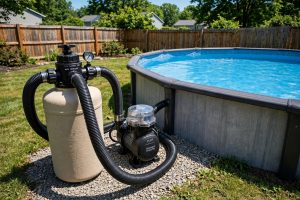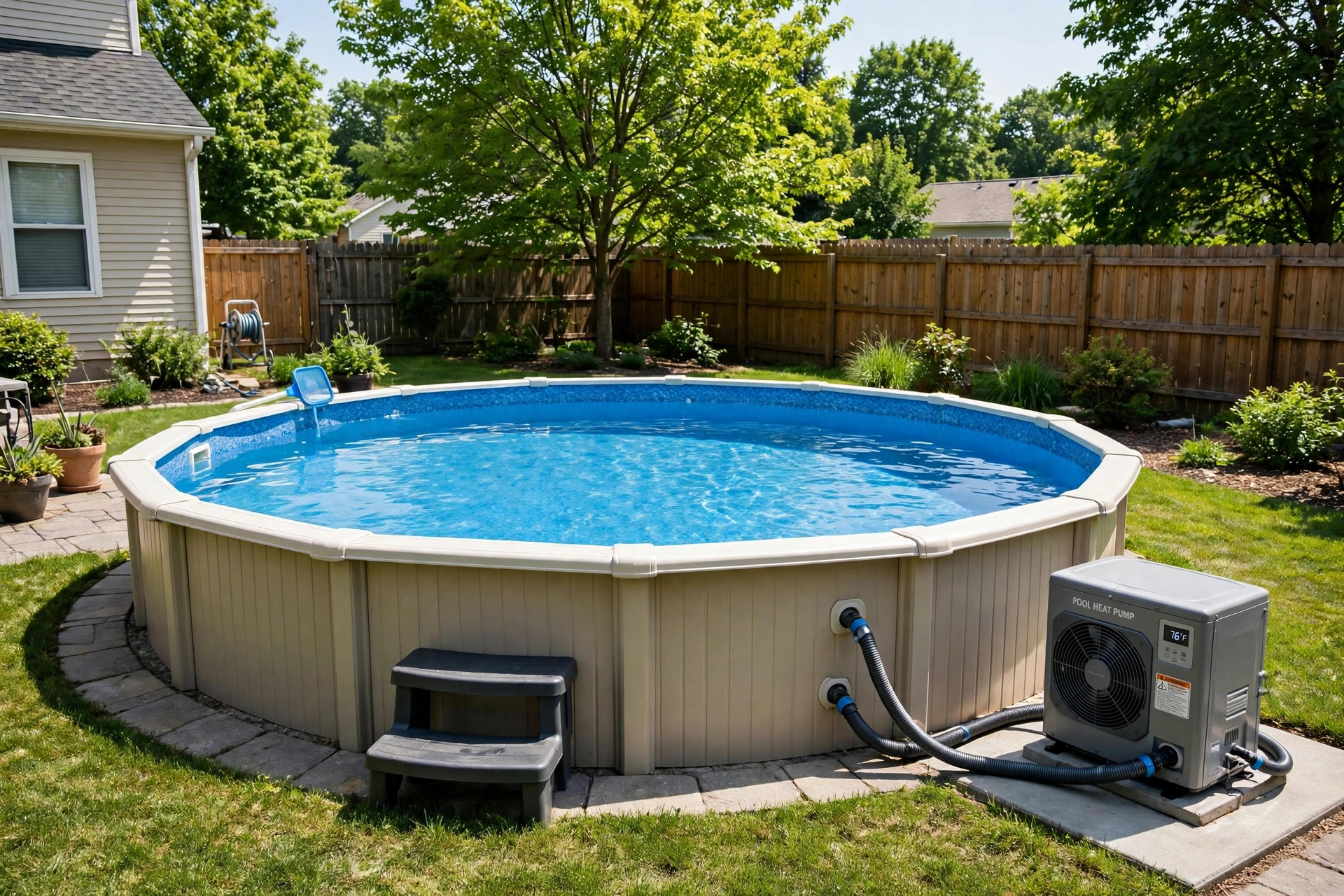

A pool heater for above ground pools can turn a short summer pool into a long one. Many families buy an above ground pool and then find that the water stays cold until late June. Nights cool the water fast because the pool walls stand out in the air. A good heater changes that. It warms the water in the spring, keeps it pleasant in the fall, and lets you swim on cool evenings. This guide walks through the main choices in plain words. It covers the types of heaters, how to pick the right size, what they cost to run, and how to use one safely.
Why a Heater Matters for an Above Ground Pool
Above ground pools lose heat fast. The walls of the pool are thin, and air moves around them on all sides. An inground pool has earth around it that holds warmth. An above ground pool does not have that help. On a cool spring night, the water can drop five to ten degrees in hours. Without a heater, the swim season in many states lasts only ten to twelve weeks.
A pool heater for above ground pools solves this problem. With steady heat, the same pool can serve from April to October in many parts of the country. That is a big gain for the money a family spends on the pool. If you are still picking a pool, read our guide to the best above ground pool for families before you shop. A heater works best when the pool itself is the right size and shape for your yard.
Heated water also makes the pool safer for young children and older adults. Cold water can cause cramps and short breath in small swimmers. Warm water lets people stay in longer and move with ease. Comfort is not the only point. Longer use means the pool earns its keep.
What to Look for When You Choose a Heater: Pool Heater for Above Ground Pools
The first thing to check is the size of your pool. You need to know how many gallons of water it holds. The pool manual states this number, or you can find it on the maker’s site. A round pool 24 feet across and 52 inches deep holds about 14,800 gallons. Heaters are rated by BTU. That is a British thermal unit, a measure of heat output. As a rule of thumb, you need about one BTU per hour per gallon to raise the water one degree in about an hour. A 14,800-gallon pool wants a heater in the 100,000 to 150,000 BTU range for steady work.
The second point is power. Most home heaters run on natural gas, propane, or electric power. Electric heat pump heaters are the common choice for above ground pools. They pull heat from the air and pass it to the water. They cost less to run than plain electric coil heaters. Gas heaters heat water fast and work well in cold weather, but they need a gas line. Solar covers and solar mats are a third option, though they warm water slowly.
Third, check the fittings. Above ground pools use smaller pipes than inground pools. Most heaters for above ground pools take 1.25-inch or 1.5-inch hose fittings. Make sure the heater you buy matches the size of your pump and filter lines. A heater that needs hard pipe work may cost more to install than the heater itself.
Fourth, look at the weather rating. A heat pump works best when the air is 50 degrees or warmer. In cold spring weather, it runs longer and uses more power. Gas heaters do not care about air temperature in the same way. If you live in the north and want to swim in April, gas or a large heat pump may serve you better.
Helpful Features Worth Paying For
A digital thermostat is worth the cost. It lets you set the water temperature and hold it there. Older dial models drift and waste power. A heater with a built-in timer lets you warm the pool before you swim and rest it at night. Look for a unit with a stainless steel or titanium heat exchanger. These parts resist pool chemicals and last longer than plain copper.
Safety parts matter too. A pressure switch shuts the heater off when the pump stops. A high-limit switch stops it if the water gets too hot. Both are standard on good units. If a unit lacks them, do not buy it.
Types of Heaters for Above Ground Pools
Electric Heat Pump Heaters
Heat pumps are the most popular choice. They do not make heat. They move heat from the air into the water, much like an air conditioner in reverse. This makes them cheap to run. A typical heat pump costs three to five times less to run than a plain electric heater for the same job. They work best in warm, humid air. Most models need air of at least 45 to 50 degrees to run well. They are quiet and simple to wire. Most need a 220-volt line from the house panel.
Gas Heaters
Gas heaters burn natural gas or propane. They heat water fast. A gas unit can raise pool water ten degrees in a few hours. They work in any weather, even on cold days. The catch is cost. Gas costs more per swim hour than a heat pump, and you need a gas line run to the pool. That work needs a licensed gas fitter. Gas heaters suit families who swim on short notice or live where spring stays cold.
Solar Heating Mats
Solar mats are black rubber panels that sit near the pool. Pool water runs through them and picks up sun heat. They are cheap to buy and cost nothing to run. The catch is speed. They warm water slowly and only on sunny days. A set of mats can add five to ten degrees on a bright day. Many owners use them with a solar cover to hold heat at night.
Solar Covers
A solar cover is a thick plastic sheet that floats on the water. It is not a heater by itself. It cuts heat loss at night and on windy days. Paired with any heater, it can cut heating cost by half or more. A cover is the cheapest way to warm a pool and the best friend of every heater.
Cost and Price: Buying and Running
A pool heater for above ground pools costs between 200 and 2,500 dollars to buy. Small electric models start near 200 dollars. Mid-range heat pumps run 800 to 1,500 dollars. Large gas units cost 1,500 to 2,500 dollars. Solar mats run 100 to 300 dollars per set. A good solar cover costs 50 to 120 dollars.
Running cost is the part most buyers miss. A heat pump on a 15,000-gallon pool costs about 50 to 150 dollars a month in power, based on local rates and how warm you keep the water. A gas heater can cost 200 to 400 dollars a month if used daily. A solar cover cuts these numbers by holding heat overnight. Keep the water at 80 degrees, not 85, and the bill drops fast.
Install cost also counts. A heat pump needs a 220-volt line, which may cost 300 to 600 dollars if the panel is far from the pool. Gas lines cost more. Some owners place the heater on a level pad of patio blocks to keep it dry and steady. For full setup costs, see our above ground pool installation cost guide. It breaks down every part of the job.
Care and Upkeep
Heaters need little care, but they need some. Keep the area around the heater clear of leaves and grass. A heat pump needs open air flow. Do not box it in. Check the water chemistry each week. Bad chemistry can eat the inside of the heater. Keep the pH between 7.2 and 7.8 and the chlorine in the normal range. A test kit tells you where you stand.
Clean the filter on time. A dirty filter slows water flow, and slow flow can make the heater overheat. Watch the pressure gauge on the filter. When it climbs 8 to 10 pounds over the clean reading, backwash or rinse it. In the fall, drain the heater before the first freeze. Water left inside can crack the pipes in winter. Cover the unit with a breathable cover if your winters are harsh.
Once a year, look over the wires and gas lines for wear. If you smell gas, turn the unit off and call your gas company. Do not try to fix a gas line yourself.
Safety Around the Heater
Electricity and water need care. All wiring for the pool area must pass through a ground fault breaker. This is a safety switch that cuts power if current leaks. A licensed electrician should wire the heater. Never run the heater with a damaged cord. Keep the heater clear of the pool ladder and steps so no one trips on it. Our review of the best pool ladder for above ground shows models with wide steps that sit well clear of heater lines.
Teach children that the heater is not a toy. The outside can get hot on gas models. Do not let kids sit on it or play near the exhaust vent. Follow the guidance from the Consumer Product Safety Commission on pool safety, which covers alarms, fences, and safe swim habits.
When using a gas heater, keep the area vented. Never run it inside a closed shed. Carbon monoxide from gas heat can harm people fast. Place the unit where wind moves air freely around it.
Frequently Asked Questions
How long does a pool heater take to warm an above ground pool?
It depends on size and type. A heat pump adds one to three degrees per hour to a 15,000-gallon pool. A gas heater adds five to ten degrees per hour. A solar cover with no heater adds a few degrees per sunny day. Give the heater a full day to bring cold spring water up to swim level.
What size heater do I need for a 15-foot round pool?
A 15-foot round pool holds about 5,300 gallons. A 50,000 to 80,000 BTU heat pump or a small gas unit will serve it well. Check the pool maker’s guide for the exact gallon count before you shop.
Can I install the heater myself?
Electric heat pump models are often sold as do-it-yourself kits. You can set the pad, connect the hoses, and plug in the unit. But the 220-volt line needs a licensed electrician in most areas. Gas models need a gas fitter. When in doubt, hire a pro.
Will a heater work with a saltwater pool?
Yes. Most modern heaters use titanium or cupronickel heat exchangers that resist salt. Check the model specs to be sure. Salt systems can be harder on cheap copper parts, so buy a heater rated for salt water. For more on pool systems, the team at Leslie’s Pool Supplies keeps clear guides on salt and chlorine setups.
How do I keep heating bills low?
Three steps cut cost fast. First, run a solar cover whenever the pool is not in use. Second, set the water to 80 degrees, not higher. Third, heat the pool only on swim days with a timer. Many owners learn their best schedule by trial in the first month.
Where can I buy a heater and parts?
Big home stores carry pool heaters in the spring season. The Home Depot and Lowe’s both stock heat pumps and gas models, plus hoses and fittings. Pool shops like Pool Warehouse sell heaters year-round and ship direct. For energy facts on heat pumps, the U.S. Department of Energy has plain guides on how they work.
Final Word
A pool heater for above ground pools is one of the best buys a pool owner can make. It can add two months to the swim season for less than the cost of a family vacation. Pick the right size, keep the water chemistry right, and use a solar cover at night. Read pool guides on The Spruce and This Old House for upkeep tips through the year. For hands-on repair help, Family Handyman and Bob Vila both carry clear how-to pieces. Spa owners can compare heating notes with the team at Bullfrog Spas. With steady care, your heater will serve you for many warm seasons.
References
Bob Vila. (n.d.). Home improvement advice. https://www.bobvila.com Bullfrog Spas. (n.d.). Hot tubs and spas. https://www.bullfrogspas.com Family Handyman. (n.d.). DIY home repair and maintenance. https://www.familyhandyman.com Leslie’s Pool Supplies. (n.d.). Pool supplies and equipment. https://www.lesliespool.com Lowe’s. (n.d.). Home improvement products. https://www.lowes.com Pool Warehouse. (n.d.). Pool equipment and supplies. https://www.poolwarehouse.com The Home Depot. (n.d.). Home improvement products. https://www.homedepot.com The Spruce. (n.d.). Home and garden advice. https://www.thespruce.com This Old House. (n.d.). Home renovation guidance. https://www.thisoldhouse.com U.S. Consumer Product Safety Commission. (n.d.). Product safety information. https://www.cpsc.gov U.S. Department of Energy. (n.d.). Energy efficiency and renewable energy. https://www.energy.gov
Was this guide helpful?

About Lisa Anderson
The My Garden US editorial team writes practical, in-depth home and garden guides for American homeowners — tested advice, no fluff.
You May Also Like
How to Lower Pool pH Levels Safely
February 5, 2026 0 views
How to Install Inground Pool Lights: A Complete Step-by-Step Guide
April 26, 2026 0 views
Pool Plaster vs Pebble Finish Comparison: A Plain Guide for Pool Owners
February 17, 2026 0 views