
Introduction
This above ground pool installation cost guide gives a clear picture of what a pool project costs from start to finish. An above ground pool is one of the most affordable ways for a family to enjoy cool water at home in summer. It costs far less than an in-ground pool, and it can be put up in a few days instead of weeks. Even so, the total price often surprises new buyers. The pool kit is only part of the cost. Site work, electrical work, water, and yearly care all add to the bill. This guide walks through each cost step by step. It covers pool prices, ground work, labor, permits, and running costs. By the end, you will know how to plan a budget that has no hidden shocks.
Why an Above Ground Pool Still Makes Sense: Above Ground Pool Installation Cost Guide
A home pool changes how a family spends summer. Children play outside for hours. Adults find a cool place to rest after work. Friends and neighbors gather for cookouts and swim parties. An above ground pool gives these joys at a fraction of the price of an in-ground pool. It also gives freedom. The pool can be taken down and moved if the family moves to a new home. It can be removed if the yard must be used for another purpose. In-ground pools are fixed in place and cost tens of thousands of dollars. An above ground pool is a simpler choice, and it still lasts many years with good care.
Price is the main reason most buyers choose this path. A full above ground pool project, with the pool kit, ground work, and labor, often costs between 2,000 and 8,000 dollars. A small steel-wall pool at the low end can be set up by the family for less. A large resin pool with a deck and a heater at the high end can cost more. Either way, the sum stays well below the 30,000 to 70,000 dollars that an in-ground pool can demand. Guides from home improvement experts at The Spruce note that above ground pools are among the best value projects for families who want water fun without debt.
What to Look for When You Buy a Pool
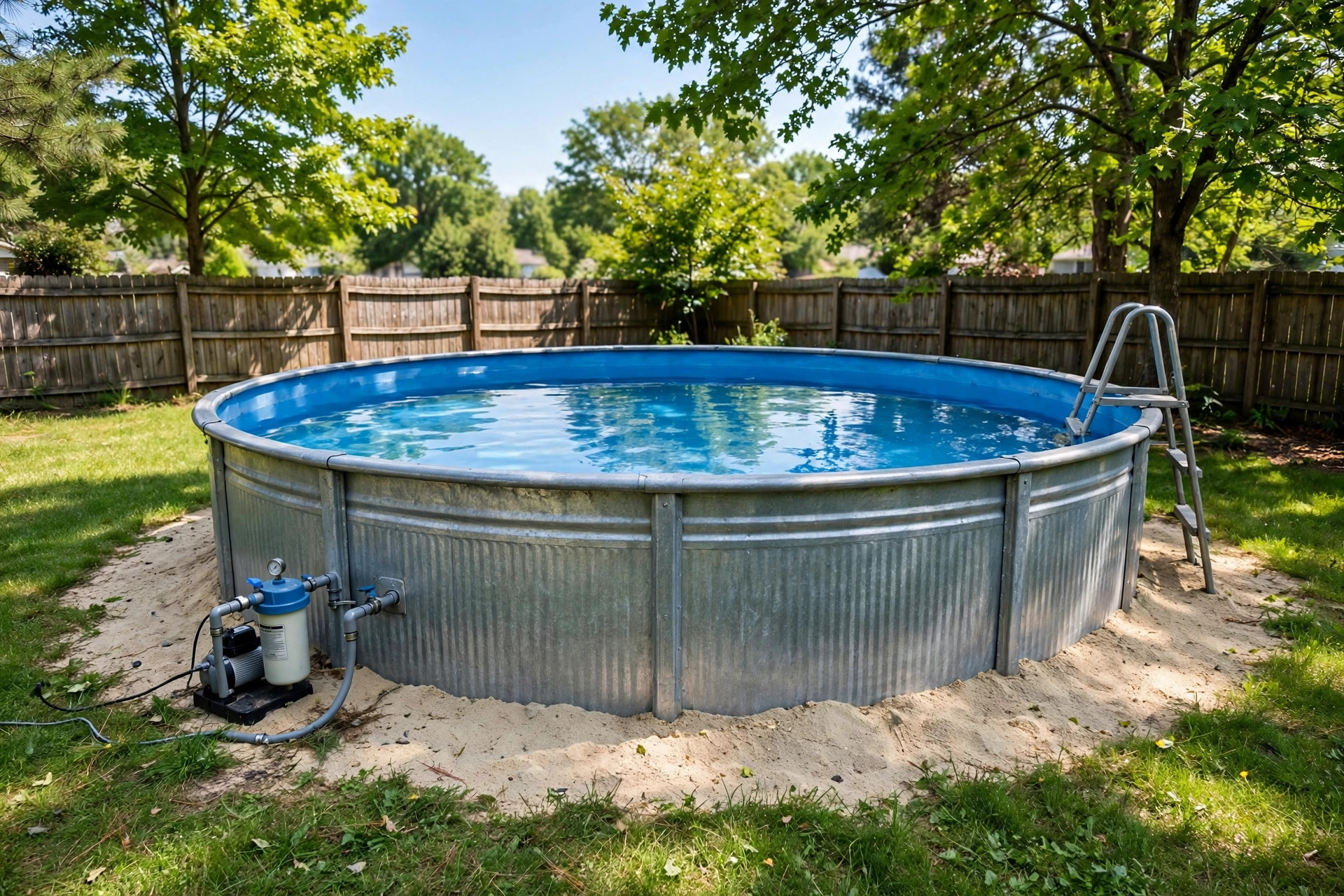
The pool kit itself is the first cost to plan. Above ground pools come in three main wall types. Steel-wall pools are the most common and the least costly. They are strong and hold up well for 10 to 15 years. Resin pools cost more but resist rust and sun damage better. Many owners in warm states prefer them because metal parts can corrode in hot, humid air. Hybrid pools use a mix of steel and resin and sit in the middle on price. Size also drives price. A 12-foot round pool for small yards may cost only a few hundred dollars. A 24-foot or 30-foot round pool, or a large oval pool, can cost 1,500 to 3,500 dollars for the kit alone.
Depth is another choice. Most above ground pools are 48 or 52 inches deep. The 52-inch wall costs a little more and holds more water, but it suits adults better. Liners deserve attention too. The liner is the plastic sheet that holds the water inside the walls. A good liner lasts 5 to 10 years. Some kits come with a thin single-layer liner, while better kits offer a thicker gauge liner. Ask what gauge the liner is before you buy. A thicker liner costs more now but saves a replacement job later. Retailers such as Pool Warehouse and Leslie’s Pool Supplies list many kit sizes and types, so you can compare prices side by side before you decide.
How the Pool Gets Installed
Installation is the part of the project where costs vary the most. Some families install the pool themselves. A small round pool can go up in a weekend with two or three helpers. The kit includes the walls, liner, pump, and filter, along with a booklet of steps. Do-it-yourself installation costs nothing in labor, but it takes time and care. The ground must be level. A pool that sits even one inch off level can bow at the wall and stress the liner. Many do-it-yourself owners still pay for one or two steps, such as bringing in sand or renting a level.
Professional installation costs between 1,000 and 3,000 dollars in most areas. The crew brings skill and tools. They level the ground, lay sand or a foam base, set the walls, fit the liner with care, and connect the pump and filter. A pro job often comes with a work guarantee, which gives peace of mind. Labor costs run higher in cities and in areas with short summer seasons, where installers book up fast. Get two or three quotes before you pick a crew. Ask what the quote covers: ground leveling, sand, haul-away of extra soil, and start-up of the filter should all be listed.
Site Work and Ground Preparation
The ground under the pool must be flat, firm, and free of sharp stones. This is true for every above ground pool. If your yard already has a flat grassy spot, site work may cost only 200 to 400 dollars for a load of sand and a day of labor. If the yard slopes, the crew must cut into the hill or build up the low side. A retaining edge of blocks or timber may be needed to hold the fill in place. Sloped-yard work can add 500 to 2,000 dollars to the project.
Sand is the most common base. A two-inch bed of clean mason sand gives the liner a soft, smooth floor. Foam base pads are another option. They cost a bit more but protect the liner from small stones and roots. Some owners add a layer of crushed stone under the sand for drainage in wet yards. Tree roots must be cleared, and stumps should be ground down well below the surface. Never place a pool over a buried stump. It will rot and leave a soft spot under the liner. If you plan to fill the pool with a garden hose, check your water rates too. A large pool holds 10,000 to 20,000 gallons, and in some towns the water bill alone can reach 100 to 300 dollars.
Electrical Work and Permits
A pool pump needs power, and safe wiring is not a place to cut costs. Most above ground pools run on a standard outlet, but the outlet must be a ground-fault type and set back a safe distance from the water. An electrician can run a proper line for 300 to 800 dollars, depending on how far the pool sits from the house. Some towns also ask for a timer on the pump. A licensed electrician knows the local code and keeps the job safe.
Permits are another cost that new buyers miss. Many towns and counties ask for a building permit before a pool goes up. A permit often costs 50 to 200 dollars. Some areas also require a fence or a locking ladder around an above ground pool, which adds cost but keeps children safe. Check with your town office before you buy. A quick phone call can save a fine and a forced move of the pool later. Safety rules from the U.S. Consumer Product Safety Commission give clear guidance on barriers and alarms for home pools, and local offices often follow these standards.
Extras That Add to the Bill
Once the pool stands, most families want a few extras. A ladder or entry step is often sold apart from the kit and costs 100 to 400 dollars. A locking ladder is best for homes with small children. A solar cover costs 50 to 150 dollars and keeps the water warm. This is a simple form of how to heat a pool without a heater, which can cut energy bills all summer. A pool heater itself costs 1,000 to 3,000 dollars installed, plus gas or power to run it.
A deck around the pool is the biggest extra. A simple wood deck platform can cost 2,000 to 6,000 dollars. A full wrap-around deck can cost far more. Decks are not required, but they make the pool feel like part of the home and give a safe place to enter. Landscaping around the pool adds beauty and can help with drainage. Keep plants a few feet from the wall so roots do not reach the liner. Big-box stores like The Home Depot carry ladders, covers, heaters, and deck kits, which lets you price extras in one trip.
Yearly Care and Upkeep Costs
A pool keeps costing money after the first summer. Plan for 500 to 1,200 dollars a year in upkeep. Chemicals are the biggest yearly cost. Chlorine, pH balancers, and shock treatments can run 300 to 600 dollars a season. A salt system costs more up front but can lower chemical costs later. If you choose salt, learn the salt cell replacement cost for pools so the long-term math is clear. Test kits and strips add a small yearly cost, but they are worth it. Balanced water protects the liner and the pump.
Power for the pump and filter adds to the electric bill. A single-speed pump can cost 30 to 80 dollars a month to run in summer. A two-speed or variable-speed pump costs more to buy but uses far less power. Filter parts wear out too. Sand in a sand filter should be changed every 3 to 5 years. Winter covers and closing chemicals add 100 to 200 dollars each fall in cold states. Plain step-by-step care guides at Swim University help new owners learn each of these tasks.
Watch the water flow as well. A pump that strains or a filter gauge that reads low can point to a clog or a leak. Learning how to fix low pool water flow early can save a burned-out pump, which is one of the priciest single repairs a pool owner faces.
Keeping the Pool Safe
Safety has a cost, but it is the most important money a pool owner spends. A fence with a self-closing gate is the best guard against a child slipping into the water alone. Even for above ground pools, many towns require a barrier once the water is more than a few feet deep. A locking ladder that folds up and locks keeps small children from climbing in. Door alarms on house doors that open toward the pool add another layer of care for 30 to 80 dollars each.
Teach every swimmer the basic rules. No diving in an above ground pool, since the water is too shallow. No swimming alone. Keep the area around the pool free of toys that might tempt a small child to climb up. Store chemicals in a locked box, high and dry, away from children and pets. Never mix chemicals, and add them to water, never water to them. These simple habits cost nothing and save lives. The U.S. Consumer Product Safety Commission reports that most child drownings in home pools happen in a few short minutes when no adult is watching, so an adult should always be on watch when the pool is in use.
How to Keep the Total Price Down
Smart shopping can cut hundreds of dollars from the project. Buy the pool kit in the off season, in fall or winter, when stores clear stock. Prices often drop 20 to 30 percent. Compare the full kit price, not just the pool. One store may sell the pool cheap but charge more for the pump, ladder, and liner. Ask for a written list of what the kit holds. Buying guides at Consumer Reports can help you weigh size, type, and price before you buy.
Do the simple labor yourself. Clear the site, haul away grass, and spread the sand on your own if you are able. Hire pros only for the skilled parts, such as wall setting and liner fitting. Finally, pick a size that fits your real use. A mid-size pool gives the same fun with lower bills every year.
Frequently Asked Questions
How much does it cost to install an above ground pool in total?
Most families spend between 2,000 and 8,000 dollars all in. This covers the pool kit, ground work, labor, electrical work, and water. Small do-it-yourself pools can cost under 2,000 dollars. Large pools with decks and heaters can pass 10,000 dollars.
Is professional installation worth the money?
For most buyers, yes. A pro crew levels the ground right, fits the liner smooth, and hooks up the filter with care. The cost of 1,000 to 3,000 dollars buys skill and often a work guarantee. A poor do-it-yourself job can cost more to fix than the pro job would have cost.
Do I need a permit for an above ground pool?
In many towns, yes. Rules differ by town and county, so call your local building office before you buy. Permits often cost 50 to 200 dollars. Some areas also require a fence, a locking ladder, or an alarm.
How long does an above ground pool last?
The walls last 10 to 20 years with good care. Steel walls last about 10 to 15 years. Resin walls can last 15 to 20 years or more. Liners last 5 to 10 years and can be replaced without buying a new pool.
What is the cheapest way to heat an above ground pool?
A solar cover is the cheapest first step at 50 to 150 dollars. It holds in the heat the sun gives for free. Solar heater panels cost more but also run on sunlight. Gas and electric heaters warm the water fast but add monthly fuel costs.
Can I put an above ground pool on a slope?
Yes, but the site must be made level first. The high side is cut down and the low side is built up, often with a small retaining edge. This site work can add 500 to 2,000 dollars, so a flat spot in the yard saves real money.
A Final Word
An above ground pool is one of the best values in home fun. The pool kit is only the start of the cost, but none of the other costs are hard to plan once you know them. Price the kit, the ground work, the labor, the electrical run, and the permit. Then plan for yearly care. Shop in the off season, do the simple work yourself, and pick the right size for your family. With a clear budget and steady care, the pool will give ten or more summers of cool water and good times. More buying and care advice for pools and spas can be found at HotSpring Spas and Bullfrog Spas, which both publish plain owner guides for backyard water projects.
References
Bullfrog Spas. (n.d.). Hot tubs and spas. https://www.bullfrogspas.com Consumer Reports. (n.d.). Product reviews and ratings. https://www.consumerreports.org Hot Spring Spas. (n.d.). Hot tubs and spas. https://www.hotspring.com Leslie’s Pool Supplies. (n.d.). Pool supplies and equipment. https://www.lesliespool.com Pool Warehouse. (n.d.). Pool equipment and supplies. https://www.poolwarehouse.com Swim University. (n.d.). Pool and hot tub care guides. https://www.swimuniversity.com The Home Depot. (n.d.). Home improvement products. https://www.homedepot.com The Spruce. (n.d.). Home and garden advice. https://www.thespruce.com U.S. Consumer Product Safety Commission. (n.d.). Product safety information. https://www.cpsc.gov
Was this guide helpful?

About Lisa Anderson
The My Garden US editorial team writes practical, in-depth home and garden guides for American homeowners — tested advice, no fluff.
You May Also Like
The Best Hot Tub Chemicals Starter Kit: What to Buy and Why
May 16, 2026 0 views
How to Winterize Above Ground Pool: A Simple Step-by-Step Guide
February 18, 2026 0 views
The Best Pool Deck Paint for Concrete: A Homeowner’s Guide
March 8, 2026 0 views