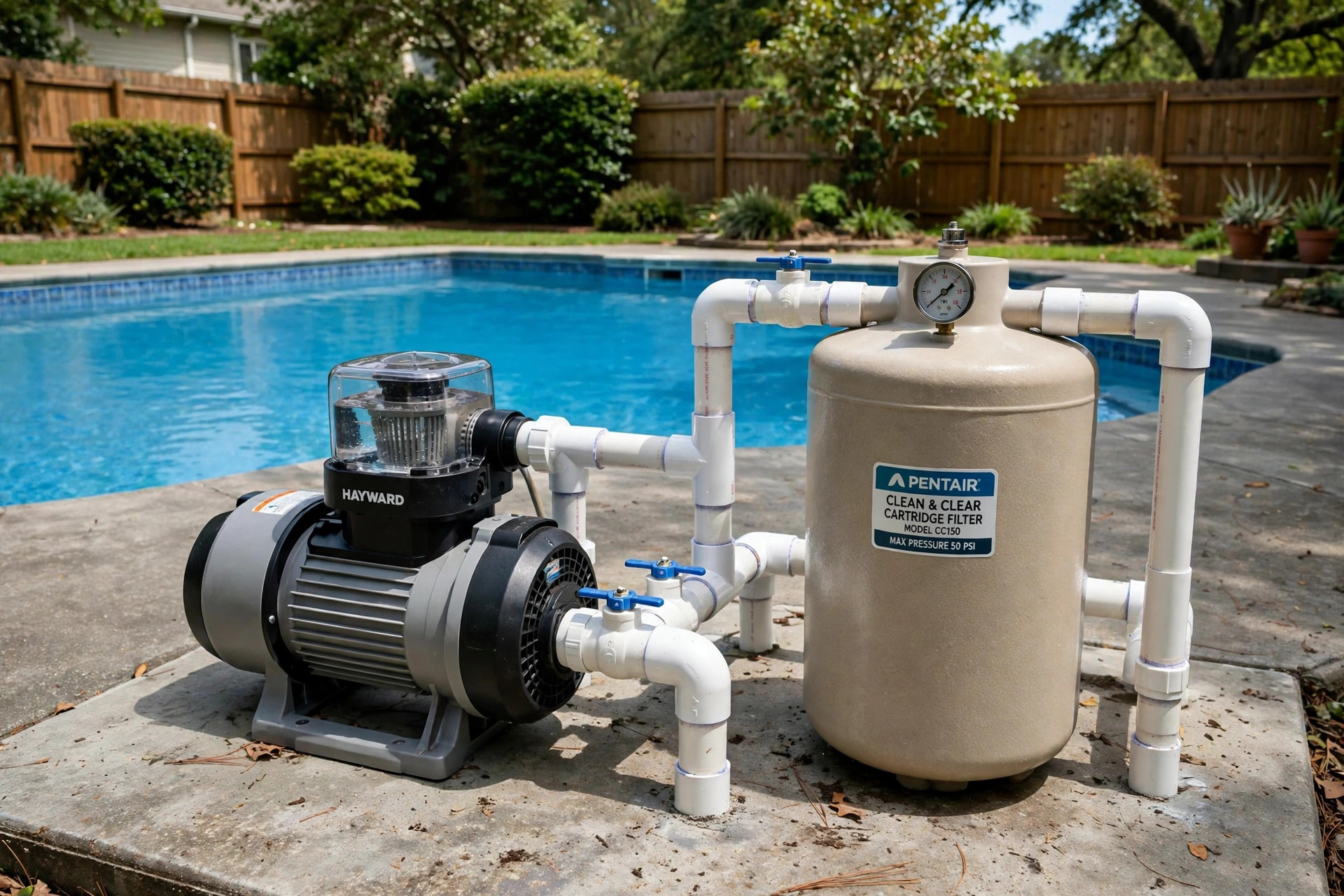
A quiet pool pump is a healthy pool pump. If you want to know how to fix pool pump making noise, you are in the right place. A loud pump is more than an annoyance. It is often a warning sign. The noise tells you that something inside the system is wrong. This guide will walk you through each step. You will learn how to find the cause of the noise and how to fix it. Most repairs are simple.
Why It Matters
The pool pump is the heart of your pool. It moves water through the filter. It keeps chemicals mixed. It keeps the water clean and safe. When the pump works well, you barely notice it. When it starts to make noise, something has changed. That change can mean low water flow. It can mean parts are wearing out. It can mean air is getting into the lines.
A noisy pump can also waste electricity. A pump that strains to pull water may run longer to do the same job. That raises your power bill. It can also shorten the life of the motor. A new pump costs several hundred dollars. Small repairs now can save you from that cost later.
There is also a comfort reason. Pools are meant for rest and play. A pump that screams or rattles can ruin a quiet evening by the water. Your neighbors may hear it too.
Common Causes of Pool Pump Noise: How to Fix Pool Pump Making Noise
Before you fix anything, you must know what kind of noise you hear. Different sounds point to different problems. Stand near the pump while it runs. Listen for a few minutes. Try to name the sound. Here are the most common causes.
Air in the System
Air in the pump is one of the most common causes of noise. The pump is built to move water, not air. When air gets in, the pump makes a gurgling or sputtering sound. It may also lose prime, which means water stops flowing through it. Air can enter through a loose pump lid, a cracked O-ring, or a low water level in the pool.
Cavitation
Cavitation happens when the pump cannot get enough water. It pulls hard on the water that is there. Small bubbles form inside the pump. When these bubbles break, they make a loud rattling or grinding sound. Many people say it sounds like the pump is full of rocks. Cavitation often comes from a clogged skimmer basket, a dirty filter, or a blocked suction line.
Worn Bearings
The motor has small bearings that let the shaft spin smoothly. Over time, these bearings wear out. Water can get into them. Heat can break down the grease inside them. When bearings fail, the pump makes a loud screeching or squealing sound. This noise often gets worse over time. Worn bearings are a common reason for pool pump noise troubleshooting calls.
Loose Parts and Vibration
A pump vibrates when it runs. That is normal. But if bolts are loose, the pump can shake against its base. The lid can rattle. Pipes can knock against the housing. A loose pump on a cracked pad can make a deep humming or banging sound. This kind of noise is often easy to fix.
A Clogged Strainer Basket or Filter
When the strainer basket is full of leaves, the pump must work harder. The same is true for a dirty filter. The strainer causes a whining or high-pitched sound. The pump may also run hot. This is one of the simplest problems to solve.
How to Diagnose the Noise
You do not need special tools to diagnose most pump noise. Follow these steps in order.
1. Turn off the pump at the breaker. Wait for it to stop fully. 2. Look at the water level. It should sit at the middle of the skimmer opening. If it is low, add water. 3. Open the pump strainer basket. Pull out leaves and debris. 4. Check the pump lid O-ring. It should be soft and smooth. If it is flat or cracked, replace it. 5. Check the filter pressure gauge. A very high reading points to a dirty filter. 6. Make sure the pump sits flat on its pad. Push it gently. It should not rock. 7. Turn the pump back on and listen again.
Write down what you hear and where it seems to come from.
How to Fix Each Problem
Once you know the cause, the repair is often simple. Here is how to fix pool pump making noise for each common cause.
Fixing Air Leaks
Start with the pump lid. Turn off the pump. Take off the lid. Pull out the O-ring. Clean it with a rag. Put a thin coat of pool-safe O-ring lubricant on it. Do not use petroleum jelly, which can damage rubber. Put the O-ring back in place and close the lid tight. Hand-tight is enough. Do not over-tighten.
Check the drain plugs on the front of the pump. Tighten them gently. Look at the union fittings on the pipes. They should be snug. If the pump still loses prime, look for a crack in the lid or a worn O-ring. Replace the part if you see damage. Parts for most pumps are sold by retailers such as Leslie’s and Pool Warehouse.
Clearing Blockages
Empty the skimmer baskets in the pool wall. Then empty the pump strainer basket again. Clean or backwash the filter. After cleaning, the pressure gauge should drop to its normal range. A clean filter can make a noisy pump quiet again in minutes. For step-by-step filter cleaning guides, see Swim University. For help choosing the right filter care routine, see our guide to the best pool filter for saltwater systems.
Replacing Worn Bearings or the Motor
If the noise is a loud screech from the motor, the bearings are likely worn. Replacing bearings takes some skill. You must take the motor apart. Some homeowners do it themselves with a bearing puller. Others hire a pool repair service. A shop can replace bearings for much less than the cost of a new motor.
In some cases, the whole motor must be replaced. If the motor is old and rusty, a new motor may be the better choice. If the pump is more than eight to ten years old, you may want to replace the full pump. A new pump comes with a warranty and often uses less power. When you shop, read our guide to the best pool pump for inground pools for help comparing models. Consumer Reports also tests pool equipment and rates models for noise and value.
Stopping Vibration
Tighten all mounting bolts. Make sure the pump sits level. If the concrete pad is cracked, you can shim the pump with hard rubber pads. Do not use soft wood, which will rot. Wrap noisy pipes with foam insulation where they touch walls or other pipes. Some owners place a rubber anti-vibration mat under the pump. These mats are sold at Home Depot and other home stores. They can cut humming noise by a large amount.
Dealing With a Humming Pump That Will Not Start
A loud hum with no water flow can mean a stuck motor. Turn off the power at the breaker. Never reach into the pump while it has power. If the shaft turns by hand but the motor still will not start, the start capacitor may be bad. Have a technician test and replace it.
Types of Pool Pumps and How Noise Differs
Not all pumps make the same amount of noise. Knowing your pump type helps you judge what is normal.
Single-speed pumps run at one high speed. They are the loudest type. They move a lot of water fast, which makes more noise. They also cost more to run.
Two-speed pumps have a low and a high setting. They run quieter on low. Many owners run them on low most of the time and switch to high only for vacuuming or backwashing.
Variable-speed pumps are the quietest. They can run at very low speeds for daily filtering. At low speed, you may barely hear them. They use much less electricity. The U.S. Department of Energy notes that variable-speed pumps can cut energy use by a large share compared to single-speed models.
If your old single-speed pump is loud and costly, switching to a variable-speed pump can solve both problems at once. The upfront cost is higher, but the power savings often pay for it within a few years.
Cost and Price
Most noise fixes are cheap. A new O-ring costs only a few dollars. A bottle of O-ring lubricant costs less than ten dollars. A replacement strainer basket may cost fifteen to thirty dollars. Rubber anti-vibration pads cost ten to twenty dollars.
A service call to diagnose a noisy pool pump motor usually costs between seventy-five and one hundred fifty dollars. Bearing replacement at a shop often runs one hundred to two hundred fifty dollars including labor. A new pump motor can cost two hundred to five hundred dollars. A full new pump, including a variable-speed model, can cost five hundred to over one thousand dollars, plus installation.
These prices are rough guides. Labor rates differ by region.
Care and Upkeep
A little care keeps the pump quiet year after year. Empty the skimmer and pump baskets at least once a week. Watch the filter pressure gauge. Clean or backwash the filter when the pressure rises eight to ten PSI above the clean reading.
Check the pump lid O-ring each month. Keep it clean and lightly lubricated. Keep the water level steady at mid-skimmer. Low water lets air into the system, which causes noise and wear. A pump that runs quietly also helps when you face how to fix cloudy pool water, since good flow is the first step to clear water. The Spruce publishes seasonal pool checklists that pair well with this routine.
In winter, follow proper closing steps if you live in a cold region. Drain the pump fully so water does not freeze and crack the housing. A cracked housing can cause air leaks and noise the next spring.
Safety
Pool pumps run on electricity and move water under pressure. Treat them with care. Always turn off power at the breaker before you open the pump or touch the motor. The switch on the timer is not enough. Lock the breaker or tag it so no one turns it on while you work.
Never run the pump with the strainer lid off. The suction is strong enough to trap hair or fingers. Keep children and pets away from the equipment area while you work. Do not touch wires or the capacitor unless you are trained. Capacitors can hold a charge even when the power is off.
If you smell burning or see smoke from the motor, turn off the breaker and call a professional. Do not try to fix a smoking motor yourself. When in doubt, hire a licensed pool technician or electrician. The U.S. Consumer Product Safety Commission publishes pool and spa safety guidance every owner should read. Spa and hot tub equipment follows the same rules; makers such as Hot Spring and Bullfrog Spas stress professional service for electrical parts.
Frequently Asked Questions
Why is my pool pump suddenly loud?
A sudden loud noise often means something changed. Check the water level first. Then check the baskets and the filter. A full basket or dirty filter is the most common sudden cause. If those are clean, look for an air leak at the pump lid.
Is it safe to run a noisy pool pump?
A mildly noisy pump can run for a short time while you diagnose it. But do not run a screaming or grinding pump for days. That can burn out the motor or melt the pump housing. If the pump is very hot or smells of burning, turn it off.
How long should a pool pump last?
Most pool pumps last eight to twelve years with good care. Motors may need bearing work once in that time. Pumps that run many hours a day in hot climates may wear faster. Keeping baskets clean and water chemistry balanced helps the pump last longer.
Can low water cause pump noise?
Yes. Low water is one of the top causes. When the water drops below the skimmer, the pump pulls in air. That makes gurgling and sputtering sounds. It also makes the pump lose prime. Keep the water at the middle of the skimmer opening at all times.
Should I repair or replace my noisy pump?
Repair it if the pump is under eight years old and the fix is simple, like an O-ring, a basket, or a capacitor. Replace the motor or the full pump if the housing is cracked or the motor is rusted through.
Why does my pump hum but not start?
A hum with no start often points to a stuck shaft or a bad start capacitor. Turn off the breaker. See if the shaft turns by hand. If it turns but the motor still will not start, the capacitor is the likely cause. Have a technician test it. Do not keep resetting the breaker on a humming motor, as this can overheat the windings.
A Final Word
Learning how to fix pool pump making noise is mostly about listening and looking. Start with the simple checks: water level, baskets, filter, and lid seal. Most noise problems end there. For deeper problems like worn bearings, know when to call a professional. A quiet pump means clean water, lower bills, and peaceful days by the pool. With the steps in this guide, you can keep yours running smooth and silent for years.
References
Bullfrog Spas. (n.d.). Hot tubs and spas. https://www.bullfrogspas.com Consumer Reports. (n.d.). Product reviews and ratings. https://www.consumerreports.org Hot Spring Spas. (n.d.). Hot tubs and spas. https://www.hotspring.com Leslie’s Pool Supplies. (n.d.). Pool supplies and equipment. https://www.lesliespool.com Pool Warehouse. (n.d.). Pool equipment and supplies. https://www.poolwarehouse.com Swim University. (n.d.). Pool and hot tub care guides. https://www.swimuniversity.com The Home Depot. (n.d.). Home improvement products. https://www.homedepot.com The Spruce. (n.d.). Home and garden advice. https://www.thespruce.com U.S. Consumer Product Safety Commission. (n.d.). Product safety information. https://www.cpsc.gov U.S. Department of Energy. (n.d.). Energy efficiency and renewable energy. https://www.energy.gov
Was this guide helpful?

About Emily Rodriguez
The My Garden US editorial team writes practical, in-depth home and garden guides for American homeowners — tested advice, no fluff.