
A clear pool is a pleasure to look at. Cloudy water takes that pleasure away. When you want to learn how to fix cloudy pool water, you are in good company. Many pool owners face this problem every summer. The good news is that cloudy water can almost always be cleared. You need patience and a clear plan. This guide gives you that plan. You will learn what causes cloudy water. You will learn how to test your water. You will learn the steps that bring back a clean sparkle. You do not need to be an expert. You do not need costly tools. Most fixes use simple supplies from a pool store. Follow the steps below, and your water can turn clear again in a few days.
Why Clear Water Matters
Clear water is not only about looks. It is about health. When water is cloudy, you cannot see the bottom of the pool. That makes swimming less safe. A swimmer in trouble may be hard to spot in hazy water. Cloudy water can also hide sharp objects on the pool floor.
Cloudy water often means the chemistry is off. Low sanitizer levels let germs grow. High or low pH can irritate eyes and skin. Swimmers may feel itchy or red-eyed after a swim in poorly balanced water.
Your equipment suffers too. A filter works harder when water is full of fine particles. The pump strains. The heater may scale up. Fixing cloudy water early protects your whole system and saves money over the season.
What Makes Pool Water Cloudy: How to Fix Cloudy Pool Water
Cloudiness comes from tiny particles floating in the water. They are too small to see one by one. Together they turn the water milky or dull. Four common causes sit behind most cases.
Too Little Sanitizer
Chlorine or bromine kills germs and breaks down waste. When the level drops too low, waste builds up. Sunscreen, sweat, and leaves all feed the cloudiness. A heavy swim day or a hot spell can use up sanitizer fast.
A Dirty or Weak Filter
The filter is the lungs of your pool. It traps the fine particles that make water look hazy. If the filter is dirty, torn, or too small for the pool, particles pass right through. Sand filters can channel. Cartridge filters can tear. Diatomaceous earth filters can lose their coating. Any of these problems shows up as cloudy water.
pH and Alkalinity Out of Range
When pH runs high, chlorine works poorly. Minerals can also drop out of the water and form a fine white haze. When total alkalinity swings, pH swings with it. The result is water that will not stay clear no matter how much chlorine you add.
Debris, Oils, and Dead Algae
Leaves and dust fall in every day. Body oils and lotions wash off swimmers. After an algae bloom dies, the dead cells stay suspended. All of these add to the haze. Regular skimming and brushing keep the load down.
What to Test First
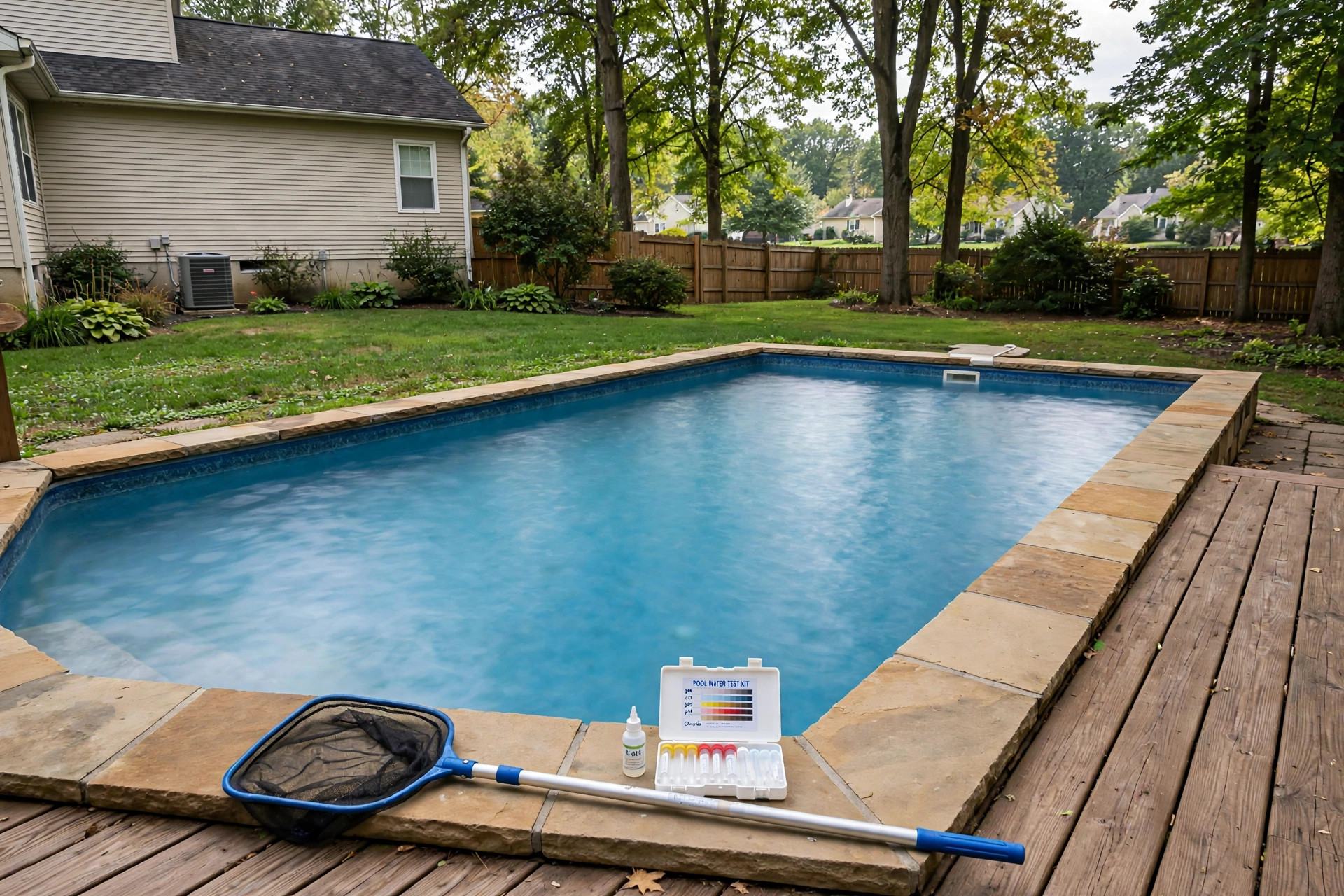
Do not guess. Test first. A test kit or test strips will tell you where you stand. You can find pool water testing guides at Swim University to learn the basics of reading results. Test strips are quick and cheap. A liquid drop kit gives more exact numbers. Many pool supply stores, such as Leslie’s, will test a water sample for you at no charge.
Check these five levels:
– Free chlorine: aim for 1 to 3 parts per million. – pH: aim for 7.2 to 7.6. – Total alkalinity: aim for 80 to 120 parts per million. – Cyanuric acid (stabilizer): aim for 30 to 50 parts per million. – Calcium hardness: aim for 200 to 400 parts per million.
Write the numbers down. They are your map. They tell you which step to take first. If you are opening your pool for the summer season, test before you add anything else. Water that sat all winter needs a full picture before treatment.
How to Fix Cloudy Pool Water Step by Step
Work through these steps in order. Do not skip the early ones. Each step builds on the one before it.
Step 1: Skim and Brush
Start with the physical work. Skim leaves and bugs off the surface. Empty the skimmer basket and the pump basket. Brush the walls and floor with a pool brush. Brushing knocks particles loose so the filter can catch them. Vacuum any dirt you can see on the floor. This step costs nothing and makes every later step work better.
Step 2: Test and Balance the Water
Use your test results. Fix total alkalinity first, then pH. Chlorine cannot do its job well when pH is out of range. Add the needed chemicals slowly. Wait a few hours. Test again. Many guides from The Spruce on home and pool care explain the order of operations in plain terms. Do not dump in several products at once. One change at a time keeps you in control.
Step 3: Shock the Pool
Shocking means adding a strong dose of chlorine to burn off waste. Do it in the evening so the sun does not burn off the chlorine. Follow the package dose for your pool size. Keep the pump running. Do not swim until free chlorine falls back to a safe level. For most pools this takes eight hours or more. If the water was very cloudy, you may need to shock twice, with a day between doses.
Step 4: Run the Filter Around the Clock
The filter must run nonstop until the water clears. Backwash a sand or earth filter when the pressure gauge rises 8 to 10 pounds above its clean reading. Rinse a cartridge filter with a hose. A weak or worn pump slows this step down, so check that you have the right pool pump for your pool size. Most pools clear in one to three days of steady filtering.
Step 5: Use a Clarifier or Flocculant
If the water is still hazy after shocking and filtering, add a clarifier. It clumps tiny particles together so the filter can catch them. A flocculant works the same way but drops the clumps to the floor for vacuuming. Flocculant acts faster but requires a manual vacuum afterward. Use one or the other, not both. Follow the label dose exactly.
Step 6: Vacuum the Pool
Vacuum the pool floor slowly. Fast moves stir the settled dirt back up. If you used a flocculant, vacuum to waste if your system allows it. This sends the dirty water out instead of through the filter. Empty the baskets again when you finish. Test the water one last time and adjust as needed.
Clarifier or Flocculant: Which One to Use
Both products gather fine particles into bigger ones. A clarifier is the easy choice for mild haze. You add it and let the filter do the work. A flocculant is the stronger choice for heavy cloudiness. It works in hours instead of days. But it demands a manual vacuum and a filter that can handle waste mode. Home improvement retailers and specialty shops carry both types, and staff can help you pick. Online sellers like Pool Warehouse stock a wide range as well. Start with a clarifier. Move to a flocculant only if the haze is stubborn.
How Much It Costs to Clear a Cloudy Pool
Clearing cloudy water is usually cheap. A pack of test strips costs about ten to twenty dollars. A bag of pool shock runs ten to twenty dollars. A bottle of clarifier costs about ten to fifteen dollars. Filter sand or a new cartridge may add twenty to fifty dollars if the old one is worn. Most owners spend under fifty dollars to clear a cloudy pool. The price climbs only if parts need replacing. A new pump or a full filter can run several hundred dollars, but that is rare. Compare that with the cost of draining and refilling, and treatment wins every time. This math holds for in-ground pools and for above-ground pools alike.
Care and Upkeep After the Water Clears
Clear water needs steady care to stay clear. Test the water two or three times a week in summer. Add sanitizer as needed to hold the 1 to 3 parts per million range. Skim the surface daily. Brush the walls once a week. Run the pump at least eight to twelve hours a day in hot weather. Keep the skimmer and pump baskets empty. Shock the pool after heavy use or a storm. These small habits stop cloudiness before it starts. Owners who follow them rarely need the full clearing routine again.
A Note on Pool Safety
Never let safety slide while the water is cloudy. Poor visibility makes it harder to see a struggling swimmer. Keep a close watch on children until the water is fully clear. Make sure drain covers are in place and intact. The Consumer Product Safety Commission sets rules for drain covers and pool safety that every owner should know. Spas and hot tubs need the same care; makers such as Hot Spring and Bullfrog Spas publish safety guidance for their owners. Keep chemicals locked away from children and pets. Store them in a cool, dry place. Add chemicals to water, never water to chemicals, and follow every label warning. Never mix two pool chemicals together. Read the label each time, even on products you have used before.
Frequently Asked Questions
How long does it take to fix cloudy pool water?
Most pools clear in one to three days. Mild haze may clear overnight. Heavy cloudiness after an algae bloom can take up to a week. Steady filtering is the key. If the water is still cloudy after a week of proper treatment, check the filter for damage.
Can I swim in cloudy pool water?
It is best to wait. Cloudy water may hold germs or have unsafe chemical levels. Poor visibility also makes swimming less safe. Wait until the water is clear and the test levels are in range. Then enjoy your swim with peace of mind.
Why did shocking the pool not work?
Three reasons are common. The pH may be too high for the chlorine to work. The filter may be dirty or damaged. Or the stabilizer level may be so high that the chlorine is locked up. Test all levels again. Fix pH and alkalinity first, then shock once more with the filter running.
What is the difference between a clarifier and a flocculant?
A clarifier clumps tiny particles so the filter can trap them. You add it and let the system run. A flocculant clumps particles into heavy masses that sink to the floor. You must vacuum them up by hand. Clarifiers suit mild haze. Flocculants suit heavy cloudiness when you want fast results.
When should I call a pool professional?
Call one if the water stays cloudy after a week of correct treatment. Call one if the filter, pump, or heater shows damage. Call one if you smell strong chemical odors that will not fade. A trained technician can find problems that a home test kit cannot see.
Does weather cause cloudy pool water?
Yes. Heavy rain washes dirt and debris into the pool. It also dilutes the chemicals. Hot sun burns off chlorine fast. Wind blows in dust and pollen. After any storm, skim the pool, test the water, and adjust the chemistry.
A Final Word
Cloudy pool water looks like a big problem. It is usually a small one. Test the water. Balance it. Shock it. Filter it. Most pools turn clear within a few days of steady work. The habits that keep water clear are simple: test often, skim often, and keep the filter running. Do that, and your pool will sparkle all summer long. Clear water makes every swim better, and the work to keep it is small compared with the reward.
References
Bullfrog Spas. (n.d.). Hot tubs and spas. https://www.bullfrogspas.com Hot Spring Spas. (n.d.). Hot tubs and spas. https://www.hotspring.com Leslie’s Pool Supplies. (n.d.). Pool supplies and equipment. https://www.lesliespool.com Pool Warehouse. (n.d.). Pool equipment and supplies. https://www.poolwarehouse.com Swim University. (n.d.). Pool and hot tub care guides. https://www.swimuniversity.com The Home Depot. (n.d.). Home improvement products. https://www.homedepot.com The Spruce. (n.d.). Home and garden advice. https://www.thespruce.com U.S. Consumer Product Safety Commission. (n.d.). Product safety information. https://www.cpsc.gov
Was this guide helpful?

About James Carter
The My Garden US editorial team writes practical, in-depth home and garden guides for American homeowners — tested advice, no fluff.
You May Also Like
Best Pool for Small Backyard Ideas: Big Summer Fun in a Tight Space
April 22, 2026 0 views
Best Pool Filter for Small Pools: How to Choose the Right One
April 15, 2026 0 views
The Best Hot Tub Under 5000 Dollars: A Plain Guide for the Sensible Buyer
April 28, 2026 0 views